
Brief Introduction of Davey Johnson
Davey Johnson, a celebrated figure in Major League Baseball (MLB), carved out a distinguished career spanning decades as both an accomplished player and a highly successful manager. Known for his keen analytical mind and pioneering use of computer-based statistical analysis, he left an indelible mark on the sport. As a player, Johnson was a four-time All-Star second baseman and a two-time World Series champion with the Baltimore Orioles. His transition to managing saw him lead the New York Mets to a memorable World Series title in 1986, cementing his legacy as one of baseball’s most influential strategic thinkers and leaders. His multifaceted contributions to baseball, both on the field and in the dugout, are widely recognized and celebrated.

Davey Johnson Overview
| Category | Information |
|---|---|
| Full Name | David Allen Johnson |
| Date of Birth | January 30, 1943 |
| Date of Death | September 5, 2025 |
| Age at Death | 82 |
| Birthplace | Orlando, Florida, U.S. |
| Place of Death | Sarasota, Florida, U.S. |
| Height | 6 ft 1 inch (185 cm) |
| Weight | 170 lb (77 kg) |
| Profession | Professional Baseball Player, Manager |
| Spouse | Mary Nan (divorced late 1980s), Susan Allen (married 1994) |
| Children | David Jr., Dawn, Andrea (deceased), Jake (stepson, deceased) |
| Education | Texas A&M University, Trinity University (Mathematics degree), Johns Hopkins University |
| Batting Hand | Right |
| Throwing Hand | Right |
| Net Worth | Estimated between $100,000 and $1 million (as of 2025) |
Early Life and Education of Davey Johnson
David Allen Johnson was born on January 30, 1943, in Orlando, Florida, U.S.. His childhood was marked by frequent relocation due to his father, Frederick Johnson, being a highly decorated World War II tank commander and career Army officer. The family lived on military bases in various locations, including Germany, Georgia, Texas, and Wyoming.
Eventually, the Johnson family settled in San Antonio, Texas, where Davey attended Alamo Heights High School. It was here that his baseball talents first drew the attention of scouts. After high school, Johnson enrolled at Texas A&M University, playing shortstop under coach Tom Chandler, who he credited with teaching him immense respect for the game. During his time at Texas A&M, he studied to be a veterinarian. Demonstrating a strong academic inclination, Johnson later continued his education during off-seasons and earned a mathematics degree from Trinity University in San Antonio, Texas. He also attended Johns Hopkins University. This background in mathematics would profoundly influence his approach to baseball, particularly in his later managerial career, as he was among the first in MLB to apply computer-based statistical analysis to decision-making, a precursor to modern sabermetrics.
Davey Johnson’s Career
Davey Johnson’s extensive career in professional baseball spanned nearly five decades, encompassing highly successful tenures as both a player and a manager. His journey began when he signed with the Baltimore Orioles as an amateur free agent in 1962, following a single season at Texas A&M University.
Playing Career
After signing with the Orioles, Johnson quickly ascended through their minor league system. He made his Major League Baseball (MLB) debut with the Orioles on April 13, 1965, at the age of 22. From 1966 onward, he established himself as the Orioles’ starting second baseman for seven consecutive seasons. During his eight seasons with Baltimore, from 1965 to 1972, Johnson was an integral part of the Orioles’ dominant dynasty, which secured four American League pennants and two World Series championships in 1966 and 1970. He was recognized for his exceptional defense, earning three consecutive Gold Glove Awards from 1969 to 1971, and was selected to four All-Star Games (1968, 1969, 1970, 1973). As a player, Johnson was often nicknamed “Dave” and was known by some Orioles teammates as “Dum-Dum” ironically, due to his high intellect and analytical nature, which was ahead of his time. He even developed a computer program to optimize the Orioles’ lineup, though manager Earl Weaver initially dismissed the idea.
In 1973, Johnson was traded to the Atlanta Braves. This move proved to be a breakthrough offensively, as he hit a career-high 43 home runs and recorded 99 RBIs, setting a new MLB record for home runs by a second baseman. He became part of the first trio of teammates, alongside Hank Aaron and Darrell Evans, to each hit 40 or more home runs in a single season. After his time with the Braves, Johnson played two seasons in Nippon Professional Baseball (NPB) with the Yomiuri Giants (1975-1976), becoming the first non-Japanese player for the team. He returned to MLB, playing for the Philadelphia Phillies (1977-1978) and Chicago Cubs (1978), notably hitting two pinch-hit grand slams in 1977, a major league record he shared with several other players. Johnson retired as a player at the end of the 1978 season, with a career batting average of .261, 136 home runs, and 609 RBIs over 1,435 games.
Managerial Career
Following his playing career, Johnson transitioned into managing, where he achieved even greater renown. He began in the minor leagues, leading the Miami Amigos to a .708 winning percentage in 1979 before the league folded. He also managed the Double-A Jackson Mets and Triple-A Tidewater Tides, winning a league championship at each minor league stop.
His major league managerial debut came with the New York Mets in 1984. Johnson quickly transformed the Mets into a powerhouse, becoming the first National League manager to win at least 90 games in each of his first five seasons. The pinnacle of his tenure with the Mets was leading the team to the 1986 World Series championship, a historic victory over the Boston Red Sox. He also guided the Mets to another National League East title in 1988. Johnson’s managerial philosophy with the Mets was famously hands-off: “I just let everybody do their thing,” which resonated with the team’s rambunctious personality.
After leaving the Mets in 1990, Johnson managed the Cincinnati Reds (1993-1995), leading them to a division title in 1995. He then returned to the Baltimore Orioles as manager (1996-1997), winning the American League Manager of the Year Award in 1997 after leading them to an AL East division championship. Johnson also managed the Los Angeles Dodgers (1999-2000) and finished his MLB managerial career with the Washington Nationals (2011-2013), where he earned his second Manager of the Year Award in 2012 by leading the franchise to its first division title since moving to Washington. He retired from managing in 2013, with a career managerial record of 1,372 wins and 1,071 losses, a .562 winning percentage that ranks among the top managers with over 1,000 wins.
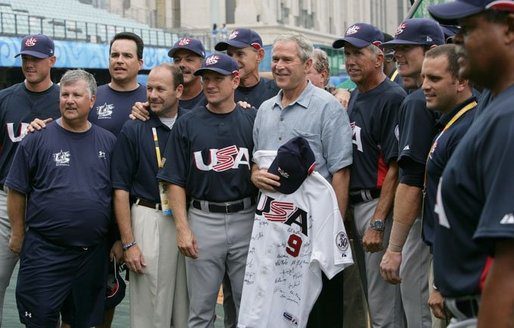
Beyond MLB, Johnson also contributed to international baseball. He managed Team USA to its first medal finish in a World Baseball Classic, securing third place in the 2009 edition. He also served as a bench coach for Team Netherlands in the 2004 Olympics and managed Team USA in the 2008 Summer Olympics, where they won a bronze medal.
Davey Johnson Personal Life & Family
Davey Johnson’s personal life saw its share of triumphs and challenges. He married Mary Nan early in his baseball career, and together they raised three children: David Jr., Dawn, and Andrea. Their marriage concluded in the late 1980s.
Johnson later married Susan Allen in 1994. Their relationship reportedly became a point of contention with Reds owner Marge Schott during his managerial stint there. Tragically, Johnson experienced profound personal losses. His daughter, Andrea, a nationally ranked amateur surfer, passed away in 2005 at the age of 32 from septic shock and complications from schizophrenia. In 2011, his stepson Jake died from pneumonia at 34.
In 2018, Johnson co-authored his autobiography, “My Wild Ride in Baseball and Beyond,” with Erik Sherman. Proceeds from the book were dedicated to his wife Susan’s nonprofit organization, Support Our Scholars. Johnson faced health challenges, including contracting COVID-19 in 2021, from which he recovered. He passed away on September 5, 2025, at the age of 82, at a hospital in Sarasota, Florida, after a long illness.
Awards and Achievements of Davey Johnson
Davey Johnson’s distinguished career was marked by numerous accolades and significant achievements, both as a player and as a manager.
As a Player:
- World Series Champion (2): 1966, 1970 (Baltimore Orioles)
- All-Star (4): 1968, 1969, 1970, 1973
- Gold Glove Award (3): 1969, 1970, 1971 (Second Baseman)
- Single-Season Home Run Record for Second Baseman: 43 home runs in 1973 (Atlanta Braves)
- National League Comeback Player of the Year: 1973 (awarded by Sporting News)
- First Player to hit two pinch-hit grand slams in a single season: 1977 (Philadelphia Phillies)
As a Manager:
- World Series Champion (1): 1986 (New York Mets)
- American League Manager of the Year (1): 1997 (Baltimore Orioles)
- National League Manager of the Year (1): 2012 (Washington Nationals)
- Mets Hall of Fame Inductee: 2010
- First National League manager to win 90+ games in first five seasons: (New York Mets)
- Managed four different teams to the postseason: New York Mets, Cincinnati Reds, Baltimore Orioles, Washington Nationals
- Team USA Manager: Bronze Medal in 2008 Summer Olympics, 3rd place in 2009 World Baseball Classic
Davey Johnson Net Worth and Income
As of 2025, Davey Johnson’s estimated net worth was reported to be between $100,000 and $1 million. His income sources stemmed primarily from his extensive career in professional baseball as both a player and a manager. Unlike modern athletes and managers who often command multi-million dollar salaries and lucrative endorsement deals, Johnson’s playing and managerial career largely predated the era of astronomical incomes in baseball.

His earnings came from player salaries during his 13 seasons in MLB and two seasons in NPB, as well as his managerial contracts with multiple MLB teams and international coaching assignments. Johnson’s analytical prowess and pioneering use of sabermetrics, while a significant contribution to the game, did not necessarily translate into the same level of financial remuneration as the highest-paid figures in later eras. Furthermore, sources indicate that Johnson engaged in some property management in Florida during brief periods away from baseball.
Legacy and Influence
Davey Johnson’s legacy in baseball is characterized by his innovative strategic thinking, his success as both a player and a manager, and his pioneering embrace of statistical analysis. He is remembered as a “cerebral” figure with a baseball mind “ahead of his time.” As a player, he was a key component of the dominant Baltimore Orioles teams of the late 1960s and early 1970s, contributing both defensively with his Gold Gloves and offensively with surprising power, particularly his record-setting 43 home runs in 1973.
However, his influence is arguably most profound in his managerial career. Johnson was among the first in MLB to apply computer-based statistical analysis to decision-making, an approach that would later become widely known as sabermetrics. He used these insights for lineup optimization and bullpen matchups, long before it became common practice. This analytical approach, combined with a philosophy of empowering players, led to significant success, most notably the 1986 World Series title with the New York Mets. Darryl Strawberry, a member of that championship team, praised Johnson’s ability to “empower players to express themselves while maintaining a strong commitment to excellence.”
Johnson’s managerial record, including taking four different franchises to the postseason and achieving a .562 winning percentage (ranking among the top ten for managers with over 1,000 wins), solidifies his place in baseball history. His impact extended to international baseball, where he managed Team USA to medal finishes, further demonstrating his leadership capabilities on a global stage. While he was considered for induction into the National Baseball Hall of Fame multiple times by the Veterans Committee and Today’s Game Committee, he had not yet been enshrined at the time of his passing. Nevertheless, his legacy as a World Series champion player and manager, a two-time Manager of the Year, and an early adopter of advanced analytics ensures his enduring influence on the game.
Interesting Facts about Davey Johnson
- Davey Johnson’s father was a highly decorated World War II tank commander who once escaped an Italian prisoner-of-war camp. Johnson did not learn the full extent of his father’s wartime experiences until he was an adult.
- As a player, Johnson once tried to convince his Orioles manager, Earl Weaver, of the benefits of his computer-coded program for “optimizing the Orioles lineup,” suggesting he should bat second instead of seventh to score more runs. Weaver reportedly dismissed the idea, but Johnson continued his analytical approach.
- He is the only player to have hit behind both legendary sluggers Hank Aaron (MLB) and Sadaharu Oh (NPB’s all-time home run king).
- In the 1966 World Series, Johnson holds the distinction of being the batter who got the final hit off pitching legend Sandy Koufax.
- He earned a mathematics degree from Trinity University, showcasing his intellectual prowess beyond the baseball field.
- Despite his managerial success, Johnson faced challenges, including being fired by Orioles owner Peter Angelos in 1997, the same day he won the AL Manager of the Year award, following a dispute over a fine.
- One of his famous quotes, reflecting his confidence, was: “I always bet on me.”
Controversies
Davey Johnson’s career, while highly successful, was not without its controversies and challenges, often stemming from clashes with front office personnel and his strong, opinionated personality. One notable conflict occurred during his tenure as manager of the New York Mets. Johnson reportedly clashed with general manager Frank Cashen. Despite leading the Mets to a World Series title in 1986 and consistent winning seasons, he was fired just 42 games into the 1990 season, following a sluggish start and ongoing tensions with the front office, alongside the numerous off-field issues plaguing the team’s star-studded roster.
Another significant controversy arose during his second stint managing the Baltimore Orioles in 1997. Johnson had a public dispute with owner Peter Angelos regarding a fine for Roberto Alomar. Johnson had instructed Alomar to pay the fine to a charity, but Alomar sent the money to a different charity based on union advice. Angelos publicly admonished Johnson, who then submitted his resignation. Angelos accepted the resignation on November 5, 1997, the very day Johnson was named the American League Manager of the Year. This high-profile dismissal highlighted Johnson’s headstrong nature and the difficulties he sometimes faced with ownership.
During his playing days with the Orioles, his analytical nature and attempts to implement sabermetrics led to some tension with manager Earl Weaver, who famously dismissed Johnson’s computer-generated lineup optimizations. While not a scandal, Johnson also admitted to developing a problem with alcohol in the years following the end of his first marriage in the late 1980s.
Social Media Presence
Information regarding Davey Johnson’s direct, active social media presence (e.g., official Instagram, Twitter, YouTube accounts with follower counts) is not widely available in the provided sources. Public figures, particularly those from earlier eras of sports, often have a less direct or managed online presence compared to contemporary personalities. Tributes and discussions about him, including posts from former players like Darryl Strawberry, are found on various social media platforms, especially following his passing.
Final Words about Davey Johnson
Davey Johnson’s passing on September 5, 2025, marked the end of an era for a true baseball luminary. His current status is that of a revered and missed figure in the sport, with numerous tributes pouring in from across the baseball community, including former players and executives who lauded his leadership, intellect, and impact.
His legacy is robust and multifaceted. As a player, he was a World Series champion and a Gold Glove second baseman known for his surprising power. As a manager, he was a World Series winner, a two-time Manager of the Year, and a visionary who embraced analytics long before it became mainstream, fundamentally changing how the game was strategized. He empowered his players and fostered winning cultures across multiple organizations.
While his candid nature and occasional clashes with ownership sometimes led to premature departures, his winning percentage and ability to consistently lead teams to contention speak volumes about his managerial prowess. The question of his eventual induction into the National Baseball Hall of Fame remains a subject of ongoing discussion, with many believing his accomplishments warrant the honor. His autobiography, “My Wild Ride in Baseball and Beyond,” published in 2018, stands as a testament to his reflective nature and his desire to share his journey and insights with the world.
Davey Johnson will be remembered not only for his tangible achievements on the field but also for his intellectual contributions to baseball, his ability to connect with and motivate players, and his unwavering belief in his own strategic capabilities. His influence will continue to resonate through the generations of players and managers he inspired and the analytical approaches he helped popularize. His life’s work ensures his place as a significant and enduring figure in the annals of baseball history.