
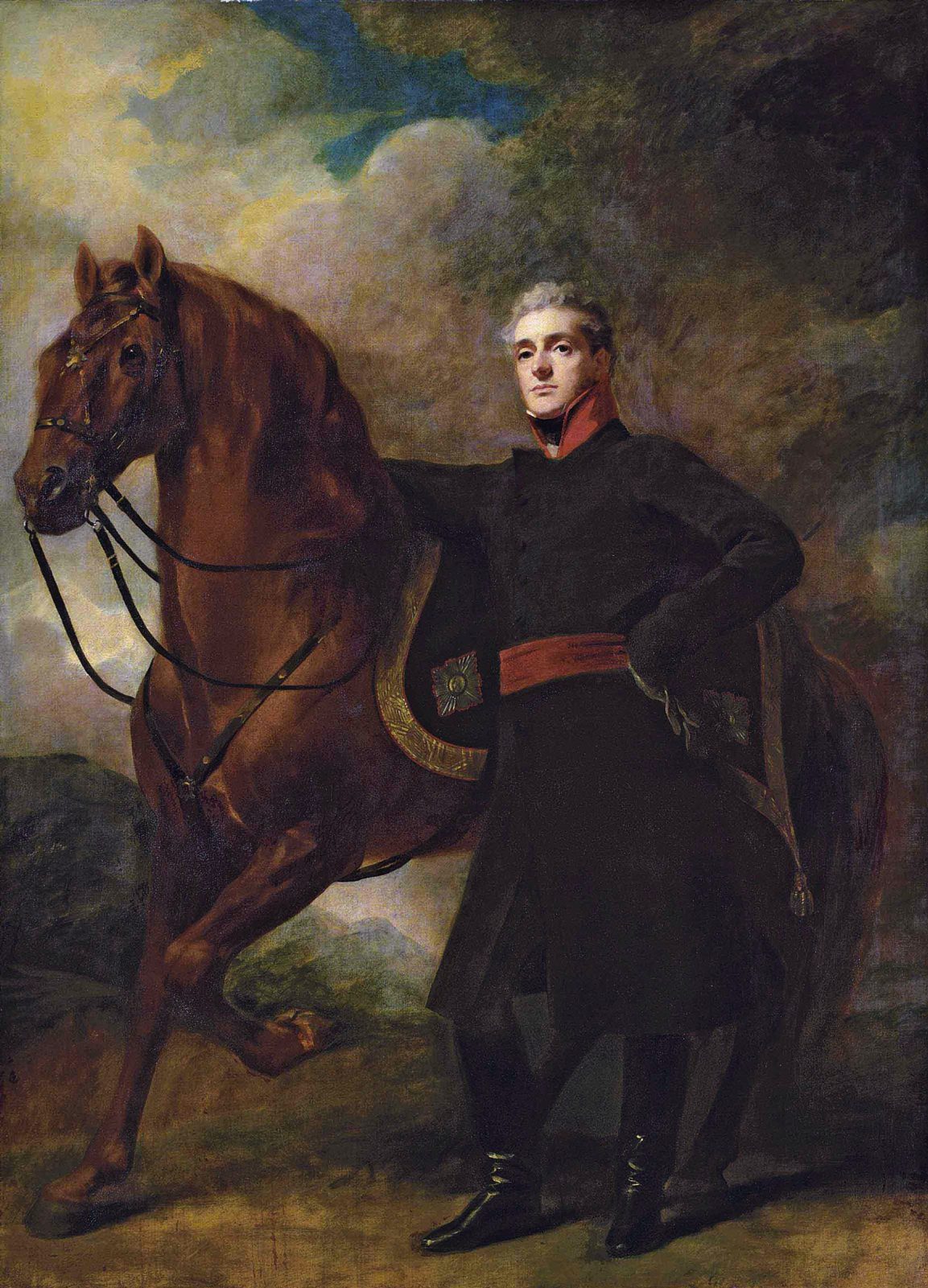
Brief Introduction of Alexander Hamilton
Alexander Hamilton (c. 1755/1757 – 1804) was a prominent American military officer, statesman, and one of the most influential Founding Fathers of the United States. Born into obscurity in the British West Indies, Hamilton’s remarkable intellect and ambition propelled him to the forefront of American politics during the Revolutionary War and the early years of the republic. He is best known for his pivotal role as the first U.S. Secretary of the Treasury, where he established the nation’s financial system, including the creation of a national bank, the assumption of state debts, and a system of tariffs, laying the groundwork for America’s economic stability and future prosperity.
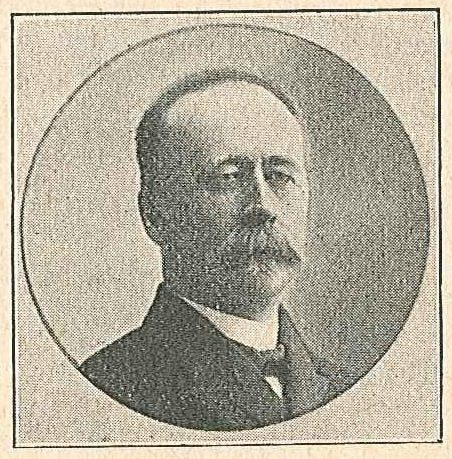
Alexander Hamilton Overview
| Attribute | Detail |
|---|---|
| Full Name | Alexander Hamilton |
| Date of Birth | January 11, 1755 or 1757 (exact date debated) |
| Date of Death | July 12, 1804 |
| Age at Death | Approximately 47 or 49 |
| Birthplace | Charlestown, Nevis, British West Indies (now St. Kitts and Nevis) |
| Nationality | American |
| Parents | Rachel Faucette Lavien (mother), James Hamilton (father) |
| Spouse | Elizabeth Schuyler Hamilton (married December 14, 1780) |
| Children | Philip, Angelica, Alexander Jr., James Alexander, John Church, William Stephen, Eliza, and a second Philip (named after his deceased elder brother) |
| Profession | Military Officer, Statesman, Lawyer, Economist, Politician, Author |
| Known For | First U.S. Secretary of the Treasury, author of Federalist Papers, architect of the U.S. financial system, aide-de-camp to George Washington |
| Height | Not consistently recorded; often described as relatively short. |
| Net Worth | (See “Alexander Hamilton Net Worth and Income” section for historical context) |
Early Life and Education of Alexander Hamilton
Alexander Hamilton’s early life was marked by adversity and a relentless drive for self-improvement. He was born on January 11, in either 1755 or 1757, in Charlestown, Nevis, in the British Leeward Islands. His mother, Rachel Faucette Lavien, was of British and French Huguenot descent, and his father was James Hamilton, a Scottish merchant. As his parents were not legally married, Hamilton was born out of wedlock, a circumstance that carried social stigma throughout his life.
His father abandoned the family around 1765 or 1766, and his mother tragically died of yellow fever in 1768, leaving Alexander and his older brother, James Jr., orphaned and impoverished. At a young age, Hamilton began working as a clerk in a trading company on St. Croix, first for Beekman and Cruger and later advancing to manager due to his exceptional abilities. During this time, he displayed a keen intellect and a talent for writing. In 1772, at the age of 15, he published an eloquent letter describing a devastating hurricane that had struck the island. This impressive writing, coupled with his evident intelligence, caught the attention of local benefactors who recognized his potential and raised funds to send him to the American colonies for a formal education.
In late 1772, Hamilton arrived in New York City. He initially attended Elizabethtown Academy in New Jersey to prepare for college, where he was exposed to influential revolutionary thinkers like William Livingston. In the autumn of 1773, he entered King’s College (now Columbia University) in New York City. Though he never completed his degree, Hamilton immersed himself in a rigorous curriculum, including anatomy, Greek and Latin literature, rhetoric, geography, history, philosophy, math, and science. While at King’s College, he quickly became involved in the burgeoning political issues of the American Revolution, publishing anonymous pamphlets and advocating for the revolutionary cause, which were so discerning they were initially attributed to John Jay.
Alexander Hamilton’s Career
Alexander Hamilton’s career was a testament to his ambition, intellect, and relentless work ethic, deeply shaping the nascent United States. His journey began with the outbreak of the American Revolutionary War. In 1775, he joined a volunteer militia regiment and quickly demonstrated military aptitude. By 1776, he was commissioned as a captain of the New York Provincial Company of Artillery, distinguishing himself in battles like Long Island, White Plains, and Trenton.
Military Service under George Washington
His leadership and writing skills caught the attention of General George Washington, who invited Hamilton to join his staff as an aide-de-camp with the rank of lieutenant colonel in 1777. For the next four years, Hamilton served as Washington’s trusted assistant, handling crucial correspondence, drafting orders, and engaging in intelligence, diplomacy, and negotiation. He played a vital role in the war’s climactic Battle of Yorktown in 1781, leading a victorious charge against the British, which ultimately secured American independence.
Post-War Contributions and Constitutional Convention
After the war, Hamilton resigned from military service and pursued a legal career, passing the bar exam in New York in 1782. He then served as a delegate from New York to the Congress of the Confederation, where he became frustrated by the weak central government under the Articles of Confederation. Hamilton’s advocacy for a stronger national government led him to play a crucial role in the Annapolis Convention in 1786, which, in turn, paved the way for the Constitutional Convention in Philadelphia in 1787. Although his direct influence during the Convention itself was somewhat limited, he was a staunch proponent of a centralized federal government.
His most significant contribution to the Constitution’s ratification was co-authoring the Federalist Papers, a series of 85 essays, of which he wrote 51. These essays persuasively argued for the adoption of the U.S. Constitution, explaining its principles and defending its structure.
First Secretary of the Treasury and Economic Architect
In 1789, President George Washington appointed Hamilton as the first U.S. Secretary of the Treasury, a position in which he profoundly shaped the nation’s future. Hamilton’s vision was to create a robust and stable financial system for the new republic. He outlined his ambitious economic program in several landmark reports to Congress, including the “First Report on Public Credit,” the “Second Report on Public Credit” (also known as the “Report on a National Bank”), and the “Report on Manufactures.”
Key components of his financial plan included:
- Assumption of State Debts: Hamilton proposed that the federal government assume the Revolutionary War debts incurred by the states, binding their economic interests to the national government and enhancing federal power. This controversial move, opposed by some, was ultimately achieved through a compromise (the “Compromise of 1790”) that also involved locating the national capital on the Potomac River.
- Establishment of a National Bank: He advocated for the creation of a Bank of the United States, modeled after the Bank of England, to provide a stable currency, manage federal funds, and offer credit for economic development. This too faced significant opposition from figures like Thomas Jefferson, who argued it was unconstitutional, but Washington signed it into law in 1791.
- Tariffs and Revenue System: Hamilton instituted tariffs on imported goods to generate federal revenue and protect nascent American industries. He also established the U.S. monetary system and the Customs Service.
These policies aimed to strengthen the national government, foster commerce and industry, and establish America’s credit both domestically and internationally. He is also credited with founding the United States Revenue Cutter Service, the precursor to the U.S. Coast Guard, and the New York Post newspaper.
After resigning from the Treasury in 1795, Hamilton continued to advise President Washington and played a significant, albeit unofficial, role in the Federalist Party. His influence shaped Washington’s Farewell Address, of which Hamilton drafted much. His later career was marked by political rivalries, particularly with Thomas Jefferson and Aaron Burr, which deeply influenced the nation’s early political parties.
Alexander Hamilton Personal Life & Family
Alexander Hamilton’s personal life was intertwined with his public ambitions and often characterized by both deep devotion and significant challenges. On December 14, 1780, he married Elizabeth “Eliza” Schuyler, the daughter of General Philip Schuyler, a prominent and wealthy figure in New York. Their marriage connected Hamilton, an orphaned immigrant, to one of America’s most influential families, a union that surprised some due to his modest origins.
Together, Alexander and Eliza had eight children: Philip (born 1782), Angelica (born 1784), Alexander Jr. (born 1786), James Alexander (born 1788), John Church (born 1792), William Stephen (born 1797), Eliza (born 1799), and a second son named Philip (born 1802, after the tragic death of their firstborn). Eliza was described as loyal, generous, compassionate, and strong-willed, providing a stable home life amidst Hamilton’s turbulent public career.
The Hamilton family endured significant tragedy. Their eldest son, Philip, was killed in a duel in 1801 at the age of 19, a loss that profoundly affected the entire family. His sister Angelica, two years younger than Philip, suffered a mental breakdown following her brother’s death and her father’s passing, living the rest of her life in a state of mental confusion under her family’s care.
Hamilton’s personal life also included a notable controversy: the Reynolds Affair. In 1797, he publicly admitted to an adulterous affair with Maria Reynolds several years prior, which, while damaging to his political career, he disclosed to clear his name from accusations of financial impropriety. This scandal highlighted the intense scrutiny faced by public figures in the early republic.
Regarding his beliefs, Hamilton was a staunch advocate for a strong federal government and a diverse, industrial economy, contrasting with Thomas Jefferson’s vision of an agrarian republic. He believed that human self-interest, when properly channeled by a wise government, could drive prosperity. Although his relationship with slavery was complex—he owned slaves at times and traded them, but also played a role in the abolition of the Atlantic slave trade and advocated for the enlistment of enslaved people in the Revolutionary Army with the promise of freedom—he also envisioned a diverse society with opportunities for all talents.
His wife, Eliza, dedicated much of her long life to preserving Alexander’s legacy after his death, organizing his papers and ensuring his biography was published.
Awards and Achievements of Alexander Hamilton
Alexander Hamilton, a towering figure in American history, was not formally recognized with “awards” in the modern sense during his lifetime. However, his life was a continuous series of significant achievements and contributions that have earned him enduring historical recognition and numerous posthumous honors.

Key Achievements and Contributions:
- Aide-de-Camp to George Washington: Served as a trusted and indispensable chief staff aide to General George Washington for four years during the Revolutionary War, demonstrating exceptional writing, administrative, and strategic skills.
- Battle of Yorktown Hero: Distinguished himself by leading a crucial and victorious charge against the British at the Siege of Yorktown in 1781, a pivotal battle that secured American victory.
- Constitutional Convention Delegate: Played a significant role in advocating for and shaping the U.S. Constitution, particularly through his efforts in the Annapolis Convention and as a delegate to the Constitutional Convention in 1787.
- Principal Author of the Federalist Papers: Co-authored the influential Federalist Papers, contributing 51 of the 85 essays, which were instrumental in persuading states to ratify the U.S. Constitution.
- First U.S. Secretary of the Treasury: Appointed by President George Washington in 1789, he became the first to hold this office, laying the foundation for the nation’s financial system.
- Architect of the American Financial System: Developed a comprehensive plan that included the federal assumption of state debts, the establishment of the First Bank of the United States, and a system of tariffs, which stabilized the national economy and established public credit.
- Founder of the U.S. Coast Guard: Established the United States Revenue Cutter Service in 1790, which is considered the predecessor to the modern U.S. Coast Guard.
- Founder of the Federalist Party: Led the Federalist Party, the world’s first voter-based political party, which championed a strong central government and industrial development.
- Founder of the New York Post: Established the New York Post newspaper in 1801.
- Influence on Washington’s Farewell Address: Played a significant role in drafting much of George Washington’s seminal Farewell Address.
- Judicial Review Principle: Helped establish the principle that courts have the right to interpret law during his time practicing law.
Posthumous Honors and Legacy-Based Awards:
Hamilton’s enduring impact is recognized through various awards named in his honor:
- Alexander Hamilton Award (U.S. Department of the Treasury): The highest honor awarded by the U.S. Department of the Treasury, established in 1955 for outstanding and unusual leadership in the department’s work.
- Alexander Hamilton Medal (Columbia College Alumni Association): The highest honor given by the Columbia College Alumni Association for distinguished service to the College and exceptional accomplishment in any field.
- Alexander Hamilton Award (Manhattan Institute): Honors individuals who foster the revitalization of cities and leaders in public policy, culture, and philanthropy.
- Alexander Hamilton Immigrant Achievement Awards (Lower Manhattan Historical Association): Recognizes foreign-born naturalized citizens who have made outstanding contributions to Lower Manhattan and New York City, reflecting Hamilton’s own immigrant journey.
- Ten-Dollar Bill: His likeness has appeared on the U.S. ten-dollar bill since 1929, cementing his visual representation in American currency.
Alexander Hamilton Net Worth and Income
Discussions of “net worth” in the modern sense are challenging when applied to historical figures like Alexander Hamilton, who lived in an era before standardized financial reporting. However, we can examine his financial standing and income sources throughout his life.
Born into poverty and orphaned, Hamilton started his career with virtually no assets. His early employment as a clerk in a trading company on St. Croix provided him with practical business knowledge but little personal wealth.
His education in the American colonies was funded by benefactors, indicating his lack of personal fortune. During the Revolutionary War, as an officer and General Washington’s aide-de-camp, he earned a military salary, but this was not a path to significant wealth.
After the war, Hamilton became a successful lawyer in New York City, which provided him with a substantial income, allowing him to support his large family. His role as the First Secretary of the Treasury, while immensely influential, was a public service position with a salary, not a direct source of immense personal wealth. His financial policies, however, created opportunities for wealth generation for others and solidified the nation’s economy.
By the time of his death in 1804, Hamilton was not a rich man by the standards of his wealthy peers, despite his impactful career. Following his death, his wife, Eliza, was actually required to pay his substantial debts, forcing her to sell their 35-acre estate in upper Manhattan, though she later managed to regain and then sell it to move into a smaller townhouse. This indicates that while he was professionally successful and provided for his family, he did not accumulate vast personal wealth, a stark contrast to some other Founding Fathers who inherited or acquired large landholdings.
Legacy and Influence
Alexander Hamilton’s legacy is profound and continues to shape the United States more than two centuries after his death. He is widely regarded as one of the most influential Founding Fathers, whose vision for a strong, centralized federal government and a dynamic economy proved foundational for the nation’s development.
Economic and Governmental Impact
Hamilton’s most enduring influence lies in his role as the architect of the American financial system. His policies as the first Secretary of the Treasury—including the federal assumption of state debts, the creation of the national bank, and the establishment of tariffs—stabilized the fledgling nation’s economy, established its creditworthiness, and fostered industrial and commercial growth. He envisioned an America with a diversified economy, including manufacturing and commerce, which laid the groundwork for the modern capitalist system.
He was a staunch constitutionalist who believed in an energetic executive and a strong national defense. His persuasive arguments in the Federalist Papers were crucial for the ratification of the Constitution, establishing a powerful federal government that could effectively govern the union.
Political Philosophy and Ideals
Hamilton’s political philosophy, which emphasized moral realism and a pragmatic understanding of human nature, contributed significantly to American constitutionalism. He believed that government should harness human passions, like the desire for property, to serve the public good. He foresaw aspects of American life that were decades away, including a diverse economy and, unlike many contemporaries, respected the faculties of Black people and worked towards ending slavery and the Atlantic slave trade.
Public Image and Cultural Resonance
Despite his historical significance, Hamilton was arguably “the least well-understood of any of the founding Fathers” for a time. However, his public image has seen a dramatic resurgence in the 21st century, largely due to Lin-Manuel Miranda’s hit Broadway musical, Hamilton. The musical revitalized public interest in his life and contributions, portraying him as a self-made immigrant who overcame adversity to shape a nation. His presence on the ten-dollar bill also ensures his continued recognition in American society.
Hamilton’s legacy is celebrated through various institutions and awards named in his honor, including the Alexander Hamilton Award by the U.S. Department of the Treasury and medals from Columbia College and the Manhattan Institute. He continues to inspire and inform conversations about America’s founding principles and economic development.
Interesting Facts about Alexander Hamilton
- Ambiguous Birth Year: The exact year of Alexander Hamilton’s birth is debated by historians, with some sources citing 1755 and others 1757.
- Orphaned Early: By the age of 13, Hamilton was effectively an orphan, a factor that deeply influenced his drive and ambition.
- Hurricane Letter: His eloquent description of a devastating hurricane in 1772, published in a local newspaper, impressed community leaders and led to a fund being raised for his education in North America.
- Washington’s “Right-Hand Man”: Hamilton served as General George Washington’s most trusted aide during the Revolutionary War, often drafting crucial correspondence and orders.
- Prolific Writer: Beyond the Federalist Papers, Hamilton was a prolific writer whose collected works fill 27 volumes. His writing was so sharp that his early anonymous pamphlets were mistakenly attributed to seasoned politicians.
- Duel with Aaron Burr: Hamilton’s life ended tragically in 1804 when he was killed in a duel with his long-time political rival, Aaron Burr, the sitting Vice President.
- ”Genius” of the Founding Fathers: Historian Paul Johnson famously referred to Hamilton as “a genius—the only one of the Founding Fathers fully entitled to that accolade.”
- Financial System’s “Powerful Cement”: Hamilton believed that a strong financial system would act as the “powerful cement of our Union,” integrating the states economically.
- Quotes on Human Nature and Government: Hamilton held a realistic view of human nature, famously stating, “Men are rather reasoning than reasonable animals, for the most part governed by the impulse of passion” and “If men were angels, no government would be necessary.” He also believed that “The sacred rights of mankind are not to be rummaged for among old parchments or musty records. They are written, as with a sunbeam, in the whole volume of human nature, by the hand of the Divinity itself; and can never be erased or obscured by mortal power.”
Controversies
Alexander Hamilton’s brilliant but often combative nature led to several significant controversies during his lifetime, which affected his personal reputation and political career.
- The Reynolds Affair: In 1797, Hamilton became embroiled in America’s first major political sex scandal, known as the Reynolds Affair. He publicly admitted to an adulterous affair with Maria Reynolds that had occurred several years prior. While the affair itself was a personal failing, Hamilton’s public confession was primarily to clear his name from accusations of financial misconduct, as James Reynolds, Maria’s husband, had attempted to blackmail Hamilton, suggesting that Hamilton was involved in illegal financial speculation. The affair and its public exposure were deeply embarrassing and politically damaging, diminishing his moral authority.
- Rivalry with Thomas Jefferson and James Madison: Hamilton’s vision for a strong, industrialized federal government stood in stark contrast to Thomas Jefferson and James Madison’s preference for an agrarian republic with limited central authority. This ideological clash fueled the formation of America’s first political parties: Hamilton’s Federalist Party and Jefferson’s Democratic-Republican Party. The intense policy debates, particularly over the national bank and federal debt assumption, were marked by bitter personal attacks and political maneuvering.
- Duel with Aaron Burr: The most tragic controversy was Hamilton’s fatal duel with his long-time political rival, Aaron Burr, in July 1804. Their rivalry had simmered for years, fueled by political and personal animosity. The immediate cause stemmed from Burr’s perception that Hamilton had slandered his character during Burr’s campaign for governor of New York. Hamilton accepted Burr’s challenge to a duel, which resulted in Hamilton being mortally wounded and dying the following day. This event shocked the nation and prematurely ended the life of one of its most promising figures.
- Opposition to John Adams: In the lead-up to the 1800 presidential election, Hamilton caused a significant rift within his own Federalist Party by opposing John Adams’s re-election. He circulated a private attack against Adams, which Aaron Burr obtained and published, further fracturing the Federalists and contributing to Thomas Jefferson’s victory.
Social Media Presence
As Alexander Hamilton lived from approximately 1755 to 1804, the concept of “social media” did not exist during his lifetime. Therefore, Alexander Hamilton did not have any social media presence, such as Instagram, Twitter, or YouTube accounts. His public communication and influence were exercised through prolific writing, including pamphlets, newspaper essays (like the Federalist Papers), speeches, and extensive correspondence. These methods served as the primary means by which he conveyed his ideas and engaged in public discourse in the 18th and early 19th centuries. His writings, such as the Federalist Papers, became enduring works that influenced public opinion and political thought.
Final Words about Alexander Hamilton
Alexander Hamilton’s life, though cut short by a tragic duel, remains an extraordinary testament to the power of intellect, ambition, and vision. From his humble beginnings as an orphaned immigrant in the Caribbean, he rose to become an indispensable figure in the American Revolution and a principal architect of the United States. His unwavering commitment to a strong federal government and a robust, diversified economy laid the essential groundwork for the nation’s future prosperity and stability.
Hamilton’s legacy is evident in many facets of modern America: the structure of its financial system, the strength of its federal government, and even its ongoing political discourse. While his policies often sparked heated debate and his personal life faced public scrutiny, his foresight and dedication were undeniable. His contributions ensure his place not merely as a historical figure, but as an enduring symbol of American ingenuity and the pursuit of national greatness. His story continues to inspire and offers critical insights into the formation of one of the world’s most enduring democracies.
 Team Dailly WikiBio