
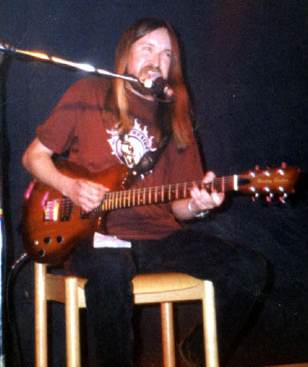
Brief Introduction of Yegor Letov
Igor “Yegor” Fyodorovich Letov (1964–2008) was a seminal Russian poet, musician, and singer-songwriter, revered as a foundational figure of the Siberian punk rock movement. He is most famous as the founder and leader of the highly influential post-punk and psychedelic rock band Grazhdanskaya Oborona (Civil Defense). Letov’s work, characterized by its raw, lo-fi sound and fiercely anti-authoritarian lyrics, circulated widely through underground channels during the Soviet era, making him a cultural icon for a generation of disaffected youth. Beyond Grazhdanskaya Oborona, he was also the creative force behind conceptual projects like Kommunizm and Yegor i Opizdenevshie. Posthumously, he is often called the “father of Russian punk.”
Yegor Letov Overview
| Full Name | Igor Fyodorovich Letov |
| Date of Birth | September 10, 1964 |
| Age | 43 |
| Birthplace | Omsk, Russian SFSR, Soviet Union |
| Nationality | Soviet, Russian |
| Profession | Poet, musician, singer-songwriter, record producer, artist |
| Famous For | Founding and leading the punk rock band Grazhdanskaya Oborona (Civil Defense) |
| Education | Expelled from a Moscow construction vocational school |
| Marital Status | Married at the time of his death |
| Spouse / Partner | Natalia Chumakova (m. 1997–2008) |
| Children | None |
| Net Worth | Information not publicly available |
Early Life and Education of Yegor Letov
Igor Fyodorovich Letov was born on September 10, 1964, in the Siberian industrial city of Omsk, Soviet Union. His father, Fyodor Dmitriyevich Letov, was a military man and a veteran of World War II who later became a local secretary for the Communist Party. His mother, Tamara Georgievna Letova, was a doctor. The family had a diverse ancestry, including Russian, Mordvin, Komi, and Turkic roots. Letov and his older brother, Sergey, who would become a renowned avant-garde jazz saxophonist, both experienced health problems from a young age, with Yegor reportedly suffering clinical deaths during his childhood. After graduating from high school in Omsk in 1982, Letov moved to the Moscow region to live with his brother. He enrolled in a construction vocational school but was expelled in the spring of 1983 for poor attendance and academic performance. He then returned to Omsk, where he took on various jobs, including plasterer, janitor, and even painting portraits of Vladimir Lenin for propaganda stands.
Yegor Letov Career
Early Career
Yegor Letov’s musical journey began in the early 1980s. In 1982, he co-founded his first band, Posev, named after a dissident magazine. His first public performance was as a bassist in late 1983 with Sergey Kuryokhin’s improvisational ensemble. A pivotal moment came on November 8, 1984, when Letov and his friend Konstantin “Kuzya UO” Ryabinov formed the band that would define his legacy: Grazhdanskaya Oborona (Civil Defense), often abbreviated as GrOb, which is also the Russian word for “coffin.” Operating outside the state-controlled music industry, Letov established his own home studio, GrOb-Records, where he recorded prolifically, often playing all the instruments himself. The band’s confrontational, anti-Soviet lyrics quickly attracted the attention of the KGB. In late 1985, Letov was forcibly committed to a psychiatric hospital for three months, a common tactic used against dissidents, where he was treated with anti-psychotic drugs.
Breakthrough
Upon his release from the mental hospital, Letov’s resolve was hardened rather than broken. He and his bandmates began a period of intense creative activity, recording numerous albums in 1987 that were distributed through underground cassette tape networks known as magnitizdat. This method of dissemination bypassed state censorship and allowed GrOb’s music—a raw, abrasive mix of punk, noise, and psychedelic rock—to spread rapidly across the Soviet Union. Songs filled with themes of rage, desperation, and dark satire against the Soviet system resonated deeply with disaffected youth, Afghan war veterans, and the disenfranchised. By the late 1980s, despite their underground status and lack of official media exposure, Grazhdanskaya Oborona had achieved cult status and widespread popularity, cementing Letov’s position as a leading voice of the counterculture.
Major Achievements and Success
Throughout his career, Letov was incredibly prolific, recording dozens of albums with Grazhdanskaya Oborona and his side projects. In the early 1990s, after briefly dissolving GrOb, he created the psychedelic project Yegor i Opizdenevshiye, releasing the critically acclaimed albums Pryg-skok (1990) and Sto let odinochestva (1992), which are considered among his most popular works. He reformed Grazhdanskaya Oborona in 1993 and became a leading figure in the national-communist rock movement “Russian Breakthrough.” He also co-founded the controversial National Bolshevik Party (NBP) with Eduard Limonov and Alexander Dugin in 1994, though he would later distance himself from politics. Letov’s final album with Grazhdanskaya Oborona, Zachem snyatsya sny? (Why Do We Dream Dreams?), was released in 2007, and he considered it his best work.
Recent Work / Current Status
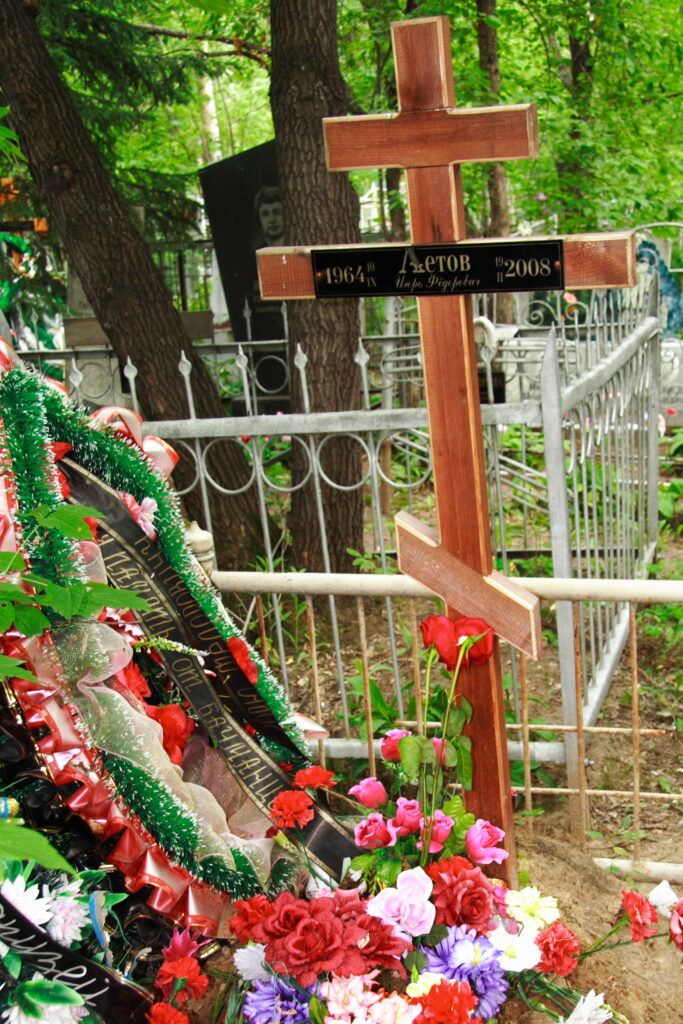
Yegor Letov remained musically active until the end of his life. In the years leading up to his death, he had renounced direct political affiliations, stating in a 2007 interview with Rolling Stone Russia that he had always been an anarchist, with a growing interest in eco-anarchism. His final live performance took place in Yekaterinburg on February 9, 2008. Yegor Letov died in his sleep at his home in Omsk on February 19, 2008, from heart failure. He was 43 years old. He was buried in the Staro-Vostochnoye cemetery in Omsk, next to his mother’s grave.
Yegor Letov Awards and Achievements
- Posthumously recognized as the “patriarch” and “father of Russian punk rock.”
- His band Grazhdanskaya Oborona achieved legendary cult status throughout the Soviet Union and Russia.
- A species of beetle discovered in Vietnam, Agyles letovi, was named in his honor in 2018.
Yegor Letov Personal Life & Family
Yegor Letov’s family life was deeply connected to his artistic world. His father, Fyodor Dmitrievich Letov, was a military veteran, and his mother was Tamara Georgievna Letova. His older brother, Sergey Letov, is a well-known free-jazz saxophonist who introduced Yegor to a wide range of Western music. In the late 1980s, Letov had a close romantic and creative relationship with fellow Siberian punk musician Yanka Dyagileva. He was married to musician Anna Volkova from 1991 to 1997. In 1997, he married Natalia Chumakova, who became the bassist for Grazhdanskaya Oborona and remained with him until his death. Letov had no children.

Yegor Letov Relationship Details
Yegor Letov’s most significant later relationship was with Natalia Chumakova. They married in 1997, and she joined Grazhdanskaya Oborona as its bass guitarist that same year, becoming an integral part of the band’s final lineup. Chumakova, a musician and journalist, became the steward of Letov’s legacy after his death in 2008, overseeing his GrOb Records label and the remastering and reissuing of his extensive catalog. She also directed a documentary about the band titled Zdorovo i vechno (Healthy and Forever).
Yegor Letov Net Worth and Income
Information regarding Yegor Letov’s net worth and income is not publicly available. As a fiercely independent and anti-commercial artist who operated largely outside the mainstream music industry for much of his career, conventional metrics of wealth are difficult to apply. His music was primarily distributed through his own label, GrOb-Records.
Yegor Letov Physical Appearance
- Height – Information not publicly available
- Weight – Information not publicly available
- Eye Color – Information not publicly available
- Hair Color – Information not publicly available
Yegor Letov Controversies
Yegor Letov was a polarizing and controversial figure throughout his life. His anti-Soviet lyrics led to his forced institutionalization in a psychiatric hospital by the KGB. In the post-Soviet era, his political evolution caused significant controversy. After years of opposing the communist regime, he embraced national-communism in the early 1990s and was a co-founder of the National Bolshevik Party, an extremist group that sought to unite far-left and far-right ideologies. This shift alienated some of his early anti-authoritarian fans. He was also accused of nationalism and antisemitism, charges he denied, stating he was a patriot but not a Nazi and always sided with the underdog. He later distanced himself from the NBP and all political movements, declaring himself an anarchist.
Yegor Letov Social Media Presence
- Instagram – Not publicly available
- Twitter – Not publicly available
- YouTube – An official channel for Grazhdanskaya Oborona exists, managed by his estate.
Interesting Facts about Yegor Letov
- Letov’s stage name “Yegor” is a folksy variant of his birth name, Igor.
- The abbreviation for his band, GrOb (from Grazhdanskaya Oborona), is also the Russian word for “coffin,” an irony he embraced.
- He was a prolific artist outside of music, also engaging in conceptual art and collage.
- Letov’s musical influences were diverse, ranging from 1960s American garage rock bands like The Sonics and The Monks to psychedelic rock and industrial music.
- He experienced several instances of clinical death during his childhood due to poor health.
Yegor Letov Legacy and Influence
Yegor Letov’s legacy is immense and enduring, particularly within Russia and the former Soviet states. He is widely regarded as one of the most influential figures in Russian rock music, with many crediting him as the “father of Russian punk.” His fiercely independent, DIY approach to recording and distributing music became a blueprint for countless underground artists. Letov’s poetic, often-abrasive lyrics explored themes of existentialism, political dissent, and Russian identity, influencing not only musicians but also writers and artists. His work provided a voice for a generation feeling alienated and oppressed by the Soviet system and later, by the chaotic capitalism of the 1990s. His music continues to be discovered by new generations, and his status as a countercultural icon remains potent.
Final Words about Yegor Letov
Yegor Letov was far more than just a musician; he was a poet, a provocateur, and a chronicler of the turbulent final years of the Soviet Union and the chaotic birth of modern Russia. From his lo-fi beginnings in a Siberian apartment to becoming an unwilling icon for various political factions, his life was a testament to artistic freedom against all odds. Letov’s journey was one of constant opposition—first to the Soviet regime, then to the perceived injustices of the new capitalist order. Though his political shifts were controversial, his core identity as a fierce individualist and an anti-authoritarian artist never wavered. His raw, honest, and powerful music created a lasting legacy that continues to inspire those who feel disenfranchised, making him one of the most vital and complex figures in modern Russian culture.
 Team Dailly WikiBio