
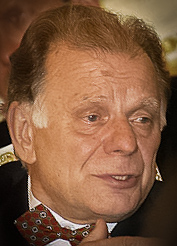
Brief Introduction of Zhores Alferov
Zhores Ivanovich Alferov was a Soviet and Russian physicist who made significant contributions to the creation of modern heterostructure physics and electronics. A Nobel laureate, he is renowned for his pioneering research in semiconductor heterostructures, which are crucial for high-speed electronics and optoelectronics. This work laid the foundation for many modern technologies, including LEDs, solar cells, fiber-optic communications, and mobile phones. In his later life, Alferov also became a prominent politician, serving as a member of the State Duma, the lower house of the Russian parliament. His career was marked by a deep commitment to both scientific advancement and the role of science in society.

Zhores Alferov Overview
| Full Name | Zhores Ivanovich Alferov |
| Date of Birth | March 15, 1930 |
| Age | Died at 88 |
| Birthplace | Vitebsk, Byelorussian SSR, Soviet Union (now Belarus) |
| Nationality | Soviet, Russian |
| Profession | Physicist, Politician |
| Famous For | Development of semiconductor heterostructures used in high-speed- and opto-electronics, Nobel Prize in Physics (2000) |
| Education | V. I. Ulyanov (Lenin) Electrotechnical Institute; Ioffe Institute (Candidate of Sciences and Doctor of Sciences) |
| Marital Status | Married |
| Spouse / Partner | Tamara Darskaya |
| Children | 2 (Ivan and Olga) |
| Net Worth | Not publicly available |
Early Life and Education of Zhores Alferov
Zhores Ivanovich Alferov was born on March 15, 1930, in Vitebsk, Byelorussian SSR, Soviet Union. His father, Ivan Karpovich Alferov, was a factory manager and a committed Bolshevik who had joined the party in 1917. His mother, Anna Vladimirovna, worked as a librarian. He was named after the French socialist leader Jean Jaurès, and his older brother was named Marx, after Karl Marx. The family moved frequently due to his father’s industrial assignments, living in various cities across the Soviet Union. His brother, Marx, was tragically killed in action during World War II in 1944. Alferov developed an early interest in physics and graduated from high school in Minsk in 1947. He then attended the Belarusian Polytechnic Academy before moving to Leningrad to study at the V. I. Ulyanov (Lenin) Electrotechnical Institute (LETI), graduating in 1952.
Zhores Alferov Career
Early Career
In 1953, Alferov began his lifelong career at the prestigious Ioffe Physical-Technical Institute of the USSR Academy of Sciences in Leningrad. Working under the guidance of Vladimir Tuchkevich, he was part of a team that developed the first Soviet transistors and germanium diodes. He earned his Candidate of Sciences in Technology degree in 1961 from the Ioffe Institute. His early research was focused on semiconductor devices, where he began to explore the potential of semiconductor heterostructures in the early 1960s, organizing a research group at the institute to pursue this line of investigation.
Breakthrough
Alferov’s major breakthrough came in the mid-to-late 1960s with his pioneering work on semiconductor heterostructures—materials composed of thin layers of different semiconductors. Independently and concurrently with Herbert Kroemer, he proposed the concept of using heterostructures for semiconductor lasers in 1963. By 1969, his team had successfully created the first semiconductor laser based on a gallium arsenide and aluminum gallium arsenide heterostructure. A year later, they achieved a monumental feat: a continuous-wave semiconductor laser that could operate at room temperature. This development was revolutionary, transforming the laser from a specialized device into a practical component for a vast range of technologies. It overcame the limitations of previous designs and paved the way for efficient, miniaturized optoelectronic devices.
Major Achievements and Success
The development of room-temperature semiconductor lasers was a pivotal achievement that opened the door to modern fiber-optic communications. Alferov’s work on heterostructures became the foundation for numerous technologies that define the modern information age, including LEDs, CD and DVD players, barcode readers, and high-efficiency solar cells. His contributions were fundamental to the development of high-speed transistors used in mobile phones and satellite communications. In recognition of his groundbreaking work, Zhores Alferov, along with Herbert Kroemer, was awarded half of the Nobel Prize in Physics in 2000 “for developing semiconductor heterostructures used in high-speed- and opto-electronics.” Throughout his career, Alferov held numerous leadership positions. He became the director of the Ioffe Institute in 1987 and later served as Vice-President of the Russian Academy of Sciences.
Recent Work / Current Status
In his later career, alongside his scientific leadership, Zhores Alferov became actively involved in Russian politics. He was elected to the State Duma in 1995, initially with the Our Home – Russia party, and was subsequently re-elected multiple times on the list of the Communist Party of the Russian Federation, though he was not a formal party member. His political work was largely focused on advocating for the interests of Russian science and education. He remained a prominent figure in the scientific community, championing research and founding the St. Petersburg Academic University to foster the next generation of scientists. Alferov passed away on March 1, 2019, at the age of 88, following a period of illness.
Zhores Alferov Awards and Achievements
- Nobel Prize in Physics (2000)
- Kyoto Prize in Advanced Technology (2001)
- State Prize of the Russian Federation (2001)
- Lenin Prize (1972)
- USSR State Prize (1984)
- Order of Lenin (1986)
- Stuart Ballantine Medal (1971)
- SPIE Gold Medal (2002)
- Global Energy Prize (2005)
- Demidov Prize (1999)
Zhores Alferov Personal Life & Family
Zhores Alferov was a dedicated family man alongside his demanding scientific and political careers. He was married to Tamara Darskaya, with whom he had two children: a son named Ivan and a daughter named Olga. He also had a daughter from a previous brief marriage. Alferov was known to be an atheist and was a signatory of an open letter to President Vladimir Putin opposing the clericalization of Russia. His personal interests included history, particularly that of World War II, as well as swimming and cross-country skiing. He emphasized the critical importance of supporting scientific institutions like the Russian Academy of Sciences, viewing them as essential for national progress.

Zhores Alferov Relationship Details
Zhores Alferov was married to Tamara Darskaya from 1967 until his death. Their union was a long and supportive partnership. They had a son, Ivan, and a daughter, Olga. Alferov also had a daughter from a brief first marriage but reportedly did not maintain a close relationship with her.
Zhores Alferov Net Worth and Income
Information regarding Zhores Alferov’s net worth and specific income is not publicly available. His primary income would have been derived from his long and distinguished career as a physicist, his directorship at the Ioffe Institute, and his stipend as a member of the State Duma. As a Nobel laureate, he also received a significant prize sum.
Zhores Alferov Physical Appearance
- Height
- Weight
- Eye Color
- Hair Color
\\\\\\\”Information not publicly available\\\\\\\”
\\\\\\\”Information not publicly available\\\\\\\”
\\\\\\\”Information not publicly available\\\\\\\”
\\\\\\\”Information not publicly available\\\\\\\”
Zhores Alferov Controversies
No major controversies have been widely reported regarding Zhores Alferov’s scientific work or personal life. His political affiliation with the Communist Party in post-Soviet Russia was a notable aspect of his public life, but it did not lead to significant public controversies.
Zhores Alferov Social Media Presence
- Instagram – Not publicly available
- Twitter – Not publicly available
- YouTube – Not publicly available
Interesting Facts about Zhores Alferov
- He was named after Jean Jaurès, a prominent French socialist leader.
- His older brother was named Marx in honor of Karl Marx.
- He entered politics primarily to protect and advocate for Russian science and the Russian Academy of Sciences.
- Despite being on the Communist Party’s electoral list for the Duma, he was not an official member of the party.
- His work on semiconductor heterostructures is fundamental to the operation of the internet, as it enabled the development of laser diodes used in fiber-optic cables.
Zhores Alferov Legacy and Influence
Zhores Alferov’s legacy is immense and is embedded in the fabric of our modern digital society. His pioneering research into semiconductor heterostructures provided the molecular foundation for the information and communication revolution. Technologies that are now ubiquitous, such as the internet, mobile phones, CD players, and LED lighting, are all direct beneficiaries of his work. As Hermann Grimmeiss of the Royal Swedish Academy of Sciences noted, without Alferov’s contributions, it would be impossible to transmit the vast amounts of information from satellites or have extensive telephone networks between cities. Beyond his scientific inventions, Alferov was a passionate advocate for science and education, mentoring a new generation of physicists and founding an academic university. His life’s work demonstrates a profound and lasting impact on both fundamental physics and the technologies that shape daily life globally.
Final Words about Zhores Alferov
Zhores Alferov was a titan of 20th-century physics, a visionary scientist whose curiosity and dedication fundamentally reshaped the world. His journey from a childhood in the Soviet Union to becoming a Nobel laureate is a testament to his intellectual brilliance. The development of semiconductor heterostructures was not merely an academic achievement; it was the key that unlocked the modern era of high-speed communications and electronics. From the smartphones in our pockets to the global fiber-optic network, Alferov’s influence is all-pervasive. He was not only a brilliant researcher but also a staunch defender of the scientific enterprise, using his political platform to champion the cause of science and education in Russia. His life and career serve as an enduring inspiration, highlighting the power of scientific inquiry to drive technological progress and benefit all of humanity.
 Team Dailly WikiBio