
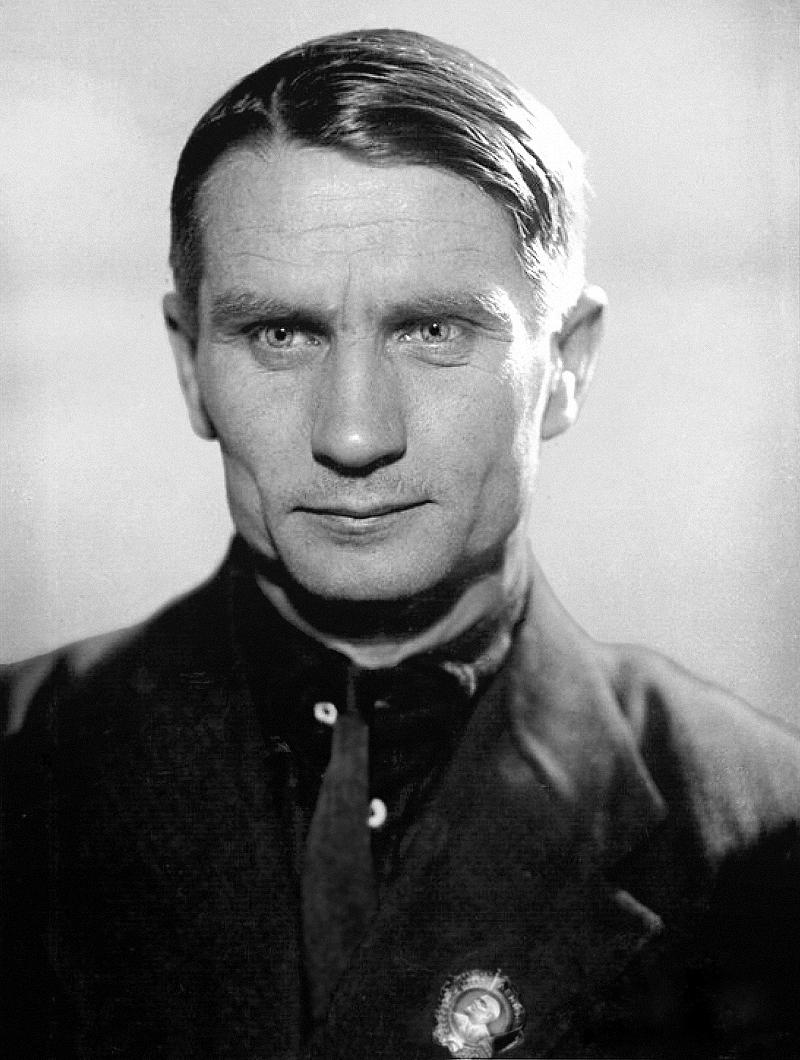
Brief Introduction of Trofim Lysenko
Trofim Denisovich Lysenko was a Soviet agronomist and biologist who became the powerful director of the Soviet Union’s Lenin All-Union Academy of Agricultural Sciences. A proponent of his own pseudoscientific theories, which came to be known as Lysenkoism, he rejected Mendelian genetics in favor of a form of Lamarckism. Lysenko’s ideas and his political influence, backed by Joseph Stalin, led to the suppression and persecution of mainstream geneticists and set Soviet biology and agricultural science back for decades. His unsound agricultural practices contributed to devastating famines that resulted in the deaths of millions of people in the Soviet Union and China.
Trofim Lysenko Overview
| Full Name | Trofim Denisovich Lysenko |
| Date of Birth | September 29, 1898 |
| Age | Died at 78 |
| Birthplace | Karlovka, Poltava Governorate, Russian Empire (now Karlivka, Poltava Oblast, Ukraine) |
| Nationality | Soviet |
| Profession | Agronomist, Biologist |
| Famous For | Lysenkoism, rejection of Mendelian genetics, and his detrimental impact on Soviet agriculture and science. |
| Education | Kiev Agricultural Institute (graduated 1925), Uman School of Horticulture (graduated 1921) |
| Marital Status | Married |
| Spouse / Partner | Alexandra Alexeyevna Lebedeva |
| Children | Information not publicly available |
| Net Worth | Information not disclosed |
Early Life and Education of Trofim Lysenko
Trofim Denisovich Lysenko was born on September 29, 1898, into a Ukrainian peasant family in the village of Karlovka, then part of the Russian Empire. His parents were Denis Nikanorovich and Oksana Fominichna Lysenko. Growing up in a rural environment, he had a delayed start to his formal education, only learning to read and write at the age of 13. In 1913, he graduated from a two-year rural school and then enrolled in a lower school of horticulture in Poltava. He continued his studies at the Uman School of Horticulture, graduating in 1921. Lysenko’s higher education was completed at the Kiev Agricultural Institute, where he earned a degree in agronomy in 1925. During his studies, he gained practical experience as a plant breeder at the Belotserkovsk experimental station.
Trofim Lysenko Career
Early Career
After graduating in 1925, Lysenko was sent to an agricultural experiment station in Ganja, Azerbaijan. It was here that he began the work that would first bring him notoriety. He conducted experiments on a process he termed “vernalization,” which involved treating seeds with cold and moisture. He claimed this process could convert winter wheat into spring wheat, allowing it to be planted in the spring and still produce a crop, a potentially significant development for the Soviet Union’s harsh climate and struggling agricultural sector. In 1928, he published a paper on vernalization that caught the attention of Soviet officials, who were desperate for solutions to the widespread famines resulting from forced collectivization. His peasant background and the promise of a quick, revolutionary fix to complex agricultural problems were appealing to the Communist Party.
Breakthrough
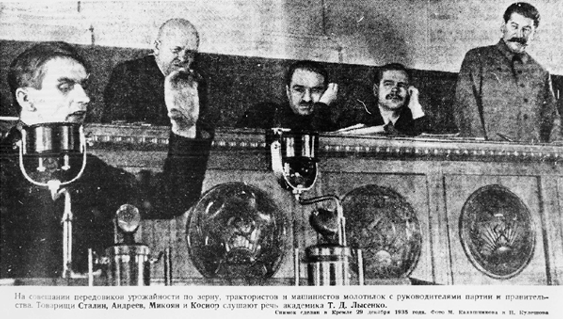
Lysenko’s breakthrough came from his ability to align his work with the political ideology of the Soviet state under Joseph Stalin. Amidst the agricultural crises of the 1930s, Lysenko’s promises of rapid and massive crop yield increases were enthusiastically embraced by the authorities. He presented his theories not just as scientific advancements but as a new form of “Soviet creative Darwinism.” In a pivotal 1935 speech, with Stalin in the audience, Lysenko famously equated his scientific opponents with political enemies of the state, declaring them to be opponents of Marxism. Stalin was the first to stand and applaud, shouting “Bravo, Comrade Lysenko. Bravo.” This public endorsement from the dictator cemented Lysenko’s position, transforming scientific debate into a political struggle. His peasant origins were politically advantageous, fitting the Soviet narrative of promoting individuals from the working class to positions of power.
Major Achievements and Success
With Stalin’s backing, Lysenko’s career and power grew exponentially. He was elected a full member of the Ukrainian SSR Academy of Sciences in 1934 and the Lenin All-Union Academy of Agricultural Sciences (VASKhNIL) in 1935. By 1938, he became the president of VASKhNIL, giving him immense control over agricultural research. In 1940, he was appointed director of the Institute of Genetics of the USSR Academy of Sciences. From these powerful positions, Lysenko systematically dismantled the field of orthodox genetics in the Soviet Union. He rejected Mendelian genetics, denying the existence of genes and chromosomes, labeling them as “bourgeois pseudoscience.” His own set of pseudoscientific beliefs, termed “Lysenkoism,” was based on the Lamarckian idea of the inheritance of acquired characteristics. He used his political power to persecute, imprison, and in some cases, arrange for the execution of thousands of dissenting scientists. His most famous victim was Nikolai Vavilov, a world-renowned botanist and geneticist and his former mentor, who was arrested in 1940 and died in prison. Lysenko’s unsound agricultural practices, such as close planting of crops based on the idea that plants of the same “class” do not compete, were implemented on a massive scale, leading to catastrophic crop failures and contributing to severe famines.
Recent Work / Current Status
Trofim Lysenko died on November 20, 1976. His power began to wane after Stalin’s death in 1953, although he retained influence under Nikita Khrushchev. However, mainstream scientists began to re-emerge and openly criticize his work as pseudoscience. In 1962, prominent Soviet physicists presented a case against him. After Khrushchev was removed from power in 1964, Lysenko’s doctrines were officially discredited, and he was removed as director of the Institute of Genetics in 1965. Efforts were then made to re-establish orthodox genetics in the USSR. Though disgraced, he was allowed to keep his academic titles and his experimental farm, where he worked until his death.
Trofim Lysenko Awards and Achievements
- Hero of Socialist Labour
- Order of Lenin (awarded eight times)
- Stalin Prize (awarded three times)
- Medal “For Labour Valour”
- Medal “For Valiant Labour in the Great Patriotic War 1941–1945”
Trofim Lysenko Personal Life & Family
Much of Trofim Lysenko’s personal life remains private. He was born to Denis and Oksana Lysenko and had three younger siblings. He was married to Alexandra Alexeyevna Lebedeva, who was also an agronomist and worked alongside him. Details about their children are not publicly available.
Trofim Lysenko Relationship Details
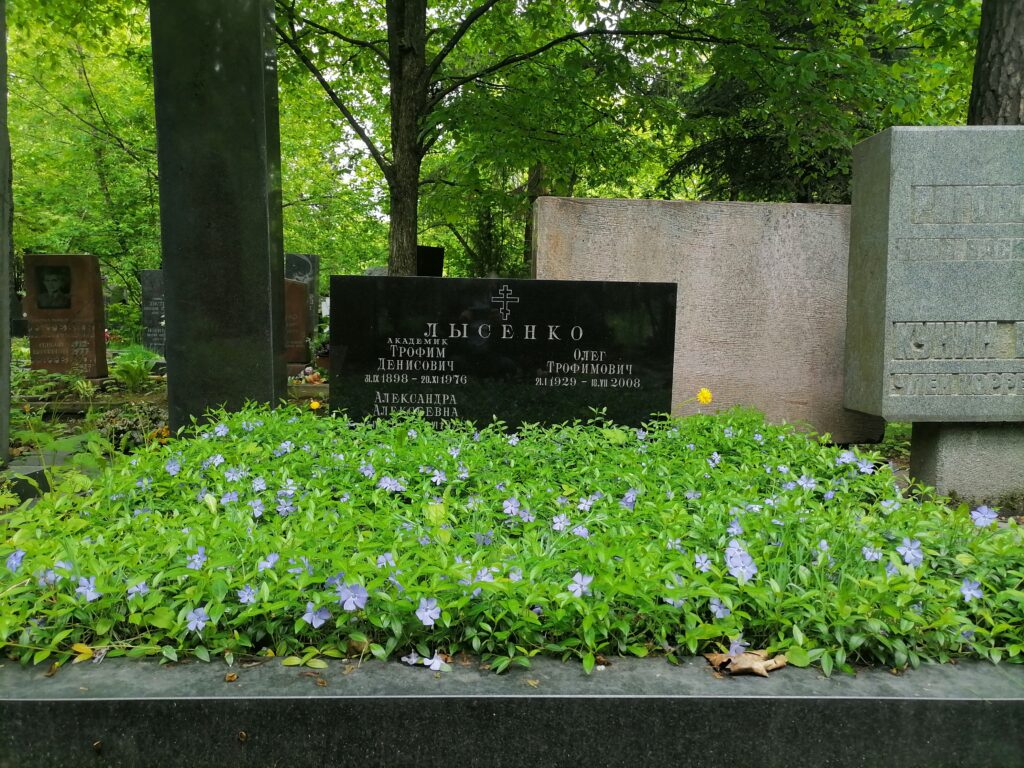
Trofim Lysenko was married to Alexandra Alexeyevna Lebedeva. She was a fellow agricultural scientist who collaborated with him on his work. Further details about their relationship timeline and personal life are not widely documented.
Trofim Lysenko Net Worth and Income
Information not disclosed
Trofim Lysenko Physical Appearance
- Height: Information not publicly available
- Weight: Information not publicly available
- Eye Color: Information not publicly available
- Hair Color: Information not publicly available
Trofim Lysenko Controversies
Trofim Lysenko’s entire career is shrouded in profound controversy. The core of the controversy lies in his pseudoscientific doctrine, “Lysenkoism,” which rejected established genetics in favor of ideologically driven theories. He used his immense political power, granted by Stalin, to launch a brutal campaign against his scientific opponents. More than 3,000 mainstream biologists were fired, imprisoned, or even executed for refusing to renounce Mendelian genetics. This included the arrest and death of Nikolai Vavilov, one of the world’s leading geneticists. Lysenko’s agricultural methods were implemented across the Soviet Union and later in China, leading to disastrous crop failures and contributing to the Great Famine in the USSR (1932-33) and the Great Chinese Famine (1959-1961), which together caused the deaths of tens of millions of people. He is often cited as the scientist responsible for more human deaths than any other in history.
Trofim Lysenko Social Media Presence
- Instagram – Not applicable
- Twitter – Not applicable
- YouTube – Not applicable
Interesting Facts about Trofim Lysenko
- He only learned to read and write at the age of 13.
- Joseph Stalin personally edited a 1948 speech by Lysenko that denounced Mendelian genetics and declared its proponents enemies of the people.
- Despite his catastrophic failures, he was awarded the prestigious Order of Lenin eight times.
- His ideas were so dominant that genetics was officially labeled a “bourgeois pseudoscience” in the Soviet Union and removed from textbooks.
Trofim Lysenko Legacy and Influence
Trofim Lysenko’s legacy is overwhelmingly negative, serving as a cautionary tale about the dangers of politicizing science. His reign as the “dictator” of Soviet biology led to the near-total destruction of genetics research in the USSR for a generation. By suppressing genuine scientific inquiry and promoting fraudulent theories, he set Soviet agriculture and biology back decades, at a time when the West was experiencing a green revolution based on the very genetic principles he rejected. The famines exacerbated by his policies caused immense human suffering and death. The term “Lysenkoism” has become synonymous with the abuse of science for political ends, representing a period where ideology triumphed over empirical evidence, leading to catastrophic consequences.
Final Words about Trofim Lysenko
Trofim Lysenko’s life is a stark illustration of how a combination of ambition, political cunning, and ideological fervor can elevate pseudoscience to state-sanctioned dogma. Rising from a humble peasant background, he skillfully navigated the turbulent political landscape of the Soviet Union, winning the favor of Joseph Stalin by promising impossible agricultural miracles that aligned with communist ideology. The result was not a revolution in farming, but the ruin of Soviet genetics, the persecution of countless honest scientists, and famines that cost millions of lives. His story is a powerful reminder of the profound human cost of allowing political power to dictate scientific truth and the critical importance of intellectual freedom in the pursuit of knowledge.
 Team Dailly WikiBio