
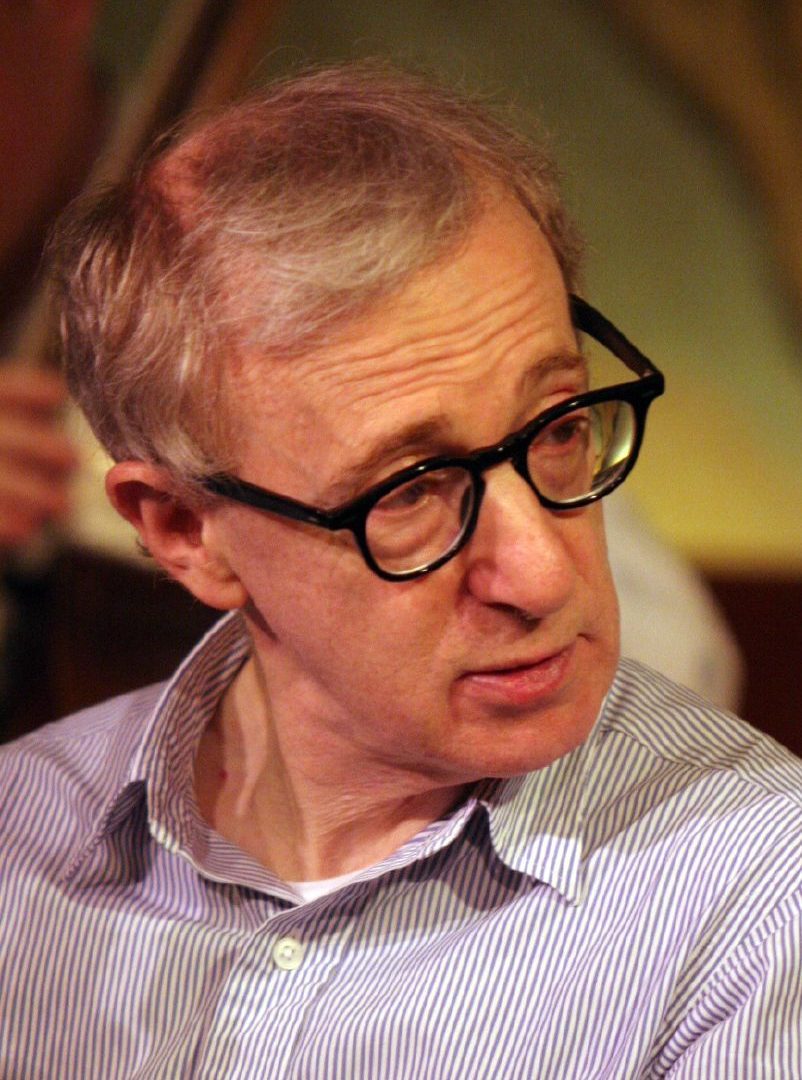
Woody Allen, born Allan Stewart Konigsberg, is an influential American filmmaker, actor, comedian, writer, musician, and playwright whose career has spanned over eight decades. Known for his distinctive blend of intellectual humor, romantic comedy, and existential drama, Allen has crafted a unique cinematic voice often characterized by neurotic, verbose protagonists and his deep affection for New York City. His prolific output includes more than 50 films, many of which he wrote, directed, and starred in, earning him numerous accolades and a significant place in film history. Despite the critical acclaim and commercial success of many of his works, his personal life has also been the subject of considerable public scrutiny and controversy.

Woody Allen Overview
| Category | Details |
|---|---|
| Full Name | Allan Stewart Konigsberg (legally changed to Heywood Allen, known as Woody Allen) |
| Date of Birth | November 30, 1935 |
| Age (as of September 2025) | 89 years old (will turn 90 in November 2025) |
| Birthplace | Bronx, New York City, U.S. |
| Nationality | American |
| Height | 5 feet 5 inches (1.65 m) |
| Parents | Nettie Konigsberg (née Cherry) and Martin Konigsberg |
| Sibling | Letty Aronson (née Konigsberg, younger sister) |
| Spouses |
|
| Children |
|
| Profession | Filmmaker, Actor, Comedian, Writer, Musician, Playwright |
| Net Worth (as of 2025) | Estimated $145 million |
Early Life and Education of Woody Allen
Woody Allen was born Allan Stewart Konigsberg on November 30, 1935, in Mount Eden Hospital in the Bronx, New York City. His parents were Nettie Cherry, a bookkeeper, and Martin Konigsberg, a jewelry engraver and waiter. Both his parents were raised in the Lower East Side of Manhattan, and his grandparents were Jewish immigrants from Austria and Lithuania, who spoke German, Hebrew, and Yiddish. He and his younger sister, Letty Aronson, grew up in the Midwood neighborhood of Brooklyn. Allen spoke German in his early years and attended Hebrew school for eight years.
He attended Public School 99, now known as the Isaac Asimov School for Science and Literature, and later Midwood High School, graduating in 1953. Contrary to his later on-screen persona of an insecure intellectual, the young Allen was reportedly more interested in baseball and impressed his peers with his talent for card and magic tricks. At the age of 15, he began writing short jokes and selling them to Broadway writers. By 16, he was earning more from his writing than his parents combined. At 17, he legally changed his name to Heywood Allen and later began using “Woody,” a tribute to jazz clarinetist Woody Herman.
Allen briefly attended New York University in 1953 to study communication and film, but dropped out after failing a “Motion Picture Production” course. He also briefly attended City College of New York in 1954 before dropping out during his first semester, preferring to teach himself rather than adhere to formal classroom instruction. This self-taught approach would become a hallmark of his filmmaking career.
Woody Allen’s Career
Woody Allen’s career journey began in the 1950s as a comedy writer for television, contributing material for shows like Your Show of Shows and The Tonight Show, working alongside notable figures such as Mel Brooks and Neil Simon. His early work earned him an Emmy Award nomination. In the early 1960s, he transitioned to stand-up comedy, performing in Greenwich Village clubs. He developed a distinctive monologue style, often portraying an insecure, intellectual, and fretful “nebbish” persona that would become iconic. During this period, he released three comedy albums, receiving a Grammy Award nomination for Best Comedy Album for his self-titled Woody Allen in 1964.
Allen’s foray into film began with writing the screenplay and co-starring in What’s New, Pussycat? (1965). Feeling that his vision was not fully realized by other directors, he decided to take complete creative control of his future projects. His directorial debut was the re-dubbed Japanese spy film What’s Up, Tiger Lily? (1966). His first feature film where he also had full directorial control was the mockumentary crime comedy Take the Money and Run (1969), marking the true beginning of his prolific filmmaking career. This was followed by a series of slapstick comedies such as Bananas (1971), Sleeper (1973), and Love and Death (1975).
His breakthrough came in 1977 with Annie Hall, a romantic comedy-drama that garnered widespread critical acclaim and four Academy Awards, including Best Picture, Best Director, and Best Original Screenplay for Allen and co-writer Marshall Brickman. This film solidified his status as a major filmmaker. Allen continued to direct films set in his beloved New York City, including Manhattan (1979), an homage to the city, which also received critical praise.
Throughout the 1980s, 1990s, and beyond, Allen maintained an impressive pace, often releasing a film almost every year. His major works from these decades include dramas like Interiors (1978) and Crimes and Misdemeanors (1989), and comedies such as Hannah and Her Sisters (1986), The Purple Rose of Cairo (1985), Radio Days (1987), Bullets Over Broadway (1994), and Mighty Aphrodite (1995). In the 2000s and 2010s, he continued to create notable films like Match Point (2005), Vicky Cristina Barcelona (2008), Midnight in Paris (2011), and Blue Jasmine (2013), many of which earned him further awards and nominations. Allen’s films are often influenced by European art cinema, literature, philosophy, psychology, and Jewish identity.
Beyond film, Allen also had a successful career as a playwright, with notable Broadway productions like Don’t Drink the Water (1966) and Play It Again, Sam (1969). He is also an accomplished jazz clarinetist, performing regularly with his New Orleans Jazz Band, and his passion for music has often been integrated into his film scores.
Woody Allen Personal Life & Family
Woody Allen’s personal life has often been as public as his professional endeavors. He has been married three times. His first marriage was to Harlene Susan Rosen in 1956, which ended in divorce in 1962. He then married actress Louise Lasser in 1966; they divorced in 1970.
Following his second divorce, Allen had a significant romantic and creative partnership with actress Diane Keaton, beginning in the early 1970s. Although they never married, Keaton became his frequent collaborator and muse, starring in many of his iconic films including Annie Hall and Manhattan.
From 1980 to 1992, Allen was in a long-term relationship with actress Mia Farrow. During this period, they adopted two children, Dylan and Moses, and had a biological son, Ronan Farrow (though Ronan’s biological paternity has been a subject of public debate).
In 1997, Allen married Soon-Yi Previn, one of Mia Farrow’s adopted daughters from her previous marriage with André Previn. Their relationship, which began in 1992 when Previn was 21 and Allen was 56, generated significant public attention and controversy due to the family dynamics. Allen and Previn have since adopted two daughters, Bechet Dumaine Allen and Manzie Tio Allen.
Allen is known for maintaining a relatively private lifestyle despite his public persona. He is a secular Jew, though his films frequently explore themes of Jewish identity, philosophy, and existentialism. His work often serves as a form of “self-therapy,” exploring his anxieties and observations on life. He is also a devoted fan of the New York Knicks basketball team.
Awards and Achievements of Woody Allen
Woody Allen has received numerous prestigious awards and honors throughout his extensive career, solidifying his reputation as one of the most acclaimed filmmakers of his generation. He holds the record for the most Academy Award nominations for Best Original Screenplay, with 16 nominations.
A table of his key awards and honors:

| Award Category | Wins | Nominations (not exhaustive) | Notable Works |
|---|---|---|---|
| Academy Awards (Oscars) | 4 (Best Picture, Best Director, Best Original Screenplay x2) | 24 (including Best Actor, Best Director, Best Screenplay) | Annie Hall (Best Picture, Director, Screenplay), Hannah and Her Sisters (Screenplay), Midnight in Paris (Screenplay) |
| BAFTA Awards | 10 | 14 | Multiple for Direction and Screenplay |
| Golden Globe Awards | 2 | 11 | Multiple for Screenplay |
| Grammy Awards | 1 | (Nominated for Best Comedy Album) | |
| Honorary Awards |
|
||
| Other Recognition | Tony Award nomination (Best Book of a Musical for Bullets over Broadway) | Writers Guild of America named Annie Hall #1 on “101 Funniest Screenplays” (2015) |
His films Annie Hall and Manhattan are preserved in the National Film Registry by the Library of Congress, recognizing their cultural, historical, or aesthetic significance. In 2004, Comedy Central ranked Allen fourth on its list of the “100 greatest stand-up comedians”.
Woody Allen Net Worth and Income
As of 2025, Woody Allen’s net worth is estimated to be approximately $145 million. This substantial wealth has been accumulated over his decades-long career as a multi-hyphenate in the entertainment industry. His income sources are diverse, primarily stemming from his extensive work as a film director, screenwriter, actor, and producer.
Allen has written, directed, and often starred in over 50 films, many of which have been critically acclaimed and commercially successful, contributing significantly to his earnings. Notable films like Annie Hall, Manhattan, Midnight in Paris, and Match Point have generated considerable revenue over the years. In addition to film, Allen earns from his work as a playwright, author of several books of short stories and humor pieces, and as a jazz clarinetist who performs regularly. His consistent output, often one film per year, has ensured a steady stream of income throughout his career. His financial strategies also reportedly include real estate investments.
Legacy and Influence
Woody Allen’s legacy is marked by his distinctive and influential contribution to cinema, particularly in the realm of romantic comedies and sophisticated urban dramas. He is often identified as part of the “New Hollywood” wave of auteur filmmakers, whose work was heavily influenced by European art cinema. His films are celebrated for their witty, intellectual dialogue, complex characters, and profound exploration of human relationships, existentialism, and the nuances of urban life, particularly in New York City.
Allen’s unique narrative techniques, including the use of monologue, breaking the fourth wall, and non-linear storytelling, have had a lasting impact on filmmaking. He is also noted for writing strong and well-defined characters for his female stars, often leading to Academy Award-winning performances. Generations of filmmakers and screenwriters have been influenced by his style, making him a subject of study in academic circles. Despite the controversies, his extensive body of work and consistent artistic vision have cemented his status as one of the most respected and prolific auteurs in cinema history. His ability to blend humor with pathos, exploring human vulnerabilities and foibles, remains a significant cultural and artistic force.
Interesting Facts about Woody Allen
- Name Evolution: He was born Allan Stewart Konigsberg, legally changed his name to Heywood Allen at 17, and later adopted “Woody” in honor of jazz clarinetist Woody Herman.
- Self-Taught Filmmaker: Despite brief stints at New York University and City College, Allen largely taught himself about filmmaking after dropping out of college.
- Prolific Output: For many years, Allen maintained a remarkable pace of making approximately one film per year, showcasing his dedication to his craft.
- Jazz Enthusiast: He is an accomplished jazz clarinetist and has regularly performed with his New Orleans Jazz Band in Manhattan for decades. His love for jazz is often reflected in the soundtracks of his films.
- Love for New York City: Almost all of his films are set in New York City, providing a romanticized and sophisticated backdrop for his stories, a testament to his deep affection for his hometown.
- Early Start: Allen began writing jokes at age 15, and by the time he graduated high school, he was earning more from his writing than his parents combined.
- Not His On-Screen Persona: While known for his neurotic, intellectual on-screen persona, in his youth, he was reportedly more interested in baseball and magic tricks.
- Philosophical Themes: His works frequently delve into deep philosophical questions, themes of mortality, love, and the absurdity of life, often described as “laughter through tears”.
Controversies
Woody Allen’s career has been significantly shadowed by controversies surrounding his personal life, particularly his relationships and allegations of sexual abuse.
The most prominent controversy emerged in the early 1990s following the end of his long-term relationship with Mia Farrow. In 1992, Farrow publicly accused Allen of sexually abusing their adopted daughter, Dylan Farrow, who was seven years old at the time. Allen has vehemently and consistently denied these allegations. The allegations led to investigations, but Allen was never charged or prosecuted. A report from the Yale-New Haven Hospital, directed by John Leventhal, was compiled, though its findings and the extent of interviews conducted have also been subjects of debate.
Further controversy arose from Allen’s relationship with Soon-Yi Previn, Mia Farrow’s adopted daughter from a previous marriage, which became public in 1992. Allen and Previn married in 1997. The relationship, given the familial context, drew substantial media attention and public criticism.
These controversies have significantly impacted Allen’s public image and career, particularly in the United States, where he has experienced a de facto boycott by much of Hollywood. While his films continue to find audiences and critical appreciation in Europe, his ability to secure financing and distribution in the U.S. has been affected.
More recently, in August 2025, Allen faced criticism from Ukraine’s Ministry of Foreign Affairs for an online appearance at the Moscow International Film Week. Ukraine accused Allen of “whitewashing crimes” and acting as a “propaganda tool” by participating in an event backed by Moscow city hall during the ongoing war in Ukraine. Allen defended his participation by stating his strong belief that Vladimir Putin is “totally in the wrong” regarding the war, but that he does not feel “cutting off artistic conversations is ever a good way to help”.
Social Media Presence
Woody Allen maintains a notably limited, if any, official presence on traditional social media platforms such as Instagram, Twitter (now X), or YouTube. Unlike many contemporary public figures, Allen has largely eschewed direct engagement through these channels, aligning with his generally private nature. Information regarding his work and appearances is typically disseminated through official press releases, news outlets, and the websites associated with his films and projects. His personal views or responses, when given, are usually conveyed through interviews or statements released by his representatives.
Final Words about Woody Allen
Woody Allen, at 89 years old (as of September 2025), continues to be a figure of enduring cinematic significance, despite the complex and often divisive nature of his public perception. His career, spanning eight decades, showcases an unparalleled dedication to filmmaking, marked by a unique vision that has explored the human condition with intellectual humor and profound insight.
In recent years, Allen has hinted at a potential retirement from filmmaking after completing his next film, expressing a desire to focus more on writing, possibly for theatre, where his career first began. His latest film, Coup de Chance, is reportedly his 50th movie, a testament to his prolific output. While his films continue to resonate with audiences globally and influence aspiring filmmakers, his legacy remains intricately tied to both his artistic achievements and the controversies that have shadowed his personal life.
Woody Allen’s work, characterized by its distinctive style, witty dialogue, and philosophical depth, has left an indelible mark on cinematic history. His contributions have redefined genres and showcased a consistent artistic voice, ensuring that he remains a subject of discussion, study, and appreciation for generations to come.
 Team Dailly WikiBio