Brief Introduction of Wolfsburg
Wolfsburg is a major city in the German state of Lower Saxony, renowned globally as the headquarters of Volkswagen AG. It is one of the few German cities planned and built in the first half of the 20th century. The city’s history, economy, and culture are inextricably linked with the automotive giant, which operates the world’s largest car manufacturing plant on its territory. Founded in 1938 to house the workers of the newly established Volkswagen factory, Wolfsburg has evolved from a purpose-built industrial town into a dynamic economic hub and a center for culture and tourism. Attractions like the Autostadt, a visitor complex dedicated to Volkswagen’s brands, and architectural landmarks such as the Phaeno Science Center, draw millions of visitors annually, showcasing the city’s successful transformation and modern identity.

Wolfsburg Overview
| Full Name | City of Wolfsburg |
| Date of Birth | July 1, 1938. |
| Age(as of 2025) | 87 years |
| Birthplace | Lower Saxony, Germany. |
| Profession | Automotive Industry Hub, Corporate Headquarters. |
| Husband/Wife | Not applicable |
| Family | Part of the state of Lower Saxony, Germany. |
| Relationship/Affairs(GF/BF) | Twin/Sister Cities: Marignane (France), Province of Pesaro and Urbino (Italy), Halberstadt (Germany), Tolyatti (Russia), Bielsko-Biała (Poland), Jiading (China), Jendouba (Tunisia). |
| Net Worth | Gross Regional Product per capita was €188,453 in 2019, one of the highest in Germany. |
Early Life and Education of Wolfsburg
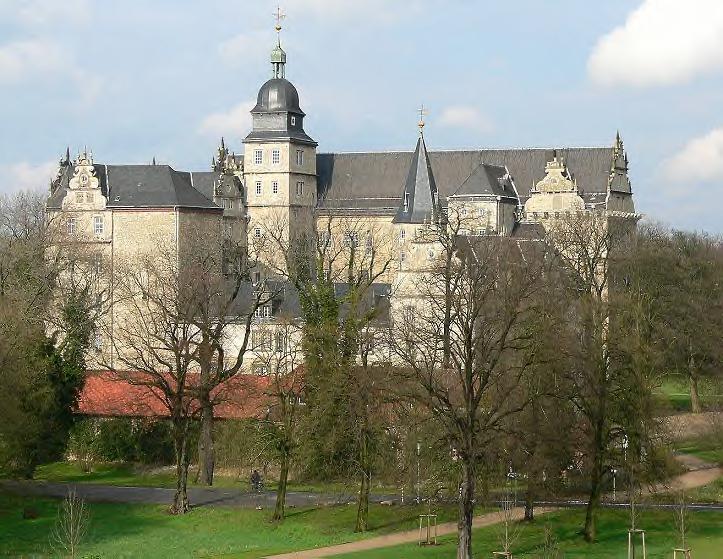
The story of Wolfsburg begins in the late 1930s, conceived on the drawing board as a model industrial town. Its creation was a direct result of the Nazi regime’s ambition to produce an affordable “people’s car” (Volkswagen). On May 26, 1938, the foundation stone for the Volkswagen factory was laid, and shortly after, on July 1, 1938, the city was officially founded as “Stadt des KdF-Wagens bei Fallersleben” (City of the Strength Through Joy Car at Fallersleben). The location was strategically chosen in a sparsely populated rural area near Wolfsburg Castle, benefiting from its central position in Germany and proximity to the Mittelland Canal and a major rail line. The original urban planning, led by Peter Koller, was based on the garden city concept, aiming to integrate residential areas with ample green spaces for the factory workers. However, the outbreak of World War II in 1939 drastically altered these plans. Instead of producing civilian cars, the factory was repurposed for armaments production, manufacturing military vehicles like the Kübelwagen and Schwimmwagen, and even parts for the V1 flying bomb. The city’s development stalled, and its landscape became dominated by barracks for workers, including a large contingent of forced laborers. After the war, on May 25, 1945, the city council, appointed by the American occupying forces, renamed the city “Wolfsburg” after the nearby 13th-century castle. The subsequent decision by the British military government not to dismantle the Volkswagen factory was a pivotal moment, setting the stage for the city’s rebirth and future prosperity. In terms of education, the city’s growth was later complemented by the establishment of key institutions. A significant milestone was the founding of a precursor to a university of applied sciences in 1988, now known as the Ostfalia University of Applied Sciences, which is a leading provider of engineering training.
Wolfsburg’s Career
Wolfsburg’s “career” is a narrative of extraordinary industrial growth, intrinsically tied to the success of Volkswagen. After World War II, the city and the factory began a new chapter under the control of the British military government, with Major Ivan Hirst playing a crucial role in restarting production. The first post-war Volkswagen, later known as the Beetle, rolled off the assembly line in 1945. This marked the beginning of a period of rapid expansion fueled by the German “Wirtschaftswunder” or economic miracle. The Beetle became a global symbol of Germany’s post-war recovery, and its immense popularity drove Wolfsburg’s prosperity. The one-millionth Beetle was produced in Wolfsburg in 1955, a major milestone celebrated in the flourishing city. This economic boom attracted a large influx of immigrant workers, particularly from Italy, who significantly shaped the city’s demographic landscape. The city’s infrastructure developed in tandem with its economic growth, with the construction of the city hall in 1958. A significant administrative change occurred in 1972 when a regional reform incorporated 20 surrounding localities, including the historic towns of Fallersleben and Vorsfelde, into Wolfsburg. This expansion increased the city’s area sixfold and pushed its population over the 100,000 mark, granting it the official status of a major city (“Großstadt”). While Beetle production in Wolfsburg ended in 1974, the factory seamlessly transitioned to manufacturing its successor, the Volkswagen Golf, which became another best-selling model and a symbol for an entire vehicle class. The Wolfsburg plant remains the heart of Volkswagen’s global operations, and one of the largest and most advanced car factories in the world, processing vast amounts of material daily and producing thousands of vehicles. Over 45 million vehicles have been manufactured there since its inception.
Wolfsburg Personal Life & Family
The “personal life” of Wolfsburg is reflected in its diverse and cosmopolitan population. Having grown from a small, planned community into a major city, it is now home to people from over 150 nations. This diversity is a legacy of the post-war economic boom, which attracted “guest workers,” most notably a large Italian community that remains the largest in Lower Saxony. The city also has significant Tunisian, Cameroonian, and Mexican communities. As of early 2024, the population stands at approximately 127,256, with a significant percentage of residents having a migration background. Administratively, Wolfsburg is an urban district within the state of Lower Saxony. The city’s governance is led by a Lord Mayor. In a broader sense, its “family” includes its strong regional partnerships and its global network of sister cities, which foster international cooperation and cultural exchange. The quality of life in Wolfsburg is high, supported by a robust economy and extensive cultural and recreational facilities. The city features a blend of modern architecture and green spaces, with numerous parks, castles, and cultural venues. These include the historic Wolfsburg Castle, a Renaissance edifice from which the city takes its name, as well as Fallersleben Castle and Neuhaus Castle. This unique mix of industrial heritage, cultural richness, and international character defines the vibrant life of the city and its citizens.
Awards and Achievements of Wolfsburg
- Achieved major city (“Großstadt”) status in 1972 after its population surpassed 100,000.
- Recognized as having one of the highest GDP per capita rates in Germany, consistently ranking as one of the country’s most economically powerful cities.
- Home to the Volkswagen Wolfsburg Plant, the largest single car manufacturing complex in the world.
- Established the Autostadt in 2000, a highly successful automotive theme park and brand communication center that attracts millions of visitors annually.
- Features several architecturally significant buildings, including the Phaeno Science Center designed by Zaha Hadid and the Cultural Center by Alvar Aalto.
- The VfL Wolfsburg football club, closely associated with the city and Volkswagen, won the German Bundesliga championship in the 2008-2009 season and the DFB-Pokal (German Cup) in 2015.
- The “Wolfsburg Crest Club Award” is a prestigious honor given by Volkswagen of America to its top-performing dealerships, named after the city to signify the highest standards of excellence.
Wolfsburg Net Worth and Income
Wolfsburg’s economic strength, often quantified as its “net worth,” is exceptionally high, making it one of Germany’s wealthiest cities. Its prosperity is overwhelmingly driven by the automotive industry, specifically the Volkswagen Group, which has its global headquarters and primary manufacturing plant in the city. The city boasts one of the highest Gross Domestic Product (GDP) per capita figures in all of Europe. In 2019, the Gross Regional Product per capita was recorded at an impressive €188,453. This figure is significantly higher than that of major financial centers like Frankfurt and other automotive cities such as Munich. The city’s primary source of income is intrinsically linked to the financial health of Volkswagen, which employs a substantial portion of the population—around 70,000 people work directly for the company in a city of about 127,000 inhabitants. Beyond direct employment, many other local businesses are dependent on the automotive giant. The city’s municipal income, largely derived from business taxes paid by Volkswagen, has historically been so strong that Wolfsburg was once debt-free and able to accumulate significant financial reserves. While this dependence creates a vulnerability to fluctuations in the auto industry, the city’s economy is also characterized by a high concentration of future-oriented industries and a rate of engineers far exceeding the national average.
Legacy and Influence
Wolfsburg’s legacy is multifaceted, serving as a prominent case study in 20th-century urban planning, corporate industrialism, and post-war reconstruction. As one of the few German cities founded in the modern era, it represents a successful example of a planned city, conceived and built for a specific industrial purpose. Its history is a microcosm of German history, from its controversial origins in the Nazi era to its rebirth as a symbol of the “Wirtschaftswunder” and democratic West Germany’s economic prowess. The city’s symbiotic relationship with a single corporation, Volkswagen, is its most defining characteristic, influencing every aspect of its development, from its economy and demographics to its urban landscape and cultural identity. This unique model of a “company town” on a grand scale has made Wolfsburg a subject of study in urbanism and economics. The city has also cultivated a significant cultural legacy, consciously moving beyond its industrial image by investing in world-class architecture and arts institutions. The commission of buildings by renowned architects like Zaha Hadid (Phaeno Science Center) and Alvar Aalto (Cultural Center) reflects a deliberate effort to establish a profile as a center for modernism and culture. Wolfsburg’s influence also extends to its confrontation with its own difficult past. The establishment of the “Place of Remembrance of Forced Labour” at the Volkswagen factory demonstrates a commitment to acknowledging and learning from the darkest chapter of its history.

Interesting Facts about Wolfsburg
- The city was originally named “Stadt des KdF-Wagens bei Fallersleben” and was renamed Wolfsburg on May 25, 1945, after a nearby 13th-century castle.
- Until 2022, Wolfsburg was home to the single largest car plant in the world by area.
- The Volkswagen factory in Wolfsburg produces its own famous currywurst sausage, a popular item in the plant’s canteens.
- The Autostadt, Volkswagen’s automotive theme park, features two iconic 48-meter tall glass silos, known as the Car Towers, where new cars are stored and delivered to customers.
- The city is one of the greenest in Germany, with numerous parks, forests, and nature reserves covering a large portion of its area.
- The Hoffmann-von-Fallersleben Museum is located in Fallersleben Castle and is dedicated to the poet August Heinrich Hoffmann von Fallersleben, who wrote the lyrics for the German national anthem.
- The inventor of the first heavy-duty truck with a diesel engine, Heinrich Büssing, was born in a district of present-day Wolfsburg, and a museum is dedicated to him.
Controversies
Wolfsburg’s history is rooted in a significant and unavoidable controversy: its founding under the Nazi regime. The city and the Volkswagen factory were established as a prestige project of the Nazi “Strength Through Joy” (Kraft durch Freude) organization. During World War II, the factory did not produce the promised “People’s Car” for the masses but was instead converted into a major center for armaments production. To sustain this production, the plant relied heavily on a workforce of approximately 20,000 forced laborers. This group included prisoners of war, civilians deported from occupied territories like Poland and the Soviet Union, and thousands of concentration camp inmates, including Jews. The company operated several camps on its property to house these workers, who were subjected to brutal conditions. In 1942, the Arbeitsdorf concentration camp was established on-site for several months. After the war, Volkswagen was one of the first German companies to commission a comprehensive historical investigation into its Nazi past, beginning in 1986. This led to the creation of the “Place of Remembrance of Forced Labour in the Volkswagen Factory,” a permanent exhibition in a former air-raid shelter that documents this dark period. In more recent times, the city was indirectly affected by the “Dieselgate” emissions scandal that engulfed Volkswagen in 2015, which led to significant financial repercussions for the company and prompted a period of budget freezes and uncertainty in the city.
Social Media Presence
- Instagram – Information not disclosed.
- Twitter – Information not disclosed.
- YouTube – Information not disclosed.
Note: While the city of Wolfsburg maintains official social media presences, specific follower and subscriber counts are dynamic and not consistently disclosed in the provided search results.
Final Words about Wolfsburg
From its origins as a purpose-built factory town under a totalitarian regime, Wolfsburg has forged a remarkable biography. It stands today as a testament to post-war resilience, economic dynamism, and strategic urban evolution. The city’s identity remains profoundly shaped by Volkswagen, its economic engine and cultural patron. This deep-seated connection is both its greatest strength and a potential vulnerability, a reality that drives contemporary discussions about economic diversification in the face of global shifts in the automotive industry, such as the transition to electric mobility. Yet, Wolfsburg is far more than just a company town. It has successfully cultivated a rich cultural landscape, championed architectural innovation, and embraced its diverse, international population. As it navigates the challenges of the 21st century, Wolfsburg’s future will depend on its ability to leverage its legacy of innovation, transforming itself from a city defined solely by the car into a more multifaceted and sustainable model of a modern European metropolis.