

Brief Introduction of Alex Ferguson
Sir Alexander Chapman Ferguson, widely known as Alex Ferguson, is a Scottish former professional football manager and player who is celebrated as one of the greatest managers in the history of the sport. His illustrious career is most notably defined by his transformative 26-year tenure at the helm of Manchester United, from 1986 to 2013. Ferguson’s leadership propelled the club to an era of unprecedented dominance, securing 38 major trophies, including 13 Premier League titles and two UEFA Champions League crowns. Renowned for his tactical acumen, fierce determination, and exceptional man-management skills, he cultivated a winning mentality that became synonymous with the club. Ferguson was also lauded for his commitment to youth development, famously nurturing the “Class of ’92” which included future superstars like David Beckham and Ryan Giggs. His remarkable achievements and enduring influence on the game were recognized with a knighthood in 1999.
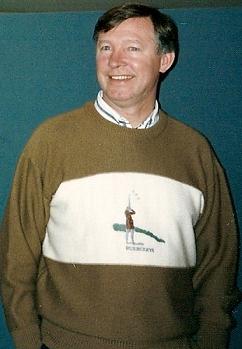
Alex Ferguson Overview
| Full Name | Sir Alexander Chapman Ferguson |
| Date of Birth | December 31, 1941 |
| Age(as of 2025) | 83 |
| Birthplace | Govan, Glasgow, Scotland |
| Profession | Former Football Manager and Player |
| Husband/Wife | Lady Cathy Ferguson (née Holding) (m. 1966; died 2023) |
| Family | Parents – Alexander Beaton Ferguson and Elizabeth Hardie; Brother – Martin Ferguson; Sons – Mark, Darren, and Jason Ferguson |
| Relationship/Affairs(GF/BF) | Not publicly available |
| Net Worth | Estimated to be between $70 million and £53.6 million |
Early Life and Education of Alex Ferguson
Alexander Chapman Ferguson was born on December 31, 1941, in the Govan district of Glasgow, Scotland. He was raised in a working-class family; his father, Alexander Beaton Ferguson, worked as a plater’s helper in the shipyards, and his mother’s name was Elizabeth Hardie. Growing up in a tenement at 667 Govan Road with his younger brother, Martin, who also became a footballer, Ferguson was instilled with the values of discipline and hard work from a young age. He attended Broomloan Road Primary School and later Govan High School. While he was a bright student, his passion lay with football. At 16, he began his football journey as an amateur player for Queen’s Park while also working as an apprentice toolmaker in a Glasgow shipyard.
Alex Ferguson’s Career
Alex Ferguson’s career in football is a storied journey from a determined player to a legendary manager. His playing career as a forward saw him represent several Scottish clubs, including Queen’s Park, St. Johnstone, Dunfermline Athletic, and Rangers. A notable high point as a player was the 1965-66 season with Dunfermline, where he was the top goalscorer in the Scottish league.
Ferguson’s transition into management began at the young age of 32 with East Stirlingshire in 1974, where he quickly gained a reputation as a disciplinarian. He then moved to St Mirren, where he remarkably transformed the team, leading them from the lower half of the Second Division to become First Division champions in 1977 with a very young squad.
His managerial breakthrough came at Aberdeen, a club he managed from 1978. Ferguson shattered the dominance of the Old Firm (Rangers and Celtic) in Scottish football, guiding Aberdeen to three Scottish league championships, four Scottish Cups, and a Scottish League Cup. His crowning achievement with Aberdeen was on the European stage, winning the UEFA Cup Winners’ Cup in 1983 by defeating Real Madrid in the final, followed by the UEFA Super Cup. He also had a brief spell managing the Scottish national team, taking them to the 1986 World Cup.
In November 1986, Alex Ferguson was appointed manager of Manchester United, marking the beginning of an era that would redefine English football. The initial years were challenging, and it is widely believed that his job was on the line before a crucial FA Cup victory in 1990. This victory was the catalyst for a period of unprecedented success. Under his leadership, Manchester United won their first league title in 26 years in the inaugural 1992-93 Premier League season. This was the first of 13 Premier League titles he would secure for the club.
Ferguson’s Manchester United became a dominant force both domestically and in Europe. He led the team to five FA Cups and four League Cups. The pinnacle of his career came in the 1998-99 season when Manchester United achieved a historic “treble,” winning the Premier League, the FA Cup, and the UEFA Champions League, a feat never before accomplished by an English club. He would go on to win a second Champions League trophy in 2008.
A key element of his success was his faith in young players, most notably the “Class of ’92,” which included David Beckham, Ryan Giggs, Paul Scholes, and the Neville brothers, who became the core of his successful teams for years to come. Ferguson was knighted in 1999 for his services to football. He retired from management at the end of the 2012-13 season, fittingly winning the Premier League in his final season and leaving behind a legacy as the longest-serving manager in Manchester United’s history.
Alex Ferguson Personal Life & Family
Alex Ferguson was married to Cathy (née Holding), whom he met in 1964 while they were both working at a typewriter factory. They married in 1966 and were together for nearly 58 years until her passing in October 2023. Ferguson often referred to his wife as his “bedrock,” highlighting her stability and encouragement throughout his demanding career. The couple had three sons: Mark, born in 1968, and twins Darren and Jason, born in 1972. Darren Ferguson followed in his father’s footsteps, becoming a professional football player and later a manager. Jason Ferguson is a film director, notably directing the documentary about his father, “Sir Alex Ferguson: Never Give In.” As of recent reports, Ferguson is a grandfather to twelve and a great-grandfather to one. Outside of football, he is known to be a supporter of the Labour Party and has a passion for horse racing, owning several successful racehorses. In 2018, he suffered a life-threatening brain hemorrhage but made a remarkable recovery.
Awards and Achievements of Alex Ferguson
- Knight Bachelor (1999)
- Commander of the Order of the British Empire (CBE) (1995)
- Officer of the Order of the British Empire (OBE) (1983)
- Premier League Manager of the Season (11 times)
- LMA Manager of the Year (4 times)
- Premier League Manager of the Month (27 times)
- UEFA Manager of the Year (1998–99)
- Onze d’Or Coach of the Year (1999, 2007)
- IFFHS World’s Best Club Coach (1999)
- BBC Sports Personality of the Year Coach Award (1999)
- BBC Sports Personality of the Year Lifetime Achievement Award (2001)
- English Football Hall of Fame (Inducted 2002)
- PFA Merit Award (2007)
- FIFA Presidential Award (2011)
- Freedom of the City of Aberdeen
- Freedom of the City of Glasgow
- Freedom of the City of Manchester
Alex Ferguson Net Worth and Income
As of 2025, Sir Alex Ferguson’s net worth is estimated to be around $70 million, or approximately £53.6 million. His wealth has been accumulated through a highly successful and long-standing career in football management, particularly his lucrative tenure at Manchester United. Beyond his managerial salary, his income is supplemented by book deals for his autobiographies, speaking engagements, and public appearances. He also has a business enterprise, ACF Sports Promotions Ltd, which manages his commercial interests. Furthermore, Ferguson has had a keen interest in horse racing and has owned or part-owned several successful racehorses, which has also contributed to his wealth. Following his retirement in 2013, he took on a role as a global ambassador and club director for Manchester United, which also provided a significant income stream.

Legacy and Influence
Sir Alex Ferguson’s legacy is immeasurable, and he is widely regarded as one of the greatest football managers of all time. He transformed Manchester United from a struggling team into a global football powerhouse, creating a dynasty that dominated English football for two decades. His success was built on a foundation of discipline, a relentless will to win, and an unwavering belief in his players. One of his most enduring legacies is his commitment to youth development. The emergence of the “Class of ’92” is a testament to his philosophy of building a team from the ground up, a model that has inspired countless clubs worldwide.
Ferguson’s tactical adaptability allowed his teams to evolve and remain competitive over a long period. He was a master of psychology, known for his “mind games” that often gave his team a crucial edge over rivals. His famously intense “hairdryer treatment” in the dressing room was legendary, but it was balanced by a paternalistic approach that fostered deep loyalty from his players. Beyond the pitch, he played a significant role in Manchester United’s commercial growth, helping to establish the club as a global brand. Statues of Ferguson at Old Trafford and the renaming of a stand in his honor are physical manifestations of his monumental impact on the club. His influence extends to the many managers and players he inspired, ensuring his principles of leadership and success will continue to shape the world of football for generations to come.
Interesting Facts about Alex Ferguson
- Before his football career took off, Ferguson worked as an apprentice toolmaker in the shipyards of Glasgow.
- He is a passionate and knowledgeable wine collector.
- Ferguson is a talented pianist, a lesser-known fact about the legendary manager.
- At one point in his playing career, he considered moving to Canada due to a lack of regular playing time.
- He once owned a pub named “Fergie’s.”
- Despite being the longest-serving manager in Manchester United’s history, he is not the longest-serving manager in European football history.
- A statue of him was unveiled outside Old Trafford on November 23, 2012, to commemorate his service to the club.
- The term “Fergie Time” was coined due to the perception that a generous amount of injury time was often added in matches where his Manchester United team was losing.
Controversies
Throughout his long and successful career, Sir Alex Ferguson was no stranger to controversy, often stemming from his fiercely competitive nature and desire to protect his team. He was known for his frequent and often heated clashes with match officials, leading to numerous touchline bans and fines over the years. His public criticisms of referees and his famous watch-pointing to indicate additional time contributed to the coining of the term “Fergie Time.”
Ferguson also had his fair share of high-profile feuds with rival managers, most notably with Arsenal’s Arsène Wenger, Newcastle’s Kevin Keegan, and Liverpool’s Rafa Benitez. These rivalries were often played out in the media, with Ferguson’s “mind games” becoming a famous part of the Premier League narrative.
His management style, while incredibly successful, also led to fallouts with several star players. The infamous “flying boot” incident involving David Beckham in 2003, which resulted in a cut above the player’s eye, is a well-documented example of his fiery temper. Other notable players he had public disagreements with include Roy Keane, Paul Ince, and Ruud van Nistelrooy, often leading to their departures from the club. He also faced criticism for his relationships with journalists, at times banning them from press conferences if he disagreed with their reporting.
Social Media Presence
- Instagram – Not publicly available
- Twitter – Not publicly available
- YouTube – Not publicly available
Final Words about Alex Ferguson
Sir Alex Ferguson’s retirement in 2013 marked the end of an era for Manchester United and English football. In the years since, he has remained a revered figure in the sport, continuing to serve as a club ambassador for Manchester United. His presence is still strongly felt at Old Trafford, where he is a regular attendee at matches. He continues to be a source of inspiration and a benchmark for success in football management. His autobiographies have provided deep insights into his methods and his remarkable life. His enduring legacy is not just in the multitude of trophies he won, but in the culture of excellence he instilled, the global brand he helped build, and the generations of players and managers he has influenced. Sir Alex Ferguson’s story is one of unwavering dedication, brilliant leadership, and an unparalleled record of achievement that has forever etched his name in the annals of football history.