

Brief Introduction of Thomas Kelly
Thomas Cajetan Kelly was a prominent American prelate of the Roman Catholic Church who served as the third Archbishop of Louisville, Kentucky, for a quarter of a century. A member of the Dominican Order, Kelly’s tenure was marked by significant contributions to the archdiocese, including the restoration of the Cathedral of the Assumption, the promotion of interfaith dialogue, and a focus on increasing the role of lay leadership within the church. His leadership extended to the national level through his work with the U.S. Conference of Catholic Bishops. Known for his intellectual prowess and pastoral dedication, Archbishop Kelly’s legacy is also complex, shadowed by the clergy sexual abuse scandal that emerged during his time in leadership. His life reflects a deep commitment to his faith and the church, alongside the challenges and controversies that defined a tumultuous period in American Catholicism.
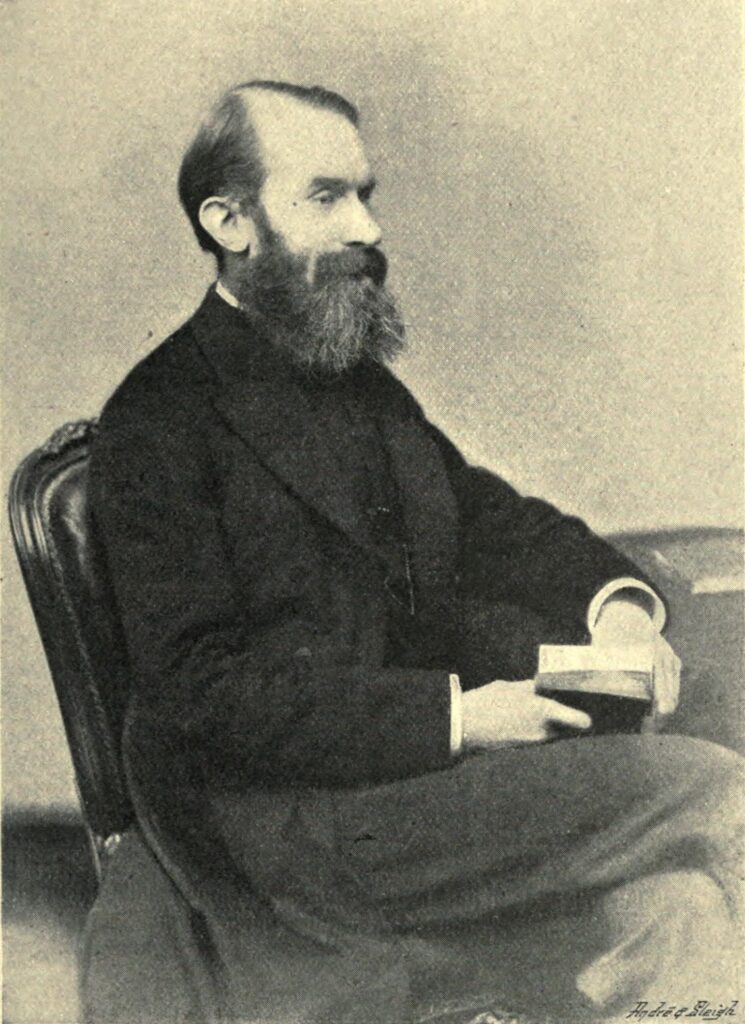
Thomas Kelly Overview
| Full Name | Thomas Cajetan Kelly |
| Date of Birth | July 14, 1931. |
| Age(as of 2025) | Deceased (Died at age 80 on December 14, 2011). |
| Birthplace | Rochester, New York, U.S. |
| Profession | Roman Catholic Archbishop. |
| Husband/Wife | Not applicable (celibate as a Roman Catholic priest). |
| Family | Son of Thomas E. Kelly and Katherine Fisher. Information about siblings is not publicly available. |
| Relationship/Affairs(GF/BF) | Not applicable. |
| Net Worth | Not publicly available. |
Early Life and Education of Thomas Kelly
Thomas Cajetan Kelly was born in Rochester, New York, on July 14, 1931, to Thomas E. Kelly and Katherine Fisher. During his childhood, the Kelly family relocated to New York City, where he began his formative education. He attended the Joan of Arc School in Jackson Heights, Queens, before continuing to the prestigious Regis High School in Manhattan. His early life was deeply entwined with the Catholic faith, which would guide his educational and professional pursuits.
After graduating from high school, Kelly embarked on his higher education at Providence College in Providence, Rhode Island, where he studied for two years. Feeling a strong call to religious life, he was admitted to the Dominican Order on August 25, 1951. His journey towards the priesthood involved extensive philosophical and theological studies at several institutions, including St. Rose Priory in Springfield, Kentucky, and St. Joseph Priory in Somerset, Ohio. He then entered the Dominican House of Studies in Washington, D.C. His dedication to his studies culminated in his ordination to the priesthood for the Dominicans on June 5, 1958, at St. Dominic Church in Washington, D.C. Following his ordination, Archbishop Kelly continued to pursue advanced degrees, earning a Licentiate of Sacred Theology from the Dominican House of Studies in 1959 and a Doctor of Canon Law from the Pontifical University of St. Thomas Aquinas in Rome in 1962. His academic pursuits also led him to further studies at the University of Vienna in Austria and at Cambridge University in the United Kingdom, reflecting his profound commitment to theological and canonical scholarship.
Thomas Kelly’s Career
Archbishop Thomas C. Kelly’s career was a testament to his administrative acumen and deep-seated commitment to the Catholic Church, marked by a steady ascent through various influential positions. His ministry began in 1962 in New York City, where he was appointed secretary of the Dominican Province of St. Joseph. During this time, he also lent his expertise to the tribunal of the Archdiocese of New York and the Legion of Decency.
In 1965, Kelly’s career took him to Washington, D.C., where he took on the role of secretary and archivist for the Apostolic Nunciature to the United States, the diplomatic mission of the Holy See. After seven years in this position, he transitioned to the U.S. Conference of Catholic Bishops (USCCB), where he was appointed associate general secretary in 1972. His leadership qualities were soon recognized, and in March 1977, he was elected to a five-year term as the general secretary of the USCCB.
His service to the church was further acknowledged in July 1977, when Pope Paul VI named him an auxiliary bishop of the Archdiocese of Washington and titular bishop of Tusuro. He was consecrated as a bishop on August 15, 1977, by Archbishop Joseph Bernardin. This role prepared him for his most significant appointment, which came on December 28, 1981, when Pope John Paul II appointed him the third Archbishop of Louisville. He was officially installed on February 18, 1982.
As Archbishop of Louisville, Kelly’s twenty-five-year tenure was characterized by numerous achievements and initiatives. He spearheaded the extensive restoration of the Cathedral of the Assumption, transforming it into a vibrant center for the arts and interfaith services. He was a strong advocate for interfaith dialogue and played a key role in convincing the Presbyterian Church (USA) to move its headquarters to Louisville. Archbishop Kelly also prioritized Catholic education, launching the “Campaign for Excellence” program to reverse declining enrollment in Catholic schools. He was also committed to increasing the involvement of lay people in church leadership. His leadership was also marked by his admission in 1996 of an addiction to opioids, for which he sought treatment, an announcement that was met with praise for its honesty. Pope Benedict XVI accepted his resignation as Archbishop of Louisville on June 12, 2007. He passed away on December 14, 2011, at the age of 80.
Thomas Kelly Personal Life & Family
As a prelate of the Roman Catholic Church, Archbishop Thomas C. Kelly’s personal life was largely defined by his public ministry and his commitment to celibacy. He was the son of Thomas E. Kelly and Katherine Fisher, but further details about his family, such as information on siblings, are not widely documented. His life was one of devotion to the Church, and he did not marry or have children, in accordance with the vows of a Catholic priest. His personal struggles were brought to public attention in 1996 when he candidly admitted to developing an addiction to painkillers following surgery for lung cancer and sought treatment. This moment of vulnerability was seen by many as an act of humility and courage. Those who knew him often described him as possessing a sharp intellect and a good sense of humor. After his retirement in 2007, he lived at Holy Trinity Parish in Louisville, where he continued to serve as a parish priest until his death.

Awards and Achievements of Thomas Kelly
- Received an honorary Doctor of Humane Letters degree from Spalding University, Louisville.
- Awarded an honorary Doctor of Humane Letters degree from Albertus Magnus College, New Haven, Connecticut.
- Bestowed with an honorary Doctor of Human Sciences degree from Caldwell College, Caldwell, New Jersey.
- Conferred with an honorary Doctor of Laws degree from Assumption College, Worcester, Massachusetts.
- Received an honorary Doctor of Sacred Theology degree from the Dominican School of Philosophy and Theology, Berkeley, California.
- Awarded an honorary Doctor of Sacred Theology degree from Providence College.
- Bestowed with an honorary Doctor of Theology degree from the Aquinas Institute of Theology, St. Louis, Missouri.
Thomas Kelly Net Worth and Income
The personal net worth of Archbishop Thomas C. Kelly is not publicly available. As a member of the Dominican Order and a high-ranking official in the Catholic Church, his finances were not a matter of public record. His income would have been derived from his positions within the church, but specific figures are not disclosed. It is customary for clergy in his position to live modestly and for their financial affairs to be managed by the archdiocese.
Legacy and Influence
Archbishop Thomas C. Kelly left a multifaceted and complex legacy on the Archdiocese of Louisville and the wider Catholic community in the United States. He is remembered for his significant contributions to the city of Louisville, particularly through his leadership in the restoration of the Cathedral of the Assumption, which has become a landmark and a hub for community and interfaith events. His dedication to Catholic education and his efforts to empower lay leadership within the church had a lasting impact on the archdiocese. He was a respected intellectual and a skilled administrator who played a key role in national Catholic affairs through his service with the USCCB.
However, his legacy is also inescapably linked to the clergy sexual abuse crisis that came to light during his tenure. Revelations that he had reassigned priests known or suspected of abuse and had been involved in confidential settlements with victims cast a dark shadow over his accomplishments. While he resisted calls to resign, the scandal profoundly affected his reputation and the trust of many in the Catholic community. His later admission of the church’s failings, which he attributed to “stupidity” and “insensitivity” rather than a deliberate cover-up, offered a glimpse into the complexities of the crisis from a leadership perspective. Ultimately, Archbishop Kelly’s influence is a story of both significant achievements and profound institutional failings, reflecting a pivotal and challenging era for the Catholic Church in America.
Interesting Facts about Thomas Kelly
- He was a member of the Dominican Order, a religious order known for its emphasis on preaching and intellectual pursuits.
- He played a role in the planning for the first two papal visits to the United States.
- In 1996, he publicly announced he was seeking treatment for an addiction to painkillers that developed after a lung operation.
- He was instrumental in the successful effort to persuade the Presbyterian Church (USA) to relocate its headquarters to Louisville in 1987.
- After retiring as Archbishop, he served as a parish priest at Holy Trinity Parish in Louisville.
Controversies
Archbishop Thomas C. Kelly’s time as the leader of the Archdiocese of Louisville was significantly marred by the clergy sexual abuse scandal. In the early 2000s, it was revealed that he had been involved in the reassignment of priests whom he knew or suspected had abused children. Additionally, he had overseen confidential settlements with victims of abuse. Despite increasing calls for his resignation in the wake of these revelations, Archbishop Kelly remained in his position. The archdiocese, under his leadership, eventually reached a significant financial settlement with numerous victims. These events have left a lasting stain on his legacy and are a critical part of the historical record of his tenure.
Social Media Presence
- Instagram – Not applicable
- Twitter – Not applicable
- YouTube – Not applicable
Final Words about Thomas Kelly
Thomas Cajetan Kelly’s life was one of dedicated service to the Roman Catholic Church, culminating in a long and impactful tenure as the Archbishop of Louisville. His leadership brought about tangible and positive changes, including the revitalization of the city’s cathedral and a renewed focus on education and lay involvement. He was a man of considerable intellect and administrative skill who navigated the complexities of church leadership on both a local and national level. Yet, his legacy is also a cautionary tale, deeply intertwined with the profound moral crisis of the clergy sexual abuse scandal. His actions, and inactions, in this regard have been a subject of intense scrutiny and criticism. Archbishop Thomas C. Kelly’s life story serves as a powerful reminder of the complexities of leadership, faith, and institutional responsibility in the modern era. He passed away in 2011, leaving behind a legacy of both commendable achievements and significant, unresolved questions.
 Team Dailly WikiBio