
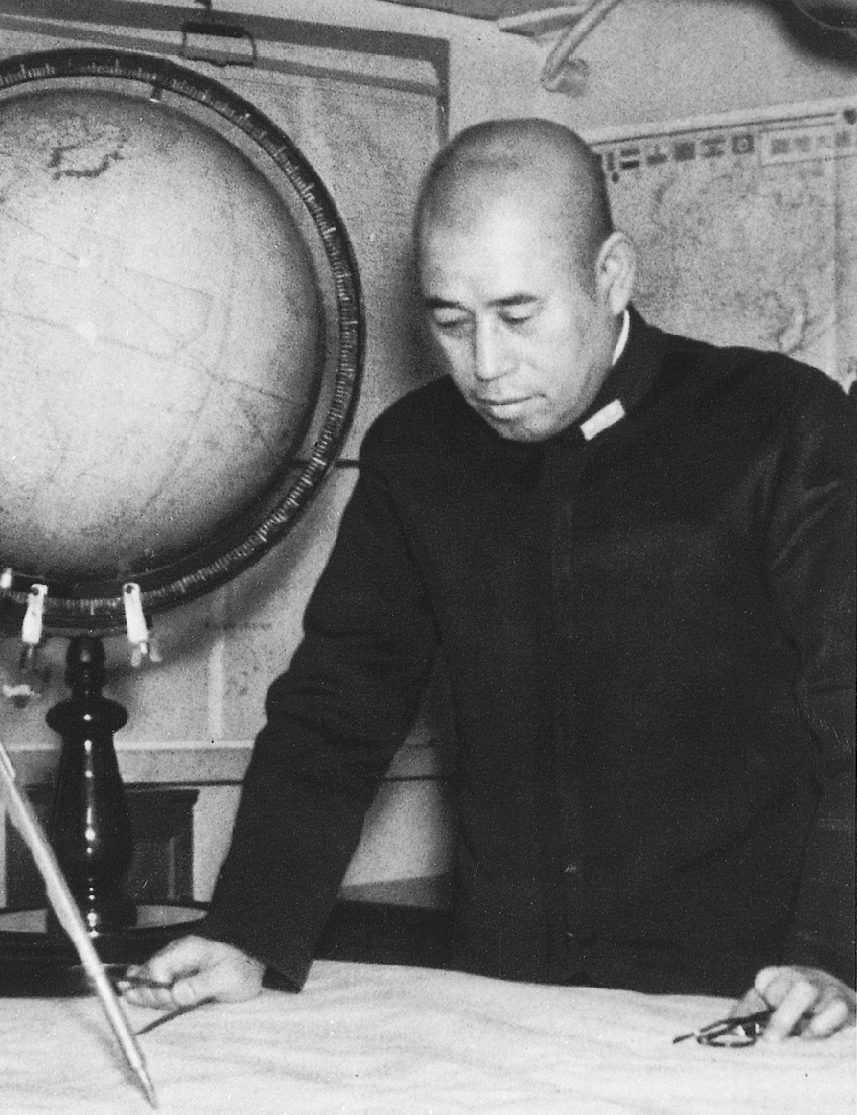
Brief Introduction of Yamamoto
Isoroku Yamamoto was a Japanese Marshal Admiral of the Imperial Japanese Navy (IJN) and the commander-in-chief of the Combined Fleet during World War II. He is most widely known for his role as the mastermind behind the surprise attack on Pearl Harbor on December 7, 1941, a pivotal event that brought the United States into the war. A brilliant and complex strategist, Yamamoto was a strong proponent of naval aviation, recognizing early on that aircraft carriers, rather than battleships, would be the dominant force in future naval conflicts. Despite his personal reservations and opposition to a war with the United States, which he knew possessed immense industrial might, he was a loyal and dedicated officer who executed his duties with formidable skill and determination. His death in 1943 was a significant blow to the morale and strategic capabilities of the Japanese military.

Yamamoto Overview
| Full Name | Isoroku Yamamoto (born Isoroku Takano) |
| Date of Birth | April 4, 1884 |
| Age(as of 2025) | Deceased (died at age 59 on April 18, 1943) |
| Birthplace | Nagaoka, Niigata Prefecture, Japan |
| Profession | Marshal Admiral, Imperial Japanese Navy |
| Husband/Wife | Reiko Mihashi (married in 1918) |
| Family | Father: Sadayoshi Takano; Mother: Mineko Takano. He had two sons, Yoshimasa and Tadao, and two daughters, Sumiko and Masako. He was adopted into the Yamamoto family in 1916. |
| Relationship/Affairs(GF/BF) | He was known to have a long-term affair with a geisha named Kawai Chiyoko. |
| Net Worth | Not publicly available. As a military officer of that era, the concept of personal net worth as it is understood today is not applicable. |
Early Life and Education of Yamamoto
Isoroku Yamamoto was born Isoroku Takano on April 4, 1884, in Nagaoka, Niigata Prefecture, Japan. He was the sixth son of Sadayoshi Takano, an intermediate-rank samurai and schoolmaster. His first name, “Isoroku,” is an old Japanese term for “56,” which was his father’s age at the time of his birth. Growing up in a former samurai family, he was instilled with the values of discipline and loyalty. At the age of 16, he entered the Imperial Japanese Naval Academy at Etajima. He graduated in 1904, ranking 11th in his class. Following the death of his parents, he was adopted in 1916 into the Yamamoto family, a common practice for families without sons to ensure the continuation of their name. Yamamoto’s education was not limited to Japan. Recognizing the importance of understanding his potential adversaries, he traveled to the United States and studied at Harvard University from 1919 to 1921. This experience, along with his later service as a naval attaché in Washington, D.C., gave him a deep appreciation for America’s industrial capacity and natural resources, which heavily influenced his strategic thinking.
Yamamoto’s Career
Yamamoto’s naval career began in the midst of conflict. Soon after graduating from the naval academy, he served on the cruiser Nisshin during the Russo-Japanese War. He was wounded at the decisive Battle of Tsushima in May 1905, where he lost the index and middle fingers on his left hand. This injury earned him the nickname “80 sen,” as a manicure at the time cost 10 sen per finger. Despite his injury, he demonstrated bravery and leadership. He returned to the Naval Staff College in 1914 and was promoted to lieutenant commander in 1916.
A pivotal moment in his career was his shift from gunnery to naval aviation in 1924. He took flying lessons and became a staunch advocate for air power, believing that aircraft carriers would supplant battleships as the most critical naval asset. He commanded the cruiser Isuzu and later the aircraft carrier Akagi. Throughout the 1930s, his influence grew. He served as chief of the Technological Division of the Naval Air Corps, where he championed the development of advanced aircraft like the Mitsubishi A6M “Zero” fighter. He also commanded the First Carrier Division. His expertise led to his appointment as Navy Vice Minister in 1936. In this role, he argued against the Tripartite Pact with Germany and Italy and opposed the invasion of China, stances that made him a target for assassination by militarist factions. To protect him, he was appointed commander-in-chief of the Combined Fleet on August 30, 1939.
As war with the United States loomed, Yamamoto, despite his personal opposition, was tasked with formulating a strategy. Believing Japan could not win a protracted war against American industrial might, he advocated for a swift, crippling blow to neutralize the U.S. Pacific Fleet. This strategic thinking led to the meticulously planned attack on Pearl Harbor. On December 7, 1941, his plan was executed with devastating success. In the six months following Pearl Harbor, Yamamoto’s fleets achieved an uninterrupted series of victories across the Pacific. However, the tide turned at the Battle of Midway in June 1942, a catastrophic defeat where Japan lost four of its vital aircraft carriers. This loss halted Japan’s advance and put them on the defensive. Yamamoto then committed forces to the grueling Guadalcanal campaign, a war of attrition that further depleted Japan’s naval and air strength. On April 18, 1943, American intelligence, having cracked Japanese naval codes, intercepted Yamamoto’s flight itinerary for an inspection tour in the Solomon Islands. In a mission codenamed “Operation Vengeance,” U.S. Army Air Forces P-38 Lightning fighters ambushed and shot down his plane, killing him.
Yamamoto Personal Life & Family
In 1918, Isoroku Yamamoto married Reiko Mihashi, with whom he had four children: two sons, Yoshimasa and Tadao, and two daughters, Sumiko and Masako. Despite his family life, Yamamoto was also known for his extramarital affairs, most notably a long-standing relationship with a geisha named Kawai Chiyoko. He was an avid and skilled gambler, enjoying games of chance like poker, shogi, and mahjong, which he felt sharpened his mind. He often joked that if his naval career failed, he would open a casino in Monaco. His time in the United States allowed him to learn fluent English and gain insight into American culture, which gave him a unique perspective compared to many of his contemporaries in the Japanese military. This understanding fostered a respect for American industrial power and a belief that a war with the U.S. should be avoided.
Awards and Achievements of Yamamoto
- Grand Cordon of the Supreme Order of the Chrysanthemum (Posthumous)
- Order of the Golden Kite, 1st Class
- Grand Cordon of the Order of the Rising Sun with Paulownia Flowers
- Grand Cordon of the Order of the Sacred Treasure
- Knight’s Cross of the Iron Cross with Oak Leaves and Swords (Nazi Germany, Posthumous)
- Posthumously promoted to the rank of Gensui (Marshal Admiral)
Yamamoto Net Worth and Income
Information regarding Isoroku Yamamoto’s net worth and income is not publicly available and is largely inapplicable to a career military officer serving the Empire of Japan during that historical period. His compensation would have been in the form of a salary and allowances from the Imperial Japanese Navy, commensurate with his high rank. Unlike modern public figures, military leaders of his time did not typically accumulate vast personal fortunes, and their financial details were not a matter of public record.

Legacy and Influence
Isoroku Yamamoto’s legacy is complex and significant. He is remembered as one of the most brilliant naval strategists of World War II. His most profound contribution to military history was his early and unwavering advocacy for naval aviation. He correctly foresaw that aircraft carriers would render battleships obsolete and fundamentally change the nature of naval warfare. The attack on Pearl Harbor, though ultimately a strategic failure for Japan, was a tactical masterpiece that demonstrated the devastating potential of carrier-based air power. His death in 1943 was a severe blow to the morale of the Japanese people and the strategic leadership of the IJN. In the United States, he was initially reviled as the architect of the “day of infamy,” but historical analysis has presented a more nuanced view of him as a reluctant warrior who understood the formidable power of his adversary. His strategic principles and innovative tactics continue to be studied in military academies worldwide.
Interesting Facts about Yamamoto
- His birth name, Isoroku, means “56” in an older Japanese dialect, representing his father’s age when he was born.
- He lost two fingers on his left hand during the Battle of Tsushima in 1905.
- He studied at Harvard University from 1919 to 1921 and later served as a naval attaché in Washington, D.C., becoming fluent in English.
- He was an avid poker and bridge player and was known for his love of gambling and games of skill.
- Due to his opposition to the Tripartite Pact with Germany and Italy, he became a target for assassination by Japanese militarists in the late 1930s.
- He famously predicted that he would “run wild” for the first six months to a year of a war with the United States but had “no expectation of success” after that. The Battle of Midway occurred almost exactly six months after Pearl Harbor.
- When his body was found in the wreckage of his plane, he was reportedly thrown from the aircraft, still strapped into his seat and with his hand on the hilt of his katana.
Controversies
The most significant controversy surrounding Isoroku Yamamoto is his role in the attack on Pearl Harbor. The attack was carried out without a formal declaration of war, leading it to be widely condemned in the United States as a treacherous and cowardly act. While Yamamoto was executing the policy of his government, his name became synonymous with the “sneak attack.” Another point of historical debate revolves around his tactical decisions, particularly during the Battle of Midway. Critics argue that his battle plan was overly complex and dispersed his forces too widely, contributing to the decisive defeat. There has also been a long-standing controversy among the American pilots of “Operation Vengeance” as to who specifically shot down Yamamoto’s plane.
Social Media Presence
Not applicable. Isoroku Yamamoto died in 1943, long before the advent of the internet and social media.
Final Words about Yamamoto
Isoroku Yamamoto remains one of the most compelling figures of the Second World War. He was a man of contradictions: a patriot who disagreed with his country’s path to war, a strategist who understood his enemy’s strengths better than his own superiors, and an innovator who forever changed naval warfare. While his plan for a short, decisive war failed, leading to the eventual devastation of his country, his strategic foresight, particularly his championing of naval aviation, was revolutionary. His death not only crippled the leadership of the Imperial Japanese Navy but also symbolized a turning point in the Pacific War. Today, Yamamoto is remembered not just as the architect of Pearl Harbor, but as a complex and brilliant military leader whose career and decisions continue to be a subject of intense historical study and debate.
 Team Dailly WikiBio