Brief Introduction of Victor Frankenstein
Victor Frankenstein is a brilliant and ambitious young scientist from Geneva, whose name has become synonymous with the profound ethical dilemmas of scientific discovery. Chronicled in Mary Shelley’s seminal 1818 novel, Frankenstein; or, The Modern Prometheus, he is renowned for his groundbreaking, yet horrifying, achievement: the creation of life. Driven by a fervent desire to uncover the secrets of existence, Victor Frankenstein’s work in chemistry and natural philosophy led him to animate a creature fashioned from lifeless matter. However, his immediate revulsion and abandonment of his creation set in motion a tragic chain of events, making his story a timeless cautionary tale about the responsibilities that accompany innovation and the perilous nature of unchecked ambition. His narrative explores the depths of guilt, isolation, and the devastating consequences of playing God.

Victor Frankenstein Overview
| Full Name | Victor Frankenstein |
| Date of Birth | Late 18th Century |
| Age(as of 2025) | Deceased |
| Birthplace | Naples, Kingdom of Naples (according to the 1831 edition) |
| Profession | Scientist, Natural Philosopher, Chemist |
| Husband/Wife | Elizabeth Lavenza |
| Family | Alphonse Frankenstein (Father), Caroline Beaufort Frankenstein (Mother), Ernest Frankenstein (Brother), William Frankenstein (Brother) |
| Relationship/Affairs(GF/BF) | Engaged and later married to Elizabeth Lavenza. |
| Net Worth | Not publicly available; however, his family was one of the most distinguished and wealthy in the Genevese Republic. |
Early Life and Education of Victor Frankenstein
Victor Frankenstein was born into a wealthy and distinguished Genevese family, the eldest son of Alphonse and Caroline Frankenstein. His childhood was idyllic, filled with love and affection, particularly from his parents who considered him their “plaything and their idol.” He grew up in the company of his adopted sister, Elizabeth Lavenza, for whom he felt a deep, protective love, and his dear friend, Henry Clerval. From a young age, Victor displayed an intense curiosity and a thirst for knowledge. He became engrossed in the works of antiquated alchemists like Cornelius Agrippa, Paracelsus, and Albertus Magnus, whose theories on the elixir of life fascinated him and set the foundation for his later ambitions.
A pivotal moment in his youth was witnessing a violent thunderstorm where lightning obliterated an oak tree, sparking his interest in electricity and the powers of nature. This event shifted his focus from the outdated alchemists to the more tangible possibilities of natural philosophy and modern science. At the age of 17, his life was struck by tragedy when his mother, Caroline, contracted scarlet fever from Elizabeth and died. This profound loss deeply affected Victor and is believed to have intensified his desire to conquer death. Shortly after, he left his grieving family for the University of Ingolstadt in Germany to pursue his studies, marking the beginning of a new, obsessive chapter in his life.
Victor Frankenstein’s Career
Upon arriving at the University of Ingolstadt, Victor Frankenstein initially found himself disappointed by the modern scientific approaches, which seemed mundane compared to the grand promises of the alchemists he had studied. However, his passion was reignited by the lectures of Professor M. Waldman, who encouraged him to study all branches of natural philosophy, especially chemistry. Victor plunged into his studies with an unparalleled fervor, quickly surpassing his peers and even his professors. He became completely consumed by his work, isolating himself from his family and friends for nearly two years. His obsession led him to explore the boundary between life and death.
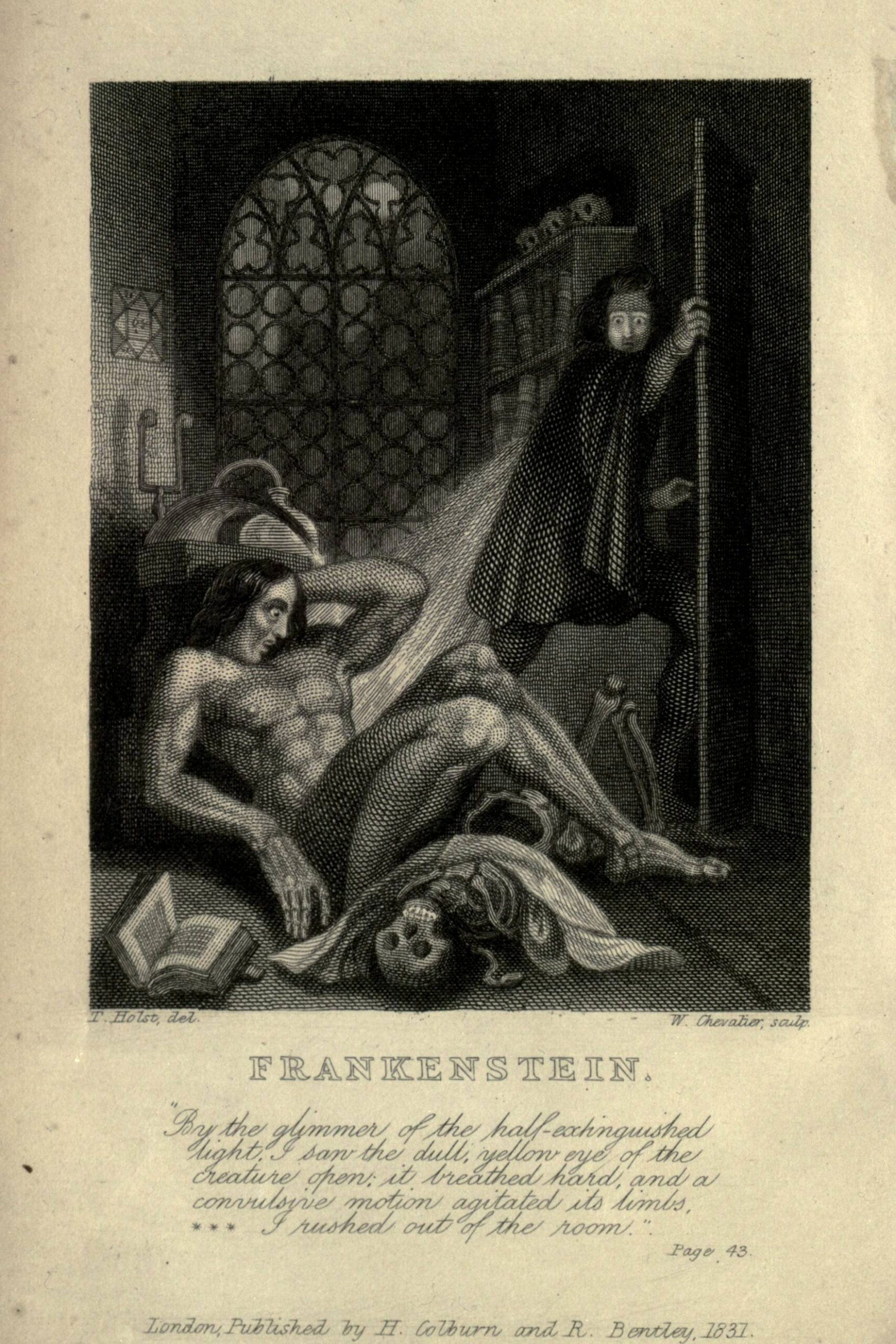
Through tireless research and countless experiments, Victor discovered the secret to animating lifeless matter. This breakthrough became the singular focus of his existence. He began constructing a humanoid creature of gigantic proportions, collecting materials from charnel houses, dissecting rooms, and slaughterhouses. On a “dreary night of November,” he finally brought his creation to life. The moment of animation, however, was not one of triumph but of horror. Repulsed by the creature’s grotesque appearance, Victor fled in disgust, abandoning the new life he had so painstakingly crafted. This act of rejection defined the rest of his “career,” which transformed from a quest for scientific glory into a nightmarish ordeal. His creation, abandoned and shunned by society, turned vengeful, leading to a devastating series of murders that destroyed Victor’s life. The remainder of his days were not spent in a laboratory but in a desperate, globe-spanning pursuit of the monster, driven by guilt and a burning desire for revenge.
Victor Frankenstein Personal Life & Family
Victor Frankenstein’s personal life was defined by the deep bonds he shared with his family and his ultimate isolation from them due to his obsessive scientific pursuits. He was the cherished eldest son of Alphonse, a respected public figure in Geneva, and Caroline, a loving mother who tragically died when Victor was a young man. He had two younger brothers: Ernest, who was six years his junior, and the youngest, William, who was beloved by the entire family. The Frankenstein household also included Elizabeth Lavenza, a beautiful and gentle girl adopted by Caroline. In the 1818 edition of the novel, Elizabeth is Victor’s cousin, while the 1831 edition portrays her as an adopted orphan. Regardless of her origin, she was Victor’s constant companion, and it was his mother’s dying wish that they should one day marry.
Victor also shared a profound friendship with Henry Clerval, a romantic and empathetic young man who served as a moral and emotional foil to Victor’s often cold and obsessive nature. Despite this loving foundation, Victor chose to isolate himself from his family and from Clerval upon attending university, neglecting correspondence and forgetting their existence in the fever of his creation. This self-imposed isolation was the beginning of his downfall. The horrific consequences of his work systematically destroyed his personal life; his creation murdered his brother William, his friend Henry, and ultimately his beloved wife Elizabeth on their wedding night. These tragic events also led to the death of his father, who succumbed to grief. By the end of his tale, Victor is a man entirely stripped of family and friends, a lonely figure consumed by a singular, destructive purpose.
Awards and Achievements of Victor Frankenstein
- Discovered the principle of life and the means to bestow animation upon lifeless matter.
- Successfully created a sentient, humanoid being, an unprecedented achievement in the annals of science.
- Made rapid and remarkable advancements in the field of chemistry and natural philosophy during his time at the University of Ingolstadt, earning the admiration of his professors.
Victor Frankenstein Net Worth and Income
A specific figure for Victor Frankenstein’s net worth is not documented. However, he was born into a distinguished and affluent family in the Republic of Geneva. Victor himself states that his family is one of the “most distinguished” and that his ancestors were “counsellors and syndics.” The family’s wealth is evident in their lifestyle; they maintained a large home with several servants, could afford to travel extensively, and supported the adoption and upbringing of Elizabeth Lavenza. Furthermore, they had the financial means to send Victor to the prestigious University of Ingolstadt for his higher education. While Victor himself neglected his personal finances and well-being during his obsessive experiments, he was supported by this substantial family wealth. He never appeared to be in want of funds for his education or his extensive and costly scientific apparatus.

Legacy and Influence
The legacy of Victor Frankenstein is both profound and complex, extending far beyond the pages of Mary Shelley’s novel to become a cornerstone of modern mythology and a powerful cultural archetype. His story serves as the quintessential cautionary tale about the potential dangers of scientific ambition pursued without moral consideration. The name “Frankenstein” itself has become a cultural shorthand for any creation that turns against its creator, a testament to the narrative’s enduring power. His work has profoundly influenced the science fiction genre, with many considering his story to be the first true science fiction novel.
Victor’s actions raise timeless ethical questions that continue to resonate in contemporary debates surrounding genetic engineering, artificial intelligence, and cloning. The narrative forces a critical examination of a creator’s responsibility to their creation, a theme that has been explored in countless adaptations across film, stage, and literature. While he is often depicted as the archetypal “mad scientist,” his character is more nuanced—a tragic figure whose noble intentions curdle into destructive obsession. His legacy is a powerful and enduring warning: the pursuit of knowledge, without the guidance of empathy and foresight, can lead to monstrous outcomes.
Interesting Facts about Victor Frankenstein
- The character of Victor Frankenstein is believed to have been partially inspired by Mary Shelley’s husband, the poet Percy Bysshe Shelley, who had a keen interest in chemistry and electrical experiments during his time at Eton College and Oxford University.
- Some aspects of Victor’s character and pursuits may also have been influenced by the real-life 17th-century alchemist Johann Konrad Dippel, who was born at Castle Frankenstein and was rumored to have engaged in macabre experiments.
- In popular culture, the name “Frankenstein” is often mistakenly used to refer to the monster itself, rather than its creator, Victor Frankenstein.
- Victor’s first name may have been a pen name used by Percy Shelley, further linking the character to Mary Shelley’s own life.
- The narrative framework of the novel presents Victor’s story as a confession to the explorer Robert Walton, making him the primary narrator of his own tragic history.
- Throughout his scientific education and experiments, Victor was largely self-taught, driven by a personal obsession that isolated him from the formal, structured learning of his university.
Controversies
The central controversy surrounding Victor Frankenstein is a profound ethical one: his absolute failure of responsibility towards his creation. Immediately upon animating the creature, Victor is horrified by its appearance and abandons it, an act of parental neglect that is the primary catalyst for all subsequent tragedies. This abandonment is widely seen as Victor’s greatest crime, far exceeding the transgression of creating life itself. His actions spark a debate on the moral obligations of scientists and creators. By focusing solely on the glory of the achievement and ignoring the potential consequences and the well-being of his sentient creation, Victor embodies the dangers of knowledge without wisdom.
Furthermore, his refusal to create a female companion for the monster is another point of intense ethical debate. While he fears the potential for a race of monsters, his decision condemns his original creation to a life of eternal loneliness, directly leading to the creature’s vengeful vow to be with him on his wedding night—a threat that culminates in Elizabeth’s murder. Victor’s consistent secrecy, his refusal to confess his role in the creation of the monster even when it could have saved the innocent Justine Moritz from execution, further cements his controversial legacy as a man whose cowardice and guilt led to the destruction of everyone he held dear.
Social Media Presence
- Instagram – Not publicly available
- Twitter – Not publicly available
- YouTube – Not publicly available
Final Words about Victor Frankenstein
Victor Frankenstein’s final days were spent in a desolate and obsessive pursuit of his creation across the frozen expanses of the Arctic. Rescued by the explorer Robert Walton, a man who mirrored his own ambitious nature, Victor used his last breaths to recount his tragic story as a warning against the perilous pursuit of glory. He dies aboard Walton’s ship from exhaustion and hypothermia, never achieving the revenge he so desperately sought. His death marks the culmination of a life that began with immense promise and ended in utter ruin, a journey from a beloved son and brilliant student to a haunted, broken man. Victor Frankenstein’s story remains a powerful and enduring allegory. It is not merely a tale of a mad scientist but a deep exploration of human nature, the pain of isolation, the corrupting force of obsession, and the moral responsibilities inherent in the act of creation. His legacy persists not as a triumphant scientist, but as a tragic hero whose catastrophic failures continue to provoke critical reflection on the boundaries of science and humanity.
 Team Dailly WikiBio