
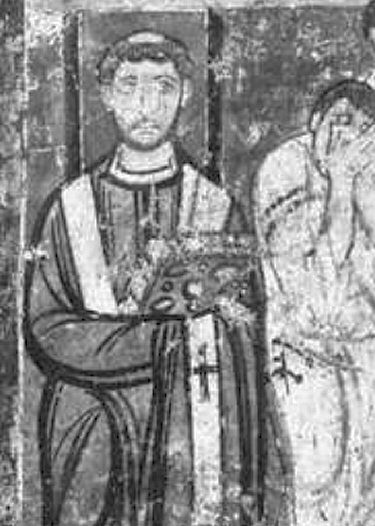
Brief Introduction of Pope Leo
Pope Leo I, celebrated as Leo the Great, was the bishop of Rome from September 29, 440, until his death on November 10, 461. A pivotal figure in the history of the Catholic Church, his papacy unfolded during the tumultuous decline of the Western Roman Empire. He is renowned for his profound theological contributions, particularly his writings on Christology which were foundational to the decrees of the Council of Chalcedon. Leo the Great is also famously remembered for his diplomatic courage, most notably when he met with Attila the Hun in 452 and persuaded him to turn back from his invasion of Italy, an act that has been immortalized in art and legend. Recognized for his significant impact on strengthening the authority of the papacy, he was one of the first popes to be distinguished with the title “the Great.” In 1754, Pope Benedict XIV declared him a Doctor of the Church, a title honoring his substantial theological writings and teachings that have left an enduring mark on Christian doctrine.
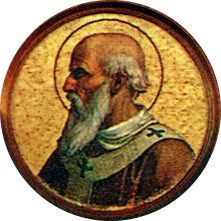
Pope Leo Overview
| Full Name | Leo |
| Date of Birth | c. 391 or 400 AD |
| Age(as of 2025) | Deceased (Died at approximately 61-70 years of age) |
| Birthplace | Tuscany, Western Roman Empire |
| Profession | Pope of the Catholic Church, Bishop of Rome |
| Husband/Wife | Not applicable (clerical celibacy) |
| Family | His father’s name was Quintianus. |
| Relationship/Affairs(GF/BF) | Not applicable |
| Net Worth | Not applicable in modern terms. As Pope, he controlled the wealth and resources of the Church in Rome during the 5th century. |
Early Life and Education of Pope Leo
Little is definitively known about the early life and education of the man who would become Pope Leo I. According to the Liber Pontificalis, a record of popes’ lives, he was a native of Tuscany, and his father’s name was Quintianus. Born around the year 391 or 400 AD, Leo likely received a fine and diverse education, which was typical for a Roman aristocrat of his time and would have prepared him for a significant career. Despite the opportunities for a worldly career, he felt a calling to the spiritual life. By 431, he was serving as a deacon in Rome, a position of considerable influence. Even at this early stage, his reputation for intellect and piety was well-established beyond the city of Rome. John Cassian, a prominent theologian, dedicated a treatise against the Nestorian heresy to Leo at his own suggestion around this time, indicating Leo’s early involvement in significant theological matters. His role as an archdeacon under Pope Celestine I and later Pope Sixtus III further solidified his importance within the Church’s hierarchy. His abilities were not limited to ecclesiastical affairs; he was also entrusted with important diplomatic missions. In 440, he was sent by the imperial court to Gaul to mediate a dispute between the military commanders Aetius and Albinus, a testament to the trust placed in his diplomatic skills even before his papacy.
Pope Leo’s Career
Leo’s career is marked by a steadfast defense of orthodox Christianity and a significant strengthening of papal authority. While on his diplomatic mission in Gaul in 440, Pope Sixtus III died. The Roman clergy and people unanimously elected the absent archdeacon as the new Pope. He returned to Rome and was consecrated on September 29, 440, beginning a pontificate that would last for twenty-one years. His papacy occurred during a period of immense political instability as the Western Roman Empire crumbled under the pressure of barbarian invasions. This power vacuum allowed Leo to take a more active role in civil and political affairs, significantly enhancing the influence of the Bishop of Rome.
One of Leo’s foremost goals was to maintain the unity of the Church. He was a staunch opponent of various heresies, including Pelagianism, Manichaeism, and Priscillianism. He asserted the primacy of the Roman See, arguing that papal power was granted by Christ to Saint Peter and passed down to his successors. This was a central theme in his letters and sermons, where he emphasized that the “care of the universal Church should converge towards Peter’s one seat.” He intervened in church affairs across the empire, from Illyria to Spain and Gaul, to enforce Roman custom and doctrinal orthodoxy.
The most significant theological challenge of his papacy was the Christological controversy concerning the nature of Jesus Christ. The archimandrite Eutyches was promoting the idea that Christ had only one nature, a fusion of the divine and human (Monophysitism). Leo decisively intervened in this debate. He issued his famous “Tome of Leo” (Epistola ad Flavianum), a dogmatic letter to Flavian, the Patriarch of Constantinople. In this seminal work, Leo clearly articulated the doctrine of the hypostatic union: that Jesus Christ is one person with two distinct natures, fully divine and fully human, united without confusion or division. This text became the cornerstone of the Council of Chalcedon in 451, the fourth ecumenical council. The bishops at the council acclaimed Leo’s Tome, famously declaring, “Peter has spoken thus through Leo.” The council formally adopted Leo’s definition, which remains a fundamental tenet of Christology for the Catholic, Eastern Orthodox, and Anglican churches.
Beyond his theological achievements, Leo’s pontificate is famed for its dramatic political interventions. In 452, Attila the Hun and his armies, having devastated northern Italy, were marching toward Rome. With the imperial government in disarray, Leo led a delegation to meet Attila. In a historic encounter near Mantua, Leo’s powerful persuasion, and according to pious legend, the miraculous appearance of Saints Peter and Paul, convinced Attila to abandon his campaign and retreat. While the exact details of the negotiation are debated by historians, the outcome solidified Leo’s reputation as a protector of the city. Three years later, in 455, when the Vandals under King Gaiseric sacked Rome, Leo again intervened. While he could not prevent the city from being plundered for two weeks, his influence reportedly repressed murder and arson. He then worked to rebuild the city and sent aid to the people who had been taken captive to Africa.
Pope Leo Personal Life & Family
As a cleric and Pope of the Catholic Church, Pope Leo I lived a life of celibacy, and therefore, information regarding a wife, children, or romantic relationships is not applicable. What is known of his family background is minimal. The Liber Pontificalis identifies his father as Quintianus and notes his Tuscan origins. He was a Roman aristocrat, which suggests his family was of some standing. His personal life was wholly dedicated to the service of the Church. His lifestyle was one of pastoral care, theological study, and administrative and diplomatic duties. He was renowned for his profoundly spiritual sermons, through which he connected with the everyday concerns of his congregation. He fostered charitable works throughout Rome, especially in areas afflicted by famine and poverty, demonstrating a deep commitment to the practical application of Christian faith. His personal beliefs were centered on the orthodox teachings of the Church, which he defended with vigor and intellectual rigor. He held a strong conviction that as Pope, he was the successor of Saint Peter, and that his actions and words represented Jesus Christ.
Awards and Achievements of Pope Leo
- Doctor of the Church: In 1754, Pope Benedict XIV officially proclaimed him a Doctor of the Church, a title granted to saints whose theological writings are considered of universal importance to the Church.
- The Great: He is one of only three popes, along with Gregory I and Nicholas I, to be officially accorded the title “the Great,” in recognition of his significant impact on the history of the papacy and the Church.
- Defense of Orthodoxy at Chalcedon: His “Tome of Leo” was instrumental in defining the orthodox Christian doctrine of Christ’s two natures at the Council of Chalcedon in 451, a pivotal moment in theological history.
- Savior of Rome: He is credited with saving Rome from being sacked by Attila the Hun in 452 through his diplomatic intervention.
- Strengthening Papal Primacy: He was a key figure in the centralization of spiritual authority within the Church and significantly advanced the theological and jurisdictional claims of the Bishop of Rome as the successor of St. Peter.
Pope Leo Net Worth and Income
The concept of personal net worth is anachronistic when applied to a 5th-century figure like Pope Leo I. As the Bishop of Rome, he did not possess personal wealth in the modern sense. Instead, he was the steward of the extensive properties and resources belonging to the See of Rome. The Church in the 5th century was a major landowner and received considerable donations and tithes. Leo would have administered this wealth to fund the activities of the Church, including the maintenance of churches, support for the clergy, extensive charitable works for the poor and refugees, and diplomatic missions. During a time of failing imperial administration, the Church’s resources, managed by Leo, played a crucial civic role in feeding the populace and rebuilding the city after the Vandal sack. His income was not a personal salary but the collective revenue of the Roman Church, which he utilized for religious and social governance.

Legacy and Influence
Pope Leo the Great’s legacy is immense and multifaceted, shaping the trajectory of both the papacy and Christian theology for centuries to come. Pope Benedict XVI described his papacy as “undoubtedly one of the most important in the Church’s history.” His most enduring theological contribution is his clear articulation of the doctrine of the hypostatic union, which settled a major Christological debate and became the standard of Catholic faith. His preserved writings, which include nearly 100 sermons and over 140 letters, continue to be studied for their theological depth and pastoral wisdom.
Leo’s pontificate also marked a turning point for the authority of the papacy. At a time when the political structures of the Western Roman Empire were collapsing, he positioned the papacy as a central, stabilizing force in both spiritual and temporal affairs. His vigorous assertion of Roman primacy, based on the succession from Saint Peter, laid the groundwork for the development of papal authority in the medieval period and beyond. His successful negotiations with Attila the Hun and Gaiseric the Vandal dramatically enhanced the prestige and political influence of the papal office. He demonstrated that the Bishop of Rome was not just a spiritual leader but also a protector of the people and a key player on the European stage. This blend of pastoral leadership, theological acumen, and political sagacity ensured that his influence would be felt long after his death.
Interesting Facts about Pope Leo
- He was the first pope to be buried within Saint Peter’s Basilica.
- Leo was unanimously elected pope while he was away from Rome on a diplomatic mission in Gaul.
- The bishops at the Council of Chalcedon in 451 so thoroughly accepted his theological treatise on Christ’s nature that they declared, “Peter has spoken through Leo.”
- He is one of only two popes, along with Pope Gregory I, who is both called “the Great” and recognized as a Doctor of the Church.
- A famous fresco by Raphael in the Vatican’s Apostolic Palace, “The Meeting of Leo the Great and Attila,” depicts his historic encounter with the Hunnic leader.
- Thirteen popes have chosen the name Leo, with many likely doing so in honor of Leo I.
- His feast day in the Catholic Church is celebrated on November 10, the date of his death.
Controversies
While Pope Leo I is a highly revered figure, his pontificate was not without actions that would be viewed critically through a modern lens. His approach to dealing with heresy was severe. In his efforts to suppress Manichaeism in Rome, he publicly exposed Manichaeans and burned their books. In 447, he declared that heretics deserved the most severe punishments, justifying the death penalty by stating that if followers of a heresy were allowed to live, it would be the end of human and Divine law. This position reflects the prevailing attitudes of the era but stands in stark contrast to contemporary views on religious freedom and tolerance. Additionally, his strong assertion of Roman primacy, while central to his legacy, created tensions with other major Christian centers, particularly with the Patriarch of Constantinople. At the Council of Chalcedon, he refused to confirm Canon 28, which elevated the See of Constantinople to a status second only to Rome, viewing it as a challenge to the apostolic authority of Alexandria and Antioch, and ultimately to the unique primacy of Rome.
Social Media Presence
Not applicable. Pope Leo I lived in the 5th century, long before the invention of the internet and social media.
- Instagram – Not applicable
- Twitter – Not applicable
- YouTube – Not applicable
Final Words about Pope Leo
Pope Leo I, Leo the Great, was a towering figure whose pontificate served as a crucial bridge between late antiquity and the emerging medieval world. He governed the Church with wisdom and courage during a period of profound crisis and transformation. His theological clarity provided a definitive answer to one of the most contentious questions in early Christianity, while his political and diplomatic actions established the papacy as a formidable force for stability and leadership in a disintegrating empire. Leo’s legacy is not simply that of a powerful administrator or a profound theologian, but of a shepherd who fiercely protected his flock from both doctrinal error and physical threat. Through his writings, his governance, and his personal courage, he indelibly shaped the identity and authority of the Roman Catholic Church, earning his title as one of the few and most deserving pontiffs to be called “the Great.” His life and work continue to be a source of inspiration and study within the Christian tradition.