
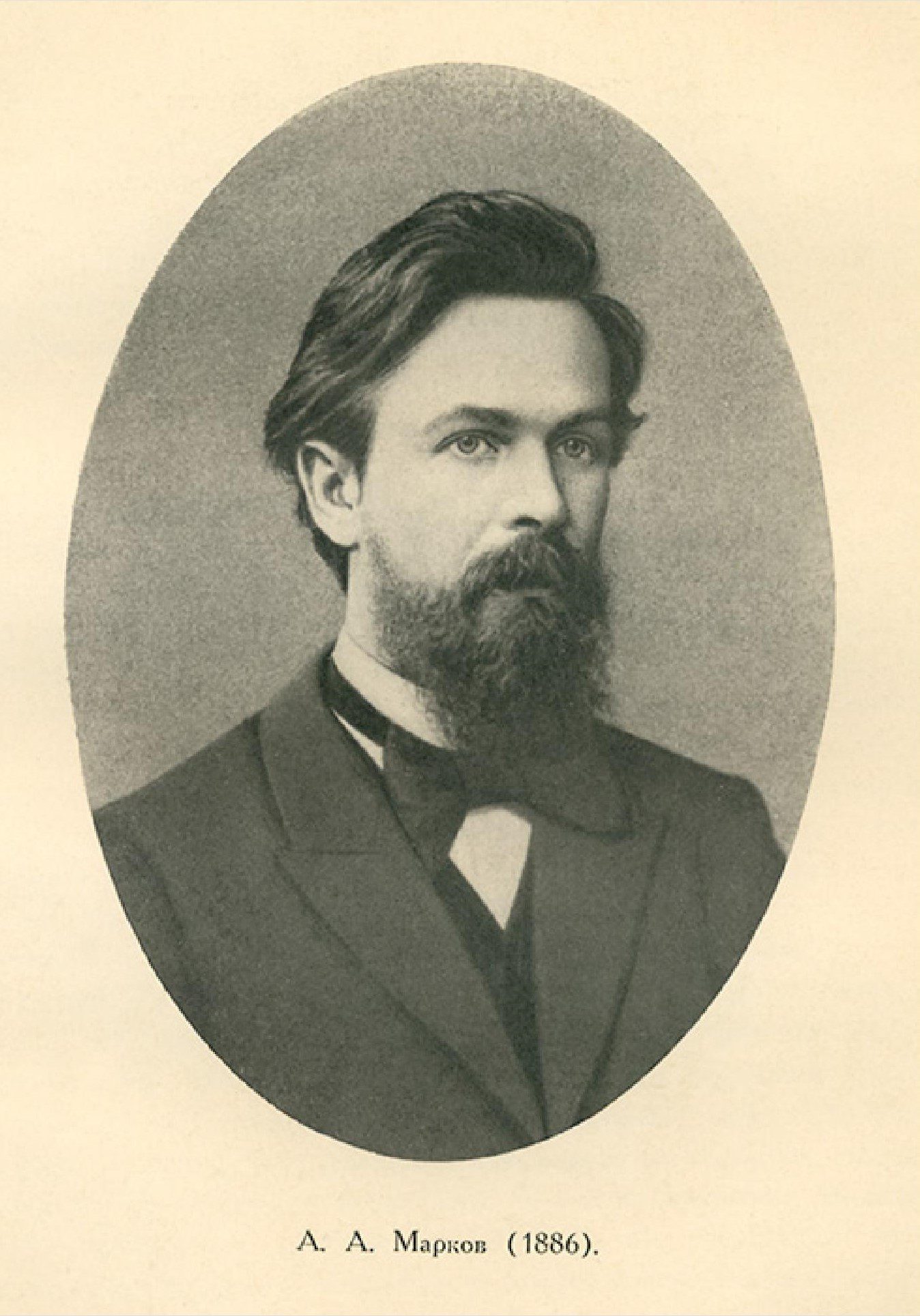
Brief Introduction of Markov (Andrei Markov)
Andrei Andreyevich Markov (1856–1922) was a profound Russian mathematician whose work fundamentally shaped the theory of probability and laid the groundwork for the study of stochastic processes. He is most renowned for his creation of the concept of Markov chains, a mathematical model describing a sequence of events where the probability of each event depends only on the state of the system at the previous event. This revolutionary idea, initially developed to analyze the distribution of vowels and consonants in Russian literature, has since found vast applications across numerous scientific and technological fields. Markov’s contributions extended the Law of Large Numbers and the Central Limit Theorem to dependent variables, opening up a new branch of probability theory. His rigorous intellectual approach and his unwavering commitment to academic and political principles defined his career at Saint Petersburg University and his lasting legacy in the world of mathematics.
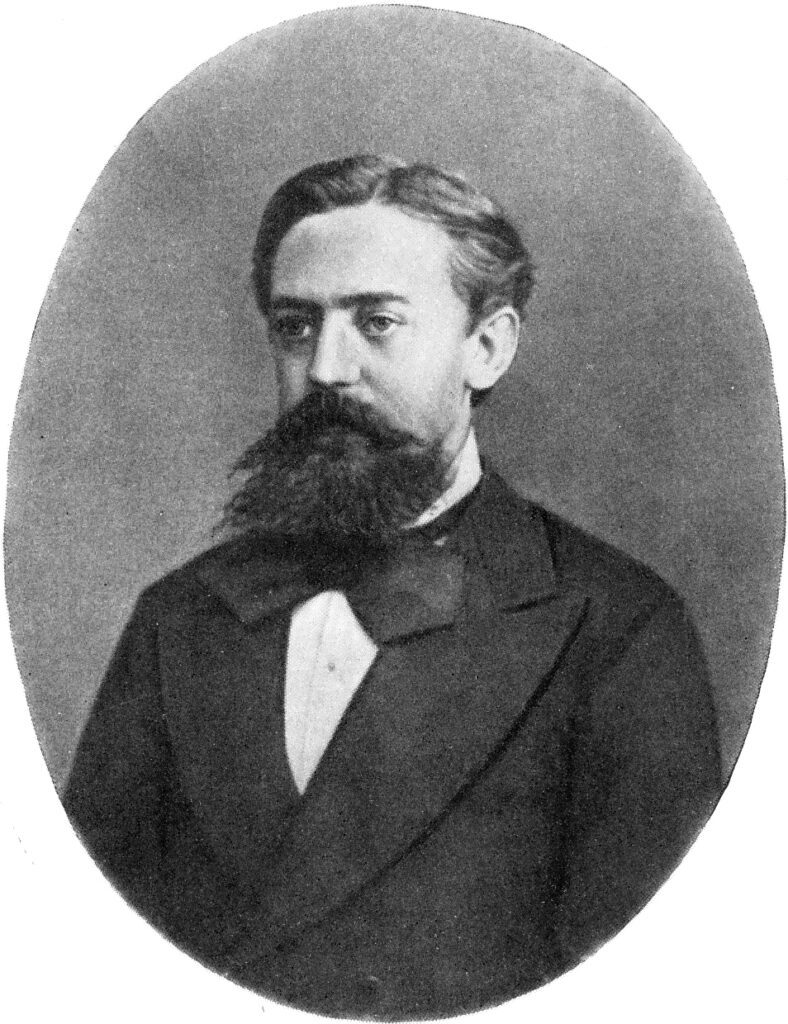
Markov (Andrei Markov) Overview
| Full Name | Andrei Andreyevich Markov |
| Date of Birth | June 14, 1856 (New Style) |
| Age(as of 2025) | Deceased (died at age 66) |
| Birthplace | Ryazan, Russian Empire |
| Profession | Mathematician, Professor |
| Husband/Wife | Maria Ivanova Valvatyeva |
| Family | Andrei Grigorievich Markov (Father), Nadezhda Petrovna (Mother), Vladimir Andreyevich Markov (Brother), Andrei Andreyevich Markov Jr. (Son) |
| Relationship/Affairs(GF/BF) | Information not disclosed |
| Net Worth | Not publicly available |
Early Life and Education of Markov (Andrei Markov)
Andrei Andreyevich Markov was born on June 14, 1856, in Ryazan, Russia, to Andrei Grigorievich Markov, a civil servant in the Forestry Department, and Nadezhda Petrovna Markov. The family later moved to St. Petersburg, the intellectual and cultural heart of the Russian Empire. Markov’s early years were marked by poor health; he relied on crutches to walk until the age of ten. This physical limitation may have contributed to his early inclination towards intellectual pursuits. During his schooling at the St. Petersburg Grammar School, Markov showed a prodigious talent for mathematics, a subject in which he excelled far beyond his performance in other areas, where he was often considered a rebellious and underwhelming student. His passion for mathematics was so profound that he wrote his first paper on the integration of linear differential equations while still in grammar school.
In 1874, Markov enrolled in the Physics and Mathematics Faculty at Saint Petersburg Imperial University, a hub of mathematical innovation in Russia. Here, he came under the tutelage of some of the most brilliant mathematical minds of his time, including Yulian Sokhotski, Yegor Zolotarev, and Aleksandr Korkin. However, the most significant influence on his academic development was Pafnuty Chebyshev, the head of the St. Petersburg mathematical school. Chebyshev was renowned for his work in probability, statistics, and number theory and for fostering a research-oriented environment that challenged his students with new problems. Markov thrived in this atmosphere, fully embracing Chebyshev’s ideas. He graduated in 1878, having won a gold medal for his prize-winning essay on the integration of differential equations using continued fractions. He continued his studies at the university, earning his Master’s degree in 1880 for his thesis “On the Binary Square Forms with Positive Determinant” and his doctorate in 1884 for his dissertation “On Certain Applications of the Algebraic Continuous Fractions.”
Markov (Andrei Markov)’s Career
Markov’s professional career was deeply intertwined with Saint Petersburg University, where he began teaching as a privatdozent in the autumn of 1880, immediately after defending his Master’s thesis. He initially lectured on differential and integral calculus. Following the retirement of his mentor, Pafnuty Chebyshev, in 1882, Markov took over the probability theory course, a field he would go on to revolutionize. His academic ascent was steady: he was appointed extraordinary professor in 1886 and promoted to ordinary professor in 1893. He was also elected as an adjunct to the Russian Academy of Sciences in 1886, becoming an extraordinary member in 1890 and a full ordinary member in 1896, succeeding Chebyshev in this prestigious position.
Markov’s early research focused on number theory and analysis, continuing the work of Chebyshev. However, after 1900, his primary focus shifted to probability theory. At the time, foundational concepts like the Law of Large Numbers and the Central Limit Theorem primarily applied to sequences of independent events. Markov was intrigued by systems where the outcome of one event influenced the next. This led to his most significant breakthrough, detailed in a 1906 paper, which introduced the concept of dependent random variables. He demonstrated that the Law of Large Numbers could still apply to these systems, provided the dependency was of a specific, limited type. This chain of dependent variables became known as a “Markov chain.”
A Markov chain is a stochastic model that possesses the “Markov property,” often described as memorylessness. This means the future state of the process depends solely on its current state and not on the sequence of events that preceded it. To provide a practical demonstration of his theory, Markov famously analyzed the sequence of vowels and consonants in the first 20,000 letters of Alexander Pushkin’s poem Eugene Onegin. By calculating the transition probabilities—the likelihood of a vowel following a vowel, a vowel following a consonant, and so on—he created a simple two-state Markov chain and showed that his theorems held true. This work founded an entirely new branch of probability theory and launched the theory of stochastic processes. His textbook, The Calculus of Probabilities, went through several editions and was highly influential in the field.
Beyond his research, Markov was known for his strong principles. In 1905, he was appointed a merited professor with the right to retire, which he did immediately but continued to teach until 1910. In 1908, when the government ordered university lecturers to monitor students amidst political unrest, Markov refused, writing that he would not be an “agent of the governance.” This act of defiance led to him being barred from further teaching duties. He resumed his lectures only after the February Revolution of 1917.
Markov (Andrei Markov) Personal Life & Family
Andrei Markov’s family background was rooted in the Russian gentry. His father, Andrei Grigorievich Markov, worked in the Forestry Department and managed private estates, while his mother was Nadezhda Petrovna. He had a younger brother, Vladimir Andreyevich Markov (1871–1897), who was also a promising mathematician but tragically died young. Together, the brothers proved the mathematical principle now known as the Markov brothers’ inequality.
In 1883, Markov married Maria Ivanova Valvatyeva. Their connection dated back to their childhoods, as Maria was the daughter of the owner of an estate that Markov’s father managed. Markov had tutored her in mathematics, and they developed a deep bond. However, her mother initially disapproved of the match due to Markov’s social standing at the time, only consenting to the marriage once his position at the university was secure. The couple had a son, also named Andrei Andreyevich Markov (1903–1979), who followed in his father’s footsteps to become a distinguished mathematician himself. Andrei Markov Jr. became a key founder of the Russian school of constructive mathematics and made significant contributions to logic and computer science, including the concept of the Markov algorithm.

Markov was a man of firm convictions, not only in politics but also in religion. He was a confirmed atheist. In a notable protest in 1912, following the excommunication of the writer Leo Tolstoy from the Russian Orthodox Church, Markov formally requested his own excommunication. The Church complied with his request, cementing his reputation as a principled and fearless dissident. He continued to live and teach in St. Petersburg (renamed Petrograd after 1914) until his death on July 20, 1922, at the age of 66.
Awards and Achievements of Markov (Andrei Markov)
While Markov’s era had fewer formal awards than modern academia, his career was marked by a series of prestigious appointments and honors that signified his high standing in the scientific community.
- Gold Medal (1878): Awarded by the Faculty of Physics and Mathematics at Saint Petersburg University for his graduation thesis, “On the Integration of Differential Equations by Means of Continued Fractions.”
- Adjunct of the Academy of Sciences (1886): Elected to this prominent position in the Russian Academy of Sciences upon the proposal of his mentor, Pafnuty Chebyshev.
- Extraordinary Member of the Academy of Sciences (1890): A significant promotion within the Academy.
- Ordinary Member of the Academy of Sciences (1896): Achieved the highest rank in the Academy, succeeding Chebyshev himself in this role.
- Merited Professor (1905): An honorific title bestowed by Saint Petersburg University recognizing his long and distinguished service.
- Honorary Member of Saint Petersburg University (1913): Though his election was initially blocked by the minister of education for political reasons, it was eventually affirmed in 1917.
Markov (Andrei Markov) Net Worth and Income
Information regarding the net worth and specific income of Andrei Andreyevich Markov is not publicly available. As a university professor and academician in the Russian Empire and early Soviet period, his income would have been derived from his university salary and stipends from the Academy of Sciences. His wealth would not be comparable to modern figures, and historical records do not provide details on his financial estate.
Legacy and Influence
Andrei Markov’s legacy is monumental, as his work opened up an entirely new field within mathematics. By developing the theory of Markov chains, he was the first to rigorously model systems of dependent random variables, fundamentally extending probability theory beyond its classical confines of independent events. This conceptual breakthrough provided the tools to analyze and predict the behavior of complex systems that evolve over time, a process now known as a stochastic process. The “memoryless” property of Markov chains became a cornerstone principle in modern probability and statistics.
The influence of Markov’s work extends far beyond theoretical mathematics, forming the basis for countless modern technologies and scientific models. Some of the most significant applications include:
- Natural Language Processing: Markov models are fundamental to predictive text algorithms used in smartphones and search engines, as well as in speech recognition software, by calculating the probability of the next word or phoneme based on the current one.
- Web Search Algorithms: The original PageRank algorithm used by Google was a direct application of Markov chain theory. It treated webpages as states and hyperlinks as transitions, calculating the probability of a user landing on a particular page to determine its importance.
- Finance and Economics: Markov chains are used to model stock market trends, credit risk, and other financial phenomena where future values depend on current conditions.
- Bioinformatics and Genetics: Hidden Markov Models (HMMs), a development of Markov’s original idea, are crucial for gene sequencing, helping scientists identify gene structures within DNA.
- Physics and Chemistry: The models are used to describe phenomena like Brownian motion and the behavior of particle systems.
- Computer Science: They are used in data analysis, network traffic modeling, and designing algorithms.
Markov’s work built upon the foundations laid by his teacher, Chebyshev, but he took it in a direction that his mentor had not envisioned, creating a tool of immense power and versatility. His intellectual courage and political dissidence further defined his public image as a scholar of unimpeachable integrity. Today, any study involving stochastic processes inevitably rests on the foundations that Andrei Markov laid over a century ago.
Interesting Facts about Markov (Andrei Markov)
- As a student, he performed poorly in most subjects except for mathematics, where his brilliance was undeniable.
- He was also a strong chess player, demonstrating his strategic and logical mind outside of pure mathematics.
- In a protest against the 300th-anniversary celebration of the Romanov dynasty in 1913, Markov organized a counter-celebration for the 200th anniversary of Bernoulli’s Law of Large Numbers.
- His first application and proof-of-concept for his chain theory was not in physics or economics, but in literary analysis, by studying the sequence of vowels and consonants in a Pushkin poem.
- He requested to be sent to a disadvantaged town in the Russian interior in 1917, at the height of the Russian Revolution, to continue his work away from the political turmoil of the capital.
Controversies
Andrei Markov was not a figure of controversy in the scandalous sense, but he was known for his principled and outspoken opposition to the autocratic Tsarist regime and the authority of the Russian Orthodox Church. His actions, born of conviction, often placed him at odds with the establishment. In 1908, he openly defied a government decree that required university professors to act as informants on their students during a period of revolutionary unrest, leading to his temporary removal from teaching. His most famous act of defiance was his 1912 letter to the Holy Synod requesting his own excommunication from the Church, a direct response to the church’s excommunication of his much-admired contemporary, Leo Tolstoy. These were not self-serving acts but rather public demonstrations of his commitment to intellectual freedom and his rejection of what he saw as unjust authority.
Social Media Presence
- Instagram – Not applicable
- Twitter – Not applicable
- YouTube – Not applicable
Final Words about Markov (Andrei Markov)
Andrei Andreyevich Markov stands as a titan in the history of mathematics. His work transcended the specific problems he chose to study, creating a universal framework for understanding random processes that continues to evolve and find new applications. The Markov chain is not merely a historical footnote; it is a living, breathing part of modern science and technology, integral to the algorithms that power our digital world and the models that help us comprehend complex natural systems. His life was a testament to the power of pure, curiosity-driven research and a powerful example of intellectual integrity. While he did not live to see the full, far-reaching impact of his discovery, his legacy is firmly embedded in the mathematical language we use to describe and predict our world, securing his place as one of the most influential mathematicians of the 20th century.