
Brief Introduction of John Candy
John Franklin Candy (1950–1994) was a beloved Canadian actor and comedian, celebrated for his larger-than-life persona, endearing warmth, and exceptional comedic timing. He rose to national prominence as a pivotal member of Toronto’s Second City comedy troupe and its groundbreaking sketch comedy series, SCTV, during the 1970s and early 1980s. Candy transitioned seamlessly into Hollywood, becoming a household name through iconic roles in numerous hit comedy films of the 1980s and early 1990s. His ability to infuse his characters with both physical humor and genuine emotional depth made him one of the most cherished performers of his generation, leaving an indelible mark on cinema and television.

John Candy Overview
| Attribute | Detail |
|---|---|
| Birth Name | John Franklin Candy |
| Date of Birth | October 31, 1950 |
| Birthplace | Newmarket, Ontario, Canada |
| Died | March 4, 1994 (aged 43) |
| Place of Death | Durango, Mexico |
| Cause of Death | Heart attack |
| Height | 6 ft 2 in (188 cm) (based on biographical information stating an “imposing 6’2″ frame”) |
| Profession | Actor, Comedian, Writer, Producer, Director |
| Years Active | 1970–1994 |
| Spouse | Rosemary Margaret Hobor (m. 1979) |
| Children | Jennifer Anne Candy (b. 1980), Christopher Michael Candy (b. 1984) |
| Parents | Sidney James Candy (father), Evangeline Valeria Aker (mother) |
| Net Worth | $15 million (at the time of his death in 1994) |
| Known For | SCTV, Stripes, Splash, Planes, Trains & Automobiles, Uncle Buck, Cool Runnings, Home Alone |
Early Life and Education of John Candy
John Franklin Candy was born on October 31, 1950, in Newmarket, Ontario, Canada, and grew up in the East York neighborhood of Toronto. He was raised in a working-class Catholic family. A profound and early tragedy struck John’s life when his father, Sidney James Candy, died of complications from heart disease at the age of 35 in 1955, when John was just four years old. This loss meant he was subsequently raised by his mother, Evangeline Valeria, with significant support from his aunt and grandparents. This early heartbreak is noted by biographers as a factor that would later infuse his comedic performances with an emotional depth rarely seen in the genre.
Candy attended Neil McNeil Catholic High School in Toronto. During his schooling, he was an average student but showed a natural athleticism and intelligence. His imposing stature, standing at 6’2″, made him a standout offensive tackle on the school’s football team, and he also played hockey. He served as the treasurer of the student council and participated in the drama club, indicating an early interest in performance. For a time, Candy harbored dreams of becoming a professional football player, but a career-ending knee injury during his high school years forced him to abandon this aspiration.
Following high school, Candy enrolled in Centennial College to study journalism and acting in 1969. He later attended McMaster University. It was during his college years that he fully discovered acting, particularly developing a passion for improvisational comedy. In 1971, he left school to wholeheartedly pursue an acting career. Around this time, he befriended fellow Canadian talent Dan Aykroyd, who encouraged Candy to audition for the Toronto branch of the renowned Chicago comedy troupe, The Second City. His audition was successful, and in 1972, Candy joined The Second City in Toronto, marking the true beginning of his illustrious career in entertainment.
John Candy’s Career
John Candy’s career was a testament to his versatile talent, transitioning from improvisational theatre to television stardom and ultimately becoming one of Hollywood’s most cherished comedic actors. His journey began in the early 1970s with minor roles in Canadian productions. He made his feature film debut with an uncredited appearance in Class of ’44 in 1973 and also had small parts in Canadian TV shows like Cucumber and Dr. Zonk and the Zunkins. However, his true breakthrough came with The Second City.
The Second City and SCTV
After joining The Second City in Toronto in 1972, Candy quickly honed his improvisational skills alongside a formidable group of future stars including Catherine O’Hara, Eugene Levy, Rick Moranis, and Dave Thomas. For two years, he performed with the Chicago group before returning to Toronto in 1974. This collective’s talent soon translated to television with Second City Television (SCTV), which debuted in 1976 on Canadian airwaves. SCTV, a cult hit initially, gained widespread North American popularity when NBC picked it up in 1981, becoming a fan favorite.
On SCTV, John Candy created a host of memorable characters, including the unscrupulous celebrity Johnny LaRue and horror film host Dr. Tongue. He also delighted audiences with impressions of figures like Julia Child, Orson Welles, and Luciano Pavarotti. His exceptional writing contributions to the show earned him two Primetime Emmy Awards for Outstanding Writing in a Variety or Music Program in 1982 and 1983, shared with his fellow castmates. SCTV established Candy as a major comedic force and laid the groundwork for his eventual move to Hollywood.
Hollywood Breakthrough and Major Works
While still with SCTV, Candy began making inroads into film, taking on small roles in Steven Spielberg’s 1979 war comedy 1941 and as parole officer Burton Mercer in The Blues Brothers (1980). His career truly started to take off in Hollywood with his supporting role as the lovable soldier Ox in the 1981 Bill Murray hit comedy Stripes, which became one of the year’s biggest comedy successes.
The 1980s saw John Candy transform into a beloved movie star. His breakthrough came in 1984 with Ron Howard‘s Splash, where he played Freddie Bauer, the womanizing brother of Tom Hanks‘ character. This role showcased his ability to make even flawed characters endearing. Following Splash, he appeared in films like Brewster’s Millions (1985), Summer Rental (1985), and Armed and Dangerous (1986).
A significant creative partnership formed between Candy and writer-director John Hughes, which proved to be a pivotal point in his career. Their collaboration began with Planes, Trains & Automobiles (1987), co-starring Steve Martin. This film is widely considered one of Candy’s greatest performances, allowing him to demonstrate a powerful blend of comedy and dramatic depth. He also had a memorable cameo in Mel Brooks’ Spaceballs (1987) and starred in Hughes-written films such as The Great Outdoors (1988) with Dan Aykroyd, and the highly successful Uncle Buck (1989). His brief, largely improvised role as Gus Polinski in Home Alone (1990) became another iconic moment, though he reportedly only earned a small fee for it as a favor to Hughes.
In the early 1990s, Candy continued to star in diverse roles, including Only the Lonely (1991), Cool Runnings (1993), which tells the inspiring story of the Jamaican bobsled team, and a dramatic turn in Oliver Stone’s JFK (1991). At the time of his untimely death in 1994, he was filming the Western comedy Wagons East, which was completed using a stunt double and special effects. His final completed film, the satirical comedy Canadian Bacon, was released posthumously in 1995. Beyond acting, John Candy also made his directorial debut with the Fox Television movie Hostage for a Day, which he had just completed before his passing.
John Candy Personal Life & Family
Despite his larger-than-life public persona, John Candy maintained a relatively private personal life, deeply valuing his family. He met Rosemary Margaret Hobor, an artist from Toronto, in 1969. They shared a strong bond and married ten years later in 1979. Rosemary was described as Candy’s steadfast support, his “rock,” throughout the highs and lows of his demanding career, remaining his wife until his death.
John and Rosemary were blessed with two children. Their daughter, Jennifer Anne Candy, was born in February 1980, and their son, Christopher Michael Candy, was born in September 1984. John Candy was known to be immensely proud of his family and made a conscious effort to balance his demanding Hollywood career with his role as a devoted husband and father. In 1980, the family relocated to Los Angeles, where Rosemary continued her art studies at the Brentwood Art Centre.
Both of Candy’s children have followed creative paths. Jennifer Candy is an actress, stand-up comedian, and producer, having worked on television shows like Liv & Maddie and Camp Candy. Christopher Candy has also ventured into the entertainment industry as an actor and producer, known for works such as Where’s This Party? (2014). In 2025, Jennifer and Christopher co-produced a documentary titled John Candy: I Like Me, a “swan song” and “beautiful goodbye” to their father, offering insights into his life and legacy through the eyes of those who admired and loved him.
Beyond his immediate family, John Candy had a profound attachment to Canada. His love for his hometown and country was evident in several ways, including his co-ownership of the Toronto Argonauts, a Canadian Football League (CFL) team, which he acquired in 1991 with partners Wayne Gretzky and Bruce McNall. Under his ownership, the Argonauts won the 1991 Grey Cup, a moment of immense pride for Candy.
Candy struggled with his weight and health for much of his life. He was a heavy smoker and also faced challenges with alcohol abuse and, at one point, cocaine use, though he reportedly quit drugs after John Belushi’s fatal overdose. These factors, combined with a strong family history of heart disease (his father died at 35 from heart complications), made him particularly susceptible to cardiac issues. He was concerned about his weight and health, and even briefly attempted the Pritikin diet. John Candy passed away in his sleep from a heart attack on March 4, 1994, at the age of 43, while filming Wagons East in Durango, Mexico. His death was a shock to the entertainment world and his fans globally. He was entombed at Holy Cross Cemetery in Culver City, California.
Awards and Achievements of John Candy
John Candy’s talent and contributions to comedy and film were recognized with several awards and honors throughout and after his career.

| Year | Award/Honor | Category | Result | Notes |
|---|---|---|---|---|
| 1982 | Primetime Emmy Award | Outstanding Writing in a Variety or Music Program | Won | For SCTV Network 90 (shared) |
| 1983 | Primetime Emmy Award | Outstanding Writing in a Variety or Music Program | Won | For SCTV Network 90 (shared) |
| 1984 | Saturn Award | Best Supporting Actor | Nominated | For Splash |
| 1985 | ACE Award | Performance in a Comedy Special | Nominated | |
| 1985 | ACE Award | Comedy Special | Nominated | |
| 1988 | American Comedy Award | Funniest Actor in a Motion Picture (Leading Role) | Nominated | |
| 1992 | Banff Television Festival | Sir Peter Ustinov Award | Won | |
| 1992 | Golden Raspberry Award (Razzie) | Worst Supporting Actress | Nominated | For Nothing but Trouble (gender-incorrect nomination) |
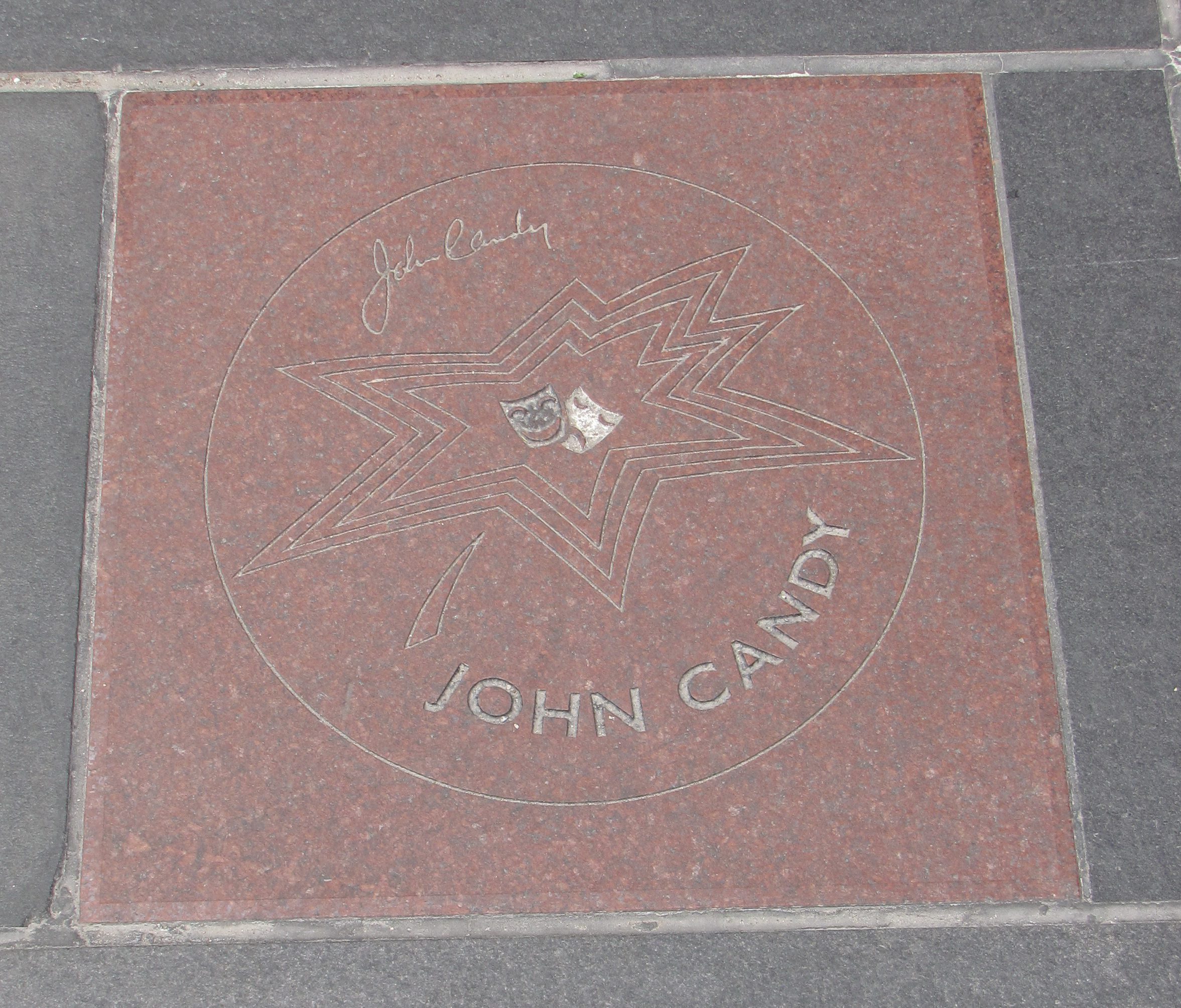
| 1998 | Canada’s Walk of Fame | Inducted | Honoree | Posthumous induction |
| 2006 | Canadian Postage Stamp | Canadians in Hollywood Series | Honoree | One of four entertainers honored by Canada Post |
| 2020 | John Candy Day | Declared by Toronto Mayor John Tory | Honoree | October 31 declared in his honor |
John Candy Net Worth and Income
At the time of his passing in March 1994, John Candy had an estimated net worth of $15 million. This figure, while substantial at the time, would equate to approximately $30 million in today’s dollars, after adjusting for inflation. Candy accumulated his wealth primarily through his highly successful career as an actor in numerous films and television shows.
His income sources included lucrative contracts for his starring and supporting roles in Hollywood blockbusters such as Splash, Planes, Trains & Automobiles, Uncle Buck, Home Alone, and Cool Runnings. Beyond his acting fees, Candy also earned income from his work as a writer, producer, and director. He co-owned the Canadian Football League team, the Toronto Argonauts, from 1991 until 1994, which contributed to his financial portfolio. Additionally, he was involved in various media projects and, at one point, co-owned a chain of blues bars and restaurants called House of Blues with Dan Aykroyd and Jim Belushi. The success of his films and his diverse business ventures played a significant role in his financial standing.
Legacy and Influence
John Candy’s legacy is that of a comedic giant with a uniquely tender heart, whose impact on film and television continues to resonate decades after his untimely death. He is remembered not just for his ability to generate laughter, but for the profound humanity and vulnerability he brought to every role, making his characters instantly credible and lovable.
His performances in films like Planes, Trains & Automobiles, Uncle Buck, and Cool Runnings are celebrated as classics of their genres and are frequently re-watched and revered by new generations of fans. Even in supporting roles, such as Gus Polinski in Home Alone or Del Griffith, the shower curtain ring salesman in Planes, Trains & Automobiles, Candy had an uncanny ability to steal scenes and leave a lasting impression. His comedic style combined physical humor with a gentle emotional candor, setting him apart from his peers.
Candy’s influence extends beyond his filmography. He was a foundational member of The Second City and SCTV, which became a breeding ground for comedic talent and revolutionized sketch comedy. His work there, earning him two Emmy Awards for writing, cemented his place in the history of television comedy. His love for Canada was also part of his public image, notably through his co-ownership of the Toronto Argonauts, who won the Grey Cup under his tenure in 1991.
The entertainment industry and his fellow actors deeply mourned his passing, with many colleagues, including Steve Martin, praising his kindness and sweetness. His children, Jennifer and Christopher Candy, are actively preserving and celebrating his memory. In 2023, it was announced that Ryan Reynolds and Colin Hanks, through Reynolds’ Maximum Effort production company, were working on a documentary about John Candy’s life, with access to the Candy family archives and home video footage. This documentary, titled John Candy: I Like Me, was set to be released in September 2025, serving as a “swan song” and a tribute to his enduring legacy. Candy’s birthday, October 31, was declared “John Candy Day” by Toronto Mayor John Tory in 2020, further solidifying his status as a national treasure.
Interesting Facts about John Candy
- Halloween Birthday: John Candy was born on October 31, 1950, making his birthday a memorable Halloween event.
- Football Dreams Shattered: Before his acting career, Candy dreamed of becoming a professional football player but a knee injury in high school ended those aspirations.
- Improv Genius: He found his true calling in improvisational comedy at The Second City, where he could freely create characters and make audiences laugh without a script.
- Co-Owner of a CFL Team: Candy co-owned the Toronto Argonauts of the Canadian Football League with Wayne Gretzky and Bruce McNall, and the team won the Grey Cup in 1991.
- Low Pay for Iconic Cameo: For his memorable, largely improvised role as Gus Polinski in Home Alone, Candy reportedly only earned around $400, doing it as a favor to John Hughes.
- Turned Down Ghostbusters Role: He famously turned down the role of Louis Tully in Ghostbusters, a part that ultimately went to Rick Moranis.
- Canadian Postage Stamp: In 2006, John Candy was honored as one of the first four entertainers to be featured on a commemorative postage stamp by Canada Post as part of its “Canadians in Hollywood” series.
- Directed a TV Movie: Prior to his death, Candy made his directorial debut with the Fox Television movie Hostage for a Day.
- Harvard Escort: During a visit to Harvard, Conan O’Brien served as his escort and, humorously, his “food policeman” while Candy was on the Pritikin diet.
- Posthumous Dedications: His final two films, Wagons East (1994) and Canadian Bacon (1995), are dedicated to his memory, and Blues Brothers 2000 also features a dedication to him.
Controversies
While John Candy was widely regarded for his congenial nature and kindness, his personal life did include some challenges and struggles, primarily concerning his health and certain personal habits. Candy grappled with significant weight issues throughout his career. Biographers and colleagues have noted his ongoing battle with obesity, which he was reportedly concerned about, and its potential impact on his health.
Additionally, Candy was a heavy smoker and, at various points in his life, struggled with alcohol abuse. He also had a period of cocaine use, particularly when he moved to Chicago to perform at The Second City, where drug use was prevalent among some of his peers. However, following the fatal drug overdose of his friend and colleague John Belushi, Candy reportedly quit drugs for a time, though he continued to smoke and used food to manage anxiety. These lifestyle factors, combined with a strong family history of heart disease (his father died prematurely from a heart attack), contributed to his poor health and ultimately his untimely death at the age of 43 from a heart attack. These struggles were largely personal and did not typically manifest as public controversies in the way celebrity scandals often do, but they were significant challenges in his life that were discussed in various biographies and accounts following his passing.
Social Media Presence
Given that John Candy passed away on March 4, 1994, he predates the era of modern social media platforms like Instagram, Twitter (now X), and YouTube. Therefore, he did not have personal, official social media accounts.
However, his enduring legacy is actively maintained and celebrated online by his family and dedicated fan communities. His children, Jennifer and Christopher Candy, are prominent figures in keeping his memory alive. They frequently share tributes and memories of their father on their personal social media accounts, which serve as a point of connection for fans. Jennifer Candy, for instance, has a presence on Instagram, where she often posts about her father.
Furthermore, the forthcoming documentary John Candy: I Like Me, co-produced by his children and Ryan Reynolds’ Maximum Effort, has generated significant online buzz and will undoubtedly contribute to his ongoing digital footprint. There are numerous fan-created pages and channels across platforms like YouTube, X, and Facebook dedicated to his work, showcasing clips from his films, interviews, and discussions about his impact, demonstrating that his comedic genius continues to thrive in the digital age. These fan-driven presences reflect the deep affection and lasting admiration people hold for John Candy.
Final Words about John Candy
John Candy’s passing on March 4, 1994, at the age of 43, left an irreplaceable void in the world of comedy and entertainment. His death, due to a heart attack while filming Wagons East in Mexico, cut short a career that was still flourishing and beginning to explore more dramatic roles. Despite his physical absence, John Candy’s legacy is robust and continues to flourish through his extensive filmography and the countless lives he touched with his warmth, kindness, and inimitable comedic talent.
He remains a cherished cultural icon, particularly in his native Canada and among fans of 1980s and 1990s cinema. His ability to portray relatable, often bumbling, yet profoundly good-hearted characters resonated deeply with audiences, creating a unique connection that few performers achieve. The enduring appeal of his films, which are regularly revisited and introduced to new generations, speaks volumes about his timeless comedic genius and the universal themes of humanity he explored.
The ongoing efforts by his children, Jennifer and Christopher Candy, to honor his memory, including their involvement in the upcoming documentary John Candy: I Like Me, ensure that his story and impact will continue to be shared and celebrated. Tributes from fellow actors, comedians, and fans consistently highlight his generosity of spirit and the joy he brought to millions. John Candy’s status as “comedy’s most beloved everyman” is well-deserved, and his work stands as a powerful testament to the lasting power of authentic warmth and vulnerability in performance. While there are no future plans for John Candy himself, his legacy guarantees that he will forever be remembered as one of the most talented and beloved actors of all time.
 Team Dailly WikiBio