
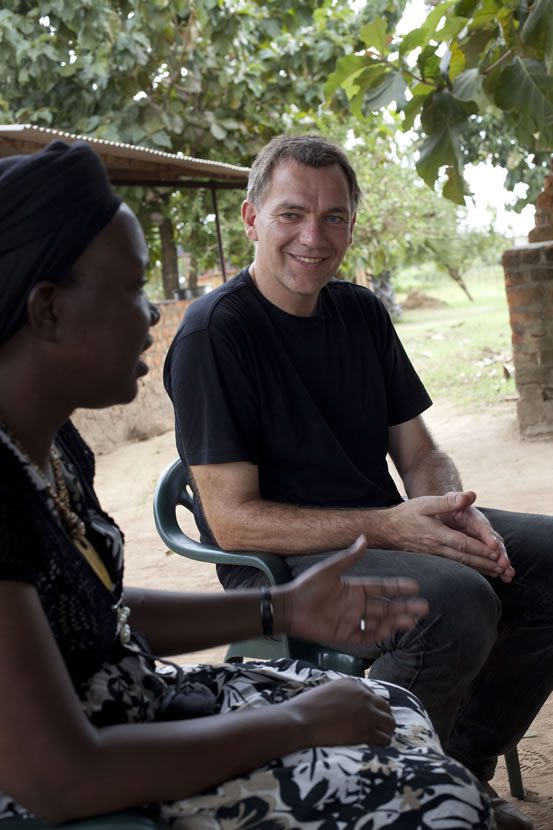
Brief Introduction of Jan Aken
Jan Paul van Aken, born on May 1, 1961, is a prominent German politician and biologist who has dedicated his career to activism, disarmament, and social justice. A leading figure in the German political party Die Linke (The Left), he currently serves as its co-chairperson. Before his deep involvement in federal politics, van Aken gained international recognition for his work as a biological weapons inspector for the United Nations, a role that underscored his commitment to global security and peace. His career began in science and environmental activism, notably as a genetic engineering expert for Greenpeace, where he campaigned against the risks of genetically modified organisms. His transition into politics saw him become a member of the German Bundestag, where he focused on foreign policy, disarmament, and arms control. Known for his principled stances and articulate critiques of government policy, Jan Aken has become a significant voice in German politics, advocating for a more peaceful and equitable world.
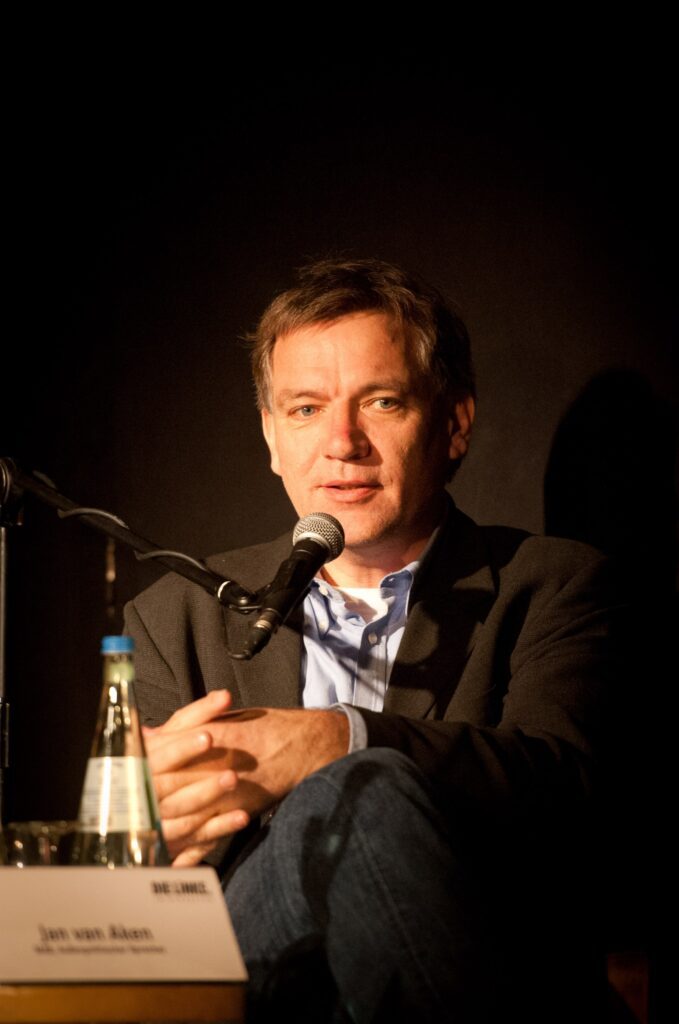
Jan Aken Overview
| Full Name | Jan Paul van Aken |
| Date of Birth | May 1, 1961 |
| Age(as of 2025) | 64 |
| Birthplace | Reinbek, Schleswig-Holstein, West Germany |
| Profession | Biologist, Politician |
| Husband/Wife | Not publicly available |
| Family | He is married and has three children. His father was a toolmaker and his mother was a secretary. |
| Relationship/Affairs(GF/BF) | Not publicly available |
| Net Worth | Information not publicly available |
Early Life and Education of Jan Aken
Jan van Aken was born in Reinbek, near Hamburg, on May 1, 1961, to a toolmaker father and a secretary mother. Growing up in Glinde-Wiesenfeld, his political consciousness was awakened early on. During his youth, he was an altar boy and became politically active, participating in demonstrations against nuclear power and right-wing extremism. A formative experience was his time spent camping in the “Free Republic of Wendland” in 1980, a protest camp against the planned nuclear waste repository in Gorleben. After completing his Abitur (university entrance qualification) at the Sachsenwald-Oberschule in Reinbek in 1982, he undertook his civilian service. Following this, van Aken enrolled at the University of Hamburg to study biology. His academic pursuits were intertwined with his activism; in 1983, he co-founded a student working group focused on the risks of genetic engineering. He successfully earned his Diploma in biology in 1989 and continued his academic journey, obtaining a Ph.D. in 1993 with a dissertation on the fixation of plant samples in space.
Jan Aken’s Career
Jan van Aken’s diverse career path reflects his deep commitment to scientific integrity, environmental protection, and international peace. After completing his doctorate, he worked as a scientist at the University of Hamburg. His expertise in genetics led him to join Greenpeace, a major international environmental organization. From 1997 to 2009, he served as a resident expert on genetic engineering, campaigning vigorously against the potential dangers of genetically modified organisms. His work at Greenpeace was not confined to Germany; he was involved in international campaigns, shaping the discourse on biotechnology and its environmental impact.
A significant chapter in his career began in the late 1990s when his focus expanded to include biological weapons and disarmament. In 1999, he co-founded the “Sunshine Project,” an international non-governmental organization dedicated to preventing the hostile use of biotechnology. This initiative worked to expose and halt programs that could violate the Biological Weapons Convention. Continuing this work, from 2004 to 2006, van Aken took on the critical role of a biological weapons inspector for the United Nations. This position involved investigating potential breaches of international treaties and working to ensure global security against the threat of biological warfare. His firsthand experience in this field provided him with a unique and profound understanding of international security and arms control.
Upon his return to Germany, Jan van Aken transitioned into the political arena, joining the left-wing political party Die Linke in 2007. His high profile and expertise quickly propelled him into a leadership role within the party. In the 2009 German federal election, he was a leading candidate for Die Linke in Hamburg and successfully won a seat in the Bundestag, the German federal parliament. He was a member of the Bundestag from 2009 to 2017. During his tenure as a parliamentarian, van Aken was an influential voice on foreign policy. He served on the Foreign Affairs Committee and the Subcommittee on Disarmament, Arms Control, and Non-Proliferation. From 2009 to 2011, he was the deputy chairperson for the parliamentary faction of The Left. He was known for his staunch opposition to German military interventions abroad and his consistent calls for stricter controls on arms exports. After leaving the Bundestag in 2017, he worked for the Rosa Luxemburg Foundation’s Geneva office as part of their global health program. In October 2024, Jan van Aken was elected as the federal co-chairman of Die Linke, alongside Ines Schwerdtner. He was again a leading candidate for the party in the 2025 federal election, successfully regaining a seat in the Bundestag.
Jan Aken Personal Life & Family
Jan van Aken is known for keeping his personal life largely private. He is married and is a father to three children. The family has lived in Hamburg’s St. Pauli district. For a period, van Aken and his family also lived in Jaffa, Israel, for two years while he was working at the Geneva office of the Rosa Luxemburg Foundation. Despite his public profile, he has made a conscious effort to shield his family, particularly his wife and children, from the media spotlight, and details about them are not publicly disclosed. His political convictions are deeply held, and he advocates for policies that promote social equality, famously coining the slogan “abolish billionaires” during the 2025 election campaign, arguing for wealth redistribution through measures like wealth and inheritance taxes.
Awards and Achievements of Jan Aken
While Jan van Aken may not have a list of formal awards in the traditional sense, his career is marked by a series of significant achievements and influential roles that have had a tangible impact in the fields of environmentalism, disarmament, and politics.
- Co-founding the international NGO “Sunshine Project” in 1999 to campaign against the misuse of biotechnology and for the strengthening of the Biological Weapons Convention.
- Serving as a United Nations biological weapons inspector from 2004 to 2006, a critical role in international peace and security.
- A lengthy and impactful tenure as a genetic engineering expert for Greenpeace, where he was a leading voice in the debate on genetically modified organisms.
- Being elected to the German Bundestag for multiple terms, representing Die Linke and holding key positions on the Foreign Affairs Committee and the Subcommittee on Disarmament, Arms Control, and Non-Proliferation.
- In 2016, he acted as a whistleblower by leaking the so-called TTIPleaks documents, classified papers from the controversial transatlantic trade negotiations.
- Rising to the position of co-chairperson of the Die Linke party in October 2024, a testament to his influence and leadership within the German left.
Jan Aken Net Worth and Income
The specific net worth of Jan van Aken is not publicly available. As a member of the German Bundestag, his income is regulated by law. His political stance heavily critiques wealth inequality, and he has been a vocal proponent of higher taxes for the wealthy and the reintroduction of a wealth tax in Germany. During the 2025 federal election campaign, he prominently advocated for the “abolition of billionaires,” calling for significant wealth redistribution to fund public services like education and infrastructure. This strong position against extreme wealth accumulation suggests that personal enrichment is not his primary motivation. He has stated that he believes exorbitant salaries for politicians lead to out-of-touch policies.
Legacy and Influence
Jan van Aken has built a legacy as a principled and relentless activist-politician. His influence extends from the scientific community and grassroots environmental movements to the highest levels of German federal politics. In his early career, his work with Greenpeace was instrumental in raising public awareness and shaping policy debates around genetic engineering in Germany and beyond. His expertise and credibility were further solidified by his time as a UN biological weapons inspector, giving him a unique and respected voice on matters of international security and disarmament. As a politician, he has been a consistent and powerful advocate for a non-interventionist foreign policy, challenging the consensus on military deployments and arms exports. He is known for his populist approach, aiming to connect with ordinary people and champion their interests against what he sees as a political and economic elite. His admission to leaking the TTIP documents in 2016 cemented his image as a whistleblower willing to challenge authority for the sake of public interest. As co-leader of Die Linke, he continues to shape the trajectory of the German left, pushing for radical social and economic change.
Interesting Facts about Jan Aken
- In his youth, he was an altar boy in the Catholic Church, a background that contrasts with his later left-wing political activism.
- He has authored several books on topics such as globalization and international security.
- During the 2025 election campaign, he revealed that he had bought a single share in the arms manufacturer Rheinmetall years ago, not for profit, but to gain access to shareholder meetings and protest the company’s practices from within.
- He spent two years living with his family in Jaffa, a mixed Arab-Jewish city in Israel.
- He is a strong advocate for a four-day work week and believes in fundamentally changing the structure of work to improve people’s lives.
Controversies
In April 2013, Jan van Aken was ordered by the Lüneburg District Court to pay a fine of €2,250 for “public provocation to commit a crime.” The conviction stemmed from his signing of a petition called “Castor, schottern,” which called for the sabotage of railway lines to protest against the transport of nuclear waste. This action was part of a broader anti-nuclear protest movement in Germany. The court’s decision followed the lifting of his parliamentary immunity by the Bundestag in November 2012, which was necessary to allow for the prosecution. The incident highlighted the tension between political protest and the law and was a significant moment in his career as an activist-politician.
Social Media Presence
- Instagram – Not publicly available
- Twitter – While there are accounts that mention him, there is no official, verified, and active personal account with a significant following. He is active on Mastodon.
- YouTube – Not publicly available
Final Words about Jan Aken
Jan van Aken remains a dynamic and influential force in German politics. As the current co-chair of Die Linke, he is at the forefront of the party’s efforts to navigate a challenging political landscape and champion a democratic socialist agenda. His journey from a scientist and activist to a national political leader is a testament to his unwavering commitment to his ideals. Whether challenging corporate power, advocating for global disarmament, or fighting for social justice at home, van Aken has consistently demonstrated a willingness to confront established norms and speak truth to power. His future plans are intrinsically linked to the fortunes of Die Linke, as he works to strengthen the party’s appeal and translate its vision for a more just and peaceful society into tangible political change. His legacy will likely be defined by his relentless pursuit of a world free from nuclear and biological weapons, and his passionate advocacy for the rights and dignity of ordinary people over the interests of the powerful and wealthy.