
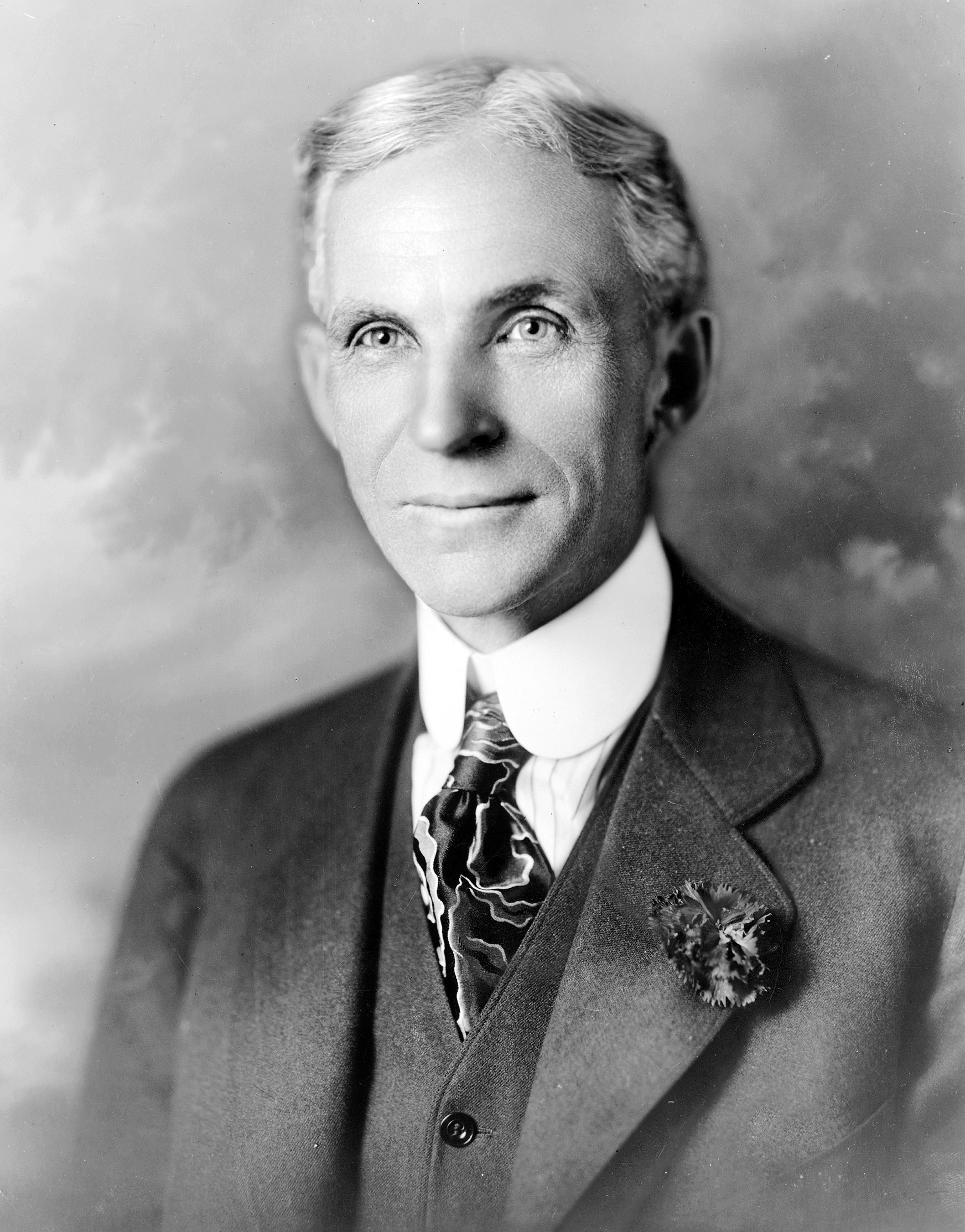
Brief Introduction of Henry Thornton
Henry Thornton (1760-1815) was a distinguished British economist, banker, philanthropist, and parliamentarian, renowned for his significant contributions to monetary theory and his unwavering commitment to social reform. As a leading figure in the Clapham Sect, an influential group of evangelical Christian reformers, he was a close friend and cousin of William Wilberforce and played a crucial financial and strategic role in the successful campaign to abolish the slave trade. In the world of finance, Thornton is celebrated for his groundbreaking 1802 work, “An Enquiry into the Nature and Effects of the Paper Credit of Great Britain,” which presented a sophisticated analysis of the monetary system and has led many to consider him the father of the modern central bank. His expertise in financial matters was widely recognized in Parliament, where he served as an independent Member for Southwark for over three decades.

Henry Thornton Overview
| Full Name | Henry Thornton |
| Date of Birth | March 10, 1760 |
| Age(as of 2025) | Deceased (Died at age 54) |
| Birthplace | Clapham, London, England |
| Profession | Economist, Banker, Philanthropist, Member of Parliament |
| Husband/Wife | Marianne Sykes (m. 1796–1815) |
| Family | Father: John Thornton, Mother: Lucy Watson, Siblings: Samuel Thornton, Robert Thornton, Jane Thornton. Nine children, including Marianne Thornton and Henry Sykes Thornton. |
| Relationship/Affairs(GF/BF) | Not applicable. He was married to Marianne Sykes. |
| Net Worth | Information not publicly available in modern terms, but he was known to be from a wealthy family and gave away a significant portion of his income to charity. |
Early Life and Education of Henry Thornton
Henry Thornton was born on March 10, 1760, in Clapham, then a village in Surrey, into a prosperous and devoutly evangelical family. He was the youngest son of John Thornton, a wealthy merchant and a prominent philanthropist who was a key patron of the early evangelical movement, and Lucy Watson. His father’s immense generosity and commitment to religious and social causes profoundly shaped Henry’s own worldview and future endeavors. The Thornton household was a hub of evangelical activity, and Henry formed a close, lifelong bond with his cousin, William Wilberforce, who would become his key ally in the fight against slavery. Thornton’s formal education was somewhat inconsistent. He attended a school in Wandsworth at a young age before being moved to another institution which he later felt provided him with “next to no education.” Despite this, his sharp intellect and studious nature allowed him to become a self-taught expert in finance and economics, fields in which he would leave a lasting mark.
Henry Thornton’s Career
Henry Thornton’s professional life was a remarkable blend of high finance, dedicated public service, and pioneering economic thought. In 1778, he began his career in a counting house and later joined his father’s merchant firm. However, finding the speculative nature of the trade unsettling, he transitioned to banking in 1784, joining the firm Down and Free. The bank was eventually renamed Down, Thornton & Free, and under his astute direction, it grew into one of London’s largest and most respected banking houses.
In 1782, Thornton was elected as the Member of Parliament for Southwark, a seat he would hold independently of party affiliation for the rest of his life. In Parliament, he was regarded as a leading authority on financial matters, serving on several important committees, including the Bullion Committee of 1810. His parliamentary work was driven by a strong moral compass; he supported parliamentary reform, Catholic emancipation, and was a steadfast opponent of corruption.
Thornton’s most enduring contribution to his field is his 1802 book, “An Enquiry into the Nature and Effects of the Paper Credit of Great Britain.” This seminal work provided a detailed analysis of paper money, the role of a central bank (the Bank of England), and the mechanisms of inflation and monetary control. He was the first to clearly distinguish between nominal and real interest rates and anticipated many concepts that would become central to modern monetary economics. His theories were so advanced that their significance was not fully appreciated until they were championed by economists like Friedrich Hayek and John Maynard Keynes over a century later.
Beyond Parliament and banking, Thornton was the financial architect of the Clapham Sect’s numerous reform efforts. He was a founder and the chairman of the Sierra Leone Company, an ambitious project to establish a colony for freed slaves in Africa, demonstrating that commerce could thrive without exploitation. He poured his own funds into the venture and effectively managed its operations from London, working closely with Zachary Macaulay. His tireless efforts and financial acumen were indispensable to the eventual success of the abolitionist movement in 1807.
Henry Thornton Personal Life & Family
In March 1796, Henry Thornton married Marianne Sykes, the daughter of a merchant from Hull. Their marriage was described as affectionate and happy. Together, they had nine children: Marianne, Henry Sykes, Lucy, Watson, Isabella, Sophia, Henrietta, Laura, and Charles. The family resided at Battersea Rise, a large house on Clapham Common that Thornton had purchased in 1792. This home became the central meeting place for the Clapham Sect, with its distinctive oval library, reputedly designed by Prime Minister William Pitt, serving as the hub for their strategic discussions on social and political reform. For several years, Thornton shared this home with his cousin and close collaborator, William Wilberforce, even after their respective marriages. Thornton was a devoted father who took a keen interest in the education and moral upbringing of his children, writing articles on the subject for the Christian Observer, the journal of the Clapham Sect. Tragically, Thornton’s life was cut short by tuberculosis. He died on January 16, 1815, at the age of 54, at Wilberforce’s home in Kensington Gore. His wife, Marianne, succumbed to the same disease just nine months later. Following their parents’ deaths, the nine orphaned children were adopted by a family friend, Sir Robert Inglis.

Awards and Achievements of Henry Thornton
- Pioneering Monetary Economist: Authored the highly influential “An Enquiry into the Nature and Effects of the Paper Credit of Great Britain” (1802), a foundational text in monetary theory that established him as the “father of the modern central bank.”
- Member of Parliament: Served as the independent MP for Southwark for 32 years (1782–1815), earning a reputation as a leading financial expert and a politician of great integrity.
- Abolitionist Leader: As a central figure in the Clapham Sect, he provided crucial financial backing and strategic leadership for the campaign to abolish the slave trade in the British Empire.
- Chairman of the Sierra Leone Company: Founded and directed the company established to create a settlement for freed slaves in Africa, a practical expression of his abolitionist principles.
- Founder of Charitable and Missionary Societies: Was instrumental in founding several significant organizations, including the Church Missionary Society (1799) and the British and Foreign Bible Society (1804), serving as the latter’s first treasurer.
- Financial Innovator: Successfully managed and expanded the banking firm Down, Thornton & Free, making it one of London’s largest banks.
Henry Thornton Net Worth and Income
A precise calculation of Henry Thornton’s net worth in contemporary terms is not available. However, it is well-documented that he was born into a very wealthy family, inheriting a significant fortune from his father, John Thornton, a successful merchant. Throughout his career as a partner in one of London’s largest banking firms, Down, Thornton & Free, he managed and grew his wealth considerably. Despite his financial success, Thornton was known for his remarkable generosity and philanthropic spirit. He lived a relatively frugal life and was known to give away a substantial portion of his income to charitable causes, with one account stating that as a bachelor he donated as much as six-sevenths of his earnings. His wealth was not hoarded but actively used to fund the extensive social and religious campaigns of the Clapham Sect, particularly the costly endeavor of the Sierra Leone Company and the fight against the slave trade.
Legacy and Influence
Henry Thornton’s legacy is multifaceted, spanning the fields of economics, politics, and social reform. In economics, his work on paper credit and the function of a central bank was profoundly ahead of its time. Though his book “Paper Credit” was largely overlooked for a century, its rediscovery in the 20th century by economists like Hayek led to his recognition as a seminal figure in monetary theory. He is credited with providing the intellectual framework that underpins modern central banking. Politically, he represented a model of integrity and independence, using his position in Parliament not for personal gain but to champion causes such as abolition and financial stability. His most visible legacy is his critical role in the abolition of the slave trade. As the financial strategist and a core member of the Clapham Sect, his influence was indispensable. He and the Sect championed numerous other causes, founding missionary societies and promoting education, leaving an enduring mark on British society’s moral and social fabric. The home he created at Battersea Rise is remembered as the headquarters of a movement that changed the world.
Interesting Facts about Henry Thornton
- He was the great-grandfather of the novelist E.M. Forster, who later wrote a biography of his eldest daughter, titled “Marianne Thornton, A Domestic Biography.”
- Despite his immense wealth and influence in banking, he initially pursued a career in banking against the advice of his parents.
- Early in his political career, he was invited to stand for Parliament in Hull but withdrew upon discovering that he was expected to bribe voters with two guineas each, a common practice he refused to engage in.
- He was a prolific writer, contributing around eighty articles to the Christian Observer, the journal of the Clapham Sect.
- He was a co-founder of what is now the Royal School for Deaf Children Margate, Britain’s first free school for deaf students.
- He and his cousin William Wilberforce lived together at Thornton’s house, Battersea Rise, for several years, even after they were both married, to better coordinate their abolitionist campaign.
- He donated a vast portion of his income to charity; as a bachelor, it was estimated to be six-sevenths of his earnings.
Controversies
Henry Thornton’s life and career were marked by a remarkable degree of integrity, and he is not associated with any significant personal scandals. Intellectually, his economic views were part of a major debate of his time. His 1802 book “Paper Credit” was a defense of the Bank of England against accusations that its over-issuance of paper money was the sole cause of inflation. He initially took what was known as the anti-bullionist stance. However, his views evolved, and by the time of the Bullion Committee in 1810, he had grown more critical of the Bank’s policies and argued for a return to the gold standard, demonstrating an intellectual flexibility and a willingness to adapt his position based on evidence.
Social Media Presence
- Instagram – Not applicable
- Twitter – Not applicable
- YouTube – Not applicable
Final Words about Henry Thornton
Henry Thornton stands as a towering figure of the late 18th and early 19th centuries, a man whose intellect and integrity left an indelible impact on both British finance and its social conscience. His life was a testament to his belief that commercial success and public service were not mutually exclusive but could be powerfully combined to effect positive change. As the “father of the modern central bank,” his economic theories laid a foundation that continues to influence fiscal policy worldwide. As a philanthropist and a leader of the Clapham Sect, his strategic mind and unwavering dedication were instrumental in one of the greatest humanitarian achievements of his era: the abolition of the slave trade. While less famous than his cousin William Wilberforce, Thornton’s role as the quiet, intellectual, and financial powerhouse of the movement was no less vital. His legacy is not just in his celebrated book or the laws he helped pass, but in the enduring example of a life lived with profound purpose, intellectual rigor, and a deep commitment to the betterment of humanity.