
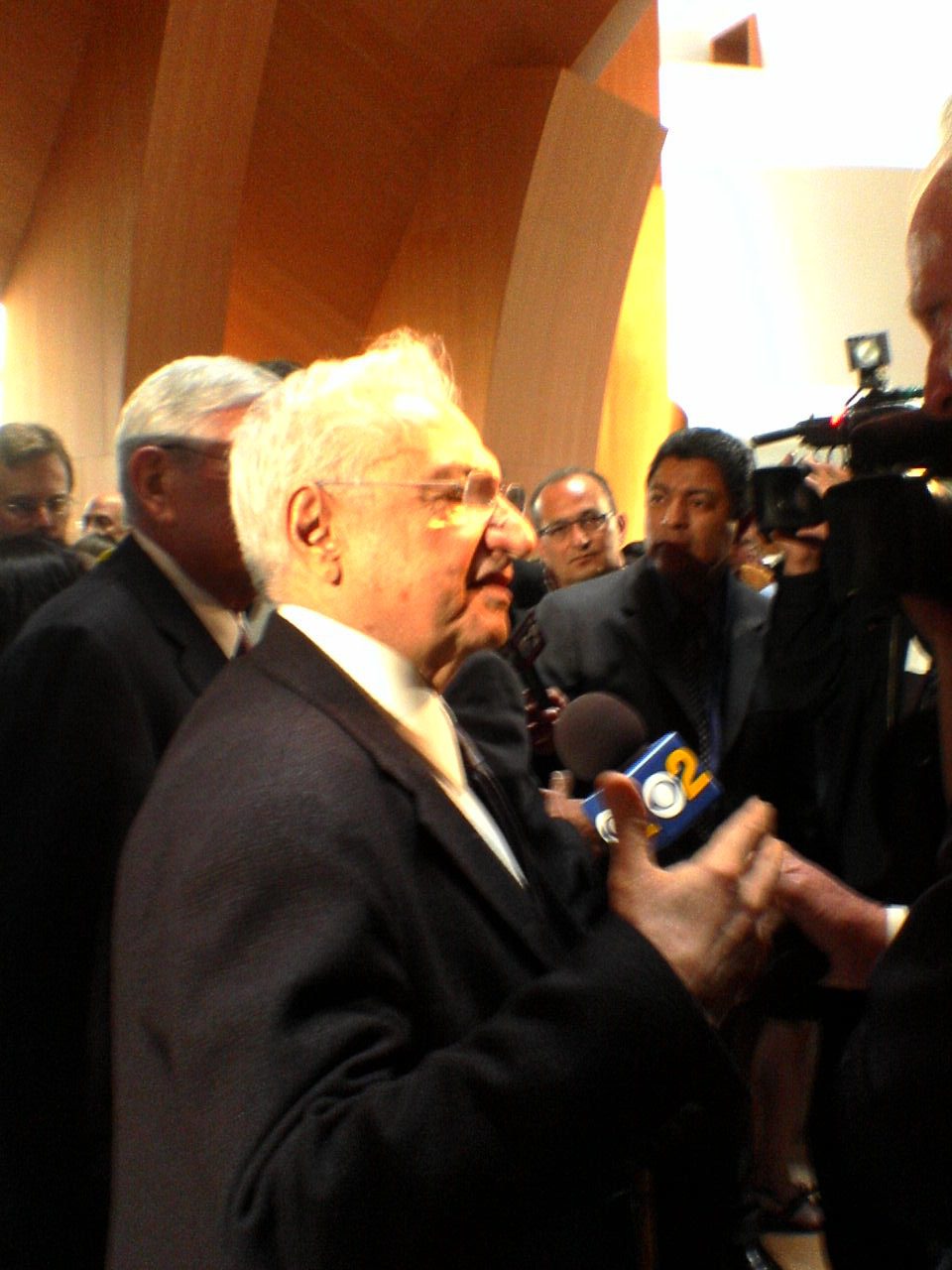
Brief Introduction of Frank Gehry
Frank Owen Gehry was a Canadian-American architect renowned for his innovative and unconventional designs that have left an indelible mark on the global architectural landscape. His work is often characterized as Deconstructivist, though he himself resisted such labels. Gehry’s buildings are celebrated for their sculptural, fragmented forms, and his pioneering use of materials like corrugated metal, chain-link fencing, and titanium. Some of his most iconic creations include the Guggenheim Museum Bilbao, the Walt Disney Concert Hall in Los Angeles, and the Fondation Louis Vuitton in Paris. Throughout his prolific career, Gehry received numerous accolades, including the prestigious Pritzker Architecture Prize in 1989, solidifying his status as one of the most influential and important architects of his time. His visionary approach challenged traditional architectural norms and transformed buildings into expressive works of art.
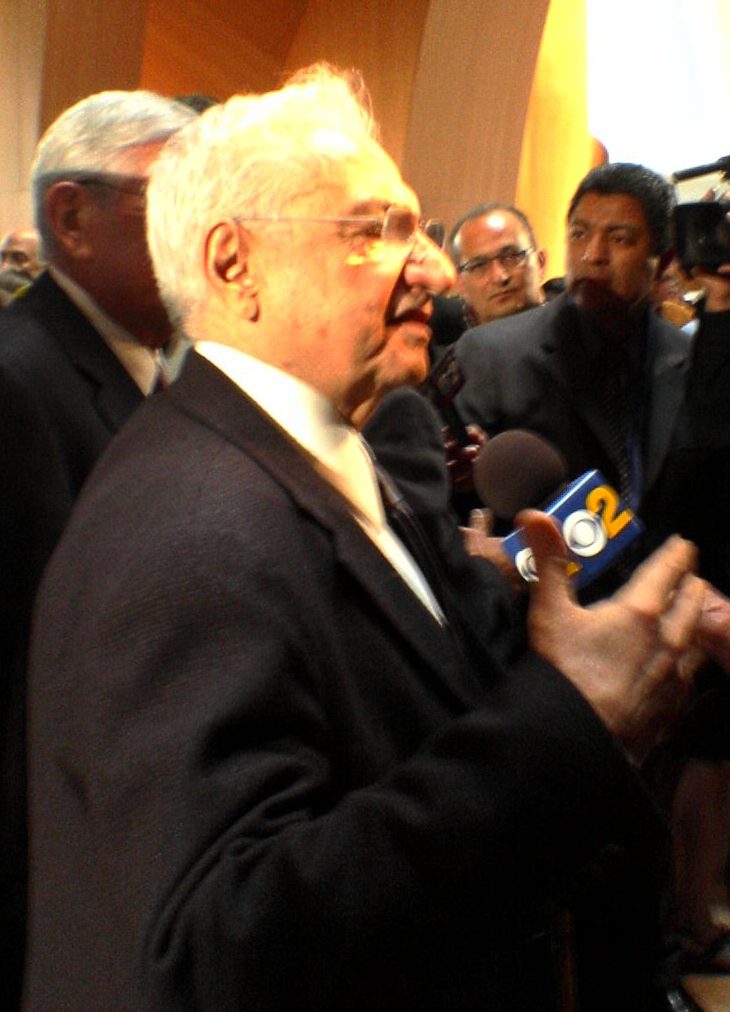
Frank Gehry Overview
| Full Name | Frank Owen Gehry (born Frank Owen Goldberg) |
| Date of Birth | February 28, 1929 |
| Age(as of 2025) | 96 |
| Birthplace | Toronto, Ontario, Canada |
| Profession | Architect, Designer |
| Husband/Wife | Anita Snyder (m. 1952; div. 1966), Berta Isabel Aguilera (m. 1975) |
| Family | Wife: Berta Isabel Aguilera; Children: Brina Gehry, Leslie Gehry Brenner (deceased), Alejandro Gehry, Samuel Gehry |
| Relationship/Affairs(GF/BF) | Not publicly available |
| Net Worth | Approximately $100 million at the time of his passing |
Early Life and Education of Frank Gehry
Frank Owen Gehry was born Frank Owen Goldberg in Toronto, Ontario, Canada, on February 28, 1929, to Polish-Jewish parents. His creativity was nurtured from a young age by his grandmother, with whom he would build imaginative cities using scraps of wood from her husband’s hardware store. This early exposure to unconventional building materials would become a hallmark of his later architectural work. In 1947, at the age of 17, Gehry and his family immigrated to Los Angeles, California. He took on various jobs, including driving a delivery truck, while attending night classes at Los Angeles City College. He went on to study architecture at the University of Southern California, graduating in 1954. It was during this period, in an effort to avoid anti-Semitism, that he changed his surname from Goldberg to Gehry. After serving in the U.S. Army, Gehry briefly studied city planning at the Harvard Graduate School of Design in 1956 but left before completing his degree.
Frank Gehry’s Career
After his studies and a brief period working for other architectural firms, including Victor Gruen Associates in Los Angeles and André Remondet in Paris, Frank Gehry established his own practice in Los Angeles in 1962, which would eventually become Gehry Partners, LLP. In his early career, Gehry’s work was more conventional, but he soon began to experiment with a more personal and expressive style. A significant turning point was the radical renovation of his own Santa Monica home in 1978, where he wrapped the existing bungalow in a new shell of corrugated steel and chain-link fencing, a move that brought him widespread attention. This project was a clear departure from traditional design and showcased his interest in everyday, “unfinished” materials.
The 1980s saw Gehry gain further recognition with projects like the California Aerospace Museum and the Loyola Law School campus in Los Angeles. However, it was the 1990s that catapulted him to international stardom. The Vitra Design Museum in Germany (1989) was his first European project and displayed the sculptural forms that would define his career. This was followed by the iconic Guggenheim Museum in Bilbao, Spain (1997), a masterpiece of undulating titanium curves that is widely credited with revitalizing the city’s economy—a phenomenon dubbed the “Bilbao effect.” This project cemented Gehry’s reputation as a visionary architect.
Throughout the 2000s and beyond, Gehry continued to produce a remarkable body of work, including the Walt Disney Concert Hall in Los Angeles (2003), with its sail-like stainless steel facade; the Jay Pritzker Pavilion in Chicago’s Millennium Park (2004); and the Fondation Louis Vuitton in Paris (2014), a stunning composition of glass “sails.” He also designed his first skyscraper, 8 Spruce Street in New York City (2011), and numerous other cultural institutions, academic buildings, and residential projects around the world. Gehry was also a dedicated educator, holding teaching positions at prestigious universities such as Yale, Harvard, and his alma mater, the University of Southern California.
Frank Gehry Personal Life & Family
Frank Gehry was a naturalized U.S. citizen but also retained his Canadian citizenship. He was married twice. In 1952, he married Anita Snyder, with whom he had two daughters, Brina and Leslie. The couple divorced in 1966. Sadly, his daughter Leslie Gehry Brenner passed away from cancer in 2008. In 1975, Gehry married his second wife, Berta Isabel Aguilera. They had two sons together, Alejandro and Samuel. Despite his global fame, Gehry was known to be a private person, rarely discussing his family in the media. He was an avid ice hockey fan, having grown up in Canada, and even started a hockey league in his office. He also had a passion for sailing and designed his own yacht.
Awards and Achievements of Frank Gehry
- Pritzker Architecture Prize (1989)
- Arnold W. Brunner Memorial Prize in Architecture, American Academy of Arts and Letters (1977)
- Wolf Prize in Art (Architecture), Wolf Foundation (1992)
- Praemium Imperiale for Architecture, Japan Art Association (1992)
- Dorothy and Lillian Gish Award (1994)
- National Medal of Arts (1998)
- Friedrich Kiesler Prize (1998)
- AIA Gold Medal, American Institute of Architects (1999)
- Gold Medal for Architecture, American Academy of Arts and Letters (2002)
- Companion of the Order of Canada (2003)
- Golden Lion for Lifetime Achievement, Venice Biennale (2008)
- Presidential Medal of Freedom (2016)
Frank Gehry Net Worth and Income
At the time of his passing in December 2025, Frank Gehry’s net worth was estimated to be around $100 million. His substantial fortune was primarily derived from his prolific and highly sought-after architectural projects around the globe. His income sources were diverse, including fees from his architectural firm, Gehry Partners, LLP, as well as royalties, and earnings from his teaching positions at various universities. Beyond architecture, Gehry also engaged in various design collaborations that contributed to his wealth. He designed a jewelry collection for Tiffany & Co., furniture lines, and even a special edition bottle for Hennessy cognac. Many of his buildings have become major tourist attractions, contributing significantly to the economies of their respective cities, a testament to the immense value of his work.

Legacy and Influence
Frank Gehry’s legacy is defined by his revolutionary approach to architecture, which challenged conventions and redefined the possibilities of building design. His work is often cited as a prime example of Deconstructivism, characterized by its sculptural and fragmented aesthetic. He was a pioneer in using computer-aided design (CAD) software, specifically CATIA (a program originally for the aerospace industry), to translate his complex and ambitious designs into buildable structures. This technological innovation allowed for a new level of formal complexity in architecture.
Perhaps his most significant contribution is the “Bilbao effect,” a term used to describe the phenomenon of a city’s economic and cultural revitalization through the construction of a landmark piece of architecture. The Guggenheim Museum Bilbao is the quintessential example, transforming a post-industrial city into a global tourist destination. Gehry’s influence extends to generations of architects who have been inspired by his willingness to experiment, take risks, and prioritize creativity and emotional expression in their work. He made architecture a popular topic of public discourse and demonstrated that buildings could be profound works of art.
Interesting Facts about Frank Gehry
- As a child, he was given the Hebrew name “Ephraim.”
- He was an avid ice hockey fan and started a league named FOG (for Frank Owen Gehry) in his office. He also designed the trophy for the World Cup of Hockey.
- His creative spark was ignited by his grandmother, with whom he built imaginary cities out of wood scraps.
- In the early 1970s, he designed a successful line of cardboard furniture called “Easy Edges.”
- Gehry was a keen sailor and designed his own yacht named “Foggy.”
- Inspiration for his fluid, sculptural forms often came from the movement of fish, a recurring motif in his work.
- He collaborated with Tiffany & Co. to create a collection of jewelry.
- He appeared in an episode of “The Simpsons,” although he later expressed regret over the appearance, feeling it oversimplified his complex design process.
Controversies
While widely celebrated, Frank Gehry’s work has not been without criticism. Some critics have argued that his designs prioritize dramatic form over function, leading to buildings that are expensive and sometimes impractical. His Stata Center at MIT, for instance, led to a lawsuit over alleged design flaws that caused leaks and other issues, though the case was later resolved amicably. The non-traditional design of the Dancing House in Prague was also controversial at the time of its construction, as it stood in stark contrast to the city’s historic Baroque and Gothic architecture. Gehry himself was known for being occasionally outspoken and having a bad temper.
Social Media Presence
- Instagram – Not publicly available
- Twitter – Not publicly available
- YouTube – Not publicly available
Frank Gehry did not maintain a personal public presence on social media platforms.
Final Words about Frank Gehry
Frank Gehry passed away on December 5, 2025, at the age of 96, leaving behind an unparalleled architectural legacy. He remained professionally active late into his life, with major projects like the Guggenheim Abu Dhabi still in development. Regarded as the “most important architect of our age” by Vanity Fair, his impact on the built environment is immeasurable. Gehry transformed architecture from a purely functional discipline into a medium for profound artistic and emotional expression. His buildings are not just structures; they are dynamic sculptures that interact with their surroundings and provoke conversation. The legacy of Frank Gehry is not simply in the iconic buildings he designed, but in the spirit of innovation, creativity, and fearless experimentation he championed, ensuring his influence will be felt for generations to come.