
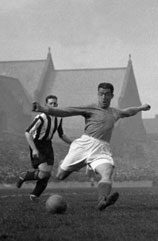
Brief Introduction of Dixie Deans
John Kelly “Dixie” Deans is a retired Scottish professional footballer, celebrated as one of the most prolific goal-scorers of his generation. His formidable presence as a centre-forward left an indelible mark on Scottish football, particularly during his tenures with Motherwell and Celtic in the 1960s and 1970s. Deans’ career is distinguished by his exceptional scoring rate, his pivotal role in Celtic’s domestic dominance, and a collection of records that still stand today. Nicknamed “Dixie” in homage to the legendary Everton striker Dixie Dean, he carved out his own legacy with a combination of power, precision, and an unwavering determination to find the back of the net. His contributions to the sport have cemented his status as a revered figure among football enthusiasts, and his life story is one of perseverance, triumph, and an enduring passion for the game.

Dixie Deans Overview
| Full Name | John Kelly Deans |
| Date of Birth | 30 July 1946 |
| Age(as of 2025) | 79 |
| Birthplace | Johnstone, Scotland |
| Profession | Former Professional Footballer |
| Husband/Wife | Information not publicly available (first marriage ended in divorce) |
| Family | Information not publicly available |
| Relationship/Affairs(GF/BF) | Information not disclosed |
| Net Worth | Not publicly available |
Early Life and Education of Dixie Deans
John Kelly Deans was born in Johnstone, Renfrewshire, Scotland, on July 30, 1946. His early life was marked by significant hardship and personal tragedy. Growing up in a working-class environment in post-war Scotland, Deans faced the devastating loss of his parents and siblings to tuberculosis. This challenging upbringing undoubtedly shaped his resilient and determined character, traits that would become hallmarks of his professional football career. Deans began his football journey with Neilston Juniors, a semi-professional club where he honed his skills as a potent goal-scorer. His prolificacy at the junior level, where he once scored 60 goals in a season, quickly drew the attention of senior clubs, laying the foundation for his ascent in the world of professional football. Information regarding his formal education is not widely documented, as his focus from a young age was firmly on his burgeoning football talents.
Dixie Deans’s Career
Dixie Deans’s professional football career is a compelling narrative of a goal-scoring prodigy who rose to become a legend of Scottish football. His journey began in earnest when he signed for Motherwell from Neilston Juniors in 1965. Over six seasons at Fir Park, Deans established himself as a formidable striker, netting an impressive 78 goals in 152 league appearances. His aggressive playing style and knack for finding the back of the net made him a fan favourite and a constant threat to opposing defences. However, his time at Motherwell was also marked by a reputation for being a “hothead,” which led to several disciplinary issues.
In October 1971, Jock Stein, the legendary manager of Celtic, made the astute decision to sign Deans for a fee of £17,500. This move proved to be a masterstroke. At Celtic, Deans’s career reached its zenith. He transformed his on-field demeanor under Stein’s guidance, channeling his aggression into becoming a more focused and disciplined player. His impact was immediate and profound. Deans formed a lethal partnership with Kenny Dalglish, and together they terrorized defenses across Scotland and Europe. During his five seasons with the Glasgow giants, he scored a remarkable 124 goals in 184 appearances, a testament to his incredible scoring prowess.
Deans’s time at Celtic was laden with success. He played a crucial role in the club’s continuation of their “nine-in-a-row” league titles, winning three consecutive Scottish Division One championships from 1971-72 to 1973-74. He also secured two Scottish Cup winner’s medals in 1972 and 1974, and a Scottish League Cup winner’s medal in 1974-75. Deans etched his name into Scottish football folklore with his performances in two major cup finals against Hibernian. He scored a hat-trick in the 1972 Scottish Cup Final, a 6-1 victory for Celtic, and repeated the feat in the 1974 Scottish League Cup Final, which Celtic won 6-3. He remains the only player in Scottish football history to have scored a hat-trick in two major domestic cup finals. Another historic achievement came in November 1973, when he scored six goals in a single league match against Partick Thistle, a post-war record that still stands.
Despite his domestic success, Deans also experienced moments of profound disappointment. The most notable of these was in the 1972 European Cup semi-final against Inter Milan. The tie went to a penalty shootout, and Deans, who had come on as a substitute, missed the crucial first penalty for Celtic, who subsequently lost the shootout. This was a difficult moment in his career, but he demonstrated his resilience by scoring a hat-trick in the Scottish Cup final just days later.
In 1976, Deans departed from Celtic and moved to England to play for Luton Town. His time at Luton was brief, and he subsequently had loan spells at Carlisle United and Partick Thistle. He then embarked on a new chapter in his career, moving to Australia to play for Adelaide City. He enjoyed a successful spell in the National Soccer League, becoming the top scorer in the inaugural 1977 season with 16 goals and winning the NSL Cup in 1979. After his time in Australia, he had a brief stint with Shelbourne in the League of Ireland before returning to Scotland for a final season with Partick Thistle in 1980, after which he retired from professional football.

Dixie Deans Personal Life & Family
Dixie Deans’s personal life has been as eventful as his professional career. He grew up in Johnstone, Scotland, and as a boy, he was a devoted supporter of St Mirren. His early life was marked by immense personal loss, as he lost his entire immediate family to tuberculosis. This profound tragedy likely contributed to the development of his resilient and determined personality. His nickname, “Dixie,” was not a reference to any allegiance to Rangers, a common misconception, but was instead an homage to the legendary Everton forward, Dixie Dean, whose goal-scoring prowess he emulated. Deans has been married, and his first marriage ended in divorce. He has been open about the personal challenges he has faced, including a brief struggle with alcohol. After retiring from football, Deans ventured into the business world, owning a pub named ‘Dixie’s’ in Rutherglen and also being involved in property development with former Celtic teammate Tommy Callaghan. In his later years, he has remained a beloved figure at Celtic Park, working as a match-day host and entertaining corporate guests alongside other Celtic legends. He has also shared anecdotes from his life and career in his autobiography, “There’s Only One Dixie Deans.”
Awards and Achievements of Dixie Deans
- Scottish Division One Champion: 1971–72, 1972–73, 1973–74
- Scottish Cup Winner: 1971–72, 1973–74
- Scottish League Cup Winner: 1974–75
- Drybrough Cup Winner: 1974–75
- NSL Cup Winner: 1979 (with Adelaide City)
- National Soccer League Top Scorer: 1977 (with Adelaide City)
- Only player in Scottish football history to score a hat-trick in two major domestic cup finals
- Post-war record for most goals in a single Scottish league game (6 goals)
Dixie Deans Net Worth and Income
Information regarding Dixie Deans’s net worth and income is not publicly available. As a professional footballer in the 1960s and 1970s, his earnings would have been significantly different from the salaries of modern-day players. After his playing career, he engaged in business ventures, including running a pub and property development, which would have contributed to his income. However, specific figures regarding his financial status have not been disclosed.
Legacy and Influence
Dixie Deans’s legacy in Scottish football is that of a phenomenal goal-scorer and a charismatic personality who left an indelible mark on the clubs he played for, particularly Celtic. His incredible scoring record, which includes numerous hat-tricks and a six-goal haul in a single match, speaks for itself. He is remembered as a fearless and robust striker who gave his all for the team. His two hat-tricks in major cup finals against a strong Hibernian side are iconic moments in Scottish football history and have cemented his status as a Celtic legend. Beyond his on-field achievements, Deans’s resilience in overcoming personal tragedy and his approachable nature have endeared him to generations of fans. His continued involvement with Celtic as a match-day host has ensured that his stories and his legend continue to be passed down. He is remembered not just for the goals he scored, but for the passion and excitement he brought to the game.
Interesting Facts about Dixie Deans
- His nickname “Dixie” was a tribute to the English footballer Dixie Dean, not an indication of any affiliation with Rangers; he was a St Mirren supporter in his youth.
- He is the only player in the history of Scottish football to have scored a hat-trick in both the Scottish Cup Final and the Scottish League Cup Final.
- He once scored six goals in a single league game for Celtic against Partick Thistle in November 1973.
- While playing in Australia for Adelaide City, he met the reggae superstar Bob Marley, who was a fan of Celtic and expressed his admiration for Deans having played at Celtic Park.
- Upon signing for Celtic, he was serving a six-week ban from his time at Motherwell.
- He was capped twice for the Scottish national team in 1974.
Controversies
Dixie Deans’s career was not without its share of controversy, particularly during his time at Motherwell. He was known for his fiery temperament on the pitch, which led to a number of sendings-off. His disciplinary record was a talking point, and he was serving a six-week suspension when he signed for Celtic in 1971. Under the management of Jock Stein at Celtic, he largely managed to control his temper, with his only sending-off for the club coming in a reserve game. The most significant moment of controversy and heartbreak in his career was his missed penalty in the 1972 European Cup semi-final shootout against Inter Milan, which ultimately led to Celtic’s elimination from the tournament.
Social Media Presence
- Instagram – Not publicly available
- Twitter – Not publicly available
- YouTube – Not publicly available
Final Words about Dixie Deans
Dixie Deans remains a revered and much-loved figure in Scottish football. A striker of immense talent and character, his goal-scoring exploits for Motherwell and Celtic have secured his place in the annals of the sport’s history. While his career had its share of highs and lows, his ability to find the back of the net with remarkable consistency and his knack for performing on the biggest stages set him apart. His legacy is not just in the records he set, but also in the memories he created for the fans who witnessed his thrilling performances. In his retirement, he has continued to be a wonderful ambassador for Celtic, sharing his experiences and his enduring love for the club with a new generation of supporters. The story of Dixie Deans is a testament to the power of resilience, dedication, and an unyielding passion for the beautiful game.