
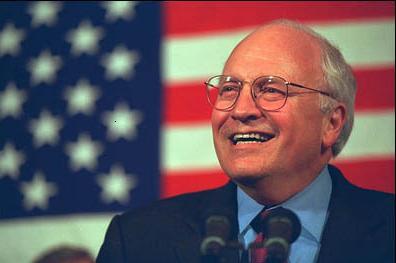
Brief Introduction of Dick Cheney
Richard Bruce “Dick” Cheney was an American politician and businessman who served as the 46th vice president of the United States from 2001 to 2009 under President George W. Bush. Often regarded as one of the most powerful vice presidents in American history, Cheney played a pivotal behind-the-scenes role in the Bush administration’s response to the September 11th terrorist attacks and the subsequent “War on Terror.” His extensive career in public service also included roles as White House Chief of Staff for President Gerald Ford, a multi-term U.S. Representative for Wyoming, and Secretary of Defense for President George H. W. Bush. Cheney’s political career was marked by his staunchly conservative views and his influential, and often controversial, role in shaping U.S. foreign and domestic policy.

Dick Cheney Overview
| Full Name | Richard Bruce Cheney |
| Date of Birth | January 30, 1941 |
| Age(as of 2025) | 84 |
| Birthplace | Lincoln, Nebraska, U.S. |
| Profession | Politician, Businessman |
| Husband/Wife | Lynne Ann Vincent (m. 1964) |
| Family | Wife: Lynne Cheney; Daughters: Elizabeth “Liz” Cheney, Mary Cheney |
| Relationship/Affairs(GF/BF) | Not publicly available |
| Net Worth | Estimated to be between $40 million and $100 million |
Early Life and Education of Dick Cheney
Richard Bruce Cheney was born on January 30, 1941, in Lincoln, Nebraska, to Marjorie Lorraine and Richard Herbert Cheney. His father was a soil conservation agent for the U.S. Department of Agriculture. The family later moved to Casper, Wyoming, where Cheney spent his formative years. In high school, he was the senior class president and co-captain of the football team. It was also during this time that he met his future wife, Lynne Vincent. After graduating, Cheney attended Yale University on a scholarship but struggled academically and dropped out. He returned to Wyoming and continued his education, eventually earning a Bachelor of Arts in 1965 and a Master of Arts in political science in 1966 from the University of Wyoming. He began doctoral studies at the University of Wisconsin–Madison but left before completing his dissertation to pursue a career in politics. During the Vietnam War, Cheney received five draft deferments, four for his student status and one for being a parent.
Dick Cheney’s Career
Dick Cheney’s political career began in 1968 with a congressional fellowship. He started as an intern for Congressman William A. Steiger and soon joined the staff of Donald Rumsfeld at the Office of Economic Opportunity during the Nixon administration. He held various positions in the Nixon and Ford administrations, culminating in his appointment as White House Chief of Staff for President Gerald Ford in 1975, becoming one of the youngest to ever hold the position. In 1978, Cheney was elected to the U.S. House of Representatives for Wyoming’s at-large congressional district, a seat he would hold for six terms. During his time in Congress, he established a solidly conservative voting record and rose through the Republican ranks, eventually becoming the House Minority Whip. In 1989, President George H. W. Bush appointed Cheney as the 17th Secretary of Defense. In this role, he oversaw significant military operations, including the U.S. invasion of Panama and Operation Desert Storm in the Persian Gulf. After the Bush administration, Cheney entered the private sector, serving as the Chairman and CEO of Halliburton Company from 1995 to 2000. His career took a decisive turn in 2000 when he was selected by George W. Bush to be his vice-presidential running mate. As Vice President, Cheney became an exceptionally influential figure, particularly after the September 11, 2001, terrorist attacks. He was a key architect of the Bush administration’s “War on Terror,” advocating for expanded executive power, warrantless surveillance, and the use of “enhanced interrogation techniques.” He was a leading proponent of the 2003 invasion of Iraq, controversially asserting that Saddam Hussein possessed weapons of mass destruction and had ties to al-Qaeda. Cheney’s two terms as vice president were marked by a significant expansion of the office’s power and influence, making him arguably the most powerful vice president in American history.
Dick Cheney Personal Life & Family
Dick Cheney married his high school sweetheart, Lynne Ann Vincent, in 1964. Lynne Cheney is an accomplished author and scholar, having earned a Ph.D. in 19th-century British literature from the University of Wisconsin-Madison. She served as the chair of the National Endowment for the Humanities from 1986 to 1993. The couple has two daughters, Elizabeth (Liz) and Mary. Both daughters have been involved in public life. Liz Cheney has had a prominent political career, serving as the U.S. Representative for Wyoming’s at-large congressional district. Mary Cheney is a businesswoman and has been an advocate for gay rights. Mary is openly lesbian and married her longtime partner, Heather Poe, in 2012. Dick Cheney publicly expressed his support for same-sex marriage, a position that at times put him at odds with other members of the Republican party. The family has several grandchildren. Cheney was known to be an avid outdoorsman, with a particular passion for fly fishing and hunting. Throughout his adult life, Cheney faced significant health challenges, having suffered his first of five heart attacks at the age of 37. His ongoing battle with heart disease led to numerous medical procedures, including a heart transplant in 2012.
Awards and Achievements of Dick Cheney
- Presidential Medal of Freedom (1991)
- U.S. Senator John Heinz Award for Greatest Public Service by an Elected or Appointed Official (1991)
- Keeper of the Flame Award (2002 – by the Center for Security Policy)
- Honorary Doctorate of Public Service from the University of Wyoming
Dick Cheney Net Worth and Income
Dick Cheney’s net worth has been a subject of public interest, with estimates placing it between $40 million and $100 million. A significant portion of his wealth was accumulated during his time in the private sector, particularly his tenure as Chairman and CEO of Halliburton from 1995 to 2000, where he received a substantial salary, bonuses, and stock options. His severance package from Halliburton was reportedly in the tens of millions of dollars. In addition to his corporate earnings, his income sources have included his government salaries from his various positions, including Vice President, as well as book deals and speaking engagements after leaving public office. He and his daughter Liz co-authored “Exceptional: Why the World Needs a Powerful America,” and he also wrote a memoir titled “In My Time: A Personal and Political Memoir.”

Legacy and Influence
Dick Cheney’s legacy is one of profound and polarizing influence on American politics and foreign policy. He is widely regarded as having redefined the role of the vice presidency, transforming it from a largely ceremonial position into a powerful center of executive authority. His supporters view him as a strong and decisive leader who was instrumental in protecting the United States in the aftermath of 9/11. They credit him with a clear-eyed approach to national security and a willingness to make difficult decisions to safeguard the country. His deep knowledge of the workings of the federal government allowed him to effectively navigate the bureaucracy and implement the administration’s agenda. Conversely, critics argue that Cheney’s policies led to a dangerous expansion of executive power, a disregard for international law, and the erosion of civil liberties. The invasion of Iraq, based on flawed intelligence that he championed, is often cited as a major foreign policy blunder that destabilized the Middle East and damaged America’s global standing. His advocacy for “enhanced interrogation techniques” has been widely condemned as endorsing torture. Ultimately, Dick Cheney’s influence is undeniable, leaving an indelible mark on the presidency, the Republican Party, and the course of American history in the early 21st century.
Interesting Facts about Dick Cheney
- He was an Eagle Scout.
- In 1975, at the age of 34, he became the youngest person to serve as White House Chief of Staff.
- He had a long history of heart problems, suffering his first heart attack at age 37 and eventually receiving a heart transplant in 2012.
- He was the head of George W. Bush’s vice-presidential search committee in 2000, and ultimately recommended himself for the position.
- He and his wife, Lynne, were high school sweethearts.
Controversies
Dick Cheney’s career was marked by numerous controversies. A central and enduring controversy surrounds his role as a key architect of the 2003 invasion of Iraq. Cheney was a forceful advocate for the war, publicly asserting that Saddam Hussein’s regime possessed weapons of mass destruction (WMDs) and had connections to al-Qaeda. The subsequent failure to find any WMDs and the lack of evidence of a significant link to al-Qaeda led to accusations that the Bush administration, with Cheney at the forefront, misled the American public to justify the war. Another significant area of controversy was Cheney’s strong support for “enhanced interrogation techniques” for suspected terrorists, which critics widely condemned as torture. He remained a staunch defender of these methods, arguing they were necessary to prevent future attacks. His connection to Halliburton also drew scrutiny, with critics raising questions about potential conflicts of interest when the company was awarded large, no-bid contracts in Iraq following the invasion. In 2006, Cheney was involved in a hunting incident where he accidentally shot and injured a fellow hunter, Harry Whittington. The delayed public disclosure of the incident drew criticism. Cheney’s tenure was also marked by the CIA leak scandal, which involved the outing of CIA operative Valerie Plame, leading to the conviction of his chief of staff, Scooter Libby.
Social Media Presence
- Instagram – Not publicly available
- Twitter – Not publicly available
- YouTube – Not publicly available
Final Words about Dick Cheney
In the years following his vice presidency, Dick Cheney remained a prominent voice in conservative politics, frequently offering his opinions on national security and foreign policy. He authored a memoir, “In My Time,” providing his perspective on his years in power. His health continued to be a significant aspect of his life, culminating in a successful heart transplant in 2012 that he chronicled in his book “Heart: An American Medical Odyssey.” A staunch conservative for most of his career, Cheney became a vocal critic of Donald Trump, arguing that Trump posed a significant threat to the American republic. In a notable break from his party, he endorsed Democratic nominee Kamala Harris in the 2024 presidential election. Dick Cheney’s career spanned a transformative period in American history, and his actions continue to be debated. He is remembered as a consequential, if deeply divisive, figure who fundamentally reshaped the power of the vice presidency and left an enduring and controversial legacy on both domestic and foreign affairs.