
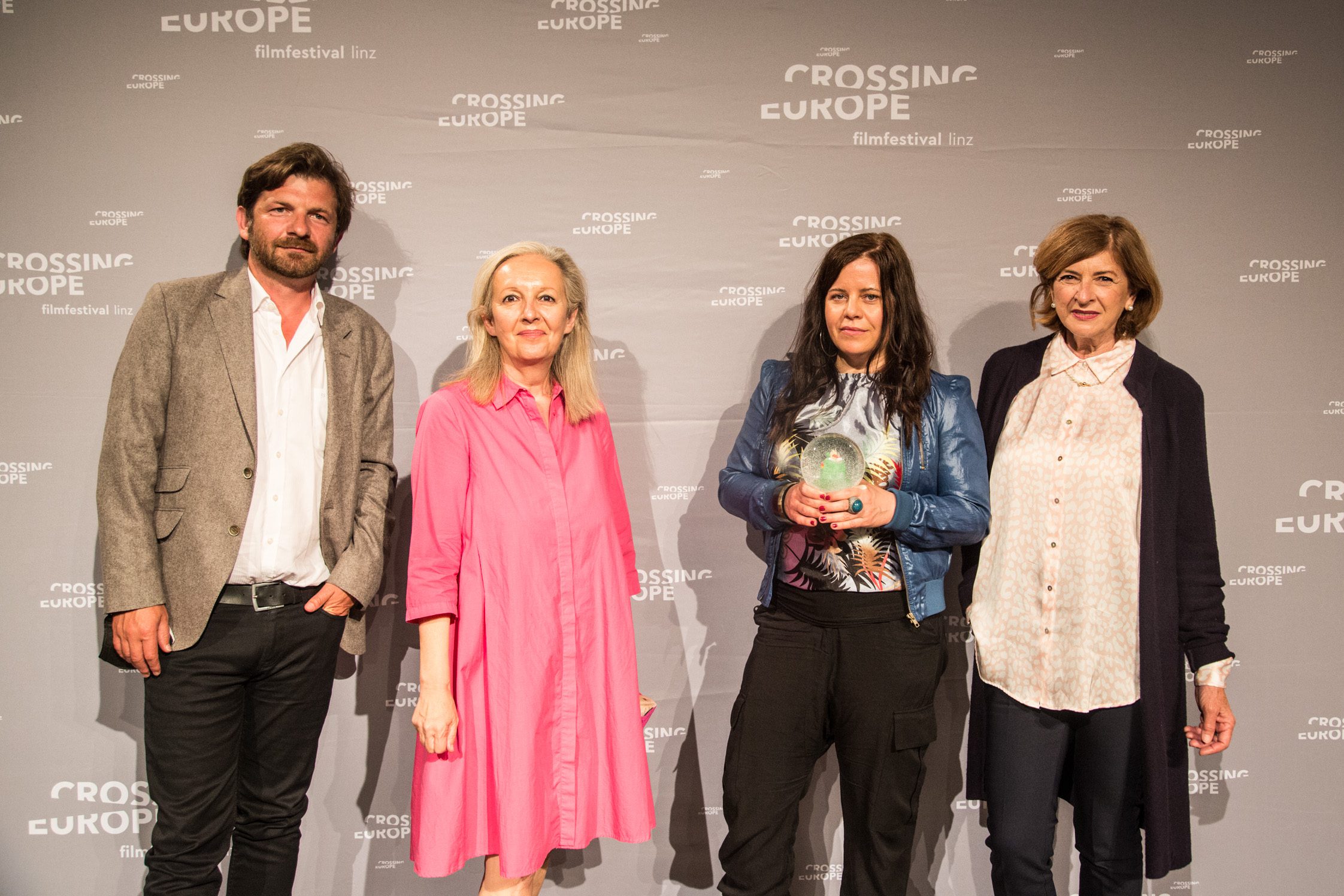
Brief Introduction of Visar Morina
Visar Morina is a critically acclaimed Kosovar-German film director and screenwriter celebrated for his poignant and unflinching exploration of themes such as identity, exile, family dynamics, and the psychological burdens of contemporary European society. Born in Pristina, Kosovo, Morina’s personal experiences as a refugee in Germany profoundly inform his cinematic narratives. He has garnered international recognition for his feature films, which are known for their meticulous storytelling, nuanced character studies, and distinct visual style. Morina’s work often delves into the subtle and overt forms of alienation and the complexities of belonging in a globalized world. His films have premiered at prestigious festivals like Sundance, Berlinale, and Karlovy Vary, earning him numerous awards and establishing him as a significant voice in modern European cinema. Through his deeply personal yet universally resonant films, Morina challenges audiences to confront uncomfortable truths about society and the human condition.

Visar Morina Overview
| Full Name | Visar Morina |
| Date of Birth | 1979 |
| Age(as of 2025) | 46 |
| Birthplace | Pristina, Kosovo |
| Profession | Film Director, Screenwriter |
| Husband/Wife | Information not disclosed. |
| Family | Parents and brothers. |
| Relationship/Affairs(GF/BF) | As of a 2015 interview, he had a girlfriend who lived in Vienna. His current relationship status is not publicly known. |
| Net Worth | Not publicly available. |
Early Life and Education of Visar Morina
Visar Morina was born in 1979 in Pristina, Kosovo, which was then part of Yugoslavia. His early life was shaped by the escalating political turmoil in the region. The 1990s in Kosovo were a time of fear and uncertainty, an environment that Morina has described as absurdly normal despite the constant threat of violence. This atmosphere of pervasive fear and the experience of living under oppressive conditions would later become a significant influence on his filmmaking. In 1994, at the age of 15, Morina and his family fled the “horror and terror” in Kosovo and sought refuge in Germany. This relocation marked a pivotal moment in his life, transforming him into what he describes as a “foreigner,” a status that has deeply impacted his worldview and artistic expression. He has spoken about being outside of German society initially and the awareness that a “hostile reaction” was always possible, an experience that has had a huge impact on his life and work.
After settling in Germany, Morina pursued his passion for the arts. Between 2000 and 2004, he gained practical experience in the creative world by working on various film and theater projects. He served as an assistant director at esteemed institutions such as the Volksbühne in Berlin. This period was formative, providing him with a foundational understanding of dramatic arts. He then enrolled at the prestigious Academy of Media Arts Cologne (Kunsthochschule für Medien Köln), where he studied directing and screenwriting from 2004 to 2010. His time at the academy was instrumental in honing his craft and developing his unique cinematic voice, culminating in his diploma film, “Der Schübling” (Death by Suffocation), which premiered in 2010 and immediately signaled the arrival of a promising new talent.
Visar Morina’s Career
Visar Morina’s career as a filmmaker is distinguished by a series of critically acclaimed short and feature films that have established his reputation as a formidable talent in international cinema. His journey began with his diploma film, “Der Schübling” (Death By Suffocation), which was lauded at several national and international festivals. This was followed by the short film “Von Hunden und Tapeten” (Of Dogs and Wallpaper) in 2013, which was selected for the international competition at the prestigious Locarno International Film Festival and nominated for the German Short Film Award.
Morina’s feature film debut came in 2015 with “Babai” (Father). The film, which tells the poignant story of a young boy’s perilous journey from Kosovo to Germany to find his father, drew heavily from Morina’s own experiences with migration. “Babai” was a resounding success, premiering at the Munich Film Festival where it won awards for Best Director, Best Script, and Best Actor. The film’s momentum continued at the Karlovy Vary International Film Festival, where Morina was honored with the Best Director award. “Babai” was also selected as Kosovo’s entry for the Best Foreign Language Film at the 88th Academy Awards, marking a significant moment for Kosovar cinema.
In 2020, Morina released his sophomore feature, “Exil” (Exile). The film, starring renowned actors Mišel Matičević and Sandra Hüller, explores the subtle and insidious nature of racism and workplace alienation through the story of a Kosovar chemical engineer in Germany who feels increasingly harassed by his colleagues. The screenplay for “Exil” had already won the German Film Academy Award for Best Unproduced Screenplay in 2018. The film premiered at the 2020 Sundance Film Festival and was also screened at the Berlinale, further solidifying Morina’s international standing. Like its predecessor, “Exil” was chosen as Kosovo’s submission for the Academy Awards.
Morina’s third feature film, “Shame and Money,” premiered at the Sundance Film Festival in early 2026. The film, co-written with Doruntina Basha, follows a Kosovar couple who are forced to move from their rural farm to the capital, Pristina, where they confront a transactional society that challenges their values and dignity. “Shame and Money” received widespread acclaim and won the World Cinema Dramatic Grand Jury Prize at Sundance, a testament to Morina’s continued excellence in filmmaking. Across his filmography, Morina consistently returns to themes of displacement, identity, and the psychological toll of societal pressures, crafting narratives that are both deeply personal and universally resonant.
Visar Morina Personal Life & Family
Visar Morina’s personal life is intrinsically linked to his artistic work, with his family’s history and experiences serving as a wellspring of inspiration. He was born to Albanian parents in Pristina, Kosovo, and has at least one brother. In a 2015 interview, he mentioned having a brother in Kosovo with two children, with whom he shares a strong bond. His parents left Kosovo around 30 years ago, and the thought of what their lives would be like if they had to leave today was a foundational idea for his film “Shame and Money.” The house he grew up in and the village where he spent his childhood also feature in the conceptualization of his films.
The refugee experience of his family is a cornerstone of his identity and his cinematic explorations. At the age of 15, he, along with his family, fled Kosovo for Germany. This journey, while he has noted it was “much nicer” than the one depicted in his film “Babai,” has undeniably shaped his perspective on themes of exile and belonging. He has spoken about the impact of being a “foreigner” in German society, even after obtaining citizenship, and how this informs the psychological landscapes of his characters.
In a 2015 interview, Morina mentioned having a girlfriend who lived in Vienna. However, he has not publicly disclosed further details about his current relationship status or if he is married. He maintains a private stance on many aspects of his personal life, preferring to let his films speak to his experiences and observations of the world. His lifestyle appears to be focused on his creative endeavors, and his beliefs are deeply rooted in humanism and a critical examination of societal structures, particularly the impact of capitalism and xenophobia on individual dignity.
Awards and Achievements of Visar Morina
- 2010: “Der Schübling” (Death By Suffocation) – Awarded at several national and international festivals.
- 2014: “Von Hunden und Tapeten” (Of Dogs and Wallpaper) – Nominated for the German Short Film Award.
- 2015: “Babai” – Best Director, Best Script, and Best Actor at the Munich Film Festival.
- 2015: “Babai” – Best Director at the Karlovy Vary International Film Festival.
- 2018: “Exil” (Exile) – German Film Academy Award for Best Unproduced Screenplay.
- 2020: “Exil” (Exile) – Heart of Sarajevo for Best Feature Film at the Sarajevo Film Festival.
- 2026: “Shame and Money” – World Cinema Grand Jury Prize: Dramatic at the Sundance Film Festival.
Visar Morina Net Worth and Income
Information regarding Visar Morina’s net worth and specific income sources is not publicly available. As an independent film director and screenwriter, his income is likely derived from a combination of film funding, grants, festival prize money, and distribution deals for his projects. The budgets for his films, such as the reported $3.6 million for “Exil,” indicate his ability to secure significant financing for his work, although this does not directly translate to personal wealth. His consistent success at major film festivals and the critical acclaim of his movies contribute to his standing in the film industry, which in turn would affect his earning potential for future projects.
Legacy and Influence
Visar Morina has carved out a significant legacy as a filmmaker whose work provides a crucial lens on the contemporary European experience, particularly from the perspective of migrants and those on the margins of society. His influence stems from his ability to translate the complex, often internalized, struggles of his characters into powerful and universally understood cinematic language. He is a prominent voice in the new wave of Kosovar and German cinema, bringing stories from his homeland to an international audience with authenticity and artistic rigor.
Morina’s films are celebrated for their unflinching honesty in depicting the psychological effects of xenophobia, the challenges of integration, and the erosion of human dignity in hyper-capitalist societies. By focusing on the nuanced and often subtle manifestations of racism and alienation, as seen in “Exil,” he has contributed to a more profound and complex conversation about these issues in Germany and beyond. His work challenges simplistic narratives and encourages a deeper empathy and understanding of the “other.” His public image is that of a thoughtful and articulate artist who is deeply engaged with the social and political currents of our time. He is respected for his commitment to personal storytelling and his ability to create films that are both artistically ambitious and socially relevant.
Interesting Facts about Visar Morina
- Visar Morina initially began his career in theater, working as an assistant director before transitioning to film.
- He spent eight years working on his debut feature film, “Babai.”
- The inspiration for his award-winning film “Shame and Money” came from a photograph he took of the two lead actors, which reminded him of his own parents.
- He has German citizenship but continues to identify as a foreigner, an experience that is central to his work.
- For his film “Exil,” he cast the acclaimed German actress Sandra Hüller, known for her role in “Toni Erdmann,” after writing her a long email explaining his vision for her character.
- He has expressed a preference for loud sound design in his films, believing it to be an integral part of the cinematic experience.
Controversies
There are no publicly documented controversies involving Visar Morina. He is known for his professionalism and dedication to his craft, and his public statements and interviews are typically focused on his work and the social issues they address.
Social Media Presence
- Instagram – Not publicly available.
- Twitter – Not publicly available.
- YouTube – Not publicly available.
Final Words about Visar Morina
Visar Morina stands as a vital and compelling voice in contemporary world cinema. His journey from a childhood in tumultuous 1990s Kosovo to becoming an award-winning filmmaker in Germany is a testament to the power of resilience and the urgency of storytelling. Through his films, he has consistently and courageously explored the intricate and often painful realities of displacement, identity, and the search for dignity in a world that is frequently unwelcoming. His work is characterized by a profound empathy for his characters and an incisive critique of the societal forces that shape their lives. As he continues to produce deeply personal and universally relevant films, Visar Morina’s legacy is that of a filmmaker who not only captures the complexities of our time but also challenges us to see the world, and each other, with greater understanding and compassion. His future projects are eagerly anticipated, as he is sure to continue pushing the boundaries of cinematic storytelling and shedding light on the human condition.