Brief Introduction of Viktor Orban
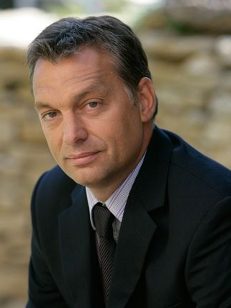
Viktor Mihály Orbán is a Hungarian politician who has been a dominant figure in the nation’s political landscape for decades. He is the current Prime Minister of Hungary, a position he has held since 2010. He previously served as Prime Minister from 1998 to 2002. Orbán is the leader of the Fidesz party, a national-conservative political party that he co-founded in 1988. Known for his strong and often controversial views, he has championed what he calls “illiberal democracy,” positioning himself as a defender of national sovereignty and Christian values in Europe. His long tenure in power has seen significant changes to Hungary’s constitution and legal framework, leading to both praise from his supporters for his strong leadership and criticism from opponents who accuse him of democratic backsliding.
Viktor Orban Overview
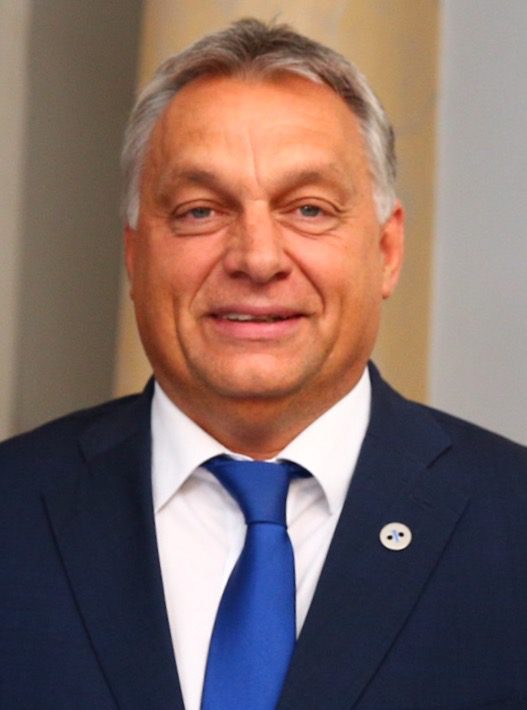
| Full Name | Viktor Mihály Orbán |
| Date of Birth | May 31, 1963 |
| Age(as of 2025) | 62 |
| Birthplace | Székesfehérvár, Hungary |
| Profession | Politician, Lawyer |
| Husband/Wife | Anikó Lévai |
| Family | Wife: Anikó Lévai; Children: Ráhel, Gáspár, Sára, Róza, Flóra |
| Relationship/Affairs(GF/BF) | Married to Anikó Lévai since 1986. |
| Net Worth | Estimated at €1 million |
Early Life and Education of Viktor Orban
Viktor Orbán was born on May 31, 1963, in Székesfehérvár, Hungary. He spent his childhood in the rural villages of Alcsútdoboz and Felcsút. He is the eldest of three sons. His father was an agricultural engineer and his mother was a special-needs teacher. In 1977, his family moved to Székesfehérvár. After completing his secondary education in 1981, where he specialized in English, Orbán served his compulsory military service. Following his military service, he enrolled at Eötvös Loránd University in Budapest to study law, graduating in 1987. During his university years, he was a founding member of the Bibó István College for Advanced Studies, a student organization that would become a cradle for the future Fidesz party. It was during this period that he became actively involved in the burgeoning anti-communist student movements. In 1989, he received a scholarship from the Soros Foundation to study political philosophy at Pembroke College, Oxford. However, he cut his studies short to return to Hungary and participate in the country’s transition to democracy.
Viktor Orban’s Career
Viktor Orbán’s political career began in the late 1980s as a leading figure in the anti-communist opposition. In 1988, he was a co-founder of the Federation of Young Democrats (Fidesz), initially a radical liberal student movement. He gained national prominence with a speech delivered on June 16, 1989, in Budapest’s Heroes’ Square at the reburial of Imre Nagy, the executed leader of the 1956 Hungarian Revolution. In his speech, Orbán boldly demanded free elections and the withdrawal of Soviet troops.
In 1990, in Hungary’s first free elections after the fall of communism, Orbán was elected to the National Assembly as a member of Fidesz. He became the party’s first president in 1993 and under his leadership, Fidesz began to shift from its liberal roots towards the center-right of the political spectrum. This ideological transformation led to a split within the party but ultimately proved to be a successful political strategy. After a disappointing result in the 1994 election, Fidesz continued to build its support base and in 1998, formed a coalition government with Orbán becoming the youngest Prime Minister in Hungary’s history at the age of 35. His first term was marked by economic reforms and Hungary’s accession to NATO in 1999.
Fidesz was defeated in the 2002 election, and Orbán spent the next eight years as the leader of the opposition. During this time, he consolidated his control over Fidesz and continued to steer the party in a more national-conservative direction. The political landscape in Hungary shifted dramatically in his favor following a 2006 speech in which the incumbent Socialist Prime Minister admitted to lying about the state of the economy. This, combined with the global financial crisis of 2008, paved the way for a landslide victory for Fidesz in the 2010 parliamentary elections, securing a two-thirds majority in parliament.
Since returning to power in 2010, Viktor Orbán has been re-elected in 2014, 2018, and 2022, becoming the country’s longest-serving prime minister. His second and subsequent terms have been characterized by significant constitutional and legislative changes. His government has been praised by supporters for its focus on family values, national identity, and economic stability. However, it has also faced significant criticism both domestically and internationally for what has been described as democratic backsliding. Critics point to the weakening of judicial independence, increased control over the media, and a rise in corruption. Orbán has openly promoted the concept of an “illiberal democracy,” arguing that it is a viable alternative to liberal democracy and better suited to protecting national interests and Christian culture. His foreign policy has also been a source of contention, as he has fostered closer ties with Russia and China while often clashing with the European Union over issues of migration and the rule of law.
Viktor Orban Personal Life & Family
Viktor Orbán has been married to Anikó Lévai since 1986. She is a lawyer by profession and has been actively involved in various charitable organizations, including the International Children’s Safety Service and Hungarian Interchurch Aid. The couple has five children: Ráhel, Gáspár, Sára, Róza, and Flóra. Orbán is known to be a devout Christian and has emphasized the importance of traditional family values in his political platform. He is also a passionate football fan and played for the Felcsút football team. He was a founder of the Ferenc Puskás Football Academy. Orbán’s personal life has been relatively private, though his family has at times been in the public eye. His son, Gáspár, is a retired professional footballer and the founder of a religious community. His eldest daughter, Ráhel, is married to entrepreneur István Tiborcz. Orbán is also a grandfather to several grandchildren.

Awards and Achievements of Viktor Orban
- Freedom Award of the American Enterprise Institute and the New Atlantic Initiative (2001)
- Polak Award of the Maria Polak Foundation (2001)
- Franz-Josef Strauß Award of the Hanns Seidel Foundation (2001)
- Grand Cross of the National Order of Merit of France (2001)
- Förderpreis Soziale Marktwirtschaft (Price for the Social Market Economy) (2002)
- Saint Stephen Prize (2002)
- Mérite Européen prize (2004)
- Grand Cross of the Order of Saint Gregory the Great (2004)
- Honorary citizenship of Esztergom (2006)
- Pro Urbe award from Csíkszereda (2008)
- Supreme Order of the Turkic World (2024)
Viktor Orban Net Worth and Income
As of 2025, Viktor Orbán’s net worth is estimated to be around €1 million. This figure is based on his officially declared assets, which include a joint bank account with his wife, and partial ownership of a family home and an apartment in Budapest. His primary source of income is his salary as the Prime Minister of Hungary. However, there have been persistent allegations and discussions in the media and among opposition figures regarding the wealth of his family members and close associates, with some claiming that their financial success is linked to Orbán’s political influence.
Legacy and Influence
Viktor Orbán’s legacy is a subject of intense debate both within Hungary and on the international stage. His supporters view him as a strong and decisive leader who has defended Hungary’s sovereignty, promoted national pride, and stood up for Christian values in a rapidly changing Europe. They credit him with restoring economic stability and implementing policies that support families. His brand of “illiberal democracy” has resonated with a significant portion of the Hungarian electorate and has found admirers among right-wing populist movements globally.
Conversely, his critics argue that he has systematically dismantled Hungary’s democratic institutions, curtailed press freedom, and fostered a climate of cronyism and corruption. They contend that his policies have isolated Hungary within the European Union and undermined the rule of law. His close relationships with leaders of authoritarian states like Russia and China have also drawn considerable criticism. Orbán’s long-term influence will be judged on whether his vision of an “illiberal state” proves to be a sustainable model of governance and what its lasting impact will be on Hungarian society and its place in Europe.
Interesting Facts about Viktor Orban
- He is an avid sports fan, particularly of football, and played as a signed player for Felcsút FC.
- In his youth, he received a scholarship from the Soros Foundation to study at Oxford, an organization he would later vehemently criticize.
- He is the longest-serving Prime Minister in Hungary’s history.
- He was once the vice-chairman of the Liberal International, a global organization of liberal political parties, a stark contrast to his later political positions.
- His master’s thesis in law school was on the Polish Solidarity movement.
Controversies
Viktor Orbán’s long and powerful career has been marked by numerous controversies. He has been accused by critics of systematically undermining democratic institutions in Hungary, including the judiciary and the media, to consolidate his power. These actions have led to accusations of authoritarianism and have prompted the European Union to raise concerns about the rule of law in Hungary. Orbán’s government has also been plagued by allegations of corruption, with critics pointing to the enrichment of his close allies and family members. His strong anti-immigration stance and rhetoric have been condemned by some as xenophobic and divisive. Furthermore, his close ties with Russian President Vladimir Putin and his government’s often obstructive stance within the EU have been a source of significant friction with Western partners. A major political crisis erupted in early 2024 when it was revealed that the then-President of Hungary, a close ally of Orbán, had pardoned a man convicted of covering up a child sexual abuse case, leading to her resignation and that of the Minister of Justice.
Social Media Presence
- Facebook – Approximately 1.2 million followers
- Instagram – Approximately 274,000 followers
- Twitter – Information not publicly available
- YouTube – Approximately 92,100 subscribers
Final Words about Viktor Orban
Viktor Orbán remains a highly influential and deeply polarizing figure in European politics. As he continues his long tenure as Hungary’s Prime Minister, his vision for an “illiberal democracy” continues to shape the nation’s domestic and foreign policies. His supporters see him as a stalwart defender of Hungarian sovereignty and Christian identity, while his detractors view him as a leader who has eroded democratic norms and values. His future plans likely involve the continued consolidation of his political power at home and the forging of alliances with like-minded nationalist leaders abroad. The long-term impact of his leadership on Hungary and its relationship with the rest of the world will be a subject of analysis and debate for years to come. The Viktor Orban biography is a testament to a political career that has been both remarkably successful and profoundly controversial.