
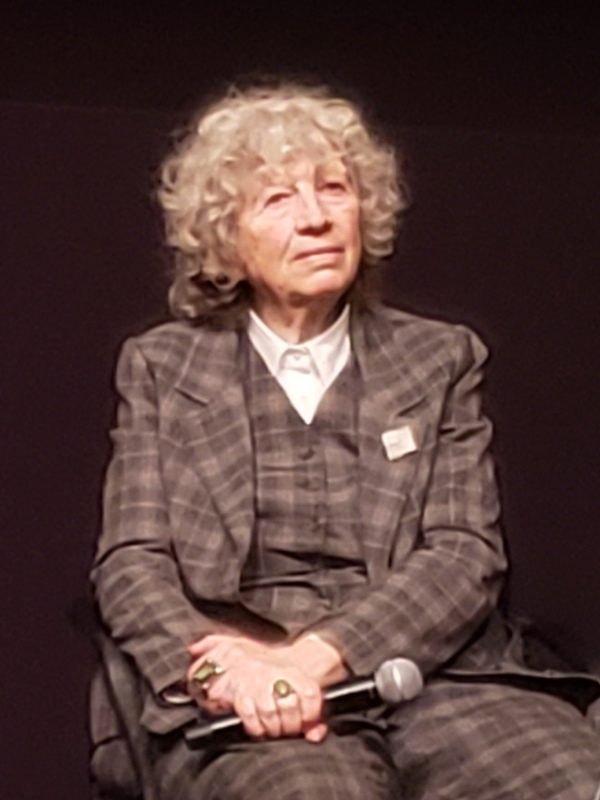
Brief Introduction of Ulrike Ottinger
Ulrike Ottinger is a highly influential German filmmaker, photographer, and visual artist, celebrated as a pioneering figure of the New German Cinema and a significant voice in avant-garde and feminist filmmaking. Born in Konstanz, Germany, her prolific career, spanning over five decades, is characterized by a unique and provocative style that defies easy categorization. Ottinger’s work is renowned for its surreal aesthetics, ethnographic explorations, and a radical treatment of themes such as identity, gender, and cultural displacement. Often writing, directing, and handling the cinematography for her own films, she creates visually stunning and meticulously composed narratives that blur the lines between fiction and documentary. Her films frequently feature strong, complex female protagonists who challenge societal norms and navigate oppressive structures, positioning her as a crucial figure in European and feminist cinema. Beyond her cinematic achievements, Ottinger is also an accomplished painter and photographer, with her multifaceted oeuvre exhibited in prestigious museums and festivals worldwide.

Ulrike Ottinger Overview
| Full Name | Ulrike Ottinger |
| Date of Birth | June 6, 1942 |
| Age(as of 2025) | 83 |
| Birthplace | Konstanz, Germany |
| Profession | Filmmaker, photographer, visual artist, painter, screenwriter, theatre and opera director. |
| Husband/Wife | Information not publicly available. She has been in a relationship with Tabea Blumenschein. |
| Family | Her mother, Maria Weinberg, was a journalist, and her father, Ulrich Ottinger, was a painter. |
| Relationship/Affairs(GF/BF) | Ulrike Ottinger is an openly lesbian woman. She was in a creative and romantic partnership with Tabea Blumenschein. |
| Net Worth | Not publicly available |
Early Life and Education of Ulrike Ottinger
Ulrike Ottinger was born on June 6, 1942, in Konstanz, Germany, a city on the shores of Lake Constance. Raised in an artistic household, her mother, Maria Weinberg, was a journalist, and her father, Ulrich Ottinger, was a painter. This creative environment nurtured her artistic inclinations from a young age, leading her to establish her own studio in Konstanz early on. In 1959, Ottinger began her formal artistic studies at the Academy of Arts in Munich, where she focused on painting. Seeking a more vibrant and intellectually stimulating atmosphere, she moved to Paris in 1962, where she resided until 1969. This period was immensely formative for her artistic development. She worked as a freelance artist and studied the technique of etching under the tutelage of Johnny Friedlaender. During her time in Paris, she was deeply influenced by the burgeoning Pop Art movement and Nouvelle Figuration, incorporating their visual language into her paintings, which often drew inspiration from magazine advertisements and political events. Beyond her studio practice, Ottinger immersed herself in the intellectual life of the city, attending lectures by prominent thinkers such as Claude Lévi-Strauss, Louis Althusser, and Pierre Bourdieu at the Collège de France. This academic engagement with anthropology, sociology, and philosophy would profoundly shape the thematic concerns of her later work. It was also during this period in Paris that she wrote her first screenplay in 1966, titled “Die Mongolische Doppelschublade” (The Mongolian Double Drawer), signaling her burgeoning interest in filmmaking.
Ulrike Ottinger’s Career
Ulrike Ottinger’s career is a testament to her multifaceted talent and relentless artistic vision, spanning painting, photography, and most notably, filmmaking. After her formative years in Paris, she returned to West Germany in 1969 and founded the “filmclub visuell” in Konstanz in collaboration with the local university. This film club, which she directed until 1972, showcased international independent films and the New German Cinema. Simultaneously, she established the gallery and edition “galeriepress,” where she presented the work of contemporary artists like Wolf Vostell and David Hockney. She moved to Berlin in 1973, a city that would become a significant backdrop and inspiration for her work. Her first feature film, “Laocoon & Sons” (1971-1973), made in collaboration with Tabea Blumenschein, marked her official entry into filmmaking. Her 1977 film, “Madame X: An Absolute Ruler,” a feminist pirate movie, garnered international attention and controversy, solidifying her reputation as a provocative and avant-garde director. This was followed by her acclaimed “Berlin Trilogy” which includes “Ticket of No Return” (1979), “Freak Orlando” (1981), and “Dorian Gray in the Mirror of the Yellow Press” (1984). These films are characterized by their surreal visuals, non-linear narratives, and exploration of Berlin’s subcultures. Ottinger’s work often rejects and parodies the conventions of art cinema, seeking new ways to construct visual pleasure and explore marginalized perspectives. Her films are known for their strong elements of stylization, fantasy, and ethnographic explorations. She has also directed numerous acclaimed documentaries, often the result of extensive travels through Asia. Notable among these are “China. The Arts – The People” (1985) and the epic “Taiga” (1992), which documents the lives of nomadic people in Northern Mongolia. Her more recent work, “Paris Calligrammes” (2020), is an autobiographical documentary that reflects on her time in Paris in the 1960s. Throughout her career, Ottinger has also been a prolific photographer, with her photographic work being exhibited at prestigious international events like the Venice Biennale and Documenta. She has also directed theatre and opera productions. Her most recent film, “The Blood Countess,” premiered at the Berlinale in early 2026.
Ulrike Ottinger Personal Life & Family
Ulrike Ottinger has been notably private about her personal life, though she has always been open about her identity as a lesbian woman. Her parents were Maria Weinberg, a journalist, and Ulrich Ottinger, a painter, who undoubtedly influenced her artistic path. During her early and most formative years as a filmmaker in Berlin, she was in a significant creative and romantic partnership with Tabea Blumenschein, who was a prominent actress in many of her early films and also designed the costumes for “Ticket of No Return.” Their collaboration was a cornerstone of Ottinger’s early cinematic explorations. Ottinger has resided in Berlin since 1973, a city that has not only been her home but also a central character in many of her films. Her work often reflects a deep engagement with the city’s history, subcultures, and transformations. While she has spoken about her artistic collaborations and intellectual influences, details about her extended family and other romantic relationships have not been publicly disclosed. Her focus in interviews and public appearances remains steadfastly on her artistic practice and the worlds she creates through her films and photography. She has never been married and does not have children. Her life appears to be one dedicated to her artistic pursuits, and she has often spoken about her desire to lead a life outside of conventional expectations, a theme that is also prevalent in her films.
Awards and Achievements of Ulrike Ottinger
- Berlinale Camera at the 70th Berlin International Film Festival (2020)
- Hans Thoma Prize of the State of Baden-Württemberg (2021)
- Award for Avant-Garde Achievements in Film at EnergaCameraimage in Torun, Poland (2022)
- Hannah Höch Prize of the City of Berlin (2011)
- Cross of the Order of Merit of the Federal Republic of Germany (2010)
- Honorary Doctorate in Fine Arts from Concordia University Montreal (2018)
- German National Film Prize (Visual Design) for ‘Johanna d’Arc of Mongolia’ (1989)
- German Film Review Prize for Documentaries for ‘China. The Arts – The People’ (1986), ‘Prater’ (2008), and ‘Chamisso’s Shadow’ (2016)
- Montréal public jury prize
- German Documentary Film Award for her life achievement (2024)
- Member of the Academy of Fine Art in Berlin since 1997
- Member of the Bavarian Academy of Fine Arts since 2020
- Member of the Academy of Motion Picture Arts and Sciences since 2019
Ulrike Ottinger Net Worth and Income
Information regarding Ulrike Ottinger’s net worth is not publicly available. As an independent and avant-garde artist, her income is likely derived from a variety of sources within the art and film worlds. These would include grants and funding for her film productions, artist fees for exhibitions of her photography and paintings at galleries and museums, and honorariums for retrospectives and speaking engagements at film festivals and universities. She has also directed theatre and opera productions, which would provide another source of income. Additionally, sales of her films, books, and photographic prints would contribute to her earnings. Given the non-commercial nature of much of her work, her wealth is more likely measured in cultural capital and artistic influence rather than a large monetary net worth.
Legacy and Influence
Ulrike Ottinger has carved out a singular and enduring legacy as one of the most important and influential avant-garde artists of the late 20th and early 21st centuries. Her work stands as a bold counter-narrative to mainstream cinema, consistently challenging conventional storytelling and visual aesthetics. As a key figure in the New German Cinema, she offered a distinctly feminist and queer perspective that was often in opposition to the male-dominated narratives of her contemporaries. Her films are celebrated for their radical treatment of sexuality and gender, presenting strong, unconventional female characters who defy societal expectations. Ottinger’s unique blending of surrealism, fantasy, and ethnography has created a cinematic language that is entirely her own. She is admired for her ability to create immersive and visually arresting worlds, often blurring the lines between documentary and fiction. Her influence extends beyond filmmaking; as a photographer and painter, her work has been shown in major international exhibitions, contributing to her status as a multifaceted artist. Through her films that explore different cultures, particularly in Asia, she has engaged in a complex and sometimes debated form of ethnographic filmmaking, always with a distinctive artistic vision. She has inspired generations of filmmakers and artists to experiment with form and to explore themes of identity and otherness with courage and imagination. Her extensive body of work continues to be the subject of academic study and is celebrated in retrospectives at prestigious institutions such as the Museum of Modern Art in New York and the Centre Pompidou in Paris.

Interesting Facts about Ulrike Ottinger
- She is a polymath who not only writes and directs her films but also frequently serves as the cinematographer and designs the elaborate sets and costumes.
- During her time in Paris in the 1960s, she attended lectures by the influential thinkers Claude Lévi-Strauss, Louis Althusser, and Pierre Bourdieu.
- Before becoming a filmmaker, she was an accomplished painter and printmaker associated with the Pop Art and Nouvelle Figuration movements in Paris.
- She founded a film club and a gallery in Konstanz, Germany, in the late 1960s, showcasing international independent cinema and contemporary art.
- Her film “Johanna d’Arc of Mongolia” (1989) was the first Western film to receive permission to shoot in Mongolia.
- Her documentaries are the result of intensive and often years-long research and travel.
- She has directed theatre and opera productions, including works by the Nobel Prize-winning author Elfriede Jelinek.
- Her photographic work is considered an independent art form and has been exhibited in major art events like the Venice Biennale and Documenta.
Controversies
While Ulrike Ottinger is widely celebrated for her artistic vision, her work has not been without its share of critical debate and controversy. Her 1977 film “Madame X: An Absolute Ruler” caused a sensation upon its release, with its unabashedly feminist and queer themes shocking some segments of the general public, even as it was lauded by critics. A more persistent point of critical discussion revolves around her ethnographic films and her depiction of non-Western cultures. Some critics have argued that her work, particularly films like “Johanna d’Arc of Mongolia,” engages in a form of Orientalism, exoticizing its subjects through a Western lens. These critiques suggest that despite her intentions, her films can replicate an imperialist gaze. However, this perspective is countered by scholars who argue that Ottinger’s highly stylized and self-aware approach critiques the very notion of an “authentic” ethnographic gaze. They contend that by embracing visual pleasure and fantasy, she subverts traditional ethnographic filmmaking conventions. Ottinger herself has addressed this, stating her interest in the “transfer of culture” and the idea that there are no “pure cultures,” only mixtures. She views her engagement with other cultures as a collaborative process rather than an observational one. This ongoing dialogue about representation, appropriation, and the filmmaker’s gaze is a central part of the critical reception of her work, highlighting its complexity and its engagement with challenging cultural questions.
Social Media Presence
- Instagram – Not publicly available
- Twitter – Not publicly available
- YouTube – Not publicly available
Ulrike Ottinger does not maintain a personal presence on major social media platforms. Her official website, ulrikeottinger.com, serves as the primary online hub for information about her films, exhibitions, and publications. The website’s privacy policy indicates an awareness of social media, but it does not link to any official accounts.
Final Words about Ulrike Ottinger
Now in her eighties, Ulrike Ottinger remains a vital and active force in the world of art and cinema. Her unwavering dedication to her unique artistic vision continues to produce challenging and visually captivating work. Her most recent film, “The Blood Countess,” which premiered in early 2026, demonstrates her continued engagement with myth, performance, and the darker aspects of human history. Her extensive artistic archive is being successively handed over to the Akademie der Künste and the Stiftung Deutsche Kinemathek in Berlin, ensuring the preservation and future study of her remarkable career. Retrospectives of her films continue to be held at major institutions worldwide, introducing her work to new generations of cinephiles and art lovers. Ottinger’s legacy is that of a true auteur, an artist who has forged her own path, creating a body of work that is as intellectually rigorous as it is aesthetically stunning. Her films and photographs stand as a testament to a life dedicated to exploring the complexities of identity, the beauty of the unconventional, and the endless possibilities of the cinematic medium. Through her unflinching and imaginative lens, Ulrike Ottinger has not only created a world of her own but has also profoundly enriched our understanding of the one we all inhabit.