
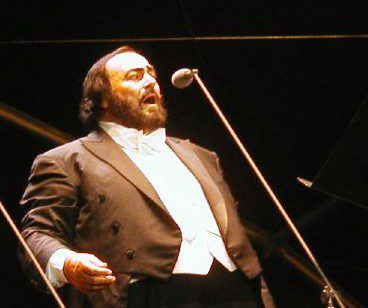
Brief Introduction of Pavarotti (Luciano Pavarotti)
Luciano Pavarotti was a world-renowned Italian operatic tenor, celebrated for his powerful and emotive voice that captivated audiences globally. His exceptional vocal range and charismatic stage presence earned him the title “King of the High Cs.” Pavarotti’s influence extended beyond the traditional opera house, as he brought classical music to a mainstream audience through televised concerts, stadium performances, and collaborations with popular music artists. He is perhaps most famously known as one of “The Three Tenors,” alongside Plácido Domingo and José Carreras, whose performances became a worldwide phenomenon, particularly their concert at the 1990 FIFA World Cup. Throughout his illustrious career, Pavarotti sold over 100 million records, making him one of the most commercially successful classical artists of all time. Beyond his musical achievements, he was also a dedicated humanitarian, hosting the “Pavarotti & Friends” benefit concerts to raise funds for various charitable causes.
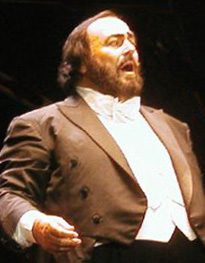
Pavarotti (Luciano Pavarotti) Overview
| Full Name | Luciano Pavarotti |
| Date of Birth | October 12, 1935 |
| Age(as of 2025) | Would have been 90 |
| Birthplace | Modena, Italy |
| Profession | Operatic Tenor |
| Husband/Wife | Adua Veroni (m. 1961; div. 2000), Nicoletta Mantovani (m. 2003) |
| Family | Parents: Fernando Pavarotti and Adele Venturi. Children: Lorenza, Cristina, Giuliana, and Alice Pavarotti. One son, Riccardo, was stillborn. |
| Relationship/Affairs(GF/BF) | Information not publicly available beyond his marriages. |
| Net Worth | Estimated to be worth at least £200m at the time of his death. |
Early Life and Education of Pavarotti (Luciano Pavarotti)
Luciano Pavarotti was born on October 12, 1935, on the outskirts of Modena in Northern Italy. His father, Fernando Pavarotti, was a baker with a fine tenor voice who sang in the local choir, and his mother, Adele Venturi, worked in a cigar factory. The family had limited financial means, living in a two-room apartment. During World War II, the family was forced to relocate to the countryside in 1943. As a child, Pavarotti was more interested in sports, particularly football, and even considered a career as a professional goalkeeper. His early musical influences came from his father’s collection of records, featuring famous tenors like Beniamino Gigli, Enrico Caruso, and his idol, Giuseppe Di Stefano. At the age of nine, he began singing with his father in the local church choir. After graduating from the Scuola Magistrale, he worked as an elementary school teacher for two years. However, his passion for music ultimately led him to pursue formal vocal training. In 1954, at the age of 19, he began studying with the respected tenor Arrigo Pola in Modena. His first significant singing success came in 1955 when the Corale Rossini, a choir he and his father were members of, won first prize at the International Eisteddfod in Llangollen, Wales, an experience that solidified his ambition to become a professional singer.
Pavarotti (Luciano Pavarotti)’s Career
Luciano Pavarotti’s professional opera career began in 1961 with his debut as Rodolfo in Puccini’s “La bohème” at the Teatro Municipale in Reggio Emilia, Italy. This successful performance launched his career in smaller Italian opera houses. His international debut came in 1963 at the Royal Opera House in London, again as Rodolfo. A pivotal moment in his early career was his collaboration with soprano Joan Sutherland, with whom he made his U.S. debut in Miami in 1965 in Donizetti’s “Lucia di Lammermoor.” That same year, he also made his debut at the prestigious La Scala in Milan.
Pavarotti’s ascent to global stardom was cemented in 1972 at the Metropolitan Opera in New York. His performance as Tonio in Donizetti’s “La Fille du Régiment” was a sensation, as he flawlessly delivered the aria’s nine high Cs, earning him the moniker “King of the High Cs” and a record 17 curtain calls. Throughout the 1970s and 1980s, he became a regular and beloved performer at the Met and other major opera houses worldwide. His televised “Live from the Met” broadcast of “La Bohème” in 1977 attracted one of the largest audiences for a televised opera at the time.
The 1990s marked a new chapter in Pavarotti’s career, as he, along with Plácido Domingo and José Carreras, formed “The Three Tenors.” Their first concert, held on the eve of the 1990 FIFA World Cup final in Rome, was a massive success, captivating a global audience of an estimated 800 million viewers. The subsequent album became the best-selling classical album of all time, and the trio went on to perform at the next three World Cup finals and toured the world, playing in large stadiums to enormous crowds. This venture was instrumental in bringing opera to a much broader, mainstream audience.
Pavarotti also initiated a series of annual charity concerts called “Pavarotti & Friends” in his hometown of Modena. These concerts, which ran from 1992 to 2003, featured collaborations with a diverse range of international pop and rock stars, including Bono, Elton John, Sting, and Mariah Carey, raising millions for humanitarian causes. His final opera performance was in Puccini’s “Tosca” at the Metropolitan Opera in 2004, and his last major public performance was at the opening ceremony of the 2006 Winter Olympics in Turin, where he sang “Nessun dorma.” Pavarotti died of pancreatic cancer on September 6, 2007.
Pavarotti (Luciano Pavarotti) Personal Life & Family
Luciano Pavarotti was married twice. His first marriage was to Adua Veroni in 1961. They had three daughters: Lorenza, Cristina, and Giuliana. The marriage ended in divorce in 2000. In 2003, Pavarotti married his former personal assistant, Nicoletta Mantovani. Together, they had twins, a daughter named Alice and a son named Riccardo. Tragically, Riccardo was stillborn due to complications during birth in January 2003. The birth of his daughter Alice brought him great joy, especially during a difficult period where he also lost both of his parents. At the time of his death in 2007, he was survived by his wife Nicoletta, his four daughters, and a granddaughter. After his death, there were reports of a dispute over his will between his widow and his daughters from his first marriage, which was later settled amicably.

Awards and Achievements of Pavarotti (Luciano Pavarotti)
- Knight Grand Cross of the Order of Merit of the Italian Republic (1988)
- Multiple Grammy Awards, including for Best Classical Vocal Soloist Performance.
- Grammy Legend Award (1998)
- Two Primetime Emmy Awards for his televised performances.
- Kennedy Center Honors (2001)
- U.N. Messenger of Peace (1998)
- Freedom of the City of London (2005)
- Red Cross Award for Services to Humanity
- Two Guinness World Records: one for receiving the most curtain calls (165) and another for the best-selling classical album (“Carreras Domingo Pavarotti in Concert”).
- Officer of the National Order of the Legion of Honour (France)
- Posthumous star on the Hollywood Walk of Fame (2022)
Pavarotti (Luciano Pavarotti) Net Worth and Income
At the time of his death in September 2007, Luciano Pavarotti’s estate was estimated to be worth at least £200 million. His significant wealth was accumulated through a multifaceted career. His primary income sources included fees from his numerous opera performances at the world’s most prestigious venues, such as the Metropolitan Opera and La Scala. A substantial portion of his earnings came from record sales; he sold over 100 million albums worldwide. The unprecedented success of The Three Tenors concerts and their best-selling albums also contributed significantly to his fortune. Additionally, Pavarotti’s income was supplemented by his solo concerts in large arenas and stadiums, televised specials, and his series of “Pavarotti & Friends” crossover concerts.
Legacy and Influence
Luciano Pavarotti’s legacy is immense, extending far beyond the confines of the opera world. He is widely credited with popularizing opera and making it accessible to a global mainstream audience. His larger-than-life personality and the sheer beauty of his voice broke down barriers, introducing millions to an art form they might have otherwise considered elitist. The Three Tenors concerts, in particular, represented a cultural phenomenon, merging high art with popular entertainment on an unprecedented scale. The first concert’s recording remains the best-selling classical album in history, a testament to its massive appeal. Pavarotti also pioneered the crossover genre with his “Pavarotti & Friends” concerts, collaborating with pop and rock legends and demonstrating that different musical worlds could coexist and create something new and exciting. Beyond his musical contributions, his humanitarian work left a lasting impact. The “Pavarotti & Friends” concerts raised millions for causes supporting children in war-torn regions and other humanitarian efforts. He remains one of the most celebrated and commercially successful tenors in history, remembered for his iconic voice, radiant charisma, and his role as a global ambassador for classical music.
Interesting Facts about Pavarotti (Luciano Pavarotti)
- Before pursuing a career in music, he worked as an elementary school teacher and briefly as an insurance salesman.
- As a young man, he was a keen football (soccer) player and considered becoming a professional goalkeeper.
- He never learned to read music fluently, a fact confirmed by conductor Richard Bonynge, though Pavarotti himself disputed the claim that he couldn’t read music at all.
- He holds a Guinness World Record for receiving 165 curtain calls after a performance.
- In 1982, he starred in a Hollywood romantic comedy film titled “Yes, Giorgio,” which was a critical and commercial failure and earned him a Razzie nomination for Worst Actor.
- The Lyric Opera of Chicago temporarily banned him in 1989 due to his frequent last-minute cancellations.
- He was an avid equestrian and organized an international show jumping competition.
- He was the first opera singer to perform as a musical guest on the television show “Saturday Night Live” in 1998.
Controversies
Throughout his career, Luciano Pavarotti was sometimes referred to as the “King of Cancellations” due to a reputation for withdrawing from scheduled performances, at times with little notice. This led to a notable ban from the Lyric Opera of Chicago in 1989 after he canceled 26 of 41 scheduled appearances over eight years. Following his death, a dispute arose over the division of his substantial estate. There were two wills, one dividing his assets according to Italian law between his wife Nicoletta Mantovani and his four daughters, and a second will that gave his U.S. holdings specifically to Mantovani. Allegations were raised that Pavarotti may not have been of sound mind when he signed the second will. However, the matter was eventually settled privately and “fairly” between his widow and his three eldest daughters.
Social Media Presence
- Instagram – Not applicable (died before the platform’s creation). However, a foundation in his name maintains an official presence.
- Twitter – Not applicable. An official account is managed by his foundation.
- YouTube – Not applicable. His performances and documentaries are widely available on the platform through various channels.
Final Words about Pavarotti (Luciano Pavarotti)
Luciano Pavarotti’s death in 2007 marked the end of an era, but his voice and influence continue to resonate. He is remembered not just as one of the finest operatic tenors of the 20th century, but as a cultural icon who brought the passion of opera to the masses. His recordings continue to sell, and his performances, especially as one of The Three Tenors, are still celebrated for their brilliance and historical significance. Pavarotti’s legacy is twofold: he was a master of his craft, a tenor whose voice could convey immense emotion and technical brilliance, and he was a master showman who understood how to connect with an audience, whether in an opera house or a stadium. His dedication to humanitarian causes through his charity concerts also forms a crucial part of his enduring legacy, showcasing his belief in the power of music to bring about positive change. Through his extraordinary talent and generous spirit, Luciano Pavarotti secured his place in history as a true legend of music.