
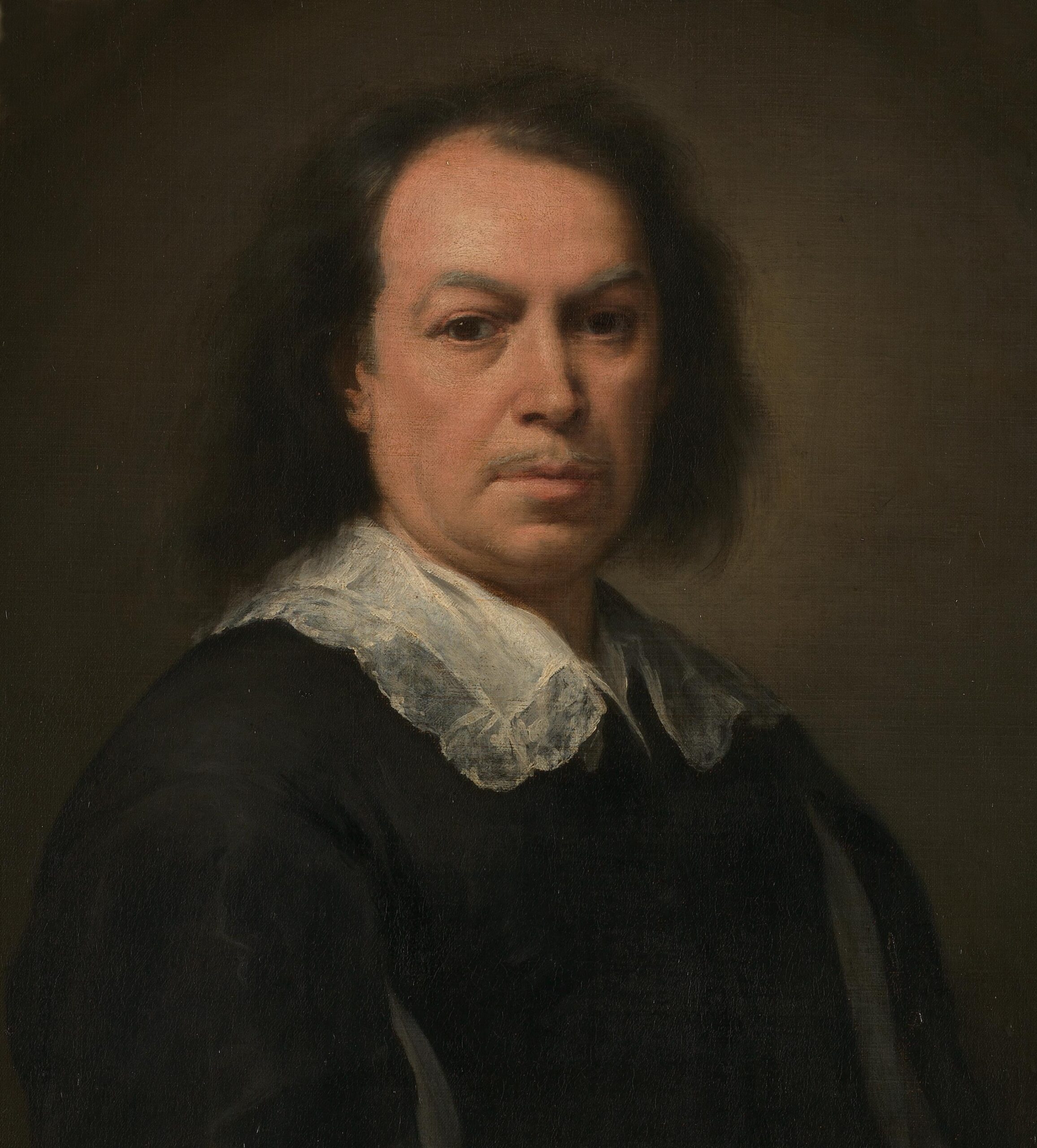
A biography of Bartolomé Esteban Murillo.
Brief Introduction of Murillo
Bartolomé Esteban Murillo was a Spanish Baroque painter who was highly regarded during his time and remains one of the most celebrated artists of the Spanish Golden Age. He is best known for his religious paintings, which are characterized by their sweetness, piety, and accessible portrayal of divine figures. Murillo also produced a considerable number of genre paintings, capturing the everyday life of contemporary women and children in Seville with a lively realism. His work was influential, and he became the first Spanish painter to achieve widespread European fame, with his paintings being copied and imitated throughout Spain and its empire. Murillo’s style evolved throughout his career, moving from a tenebrist style influenced by Zurbarán to a softer, more idealized “vaporous style.” He was a founder and the first president of the Academy of Painting in Seville.

Murillo Overview
| Full Name | Bartolomé Esteban Murillo |
| Date of Birth | Late December 1617 (baptized January 1, 1618) |
| Age(as of 2025) | Would have been 408 years old |
| Birthplace | Seville, Crown of Castile |
| Profession | Painter, draftsman |
| Husband/Wife | Beatriz Cabrera y Villalobos (married in 1645) |
| Family | Parents: Gaspar Esteban and María Pérez Murillo. He was the youngest of fourteen children. He had ten or eleven children with his wife, Beatriz, though only five survived their mother. |
| Relationship/Affairs(GF/BF) | Not publicly available |
| Net Worth | Information not disclosed. |
Early Life and Education of Murillo
Bartolomé Esteban Murillo was born in Seville, Spain, in late December 1617 and was baptized on January 1, 1618. He was the youngest of fourteen children born to Gaspar Esteban, a barber-surgeon, and María Pérez Murillo. Following a common custom, he adopted the surname of his maternal grandmother, Elvira Murillo. Tragedy struck early in his life, as both of his parents died when he was around nine years old, leaving him an orphan. He was then raised by his older sister, Ana, and her husband, Juan Agustín Lagares. There is little documentation about Murillo’s early years and his beginnings as a painter. It is believed he began his artistic training in the studio of Juan del Castillo, a relative of his mother’s and a painter in his own right. Del Castillo’s influence is visible in Murillo’s earliest works. His early paintings were also influenced by the realism of artists like Francisco de Zurbarán, Jusepe de Ribera, and Alonso Cano. The bustling commercial environment of Seville at the time also exposed him to artistic influences from other regions, including Flemish painting.
Murillo’s Career
Murillo’s career began to gain momentum in 1645 when he received his first major commission: a series of eleven canvases for the cloister of the convent of San Francisco in Seville. This project, which he worked on until 1648, helped to establish his reputation. Around the same time, he married Beatriz Cabrera y Villalobos in 1645. Following this commission, he started to specialize in religious themes that would bring him great success, particularly the Virgin and Child and the Immaculate Conception. One of his earliest known works is the Virgin of the Rosary (c. 1642). In addition to his religious works, Murillo was a master of genre painting, depicting everyday life in Seville with remarkable realism. His paintings of street urchins, flower girls, and beggars provide a valuable record of the time. Notable examples include The Young Beggar and Two Women at a Window. A significant development in his style came after a possible trip to Madrid, where he is thought to have studied the works of Velázquez and seen the paintings of Venetian and Flemish masters in the royal collections. This led to a softer, more colorful, and idealized style, often referred to as his “vaporous” style, exemplified in works like The Vision of St. Anthony (1656). In 1660, Murillo was a key figure in the founding of the Seville Academy of Painting, serving as its first president alongside Francisco Herrera the Younger. This period marked his greatest activity, and he received numerous important commissions, including altarpieces for the Augustinian monastery and paintings for the church of Santa María la Blanca. His fame grew throughout Europe, making him the first Spanish painter to achieve such widespread recognition. His work was highly sought after, and he had many pupils and followers who imitated his style. One of his most celebrated works from his later period is the Soult Immaculate Conception (1678). His career was tragically cut short in 1682 when he fell from a scaffold while working on an altarpiece in Cádiz. He died in Seville a few months later from his injuries.
Murillo Personal Life & Family
In 1645, Bartolomé Esteban Murillo married Beatriz Cabrera y Villalobos. The couple had a large family, with sources citing either ten or eleven children. Sadly, their lives were marked by tragedy, as four of their children died during the devastating plague that struck Seville in 1649. Beatriz herself passed away in 1663, leaving Murillo a widower with five surviving children. Of their children, only one, Gabriel, is known to have followed in his father’s footsteps as a painter. Murillo was a devout Catholic, and his faith was a central theme in his life and art. He had close ties with various religious orders in Seville, especially the Franciscans, who were among his chief patrons. After the death of his wife, he joined the charitable confraternity, the Hermandad de la Caridad, in 1665, for which he painted eleven canvases. Recent research has also revealed that Murillo owned five enslaved individuals during his lifetime.
Awards and Achievements of Murillo
- Co-founder and first president of the Seville Academy of Painting (Academia de Bellas Artes) in 1660.
- He became the most popular and celebrated religious painter in 17th-century Spain.
- He was the first Spanish artist to achieve widespread international fame during his lifetime.
- His work was so highly valued that the King of Spain eventually prohibited the export of his paintings.
Murillo Net Worth and Income
Information regarding Bartolomé Esteban Murillo’s specific net worth or income is not publicly available, as such records were not typically kept or have not survived from the 17th century. However, it is known that he was a highly successful and sought-after artist in his time. The numerous commissions he received from religious orders, confraternities, and private patrons would have provided him with a substantial income. The high demand for his paintings, both in Spain and abroad, indicates his financial success. His family was described as financially comfortable during his childhood. Realized prices for his artworks at auction in the modern era have ranged from a few dollars to over four million USD, depending on the piece.

Legacy and Influence
Bartolomé Esteban Murillo’s legacy is significant, and his influence extended for centuries after his death. For nearly two hundred years, he was considered Spain’s greatest painter. He was the leading painter in Seville in the latter half of the 17th century, and his style dominated the Seville school of painting for a century and a half. His many pupils and followers ensured the continuation of his artistic approach. Murillo was the first Spanish artist whose works were extensively known outside of Spain before the 19th century. His paintings were widely copied and imitated, and he influenced prominent artists across Europe, including Thomas Gainsborough in England and Jean-Baptiste Greuze in France. While his reputation declined in the late 19th century, with his work being seen as overly sentimental by some modernist critics, there has been a renewed appreciation for his art in the 21st century. His ability to combine realism with an idealized and gentle spirituality created a deeply accessible and emotionally resonant style of religious art. Today, his masterpieces are housed in major museums around the world, including the Museo del Prado in Madrid, the Louvre in Paris, and the Hermitage Museum in St. Petersburg.
Interesting Facts about Murillo
- He often used his mother’s surname, Murillo, rather than his father’s, Esteban.
- Despite being a celebrated painter, he only produced two known self-portraits during his lifetime.
- A fall from a scaffold while working on a commission in Cádiz ultimately led to his death.
- The term “estilo vaporoso” or “vaporous style” is often used to describe the soft, melting forms and delicate coloring of his mature work.
- Google created a Doodle in 2018 to celebrate the 400th anniversary of his birth.
- For a time, his reputation surpassed that of any other Spanish artist, including Velázquez.
- One of his paintings, La Inmaculada de Soult, was sold to the Louvre in the 19th century for a world-record price at the time.
Controversies
While not a figure of major controversy, Murillo’s reputation has fluctuated significantly over time. For centuries after his death, he was revered as one of the greatest painters. However, in the late 19th and early 20th centuries, his work fell out of favor with the rise of modernism. Critics, including artists like Manet and Picasso, came to view his religious paintings as overly sentimental and his genre scenes as saccharine and unrealistic, favoring the starker realism of artists like Velázquez. Additionally, recent historical research has brought to light that Murillo was an enslaver, having owned five enslaved people during his life.
Social Media Presence
- Instagram – Not applicable
- Twitter – Not applicable
- YouTube – Not applicable
Final Words about Murillo
Bartolomé Esteban Murillo remains a pivotal figure in the history of Spanish art. His mastery of color, light, and composition, combined with his ability to convey deep human emotion and religious piety, secured his place as a master of the Baroque period. While primarily known for his religious works that catered to the devout Catholic faith of 17th-century Spain, his genre scenes offer a unique and invaluable glimpse into the everyday life of his time. Although his fame waned with changing artistic tastes, the 21st century has seen a re-evaluation of his significant contributions. His work continues to be admired for its technical brilliance, its tender and humane depictions of sacred subjects, and its lasting influence on the course of European art. Murillo’s legacy is that of an artist who could make the divine accessible and find beauty in the ordinary, leaving behind an oeuvre that continues to captivate and inspire.