
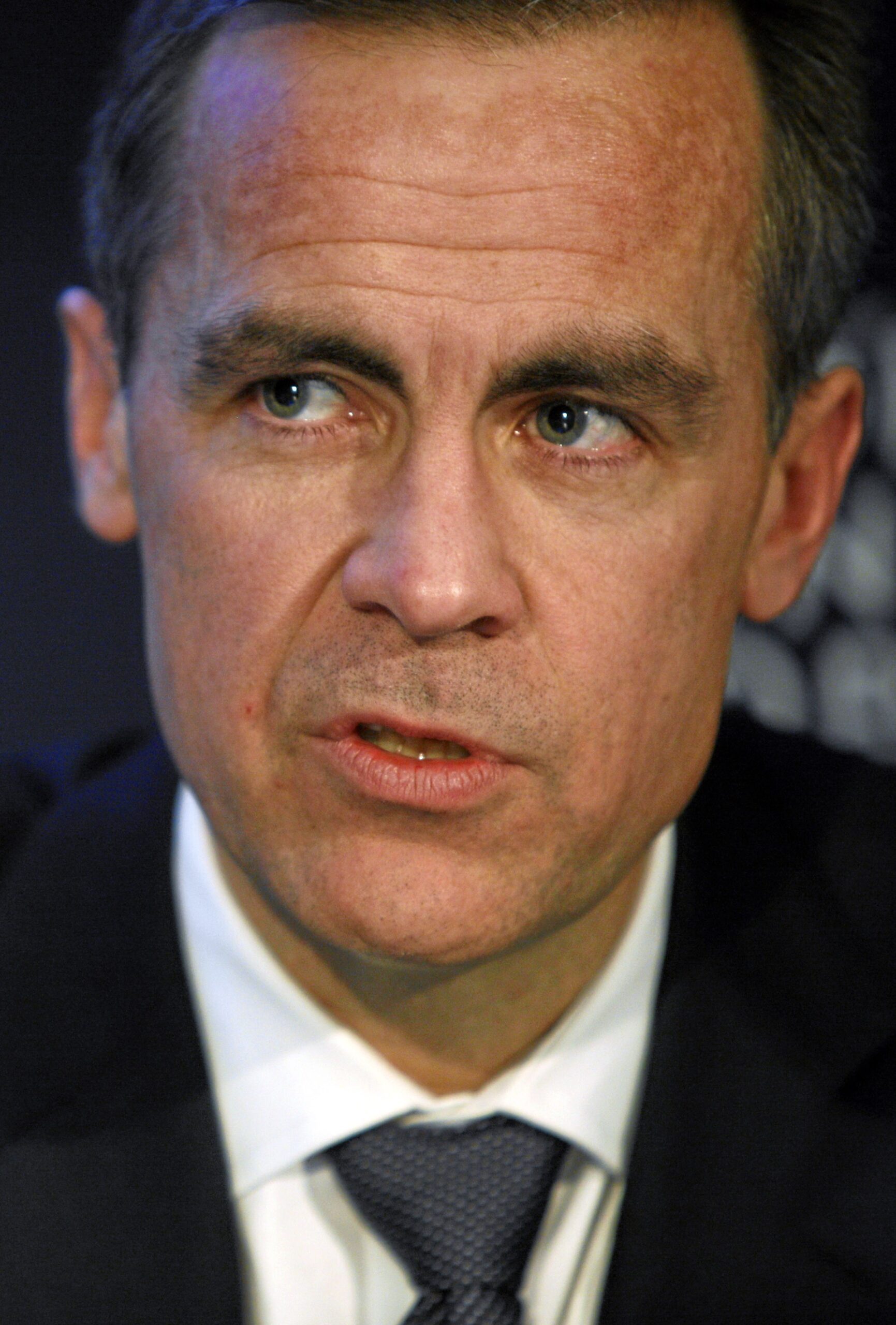
Brief Introduction of Mark Carney
Mark Joseph Carney is a distinguished Canadian economist and central banker who has held some of the most critical leadership positions in global finance. He is widely recognized for his tenures as the Governor of the Bank of Canada and the Governor of the Bank of England, becoming the first non-Briton to lead the latter institution. Carney’s career has been marked by his adept navigation of major economic crises, including the 2008 global financial crisis and the economic fallout from Brexit. Following his illustrious career in public service, he has transitioned into prominent roles in the private sector, focusing on sustainable finance and environmental, social, and governance (ESG) investing. His influence extends to international climate finance policy through his work as a United Nations Special Envoy.
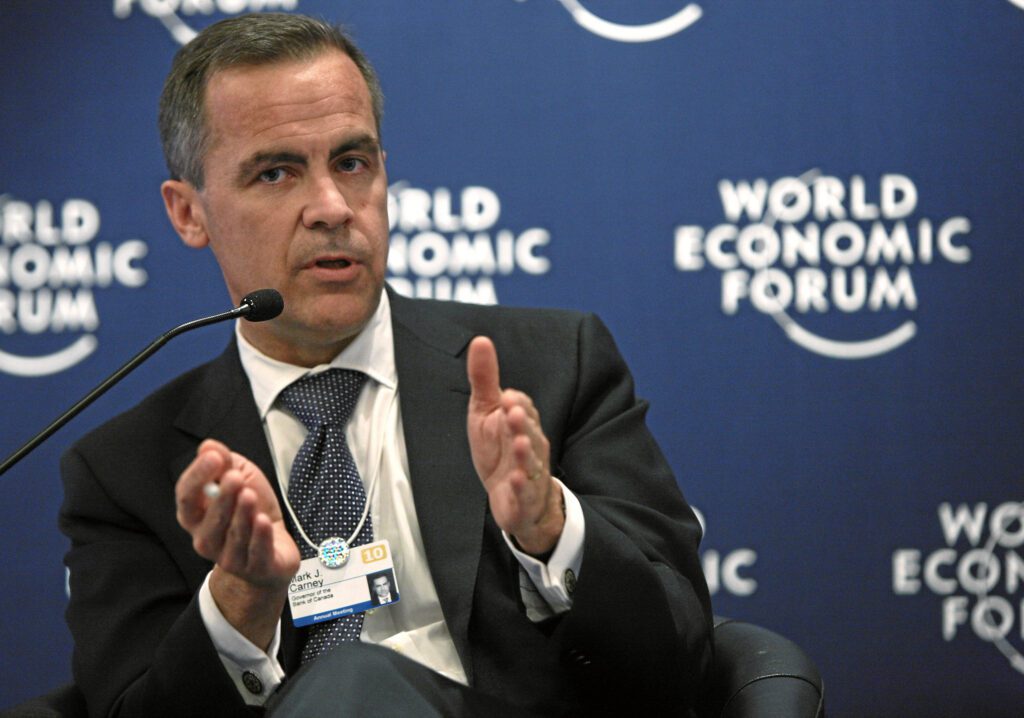
Mark Carney Overview
| Full Name | Mark Joseph Carney |
| Date of Birth | March 16, 1965 |
| Age(as of 2025) | 60 |
| Birthplace | Fort Smith, Northwest Territories, Canada |
| Profession | Economist, Central Banker, Financier |
| Husband/Wife | Diana Fox Carney |
| Family | Parents: Robert J. Carney and Verlie Margaret Carney. Siblings: Brenda, Sean, and Brian. Children: Four daughters (Cleo, Tess, Amelia, and Sasha). |
| Relationship/Affairs(GF/BF) | Married |
| Net Worth | Approximately $6.97 million as of 2025 |
Early Life and Education of Mark Carney
Mark Joseph Carney was born on March 16, 1965, in Fort Smith, Northwest Territories, Canada. He was raised in Edmonton, Alberta, where his parents worked as teachers. Carney’s academic journey began at St. Francis Xavier High School in Edmonton. He then moved to the United States to attend Harvard University, where he earned a bachelor’s degree in Economics with high honors in 1988. During his time at Harvard, his interest in economics was notably influenced by the lectures of John Kenneth Galbraith. After his undergraduate studies, Carney furthered his education at the University of Oxford in England. He obtained a master’s degree in Economics in 1993 and a doctorate in Economics in 1995 from Nuffield College, Oxford. His doctoral thesis was titled “The dynamic advantage of competition”. While at Oxford, he was also a goaltender for the university’s ice hockey team, which is where he met his future wife.
Mark Carney’s Career
Mark Carney’s career is distinguished by a seamless transition between the private and public sectors, culminating in leadership roles at two of the world’s most influential central banks. He began his professional journey at Goldman Sachs, where he spent thirteen years in their offices in London, Tokyo, New York, and Toronto. During his tenure, he held significant positions, including co-head of sovereign risk and managing director of investment banking, where he was involved in work with post-apartheid South Africa and advised Russia during its 1998 financial crisis.
In 2003, Carney transitioned to public service, joining the Bank of Canada as a Deputy Governor. A year later, in November 2004, he was appointed as the Senior Associate Deputy Minister of Finance, where he served under both Liberal and Conservative governments. In this role, he oversaw the government’s plan to tax income trusts.
Carney’s ascent in the world of central banking was solidified in February 2008 when he was appointed Governor of the Bank of Canada. Taking the helm at the onset of the global financial crisis, he was praised for his proactive measures, such as cutting interest rates, which helped Canada’s economy weather the storm more effectively than many other G7 nations. His leadership during this turbulent period earned him international recognition.
In November 2012, in a widely lauded move, Carney was appointed as the Governor of the Bank of England, the first non-Briton to hold the position. He began his term in July 2013 and served until March 2020. As Governor, he was instrumental in steering the UK’s economy through the uncertainties of Brexit and the initial economic shock of the COVID-19 pandemic. Concurrently with his governorships, he chaired the Financial Stability Board from 2011 to 2018, overseeing the reform of the global financial system.
After leaving the Bank of England, Carney focused his efforts on climate finance and sustainability. In December 2019, he was appointed as the UN Special Envoy for Climate Action and Finance. In August 2020, he joined Brookfield Asset Management as Vice Chair and Head of ESG and Impact Fund Investing, a role he held until January 2025. He also served as an informal advisor to the Canadian government during the COVID-19 pandemic. His career has since taken a political turn, with him becoming the Leader of the Liberal Party of Canada.

Mark Carney Personal Life & Family
Mark Carney is married to Diana Fox Carney, a British economist with expertise in development and climate policy. They met at the University of Oxford where they both played for the ice hockey teams and married in 1994. Diana Fox Carney is a respected professional in her own right, having held positions at various think tanks in Canada and the UK, and is an advocate for environmental and social justice causes. The couple has four daughters: Cleo, Tess, Amelia, and Sasha. The family has lived in Toronto, Ottawa, and London, moving as Carney’s career progressed. They returned to Ottawa in 2020 after his term at the Bank of England concluded. Carney is the son of two teachers, Robert and Verlie Carney, and grew up in Edmonton with his three siblings, Brenda, Sean, and Brian.
Awards and Achievements of Mark Carney
- Officer of the Order of Canada (2014)
- Honorary Doctor of Laws from the University of Manitoba (2013)
- Named one of Foreign Policy magazine’s Top 100 Global Thinkers
- Euromoney’s Central Bank Governor of the Year (2012)
Mark Carney Net Worth and Income
As of 2025, Mark Carney’s net worth is estimated to be approximately $6.97 million. His wealth has been accumulated through his extensive and high-profile career in both the private and public sectors. His thirteen-year tenure at the investment bank Goldman Sachs, where he held senior roles, contributed significantly to his fortune. His subsequent positions as Governor of the Bank of Canada and the Bank of England came with substantial salaries. More recently, his income sources have included his roles at Brookfield Asset Management and as chair of the board of directors for Bloomberg L.P.
Legacy and Influence
Mark Carney’s legacy is defined by his influential leadership in global finance and his pioneering advocacy for integrating climate change considerations into financial markets. His steady hand during the 2008 financial crisis as Governor of the Bank of Canada is credited with helping the country navigate the turmoil with relative stability. As the first non-Briton to lead the Bank of England, he broke a centuries-old tradition and brought a global perspective to one of the world’s most important financial institutions. His introduction of “forward guidance” on interest rates was a significant policy innovation. In the later stages of his career, Carney has become a leading voice on the financial risks and opportunities associated with climate change. As the UN Special Envoy for Climate Action and Finance, he has been instrumental in mobilizing private finance for the transition to a net-zero economy, co-founding initiatives like the Glasgow Financial Alliance for Net Zero. His book, “Value(s): Building a Better World for All,” further outlines his vision for an economy based on human values.
Interesting Facts about Mark Carney
- He was a goaltender for the Oxford University ice hockey team.
- He was the first non-Briton to be appointed Governor of the Bank of England in its more than 300-year history.
- His wife, Diana Fox Carney, is a respected economist and climate policy expert.
- He was an informal advisor to Canadian Prime Minister Justin Trudeau at the beginning of the COVID-19 pandemic.
Controversies
During his transition into Canadian politics, Mark Carney faced scrutiny regarding his time as chair of Brookfield Asset Management (BAM). A key point of contention was the relocation of BAM’s head office from Toronto to New York. Critics, particularly from the Conservative party, accused Carney of downplaying his role in the decision, pointing to company documents that suggested the board approved the move while he was still chairman. Carney maintained that the formal decision was made after his departure. Questions were also raised about potential conflicts of interest stemming from his extensive financial holdings in Brookfield, with calls for him to disclose the assets placed in a blind trust. His advocacy for climate finance while at Brookfield also drew criticism, with some pointing out the company’s investments in fossil fuel infrastructure in other countries. Additionally, his decision to support a controversial oil pipeline in Canada led to the resignation of a prominent cabinet minister from his own party.
Social Media Presence
- Instagram – Information not publicly available
- Twitter – Information not publicly available
- YouTube – Information not publicly available
Final Words about Mark Carney
Mark Carney’s career represents a remarkable trajectory from the highest echelons of global finance to a pivotal role in Canadian politics. Having successfully steered two G7 economies through periods of significant economic turbulence, he has proven his capabilities as a pragmatic and forward-thinking leader. His more recent focus on climate change and sustainable finance has positioned him as a key figure in the global effort to build a more resilient and environmentally conscious economy. As he embarks on a new chapter in his career, his extensive experience in both the private and public sectors will undoubtedly shape his approach to national and international policy. His journey continues to be one of significant influence, with a legacy that will be defined by his contributions to both economic stability and the evolving landscape of sustainable finance.