
<
Brief Introduction of Julia Klockner
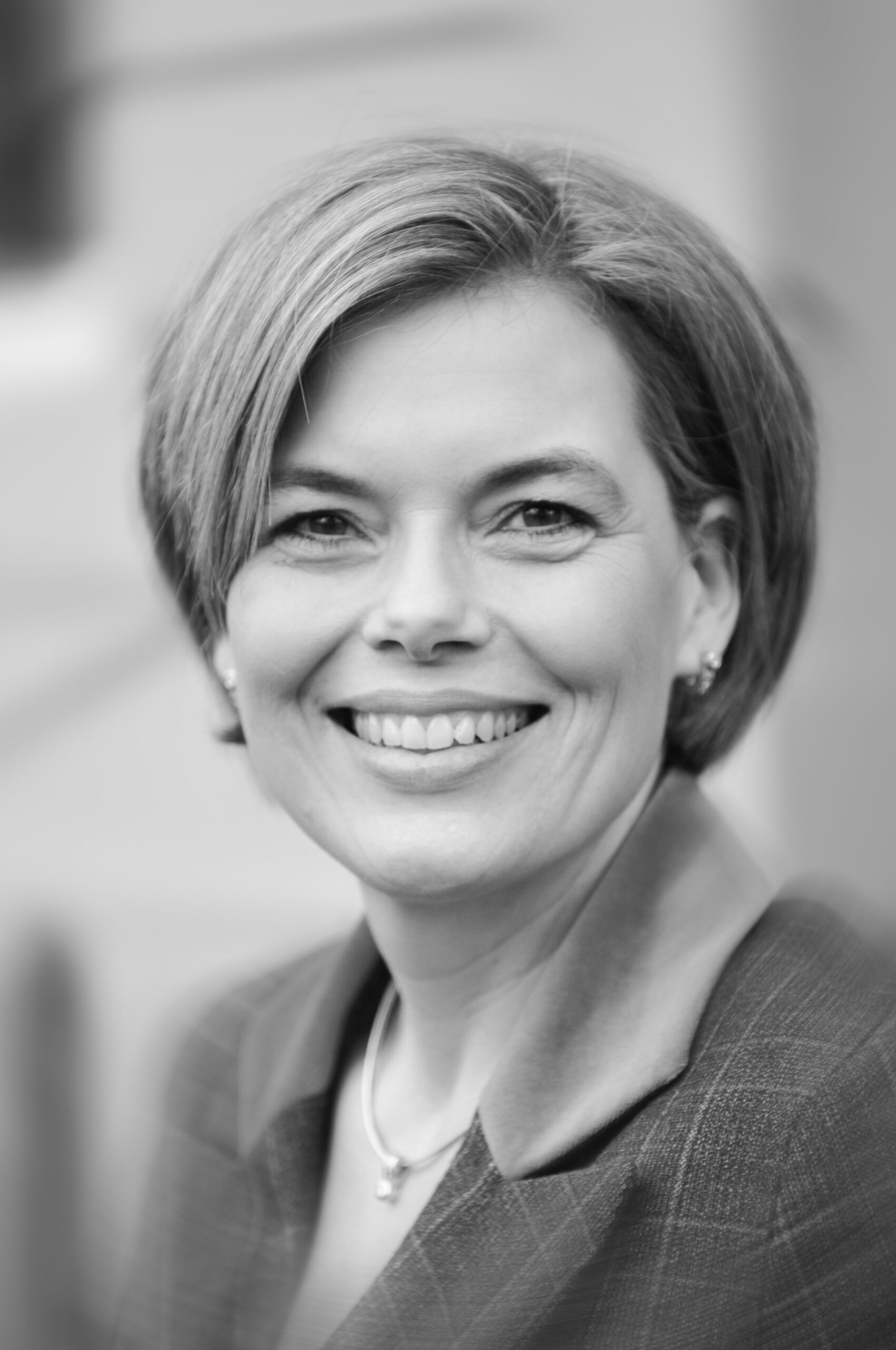
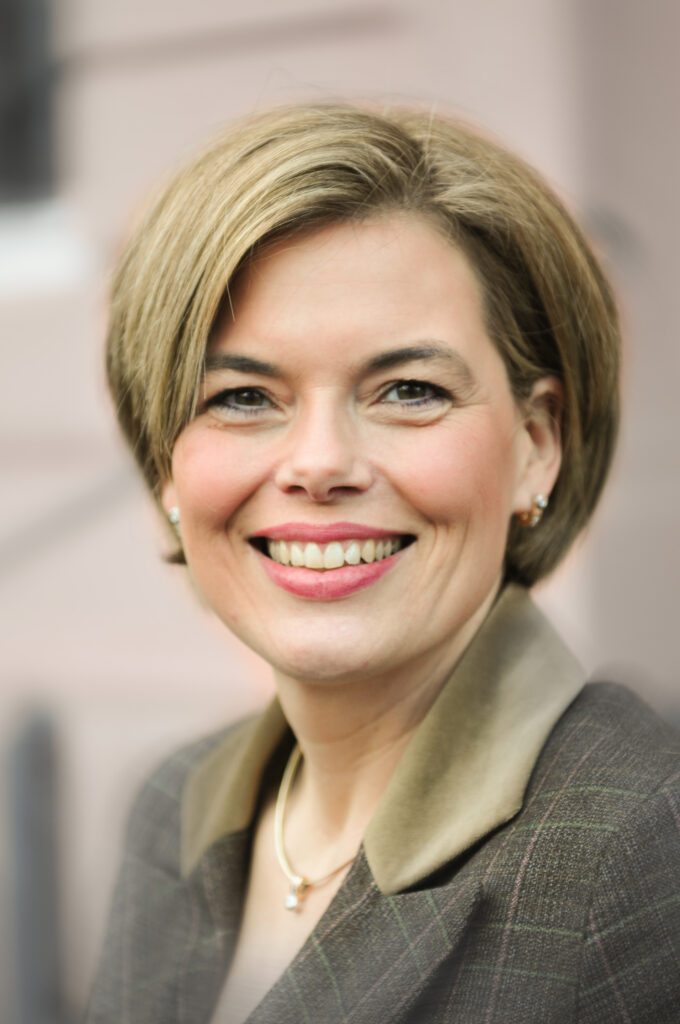
Julia Klöckner is a prominent German politician affiliated with the Christian Democratic Union (CDU). She has held several significant positions in both state and federal politics, establishing herself as a key figure within her party. Klöckner served as the Federal Minister of Food and Agriculture in Chancellor Angela Merkel’s cabinet from 2018 to 2021. Before her tenure as minister, she was an influential leader in Rhineland-Palatinate’s state politics. Her political career is marked by a deep engagement with agricultural policy, consumer protection, and economic affairs. Klöckner first gained public recognition in 1995 when she was selected as the German Wine Queen, an ambassadorial role that leveraged her origins in a wine-making family. In March 2025, she was elected President of the German Bundestag, the second-highest office in Germany.
Julia Klockner Overview
| Full Name | Julia Klöckner |
| Date of Birth | December 16, 1972 |
| Age(as of 2025) | 53 |
| Birthplace | Bad Kreuznach, Rhineland-Palatinate, Germany |
| Profession | Politician, Journalist |
| Husband/Wife | Separated from Ralph Grieser. Previously in a long-term relationship with Helmut Ortner. |
| Family | Parents: Aloys and Doris Klöckner. Brother: Stephan Klöckner. |
| Relationship/Affairs(GF/BF) | In a relationship with Jörg Pilawa since August 2025. |
| Net Worth | Information not publicly available |
Early Life and Education of Julia Klockner
Julia Klöckner was born on December 16, 1972, in the spa town of Bad Kreuznach in Rhineland-Palatinate. She grew up in a Roman Catholic household in Guldental, where her parents, Aloys and Doris Klöckner, owned and operated a vineyard. This upbringing in a vintner’s family gave her an early and intimate understanding of agriculture and wine production, which would later influence her professional and political life. She has an older brother named Stephan. Klöckner attended the Gymnasium an der Stadtmauer in Bad Kreuznach, where she completed her Abitur in 1992. Following her secondary education, she enrolled at the Johannes Gutenberg University in Mainz. There, she pursued a diverse course of study in political science, Catholic theology, and education. In 1998, she successfully completed her studies, earning a Master of Arts degree and passing her first state examination to qualify as a teacher of social studies and religion. Her master’s thesis focused on the structure and development of the European wine market policy, reflecting her deep-rooted interest in the field.
Julia Klockner’s Career
Julia Klöckner’s career began not in politics, but in fields related to her upbringing and education. In 1994, she was named the Nahe Wine Queen and subsequently, in 1995, the German Wine Queen. This role as a national ambassador for German wine provided her with her first taste of public life and representation. During this time, she even presented a bottle of Riesling to Pope John Paul II. After university, she embarked on a career in journalism. She completed an internship at Meininger Verlag, a publishing house specializing in wine and beverage publications. Between 1998 and 2002, she worked as a freelance contributor for SWR television. She later became an editor for “weinwelt” magazine and from 2001 to 2009, she was the editor-in-chief of “Sommelier-Magazin,” a publication she co-founded.
Klöckner’s formal entry into politics began in 1997 when she joined the Junge Union (the youth wing of the CDU/CSU), the Frauen Union (the women’s association), and the CDU party itself. Her political ascent was swift. In 2002, she was elected to the German Bundestag, the federal parliament, representing the Kreuznach constituency. She won the direct mandate for the first time in about 50 years for the CDU in that district in the 2005 federal elections. Within the Bundestag, she became involved in committees related to consumer protection, food, and agriculture, quickly establishing herself as an expert in these areas. From 2009 to 2011, she served as a Parliamentary State Secretary in the Federal Ministry of Food, Agriculture and Consumer Protection under Minister Ilse Aigner.
In 2010, Klöckner transitioned her focus to state-level politics in her home state of Rhineland-Palatinate. She was elected as the chairwoman of the CDU in the state and became the party’s lead candidate for the 2011 state elections. Although the CDU did not win the election, Klöckner became the leader of the opposition as the chair of the CDU parliamentary group in the state parliament, a role she held until 2018. During this period, her national profile continued to grow. In 2012, she was elected as one of the Deputy Federal Chairpeople of the national CDU party, serving under then-Chancellor Angela Merkel. This placed her in the party’s top leadership circle, and she was often seen as a potential successor to Merkel.
Following the 2017 federal elections, Julia Klöckner returned to the federal stage in a major role. In March 2018, she was appointed Federal Minister of Food and Agriculture in Angela Merkel’s fourth cabinet. She held this position until the end of Merkel’s chancellorship in December 2021. After the 2021 federal election, she returned to the Bundestag and became the spokeswoman for economic policy for the CDU/CSU parliamentary group. She also took on the role of Federal Treasurer for the CDU in 2022. A significant milestone in her career came in March 2025, when she was elected President of the German Bundestag, succeeding Bärbel Bas and becoming the fourth woman to hold this prestigious office.
Julia Klockner Personal Life & Family
Julia Klöckner maintains a relatively private personal life. She grew up in a Catholic family of vintners in Guldental, a background that has significantly shaped her personal and political identity. For several years, she was in a relationship with media manager Helmut Ortner. In 2019, she married Ralph Grieser, an entrepreneur in the classic car trade, in a ceremony in South Africa. Grieser has two daughters from a previous relationship whom Klöckner became a stepmother to. The couple announced their separation in August 2023. In August 2025, it was publicly confirmed that Julia Klöckner is in a relationship with well-known German television presenter Jörg Pilawa. Klöckner is a practicing Roman Catholic and has been open about the role of her faith in her life and political work. She is also actively involved in various social and charitable organizations outside of her political duties.

Awards and Achievements of Julia Klockner
- 1995: German Wine Queen
- 2009/2010: Completed the Young Leader Program of the American Council on Germany.
Julia Klockner Net Worth and Income
Information regarding Julia Klöckner’s precise net worth is not publicly available. As a high-ranking German politician, her income is primarily derived from her official salary. As President of the Bundestag, a Federal Minister, and a Member of the Bundestag, she receives remuneration and allowances as stipulated by German law for public officials. The German Bundestag provides transparency regarding the income of its members, but a comprehensive net worth calculation, including private assets, is not disclosed. She may have additional income from book publications and other activities prior to her most recent government roles, but specific figures are not public knowledge.
Legacy and Influence
Julia Klöckner has carved out a significant legacy as a leading conservative politician in Germany. Her influence is most pronounced in the realms of agricultural and food policy. As Federal Minister, she championed a “National Reduction and Innovation Strategy” aimed at voluntarily reducing sugar, fat, and salt in processed foods, a policy that sparked both praise and criticism for its reliance on industry cooperation rather than regulation. Her deep roots in a wine-growing region have consistently informed her political advocacy for German agriculture and viticulture. She is known for her pragmatic approach and strong communication skills, which have helped her navigate complex political landscapes both at the state and federal levels. Within the CDU, she has been a powerful voice, serving as a deputy leader for a decade and often being part of the conversation about the party’s future direction. Her election as President of the Bundestag in 2025 cemented her status as one of Germany’s most influential political figures, holding the second-highest office in the state.
Interesting Facts about Julia Klockner
- Before her political career, she was elected the 47th German Wine Queen in 1995.
- As the German Wine Queen, she had the opportunity to present a bottle of German Riesling wine to Pope John Paul II.
- She is an author and has published several books on topics including political ideologies and integration.
- Her master’s thesis was on the topic of European wine market policy.
- She is the first woman to directly succeed another woman as President of the German Bundestag.
- In late 2025, due to a lack of candidates, she agreed to temporarily step back into her former role as a Nahe Wine Queen ambassador to help promote the region’s viticulture.
Controversies
Throughout her career, Julia Klöckner has faced several controversies. One of the most notable occurred in June 2019 during her time as Minister of Food and Agriculture. The ministry’s official Twitter channel released a video featuring Klöckner in conversation with the head of Nestlé Germany. In the video, she praised the company for its efforts to reduce sugar, fats, and salt in its products as part of her ministry’s voluntary reduction strategy. The video drew immediate and widespread criticism, with opponents accusing her of using her public office to create a “PR event” for the multinational food giant. Critics, including politicians from other parties and social media influencers, argued that the video amounted to undeclared advertising or lobbying. The media standards authority of Berlin-Brandenburg later investigated complaints of hidden advertising but concluded that the video did not violate the law, as there was no evidence of payment from Nestlé and the video fell within the scope of permissible government public relations. Despite this ruling, the incident fueled a broader debate about the close ties between politicians and corporate lobbyists and damaged her public image among critics who felt she was too aligned with industry interests over consumer protection.
Social Media Presence
- Instagram – Not publicly available
- Twitter – Publicly available, follower count subject to change.
- YouTube – Not publicly available
Final Words about Julia Klockner
Julia Klöckner remains a formidable and central figure in German politics. Her journey from German Wine Queen to President of the Bundestag is a testament to her political acumen and ambition. Having served as a federal minister, a state opposition leader, and a deputy party chair, she possesses a breadth of experience that is rare in the political arena. Her career has been characterized by a focus on agricultural and economic issues, informed by her unique personal background. Now holding one of the highest offices in the country, she is in a powerful position to shape parliamentary debate and the legislative process. As she navigates the challenges of her role as Bundestag President, her leadership will continue to be a significant factor in the direction of German governance and the fortunes of the Christian Democratic Union.