
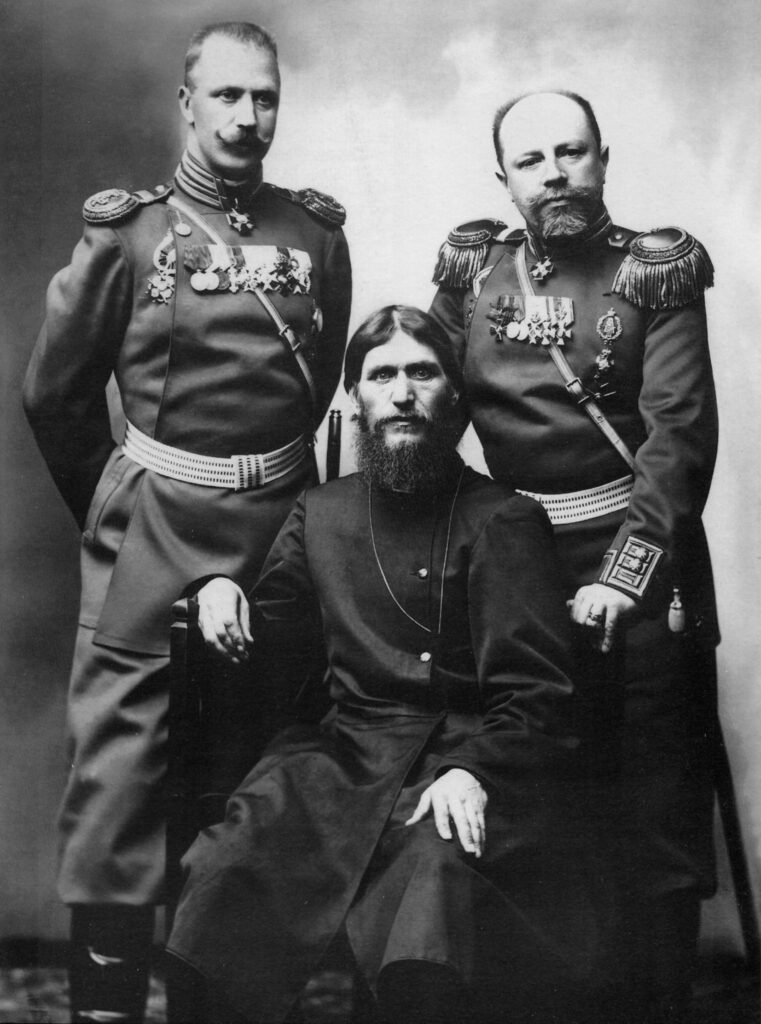
Brief Introduction of Grigory Rasputin
Grigory Yefimovich Rasputin was a Russian mystic and self-proclaimed holy man who befriended the family of Emperor Nicholas II, the last monarch of Russia, and gained considerable influence in the final years of the Russian Empire. Born a peasant in Siberia, Rasputin’s charisma and purported healing abilities, particularly concerning the hemophiliac heir Alexei, allowed him to penetrate the highest echelons of society. He became a deeply divisive figure, seen by some as a visionary and prophet, and by others as a debauched charlatan whose scandalous reputation helped discredit the tsarist government. His life was shrouded in legend and controversy, culminating in his infamous murder by a group of conservative noblemen, an event that foreshadowed the imminent collapse of the Romanov dynasty.
Grigory Rasputin Overview
| Full Name | Grigory Yefimovich Rasputin |
| Date of Birth | January 21, 1869 (O.S. January 9, 1869) |
| Age | 47 years |
| Birthplace | Pokrovskoye, Tobolsk Governorate, Siberian Russia |
| Nationality | Russian |
| Profession | Mystic, Faith Healer |
| Famous For | Influence over the Russian Imperial Family (the Romanovs) |
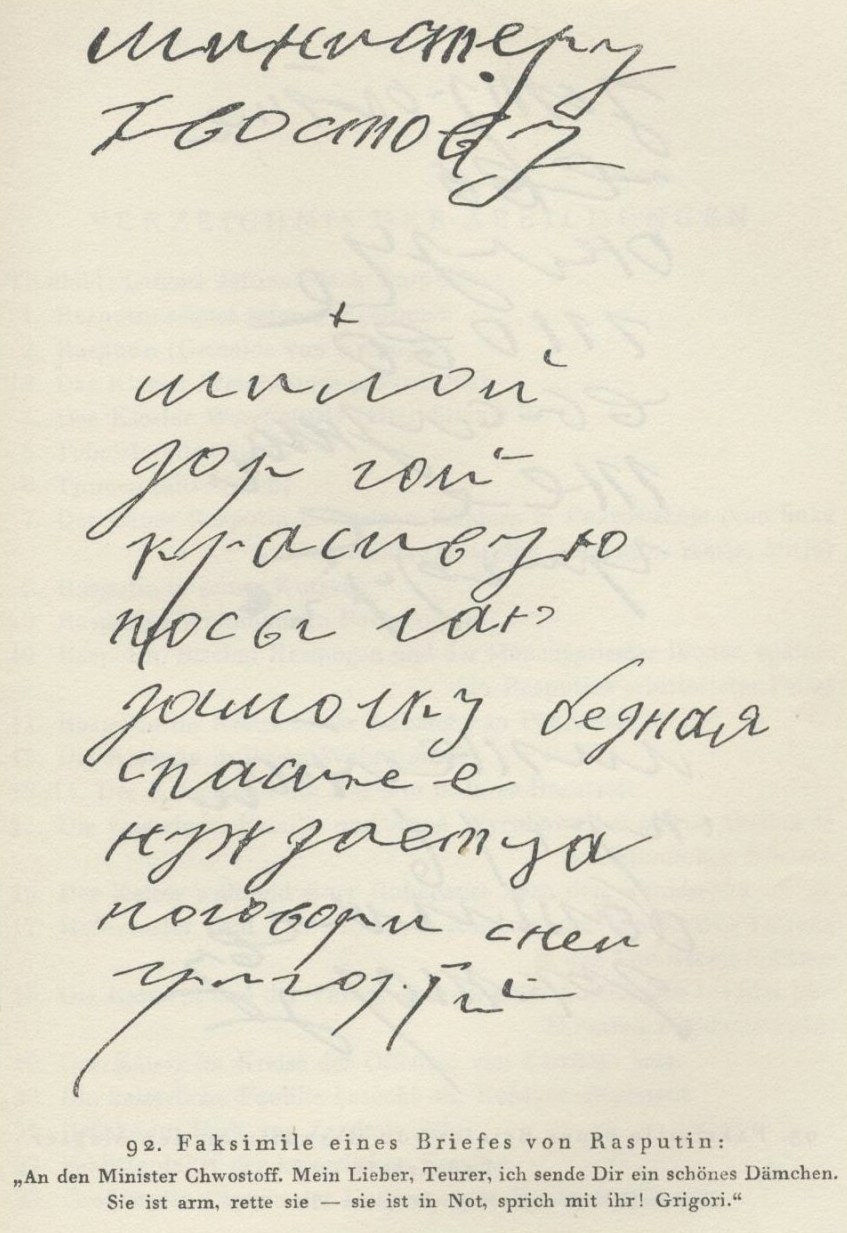
| Education | Largely illiterate, received little to no formal schooling |
| Marital Status | Married |
| Spouse / Partner | Praskovya Fedorovna Dubrovina |
| Children | Seven children, three of whom survived to adulthood (Dmitry, Maria, and Varvara) |
| Net Worth | Not publicly available |
Early Life and Education of Grigory Rasputin
Grigory Yefimovich Rasputin was born into a peasant family in the small Siberian village of Pokrovskoye, along the Tura River. The exact date of his birth is often cited as January 21, 1869. His parents, Yefim and Anna Rasputin, were peasant farmers; Yefim also served as a church elder and a government courier. Grigory was one of several children, but he and a sister were reportedly the only ones to survive into adulthood, with several siblings dying in infancy. Like most Siberian peasants of his time, Rasputin received little to no formal education and remained illiterate for much of his early life. His youth was marked by stories of an unruly nature, with some local records suggesting involvement in petty theft and drinking. At around the age of 18, he underwent a religious conversion, which set him on a path of spiritual seeking. This led him to spend time at monasteries, including a transformative few months at the St. Nicholas Monastery in Verkhoturye, though he never officially became a monk.
Grigory Rasputin Career
Early Career
After his religious awakening, Rasputin embarked on a new path as a “strannik,” or a wandering holy pilgrim. He left his family for extended periods, traveling across Russia and making pilgrimages to holy sites, possibly reaching Mount Athos in Greece and Jerusalem. During these travels, he lived off donations and began to build a reputation as a “starets” (a spiritual elder) with powers of healing and prophecy. He developed a unique brand of mysticism that combined Orthodox Christian teachings with folk beliefs. His charisma, intense gaze, and reputation as a holy man started to attract a following. By 1903, his wanderings led him to St. Petersburg, where his magnetic personality and piousness impressed key figures within the Russian Orthodox Church, paving his way into the capital’s high society, which was then captivated by mysticism and the occult.
Breakthrough
Rasputin’s major breakthrough came in November 1905, when he was introduced to the imperial family: Tsar Nicholas II and Empress Alexandra Feodorovna. The introduction was facilitated by members of the aristocracy who were taken with his spiritual fervor. The royal couple was desperate to find help for their only son and heir, Alexei, who suffered from hemophilia, a life-threatening genetic disorder that causes severe bleeding. In 1906, during one of Alexei’s bleeding episodes, Rasputin was summoned to the palace. He seemed to possess a remarkable ability to calm the boy and staunch the bleeding, likely through a form of hypnotic suggestion or by advising against the use of aspirin, a then-common but harmful treatment for hemophiliacs. This apparent success convinced the Empress, in particular, that Rasputin was a holy man sent by God to save her son. His ability to ease the Tsarevich’s suffering cemented his position as an indispensable favorite at the imperial court.
Major Achievements and Success
Rasputin’s primary “success” was the immense influence he wielded over Empress Alexandra and, through her, the Tsar. This influence reached its zenith during World War I, after Tsar Nicholas II took personal command of the army at the front in 1915, leaving Alexandra in charge of domestic affairs. Rasputin became her most trusted advisor, and his recommendations often led to the appointment and dismissal of high-ranking government officials. He became, in effect, one of the most powerful figures in the country, with petitioners seeking his favor to gain positions or avoid military service. For the Empress, his greatest achievement was the continued well-being of her son, Alexei, whose health and destiny she believed were inextricably linked to the mystic.
Recent Work / Current Status
Grigory Rasputin was assassinated in the early morning of December 30, 1916 (O.S. December 17). A group of conservative nobles, including Prince Felix Yusupov (the husband of the Tsar’s niece), Grand Duke Dmitri Pavlovich (the Tsar’s cousin), and politician Vladimir Purishkevich, lured him to Yusupov’s Moika Palace. They feared his influence was a threat to the Russian Empire and sought to save the monarchy from further scandal. While Yusupov’s memoirs famously recounted a dramatic murder involving poison, multiple gunshots, and eventual drowning, the official autopsy concluded that Rasputin died from three gunshot wounds, one of which was a close-range shot to the forehead. His body was recovered from the icy Neva River a few days later.
Grigory Rasputin Awards and Achievements
- No formal awards or official achievements are documented. His “achievements” were tied to his informal and controversial role within the Russian court.
Grigory Rasputin Personal Life & Family
In 1887, at the age of 18, Grigory Rasputin married a peasant girl named Praskovya Fedorovna Dubrovina. She remained in their home village of Pokrovskoye throughout Rasputin’s rise to prominence and remained loyal to him. They had seven children together, though only three survived into adulthood: Dmitry, Maria (sometimes called Matryona), and Varvara. Despite his image as a holy man, Rasputin’s personal life in St. Petersburg was the subject of immense scandal. He was known for his heavy drinking and licentious behavior, and he was rumored to have had numerous affairs with women from all social strata, from society ladies to prostitutes. He cultivated an unkempt appearance, often appearing with dirty clothes and food in his beard, which some found authentic while others found repulsive.

Grigory Rasputin Relationship Details
Grigory Rasputin was married to Praskovya Fedorovna Dubrovina from 1887 until his death in 1916. Praskovya was a peasant from a nearby village who became his wife before he embarked on his life as a pilgrim. She raised their children in Siberia and, despite awareness of his philandering, reportedly remained devoted to him, once quoted as saying, “He has enough for all.” While scandalous rumors circulated about an affair between Rasputin and Empress Alexandra, there is no evidence to support this claim, and historians generally consider it to be unfounded gossip used to discredit the royal family. Alexandra’s devotion to him stemmed from her fervent belief that he was the only one who could save her son’s life.
Grigory Rasputin Net Worth and Income
Information not disclosed. As a peasant mystic, Grigory Rasputin did not have a formal salary or a quantifiable net worth. His lifestyle in St. Petersburg was funded by the “donations” and gifts of his wealthy and powerful patrons, including the imperial family. He was known to accept bribes from those seeking his influence in securing government appointments or other favors. However, there are no reliable estimates of his financial worth.
Grigory Rasputin Physical Appearance
- Height: \\\\\\\”Tall\\\\\\\”
- Weight: \\\\\\\”Information not publicly available\\\\\\\”
- Eye Color: Piercing grey-green eyes
- Hair Color: Long, dark hair and a long beard
Grigory Rasputin Controversies
Grigory Rasputin’s life was steeped in controversy. His enemies accused him of religious heresy, with the local clergy denouncing him as a heretic early on. In St. Petersburg, he was widely accused of debauchery, including excessive drinking and sexual licentiousness, with numerous reports of affairs and visits to brothels. The most significant controversy was the extent of his political influence over Empress Alexandra. Critics and the public believed he manipulated the Tsarina, leading to incompetent ministers being appointed to powerful positions, which destabilized the government, especially during World War I. Salacious and unfounded rumors of a sexual affair with the German-born Empress were widespread, fueling public anger and damaging the credibility of the monarchy. His presence at court and his behavior created deep divisions and animosity among the aristocracy and government officials, ultimately leading to his assassination.
Grigory Rasputin Social Media Presence
- Instagram – Not applicable
- Twitter – Not applicable
- YouTube – Not applicable
Interesting Facts about Grigory Rasputin
- Despite his reputation, the surname “Rasputin” likely did not mean “debauched” or “licentious” as was popularly believed; a more probable origin is from the Russian word for “crossroads.”
- He survived a previous assassination attempt in June 1914 when a peasant woman named Khioniya Guseva stabbed him in the stomach, leaving him seriously wounded.
- Rasputin allegedly wrote a prophetic letter to the Tsar before his death, predicting that if he were killed by nobles, the imperial family would be killed by the Russian people within two years.
Grigory Rasputin Legacy and Influence
Grigory Rasputin’s legacy is complex and heavily mythologized. To his enemies and many historians, he symbolizes the corruption and decay at the heart of the Russian imperial court. The scandal and controversy surrounding his influence, particularly during World War I, severely undermined the authority and credibility of the Romanov dynasty. His presence served as a focal point for public resentment, and his scandalous reputation helped discredit the Tsarist government, thus contributing to the revolutionary atmosphere that led to the overthrow of the monarchy in 1917. For others, especially peasants in his native Siberia, he represented a “rags to riches” story, a simple man who rose to a position of immense power, showing that anyone could defy their predetermined station in life. He remains a mysterious and captivating figure in popular culture, often depicted as a villainous sorcerer or a “mad monk,” whose life and death continue to fascinate and fuel speculation.
Final Words about Grigory Rasputin
Grigory Rasputin’s journey from an illiterate Siberian peasant to the most influential figure in the court of the last Russian Emperor is one of history’s most dramatic and debated tales. His ability to alleviate the suffering of the hemophiliac heir, Alexei, granted him unparalleled access to and power over the imperial family. While viewed as a savior by the desperate Empress Alexandra, he was seen by the Russian elite and public as a corrupt and depraved manipulator whose influence was disastrous for the country. The rampant scandals, both real and rumored, surrounding his personal life and his meddling in state affairs eroded public trust in the monarchy at a critical moment in history. His brutal assassination by nobles was not the salvation for the monarchy they had hoped for but rather a prelude to its final, violent collapse. Rasputin remains a potent symbol of the decadence and decay that precipitated the end of the Russian Empire.
 Team Dailly WikiBio