
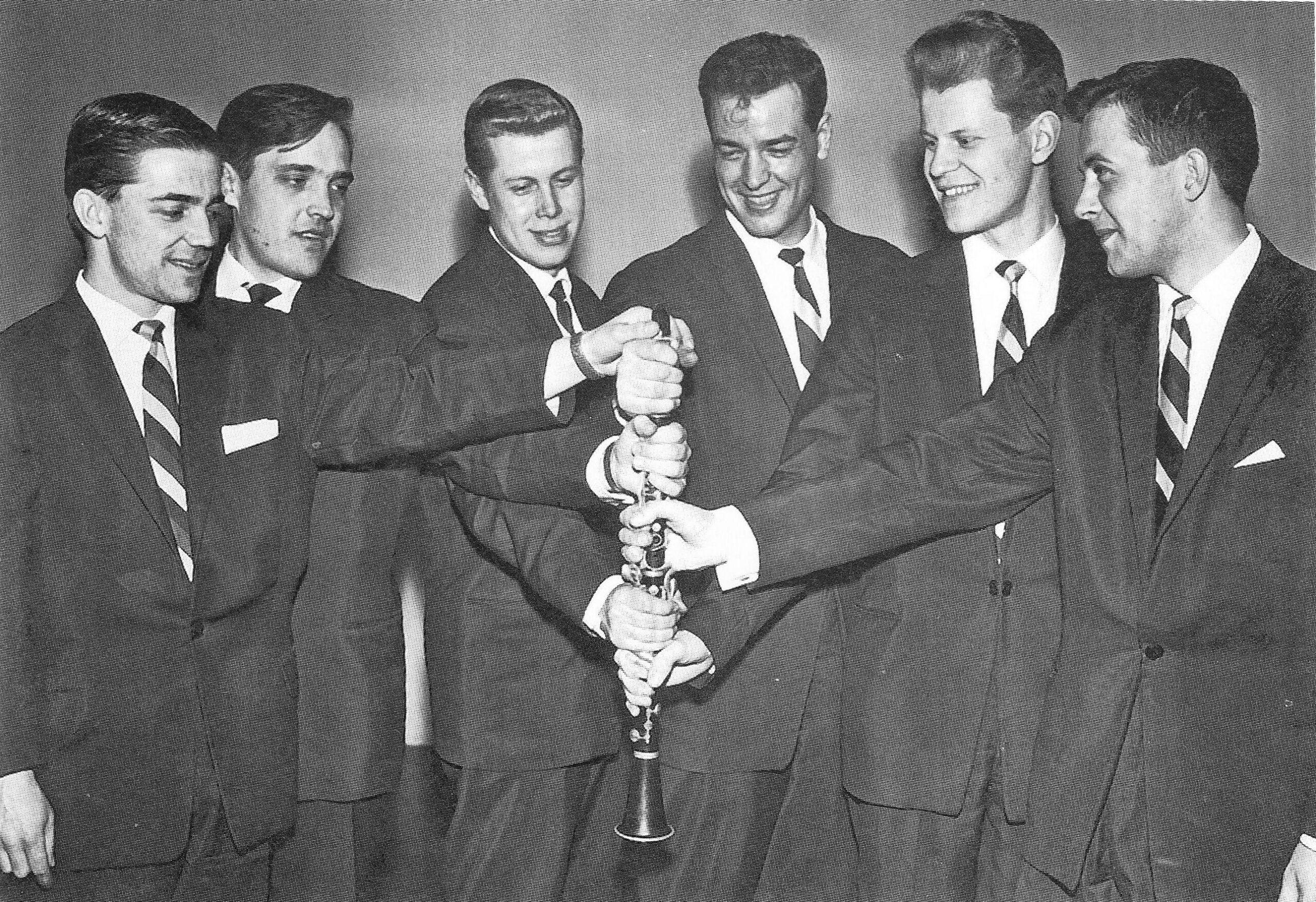
Brief Introduction of Fin Ronnie
Finn Ronne was a distinguished Norwegian-American Antarctic explorer, naval officer, and author, renowned for his extensive contributions to the exploration and mapping of the Earth’s southernmost continent. Following in the footsteps of his father, who was a member of Roald Amundsen’s successful South Pole expedition, Ronne dedicated much of his life to unraveling the mysteries of Antarctica. He participated in several expeditions led by the famed Admiral Richard E. Byrd before leading his own groundbreaking Ronne Antarctic Research Expedition from 1946 to 1948. This expedition was notable not only for its scientific achievements but also for the inclusion of his wife, Edith “Jackie” Ronne, who became one of the first two women to overwinter in Antarctica. Throughout his career, Finn Ronne traveled thousands of miles across the Antarctic landscape by ski and dog sled, discovering and charting vast, previously unknown territories, and significantly advancing the world’s geographical knowledge of the continent.

Fin Ronnie Overview
| Full Name | Finn Ronne |
| Date of Birth | December 20, 1899 |
| Age(as of 2025) | Deceased (Died on January 12, 1980, at the age of 80) |
| Birthplace | Horten, Norway |
| Profession | Antarctic Explorer, Naval Officer, Author |
| Husband/Wife | Edith “Jackie” Maslin Ronne |
| Family | Father – Martin Rønne, Wife – Edith Ronne, Daughter – Karen Ronne Tupek |
| Relationship/Affairs(GF/BF) | Married to Edith “Jackie” Ronne |
| Net Worth | Not publicly available |
Early Life and Education of Fin Ronnie
Finn Ronne was born on December 20, 1899, in Horten, a coastal town in Vestfold county, Norway. The spirit of exploration was deeply embedded in his heritage, as his father, Martin Rønne, was a seasoned polar explorer. The elder Rønne was a sailmaker who had the distinct honor of serving with the legendary Roald Amundsen on his triumphant expedition to the South Pole in 1911. This familial connection to one of history’s greatest polar achievements undoubtedly ignited a passion for the icy wilderness in young Finn. Growing up, he was captivated by the tales of polar adventurers like Fridtjof Nansen, Sir John Franklin, and Ernest Shackleton. His upbringing in a maritime town, coupled with his father’s heroic legacy, set the course for his future endeavors.
Ronne pursued a practical and technical education that would prove invaluable in the harsh and demanding environments he would later conquer. He attended Horten Technical College, where he earned a degree in engineering, specializing in naval architecture and boiler construction. This engineering background provided him with the essential skills to design, build, and maintain the equipment necessary for survival and exploration in the extreme conditions of Antarctica. In 1923, at the age of 23, Finn Ronne made the life-changing decision to immigrate to the United States, seeking new opportunities and a path to fulfill his exploratory ambitions. He settled in the U.S. and, after several years of hard work and dedication, became a naturalized American citizen in 1929. His early years in America were spent honing his engineering skills at prominent companies such as the Bethlehem Steel Corporation and the Westinghouse Electric Corporation, where he worked as a mechanical engineer for over a decade. This period of his life was crucial in providing him with the professional experience and financial stability to eventually pursue his lifelong dream of Antarctic exploration.
Fin Ronnie’s Career
Finn Ronne’s illustrious career as an Antarctic explorer was a testament to his endurance, leadership, and unwavering dedication to scientific discovery. His journey into the heart of the Antarctic began in the 1930s when he joined the expeditions of the renowned American polar explorer, Admiral Richard E. Byrd. Ronne served as a ski expert and dog driver on Byrd’s second Antarctic expedition from 1933 to 1935. His expertise in skiing and handling dog sleds, skills honed during his Norwegian upbringing, made him an invaluable asset to the team. He returned to the Antarctic with Byrd for the United States Antarctic Service Expedition of 1939-1941, this time in a more senior role as chief of staff and transportation engineer. During this expedition, Ronne, alongside ornithologist Carl Eklund, undertook a monumental 1,264-mile sledge journey that lasted 84 days. This grueling trek resulted in the charting of approximately 460 miles of new coastline and the significant discovery that Alexander I Land was, in fact, an island.
The pinnacle of Finn Ronne’s career was the Ronne Antarctic Research Expedition (RARE), which he organized and led from 1946 to 1948. This privately funded expedition, with support from the American Geographical Society, was a testament to his determination and leadership. A groundbreaking aspect of this expedition was the inclusion of two women: his wife, Edith “Jackie” Ronne, who served as the expedition’s historian and correspondent, and Jennie Darlington, the wife of the chief pilot. Their participation marked a historic moment, as they became the first women to overwinter in Antarctica. The RARE expedition was a resounding success, achieving significant scientific and geographical milestones. Ronne and his team meticulously mapped and explored vast stretches of the Weddell Sea coastline, discovering the last unknown coastline on Earth. They explored an estimated quarter of a million square miles and mapped a further 450,000 square miles of newly discovered lands. In honor of his wife’s contributions, Ronne named a massive ice shelf at the head of the Weddell Sea the “Edith Ronne Land,” which was later renamed the Ronne Ice Shelf.
Beyond his own expedition, Finn Ronne continued to be a leading figure in polar exploration. He served in the United States Navy for several years, attaining the rank of Captain in the U.S. Navy Reserve. In the 1950s, during the International Geophysical Year, the Navy organized Operation Deepfreeze to complete the mapping of Antarctica and establish scientific research bases. Recognizing his unparalleled expertise, Ronne was appointed as the scientific and military leader for a U.S. Weddell Sea base, making him the only leader of a U.S. Antarctic base to command both scientific and military personnel. Throughout his life, Ronne authored several books about his experiences, including “Antarctic Conquest” and “Antarctica, My Destiny,” leaving behind a rich literary and scientific legacy. His career was characterized by a relentless pursuit of knowledge, a disciplined leadership style, and a profound love for the pristine wilderness of Antarctica.
Fin Ronnie Personal Life & Family
Finn Ronne’s personal life was intrinsically linked to his passion for exploration. He was married to Edith “Jackie” Maslin, whom he met on a blind date in 1942. They married on March 18, 1944. Jackie, who was twenty years his junior, was captivated by his charming Norwegian accent and his spellbinding stories of the polar regions. Their partnership was not confined to domestic life; Jackie became an integral part of his most famous expedition. Initially, she had only planned to accompany him as far as the expedition’s departure point in Valparaiso, Chile. However, at the last minute, she was persuaded to join the expedition, becoming the first American woman to set foot in Antarctica and, along with Jennie Darlington, one of the first two women to spend a winter on the continent. As the expedition’s recorder and correspondent for the North American Newspaper Alliance, she played a vital role in documenting their historic journey. In 1971, Finn and Jackie became the first married couple to stand together at the South Pole.
The couple had one daughter, Karen, who was born in 1951. The spirit of exploration was passed down through the generations, as Karen also developed a deep appreciation for the polar regions. The Ronne family’s connection to Antarctica is a unique multi-generational story, beginning with Finn’s father, Martin, continuing with Finn and Jackie, and being embraced by their daughter. Finn Ronne was known for his disciplined and austere Norwegian heritage, which shaped his leadership style. He was a man of strict order and hard work, and as an expedition leader, he was driven and uncompromising in his pursuit of safety and success. This sometimes led to clashes with younger, more adventure-seeking expedition members who chafed under his firm management. However, those who knew him well also spoke of his warmth, charm, and loyalty. He was highly respected by his peers for his exceptional “polar sense” and his competence in crisis situations. Finn Ronne passed away from heart failure in his sleep on January 12, 1980, at his home in Bethesda, Maryland, at the age of 80. He was buried with full military honors in Arlington National Cemetery, a fitting tribute to a man who served his adopted country with distinction both in the military and in the field of exploration.

Awards and Achievements of Fin Ronnie
- Received three Congressional Gold Medals for his contributions to geographical exploration and science.
- Awarded the St. Olav’s Medal by the King of Norway, a prestigious honor from his birth country.
- The Ronne Ice Shelf, one of the largest ice shelves in the world, is named in honor of him and his wife.
- The Finn Ronne Memorial Award is presented by the Explorers Club to individuals who have demonstrated outstanding accomplishments in polar field research.
- He traveled an estimated 3,600 miles by ski and dogsled across Antarctica, more than any other explorer in history at the time.
- Led the Ronne Antarctic Research Expedition (1946-1948), which mapped the last unknown coastline on Earth.
- Authored several books and numerous scientific papers on Antarctica, contributing significantly to the body of knowledge about the continent.
- Served as the scientific and military leader of a U.S. base in Antarctica during the International Geophysical Year.
Fin Ronnie Net Worth and Income
Information regarding the net worth and income of Finn Ronne is not publicly available. As a historical figure whose career was primarily in the realms of scientific exploration and military service, his earnings were not a matter of public record. His expeditions were often funded through a combination of private donations, support from geographical societies, and government assistance, rather than for personal profit.
Legacy and Influence
Finn Ronne left an indelible mark on the history of polar exploration and our understanding of Antarctica. His legacy is etched into the very map of the continent, most notably with the naming of the vast Ronne Ice Shelf in his and his wife’s honor. This geographical feature serves as a permanent reminder of his expedition’s monumental achievements in charting the unknown. His meticulous mapping of hundreds of thousands of square miles of territory filled in significant gaps in the world’s knowledge of Antarctica, solidifying its status as a single continent.
Ronne’s influence extends beyond cartography. He was a pioneer in demonstrating the value of smaller, well-organized expeditions, which he believed to be more effective than larger, more cumbersome ventures. His leadership of the Ronne Antarctic Research Expedition, which included the first women to overwinter on the continent, was a significant step forward in diversifying the field of polar exploration. This act, though perhaps not intentionally revolutionary at the time, helped to pave the way for greater female participation in scientific research in extreme environments. The establishment of the Finn Ronne Memorial Award by the Explorers Club further cements his legacy, ensuring that his spirit of courageous and impactful polar research continues to be celebrated and encouraged in future generations of explorers. His numerous books and scientific papers remain valuable resources for those studying the Antarctic, and his life story continues to inspire adventurers and scientists alike. Finn Ronne’s public image is that of a determined and highly skilled explorer, a man who combined the discipline of his military background with the insatiable curiosity of a scientist.
Interesting Facts about Fin Ronnie
- His father, Martin Rønne, was a member of Roald Amundsen’s historic expedition that was the first to reach the South Pole in 1911.
- Upon immigrating to the United States, he legally changed the spelling of his last name from the Norwegian “Rønne” to “Ronne”.
- When he first set foot on Antarctica in 1934 as part of a Byrd expedition, Admiral Byrd reportedly showed him a bed where his father had carved Finn’s name during a previous expedition.
- He and his wife, Edith “Jackie” Ronne, were the first married couple to visit the South Pole together, which they did on December 7, 1971.
- The science fiction and fantasy writer L. Sprague de Camp was the ghostwriter for Finn Ronne’s book, “Antarctic Conquest”.
- Ronne was an advisor to the CIA on matters of cold-weather clothing.
- In the 1960s, he led one of the very first tourist cruises to the Antarctic, pioneering a new way for the public to experience the continent.
- The famed Norwegian explorer Thor Heyerdahl sought out Finn Ronne for advice before his legendary Kon-Tiki expedition.
Controversies
Finn Ronne’s leadership style, while effective, was a source of some friction and controversy during his expeditions. His daughter, in a preface to a biography, acknowledged that some people who served under him spread negative impressions, referring to his “dictatorial style,” “paranoia,” and “inflexible management.” This was attributed to his austere Norwegian upbringing, which valued discipline and strict order, and his military sense of respecting leadership. As the leader of privately funded and high-stakes expeditions, he was intensely focused on safety and the successful completion of goals, which sometimes put him at odds with younger volunteers who were seeking adventure and camaraderie. Clashes and “willful skirmishes” between Ronne and his men became legendary, fueled by differing expectations and cultural backgrounds. Additionally, his wife’s book, “My Antarctic Honeymoon,” co-authored with Jane McIlvaine, reportedly highlighted some of the tensions on the expedition, particularly between Ronne and the chief pilot, Harry Darlington.
Social Media Presence
Finn Ronne lived and conducted his explorations long before the advent of the internet and social media. As such, he did not have any social media presence.
- Instagram – Not applicable
- Twitter – Not applicable
- YouTube – Not applicable
Final Words about Fin Ronnie
Finn Ronne’s life was one of extraordinary achievement, driven by a passion for exploration that was instilled in him from birth. As a Norwegian immigrant who became a proud American citizen, he embodied the spirit of adventure and the pursuit of knowledge. His contributions to the mapping of Antarctica were monumental, forever changing our understanding of the continent’s geography. He was a man of great discipline and skill, whose leadership, though at times controversial, consistently resulted in successful and safe expeditions in the world’s most unforgiving environment. His legacy is not only written on maps but is also carried on through the awards that bear his name and the inspiring story of his life’s work. The tale of the Fin Ronnie biography is a compelling narrative of a family’s multi-generational connection to the polar regions, a testament to a pioneering spirit that pushed the boundaries of human exploration, and a story of a husband and wife, Finn Ronnie and his wife Edith, who shared a life of adventure at the bottom of the world. Finn Ronne will forever be remembered as one of the great figures of the heroic age of Antarctic exploration.