
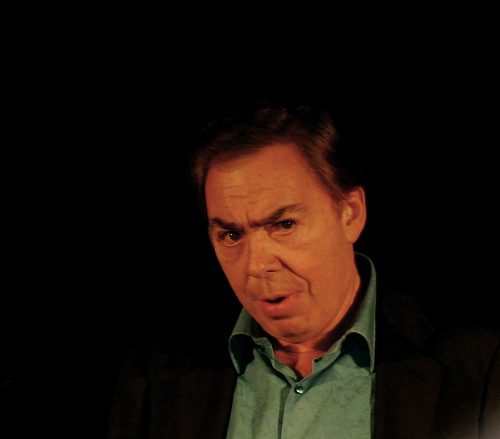
Brief Introduction of Andrew Lloyd Webber
Andrew Lloyd Webber, Baron Lloyd-Webber, is a globally renowned English composer and impresario of musical theatre. Widely regarded as one of the most commercially successful composers in history, his works have captivated audiences worldwide for decades. His collection of musicals includes some of the longest-running productions in both West End and Broadway history. Among his most iconic creations are “The Phantom of the Opera,” “Cats,” “Jesus Christ Superstar,” and “Evita.” Lloyd Webber’s influence on musical theatre is immeasurable; he is credited with reinventing the genre by blending various musical styles, from classical and rock to pop. His production company, the Really Useful Group, is one of the largest theatre operators in London. He is one of the select few to have achieved EGOT status, having won an Emmy, a Grammy, an Oscar, and a Tony Award.
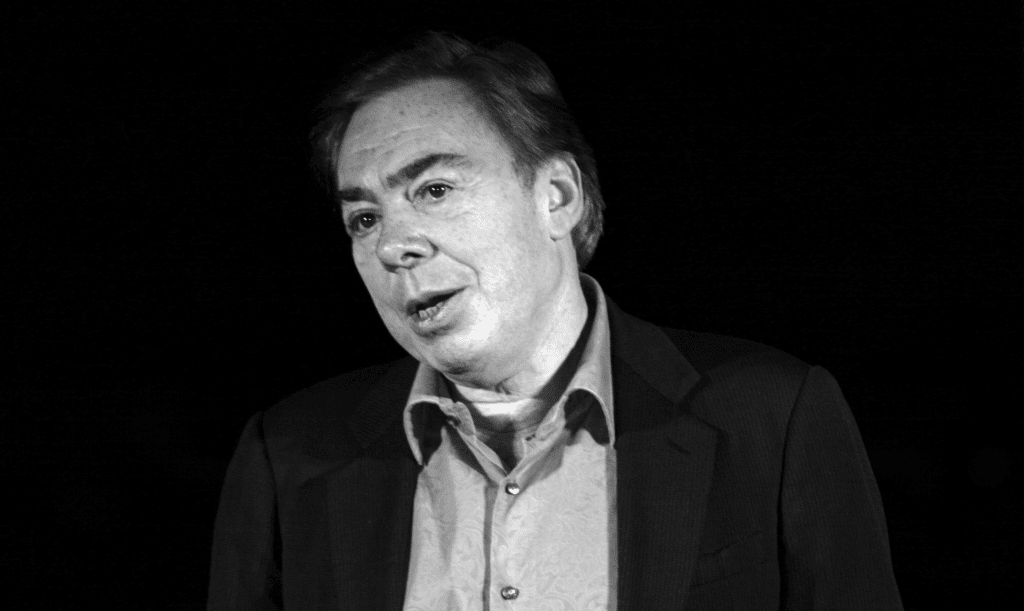
Andrew Lloyd Webber Overview
| Full Name | Andrew Lloyd Webber, Baron Lloyd-Webber |
| Date of Birth | March 22, 1948 |
| Age(as of 2025) | 77 |
| Birthplace | Kensington, London, England |
| Profession | Composer, musical theatre impresario, producer |
| Husband/Wife | Madeleine Gurdon (m. 1991) |
| Family | Father: William Lloyd Webber (composer), Mother: Jean Hermione Johnstone (violinist and pianist), Brother: Julian Lloyd Webber (cellist) Children: Imogen, Nicholas (deceased), Alastair, William, and Isabella |
| Relationship/Affairs(GF/BF) | Previously married to Sarah Hugill (1971-1983) and Sarah Brightman (1984-1990) |
| Net Worth | Estimated to be around $1.2 billion |
Early Life and Education of Andrew Lloyd Webber
Andrew Lloyd Webber was born into a deeply musical family in Kensington, London, on March 22, 1948. His father, William Lloyd Webber, was a composer and the director of the London College of Music, while his mother, Jean Hermione Johnstone, was a violinist and pianist. This environment nurtured his prodigious musical talents from a very young age. His younger brother, Julian Lloyd Webber, would also go on to become a world-renowned solo cellist. Andrew began playing the piano, violin, and French horn as a child and started composing his own music at the age of six, with a suite of six pieces published by the age of nine. His aunt Viola, an actress, frequently took him to the theatre, sparking his lifelong passion for the stage. He received his early education at Westminster School as a Queen’s Scholar. He later began a course in history at Magdalen College, Oxford, but his true calling was in music. In the winter of 1965, he abandoned his history studies to enroll at the Royal College of Music, focusing on musical theatre.
Andrew Lloyd Webber’s Career
Andrew Lloyd Webber’s illustrious career began in 1965 when, at the age of 17, he was introduced to the 20-year-old aspiring lyricist Tim Rice. This meeting marked the beginning of one of the most legendary partnerships in musical theatre history. Their first collaboration was a musical titled “The Likes of Us,” based on the story of Thomas John Barnardo, though it failed to find a backer at the time. Their breakthrough came in 1968 with “Joseph and the Amazing Technicolor Dreamcoat,” a pop oratorio commissioned for a school choir that would later be expanded into a full-blown international success. This was followed by the groundbreaking rock opera “Jesus Christ Superstar” in 1970, which, like its predecessor, began life as a concept album before being staged. Their final major collaboration of this era was “Evita” (1976), a musical based on the life of Eva Perón, which also started as a concept album and went on to achieve massive success in the West End and on Broadway. The song “Don’t Cry for Me Argentina” became a global hit.
In the 1980s, Lloyd Webber embarked on a series of solo projects that would cement his status as a theatrical giant. In 1981, he composed “Cats,” based on T. S. Eliot’s “Old Possum’s Book of Practical Cats.” This whimsical and visually spectacular show became one of the longest-running musicals in both London and New York history. The song “Memory” from “Cats” is one of his most famous compositions. He followed this with the innovative “Starlight Express” in 1984, a musical performed entirely on roller skates. However, it was his 1986 masterwork, “The Phantom of the Opera,” that would become his most enduring legacy. Inspired by Gaston Leroux’s novel, the hauntingly romantic musical is the longest-running show in Broadway history and continues to play to packed houses in London. The part of Christine was written for his then-wife, Sarah Brightman.
Throughout the 1990s and into the 21st century, Lloyd Webber continued to produce a string of musicals, including “Aspects of Love” (1989), “Sunset Boulevard” (1993), “The Beautiful Game” (2000), and “The Woman in White” (2004). He also penned a sequel to his most famous work, titled “Love Never Dies” (2010). In 2015, he found renewed success with “School of Rock,” a musical adaptation of the popular film. His company, LW Theatres (formerly The Really Useful Group), owns and operates several of London’s most prestigious theatres, including the London Palladium and the Theatre Royal, Drury Lane. In recent years, he has continued to be a driving force in theatre, composing the anthem “Make a Joyful Noise” for the coronation of King Charles III in 2023 and announcing a new musical, “The Illusionist,” planned for 2026.
Andrew Lloyd Webber Personal Life & Family
Andrew Lloyd Webber has been married three times. His first wife was Sarah Hugill, whom he married on July 24, 1971. They had two children together: a daughter, Imogen Lloyd Webber (born 1977), and a son, Nicholas Lloyd Webber (1979–2023). Imogen is a writer and political commentator, while Nicholas was a Grammy-nominated composer and record producer who tragically passed away from gastric cancer in March 2023. The couple divorced in November 1983.
In March 1984, Lloyd Webber married the renowned soprano Sarah Brightman, for whom he wrote the iconic role of Christine Daaé in “The Phantom of the Opera.” Their marriage and professional collaboration were highly publicized. They divorced in January 1990 but have remained on amicable terms.

His third and current wife is Madeleine Gurdon, a former equestrian. They married on February 9, 1991. Together, they have three children: Alastair Adam (born 1992), William Richard (born 1993), and Isabella Aurora (born 1996). The family resides at Sydmonton Court in Hampshire, where Lloyd Webber also hosts the annual Sydmonton Festival, a showcase for new musical works. He is a passionate art collector and a lifelong supporter of the London football club Leyton Orient F.C. In 2009, he was diagnosed with early-stage prostate cancer but has since made a full recovery following surgery.
Awards and Achievements of Andrew Lloyd Webber
- EGOT winner (Emmy, Grammy, Oscar, Tony Award)
- Knighted by Queen Elizabeth II in 1992 for services to the arts
- Created a Life Peer in 1997 as Baron Lloyd-Webber of Sydmonton
- Knight Companion of the Most Noble Order of the Garter (2024)
- Seven Tony Awards
- Seven Laurence Olivier Awards
- Three Grammy Awards (plus the Grammy Legend Award)
- One Academy Award (for “You Must Love Me” from Evita)
- One Golden Globe Award
- Fourteen Ivor Novello Awards
- Kennedy Center Honors (2006)
- Praemium Imperiale (1995)
- Inducted into the Songwriters Hall of Fame
- Star on the Hollywood Walk of Fame
Andrew Lloyd Webber Net Worth and Income
As of 2025, Andrew Lloyd Webber’s net worth is estimated to be approximately $1.2 billion. This immense wealth makes him one of the richest musicians in the United Kingdom. His fortune is primarily derived from the phenomenal success of his numerous musicals. The income streams are vast and varied, including box office ticket sales from productions running across the globe, royalties from both professional and amateur stagings, and licensing fees for his works. Furthermore, cast recordings and film adaptations of his musicals, such as the successful movie versions of “Evita” and “The Phantom of the Opera,” have significantly contributed to his wealth. His production company, LW Theatres, is also a major source of income, as it owns and operates some of London’s most valuable and iconic theatre venues.
Legacy and Influence
Andrew Lloyd Webber’s legacy is defined by his revolutionary impact on musical theatre. He is often credited with pioneering the “mega-musical,” characterized by its grand scale, epic storytelling, and powerful, emotionally charged scores. His ability to fuse diverse musical genres, from rock opera to classical pastiche, has broadened the appeal of musical theatre to a global audience. Shows like “Cats” and “The Phantom of the Opera” broke records for their longevity and commercial success, transforming the West End and Broadway landscapes. Many of his songs, such as “Memory,” “Don’t Cry for Me Argentina,” and “The Music of the Night,” have become standards, transcending their theatrical origins to achieve widespread popularity. Through the Andrew Lloyd Webber Foundation, established in 1992, he has become a significant philanthropist, supporting arts, culture, and heritage in the UK by providing scholarships for aspiring performers and funding various cultural projects.
Interesting Facts about Andrew Lloyd Webber
- He was commissioned by Prince Edward to write a short musical, “Cricket,” for Queen Elizabeth II’s 60th birthday celebration in 1986.
- He shares a birthday (March 22) with fellow legendary musical theatre composer Stephen Sondheim.
- In 2017, he became the first composer since Rodgers and Hammerstein in 1953 to have four musicals running simultaneously on Broadway (“Sunset Boulevard,” “Cats,” “The Phantom of the Opera,” and “School of Rock”).
- A passionate art collector, he once owned a Picasso painting which he later sold to support his foundation.
- He wrote a Latin Requiem Mass in memory of his father, which premiered in 1985 and won a Grammy for Best Classical Composition.
- He is one of only a handful of individuals to have achieved “EGOT” status by winning an Emmy, Grammy, Oscar, and Tony Award.
Controversies
Throughout his extensive career, Andrew Lloyd Webber has faced some controversies, most notably accusations of plagiarism. Critics and other musicians have pointed out similarities between some of his melodies and existing classical pieces. For instance, the Dutch composer Louis Andriessen stated that Lloyd Webber had “yet to think up a single note.” A well-known example is the song “I Don’t Know How to Love Him” from “Jesus Christ Superstar,” which bears a resemblance to a theme from Mendelssohn’s Violin Concerto. Similarly, the main theme from “The Phantom of the Opera” has been compared to a recurring riff in Pink Floyd’s 1971 song “Echoes.” More recently, his musical “Bad Cinderella” faced a difficult reception, closing early in both the West End and on Broadway amid criticism and reports of discord, with Lloyd Webber himself reportedly calling the show a “costly mistake.” He also received some criticism for his decision to cast the lead in “The Sound of Music” via a reality television show.
Social Media Presence
- Instagram – Information not disclosed.
- Twitter – Information not disclosed.
- YouTube – 261K subscribers
Final Words about Andrew Lloyd Webber
Andrew Lloyd Webber remains an active and influential figure in the world of theatre. His classic musicals, particularly “The Phantom of the Opera,” continue to be staged in major cities around the globe, enchanting new generations of theatregoers. He is actively involved in overseeing new interpretations and revivals of his work, collaborating with new directors to breathe fresh life into his beloved shows. His focus has also turned to nurturing new talent and creating new works. He has announced a new musical, “The Illusionist,” which is expected to be released in 2026 and will see him collaborate with director Jamie Lloyd and writer Chris Terrio. Furthermore, a 2025 Christmas production of “Sherlock Holmes and The 12 Days of Christmas” will feature new songs from Lloyd Webber and his old partner, Tim Rice, marking a significant reunion. His enduring passion for the arts, coupled with his ongoing creative output, ensures that the final curtain on his remarkable career is nowhere in sight. The Andrew Lloyd Webber biography continues to be written, with each new project adding another chapter to his unparalleled legacy.