
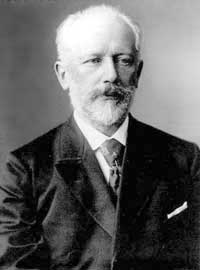
Brief Introduction of Pyotr Tchaikovsky
Pyotr Ilyich Tchaikovsky was a renowned Russian composer of the Romantic period. He is celebrated globally as the creative genius behind some of the most cherished ballets, including “Swan Lake,” “The Sleeping Beauty,” and “The Nutcracker.” Tchaikovsky was the first Russian composer to gain significant and lasting international recognition. His works are admired for their soaring melodies, profound emotional depth, and vibrant orchestration, skillfully blending Western European musical forms with distinctly Russian folk traditions. His symphonies, concertos, and operas, such as “Eugene Onegin” and the “1812 Overture,” remain staples in the classical repertoire, cementing his status as one of the most popular and influential composers in history.

Pyotr Tchaikovsky Overview
| Full Name | Pyotr Ilyich Tchaikovsky |
| Date of Birth | May 7, 1840 |
| Age | 53 years (at the time of death) |
| Birthplace | Votkinsk, Vyatka Governorate, Russian Empire |
| Nationality | Russian |
| Profession | Composer, Conductor, Music Professor |
| Famous For | Composing ballets like “Swan Lake” and “The Nutcracker,” and works such as the “1812 Overture.” |
| Education | Imperial School of Jurisprudence, Saint Petersburg Conservatory |
| Marital Status | Married (Separated) |
| Spouse / Partner | Antonina Miliukova |
| Children | None |
| Net Worth | Information not publicly available |
Early Life and Education of Pyotr Tchaikovsky
Pyotr Ilyich Tchaikovsky was born on May 7, 1840, in Votkinsk, a small town in the Russian Empire. He was the second son of Ilya Petrovich Tchaikovsky, a mining engineer and manager of the local iron works, and his wife, Alexandra Andreyevna. Tchaikovsky showed a remarkable aptitude for music from a very young age, reportedly beginning piano lessons at the age of five and attempting his first composition at four. His family nurtured his early interest, exposing him to the works of Mozart and Italian opera masters. Despite his obvious musical talent, a formal music education was not readily available in Russia at the time. Consequently, his parents decided he should pursue a more practical career in the civil service. At the age of ten, he was sent to the Imperial School of Jurisprudence in St. Petersburg, a boarding school that prepared students for civil service careers. The separation from his mother was deeply traumatic, and her death from cholera when he was fourteen was a devastating blow. While studying law, his passion for music never faded; he continued to attend operas and take private music lessons. After graduating in 1859, he took a position as a clerk in the Ministry of Justice but found the work unfulfilling. His desire to pursue music professionally grew, and at 21, with his father’s support, he enrolled in music classes at the Russian Musical Society, which soon became the St. Petersburg Conservatory. He became one of the first composition students at the newly founded conservatory, studying under Anton Rubinstein, and graduated in 1865.
Pyotr Tchaikovsky Career
Early Career
After graduating from the St. Petersburg Conservatory in 1865, Tchaikovsky’s professional career began. He was offered the position of professor of harmony at the newly established Moscow Conservatory by Nikolai Rubinstein, brother of his mentor Anton. This role provided him with a steady income, though he found teaching to be demanding. During this period, he began to compose earnestly. His work was first performed publicly in 1865 when Johann Strauss the Younger conducted his “Characteristic Dances.” His First Symphony, “Winter Daydreams,” premiered in Moscow in 1868 to a positive reception. He also ventured into opera with “The Voyevoda” (1868), though it was not a significant success. A pivotal moment in his early career was the composition of the fantasy-overture “Romeo and Juliet,” which, after revisions suggested by Mily Balakirev, became his first recognized masterpiece and showcased the distinct emotional and melodic style that would define his music.
Breakthrough
Tchaikovsky’s breakthrough on the international stage came in the mid-1870s. The premiere of his Piano Concerto No. 1 in 1875, though initially criticized by Nikolai Rubinstein, became immensely popular and is now one of the most famous piano concertos ever written. Another crucial development during this period was the beginning of his relationship with Nadezhda von Meck, a wealthy widow and arts patroness. Starting in 1877, she provided him with a generous monthly allowance on the condition that they never meet in person. This financial support was transformative, allowing Tchaikovsky to resign from his teaching post at the Moscow Conservatory in 1878 and dedicate himself entirely to composition. This newfound freedom led to an incredibly productive period, during which he composed landmark works like the ballet “Swan Lake” (1877), the opera “Eugene Onegin” (1878), and his Fourth Symphony, which he dedicated to von Meck.
Major Achievements and Success
Following his breakthrough, Tchaikovsky’s fame grew exponentially both in Russia and abroad. By the 1880s, he had achieved international renown. In 1884, his social standing was solidified when Tsar Alexander III conferred upon him the Order of St. Vladimir, which included a title of hereditary nobility. The Tsar later awarded him a lifetime annual pension, effectively making him the premier court composer. Tchaikovsky also overcame his fear of conducting and began to lead performances of his own works across Europe and America. A major highlight was his 1891 trip to the United States, where he conducted at the inaugural concert of Carnegie Hall in New York. His later years produced some of his most enduring masterpieces, including the ballets “The Sleeping Beauty” (1889) and “The Nutcracker” (1892), and the opera “The Queen of Spades” (1890). His final completed work, the Symphony No. 6, “Pathétique,” premiered just nine days before his death in 1893 and is considered by many, including the composer himself, to be one of his greatest and most sincere compositions.
Recent Work / Current Status
Pyotr Ilyich Tchaikovsky died on November 6, 1893, at the age of 53. The official cause of death was cholera, reportedly contracted after drinking unboiled water. However, the circumstances surrounding his death have been the subject of speculation and controversy for many years.
Pyotr Tchaikovsky Awards and Achievements
- Awarded the Order of St. Vladimir (fourth class) in 1884 by Tsar Alexander III, which carried with it hereditary nobility.
- Granted a lifetime pension from the Tsar in 1885, making him the premier court composer in practice.
- Elected as a member of the Académie des Beaux-Arts in France in 1892, only the second Russian to receive this honor.
- Awarded an honorary Doctor of Music degree from the University of Cambridge in 1893.
Pyotr Tchaikovsky Personal Life & Family
Tchaikovsky’s personal life was marked by emotional turmoil and periods of depression. He was the second of six surviving children and was deeply devoted to his mother, whose death during his adolescence affected him profoundly. Tchaikovsky struggled with his homosexuality, which was illegal and socially stigmatized in 19th-century Russia, leading him to live in constant fear of exposure. This personal conflict is believed to have contributed to his decision to marry. In 1868, he briefly considered marrying Belgian soprano Désirée Artôt, whom he later claimed was the only woman he ever loved. His most significant personal relationship was his 13-year correspondence with his patroness, Nadezhda von Meck, with whom he exchanged over 1,100 letters but never met in person. Her sudden termination of their arrangement in 1890 was a severe emotional blow, even though he was no longer financially dependent on her.

Pyotr Tchaikovsky Relationship Details
In 1877, Tchaikovsky entered into a disastrous marriage with a former student, Antonina Miliukova, who had declared her love for him. The marriage was an attempt to quell social rumors about his personal life and conform to societal expectations. However, the union lasted only a few weeks before Tchaikovsky fled, suffering a severe nervous breakdown. He made arrangements to never see his wife again, though they never officially divorced. Antonina Miliukova eventually suffered from mental illness and died in 1917. Tchaikovsky never blamed her for the failure of their marriage.
Pyotr Tchaikovsky Net Worth and Income
Specific details about Pyotr Tchaikovsky’s net worth are not available in modern terms. His primary income sources were his salary as a professor at the Moscow Conservatory, commissions for compositions, and conducting fees. A crucial source of financial stability was the annual allowance of 6,000 rubles provided by his patroness, Nadezhda von Meck, from 1877 to 1890. This allowed him to compose full-time. Later in his life, he was also awarded a lifetime pension of 3,000 rubles per year from Tsar Alexander III.
Pyotr Tchaikovsky Physical Appearance
- Height: Information not publicly available
- Weight: Information not publicly available
- Eye Color: Information not publicly available
- Hair Color: Information not publicly available
Pyotr Tchaikovsky Controversies
The greatest controversy surrounding Tchaikovsky is the cause of his death. The official cause was listed as cholera, contracted from drinking unboiled water during an epidemic in St. Petersburg. However, this has long been contested. Theories of suicide have persisted for decades, with some speculating he deliberately drank contaminated water. Another prominent theory, which gained traction in the late 20th century, suggests that Tchaikovsky was forced to commit suicide by a “court of honor” composed of his former schoolmates from the Imperial School of Jurisprudence to avoid a public scandal over his alleged homosexual relationship with a young nobleman. However, no definitive evidence has ever confirmed these theories, and the true circumstances of his death remain a subject of debate among historians.
Pyotr Tchaikovsky Social Media Presence
- Instagram – Not applicable
- Twitter – Not applicable
- YouTube – Not applicable
Interesting Facts about Pyotr Tchaikovsky
- He began composing music at the young age of four.
- Before becoming a full-time composer, he worked as a civil servant in the Ministry of Justice for four years.
- Tchaikovsky had a daily routine that included a mandatory two-hour walk, believing that if he returned even a few minutes early, he would suffer great misfortune.
- He was an avid mushroom picker, an activity he enjoyed in his leisure time.
- Despite his fame as a conductor later in life, he suffered from a pathological fear of conducting for much of his career.
Pyotr Tchaikovsky Legacy and Influence
Pyotr Ilyich Tchaikovsky’s legacy is immense and enduring. He is one of the most beloved composers of the Romantic era, whose music continues to captivate audiences worldwide. His work significantly elevated the status of ballet music, transforming it from mere accompaniment to a sophisticated symphonic art form capable of deep emotional expression and narrative coherence. Compositions like “Swan Lake” and “The Nutcracker” revolutionized the genre and remain cornerstones of the ballet repertoire. Tchaikovsky’s ability to blend Russian folk melodies with Western compositional structures created a unique and powerful musical style that influenced subsequent generations of composers, including Sergei Rachmaninoff and Igor Stravinsky. His symphonies, concertos, and overtures are celebrated for their melodic genius and emotional intensity, making them some of the most frequently performed pieces in classical music.
Final Words about Pyotr Tchaikovsky
Pyotr Ilyich Tchaikovsky’s life was a study in contrasts: a public figure of immense international acclaim who privately battled deep personal insecurities and depression. Despite his inner turmoil, he channeled his profound emotions into creating a body of work that is both grand and intimately personal. From the festive magic of “The Nutcracker” to the tragic passion of “Romeo and Juliet” and the poignant despair of his “Pathétique” Symphony, Tchaikovsky’s music speaks a universal language of the heart. He was a master of melody and orchestration, the first Russian composer to leave a lasting mark on the world stage. His compositions have transcended time, remaining a testament to his extraordinary genius and his profound impact on the landscape of classical music.