
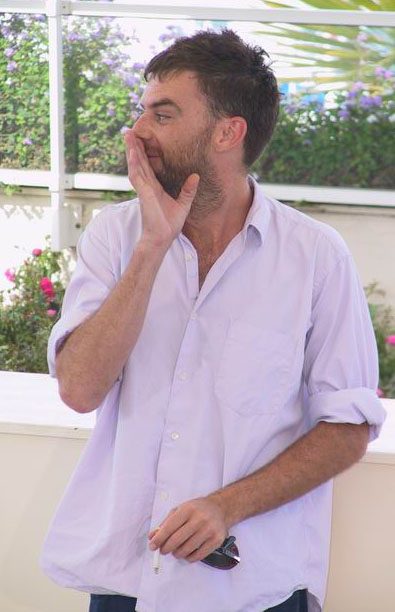
Brief Introduction of Paul Thomas Anderson
Paul Thomas Anderson is a highly acclaimed American filmmaker, recognized as one of the most preeminent writer-directors of his generation. Known for his distinctive and ambitious character-driven psychological dramas, Anderson’s work often explores themes of dysfunctional families, alienation, loneliness, and the pursuit of redemption. His films are celebrated for their bold visual style, intricate narratives, and profound emotional depth, establishing him as a modern master of cinema. Anderson’s impressive filmography has earned him numerous accolades, including a BAFTA Award, Best Director honors at major international film festivals like Cannes and Venice, and multiple Academy Award nominations, solidifying his status as a significant and influential voice in contemporary filmmaking.

Paul Thomas Anderson Overview
| Full Name | Paul Thomas Anderson |
| Date of Birth | June 26, 1970 |
| Age | 55 |
| Birthplace | Studio City, Los Angeles, California, U.S. |
| Nationality | American |
| Profession | Director, Screenwriter, Producer, Cinematographer |
| Height | 5 feet 10 inches (1.78 m) |
| Partner | Maya Rudolph (since 2001) |
| Children | 4 (Pearl, Lucille, Jackson, Minnie) |
| Father | Ernie Anderson |
| Mother | Edwina Gough |
| Net Worth (estimated) | $90 million (as of 2025) |
Early Life and Education of Paul Thomas Anderson
Paul Thomas Anderson was born on June 26, 1970, in the Studio City neighborhood of Los Angeles, California. He grew up in the San Fernando Valley, an area that would later serve as the backdrop for many of his acclaimed films. He is one of nine children, with three siblings and five older half-siblings from his father’s previous marriage. His father, Ernie Anderson, was a notable figure, known as the voice of ABC and for his role as a Cleveland late-night horror host named Ghoulardi, a character who later inspired the name of Paul Thomas Anderson’s production company. While Anderson reportedly had a troubled relationship with his mother, Edwina Gough, he was very close with his father, who actively encouraged his creative aspirations, suggesting he pursue a career as a writer or director.
Anderson’s passion for filmmaking ignited at a remarkably young age. He made his first film when he was just eight years old. In 1982, at the age of 12, his father purchased a Betamax video camera, which Anderson eagerly used to create more films. He later transitioned to using 8 mm film and then a Bolex 16 mm camera as a teenager, continually experimenting with the medium and writing his own stories. From an early stage, Anderson harbored no alternative career plans, dedicating himself entirely to the pursuit of directing.
His education included attendance at several private schools, such as the Buckley School, John Thomas Dye School, Campbell Hall School, Cushing Academy, and Montclair College Preparatory School. After completing high school at Montclair Prep, Anderson briefly enrolled in higher education, attending Santa Monica College and completing two semesters at Emerson College. However, his formal academic journey in film was short-lived; he famously attended New York University for only two days before deciding to drop out. Instead of spending his tuition money on further schooling, Anderson used it to finance his 1993 short film, Cigarettes & Coffee, a pivotal decision that marked his decisive entry into the film industry.
Paul Thomas Anderson’s Career
Early Filmmaking and Breakthrough Success
Early Filmmaking and Breakthrough Success
Paul Thomas Anderson’s professional career began as a production assistant, working on television shows, films, music videos, and even game shows in both Los Angeles and New York City. This hands-on experience provided him with an invaluable foundation before he made his significant foray into independent filmmaking. His short film, Cigarettes & Coffee, completed in 1993 with a budget of $10,000, garnered considerable attention at the 1993 Sundance Film Festival, where it was screened in the Shorts Program. This exposure led to an invitation to the Sundance Institute’s Directors Lab and an offer from producer Robert Jones to expand the short into a feature film.
The result was Anderson’s feature film debut, Hard Eight, released in 1996 (also known by its original title, Sydney). The film, a modern neo-noir, starred Philip Baker Hall, John C. Reilly, and Gwyneth Paltrow, and received critical praise, being screened at the 1996 Cannes Film Festival. While well-received, it was his subsequent film that truly launched his career and established him as a distinctive new voice in cinema.
In 1997, Anderson achieved widespread critical and commercial success with Boogie Nights. Based on his earlier mockumentary short, The Dirk Diggler Story, the film is set during the Golden Age of Porn in the 1970s and 1980s. Boogie Nights traced the rise and fall of a young pornographic actor, played by Mark Wahlberg, and featured an ensemble cast including Julianne Moore and Burt Reynolds. The film earned Anderson his first Academy Award nomination for Best Original Screenplay, and its success granted him complete creative control for his future projects.
Major Works and Evolution of Style
Following his breakthrough, Anderson continued to craft critically acclaimed films that showcased his evolving directorial style and thematic interests. His 1999 ensemble film, Magnolia, intertwined multiple stories of disparate characters in the San Fernando Valley over a single day. The ambitious work, featuring a large cast including Tom Cruise, Julianne Moore, and Philip Seymour Hoffman, earned Anderson another Academy Award nomination for Best Original Screenplay.
In 2002, he directed Punch-Drunk Love, an unconventional romantic dramedy starring Adam Sandler in a critically lauded dramatic role. This film earned Anderson the Best Director Award at the Cannes Film Festival, marking a shift in his visual style to something more surreal and heightened.
His fifth feature, the epic period drama There Will Be Blood (2007), loosely based on Upton Sinclair’s novel Oil!, received widespread acclaim and is often regarded as one of the greatest films of the 21st century. The film, starring Daniel Day-Lewis in an Oscar-winning performance, earned Anderson nominations for Best Picture, Best Director, and Best Adapted Screenplay at the Academy Awards, and he won the Silver Bear for Best Director at the Berlin International Film Festival.
Anderson continued his critical success with The Master (2012), a psychological drama depicting the complex relationship between a charismatic cult leader and a troubled Navy veteran. Shot in 65mm, the film garnered immense praise for its cinematography and performances, winning Anderson the Silver Lion for Best Director at the Venice Film Festival.
He ventured into adaptation again with Inherent Vice (2014), a psychedelic neo-noir based on Thomas Pynchon’s novel. The film received an Academy Award nomination for Best Adapted Screenplay and the Independent Spirit Robert Altman Award. In 2017, Anderson released Phantom Thread, a period romance drama set in London’s haute couture world. It earned him nominations for Best Picture and Best Director at the Academy Awards and won an Oscar for Best Costume Design.
His ninth feature, Licorice Pizza (2021), was a coming-of-age dramedy set in the 1970s San Fernando Valley. The film earned him the BAFTA Award for Best Original Screenplay and further Academy Award nominations for Best Picture, Best Director, and Best Original Screenplay.
Paul Thomas Anderson is known for his consistent collaborations with a trusted creative team, including cinematographer Robert Elswit, costume designer Mark Bridges, and composers Jon Brion and Jonny Greenwood. He is also celebrated for his work with a recurring ensemble of actors, such as Philip Seymour Hoffman, John C. Reilly, Philip Baker Hall, and Daniel Day-Lewis. Anderson’s filmmaking style is characterized by constantly moving camera shots, steadicam-based long takes, and a masterful use of music. His narratives often feature unique structures, including non-linear storytelling and overlapping timelines, and are primarily character-driven, exploring the inner lives and conflicts of realistically flawed individuals.
Anderson’s tenth film, titled One Battle After Another, starring Leonardo DiCaprio, Regina Hall, and Sean Penn, is scheduled for release in 2025, signaling his continued active presence in the film industry.
Paul Thomas Anderson Personal Life & Family
Paul Thomas Anderson maintains a notably private personal life, rarely discussing his relationships or family publicly. Since November 2001, he has been in a long-term relationship with actress and comedian Maya Rudolph. Although they are not legally married, Rudolph has publicly referred to Anderson as her “husband,” explaining that the term accurately conveys their committed partnership and shared family life after the birth of their first child.
Together, Anderson and Rudolph have four children. Their first daughter, Pearl, was born in October 2005. They welcomed their second daughter, Lucille, in November 2009, followed by a son, Jackson (also referred to as Jack), in July 2011. Their youngest daughter, Minnie, was born in August 2013. The family resides in the San Fernando Valley, the same region that frequently inspires the settings of Anderson’s films.

Prior to his relationship with Maya Rudolph, Anderson was in a relationship with musician Fiona Apple, which lasted from 1997 to 2002. He also directed several of her music videos during this period.
Awards and Achievements of Paul Thomas Anderson
Paul Thomas Anderson is one of the most decorated filmmakers of his generation, having amassed a substantial collection of awards and nominations throughout his career. He has been nominated for eleven Academy Awards across various categories, including Best Picture, Best Director, Best Original Screenplay, and Best Adapted Screenplay. Although he has not yet won an Oscar, he is recognized as one of the few filmmakers to receive more than ten Academy Award nominations without a win.
His international recognition includes a BAFTA Award for Best Original Screenplay for Licorice Pizza. Anderson is also the only person to have achieved the rare distinction of winning Best Director at the Cannes Film Festival (for Punch-Drunk Love), the Silver Lion for Best Director at the Venice Film Festival (for The Master), and both the Silver Bear for Best Director and the Golden Bear for Best Film at the Berlin International Film Festival (for There Will Be Blood and Magnolia, respectively).
Other significant honors include nominations for three Golden Globe Awards and a Grammy Award for Best Music Film for his work on Thom Yorke‘s Anima. In 2019, he was inducted into the Online Film & Television Association Film Hall of Fame.
A summary of some of his major awards and nominations includes:
- Academy Awards: 11 nominations (e.g., Best Original Screenplay for Boogie Nights and Magnolia; Best Picture, Director, Adapted Screenplay for There Will Be Blood; Best Picture, Director for Phantom Thread and Licorice Pizza)
- BAFTA Awards: 1 win (Best Original Screenplay for Licorice Pizza), 8 nominations
- Cannes Film Festival: Best Director (for Punch-Drunk Love)
- Venice Film Festival: Silver Lion for Best Director (for The Master)
- Berlin International Film Festival: Silver Bear for Best Director (for There Will Be Blood), Golden Bear (for Magnolia)
- Golden Globe Awards: 3 nominations
- Grammy Awards: 1 nomination (Best Music Film for Anima)
- Independent Spirit Awards: Robert Altman Award (for Inherent Vice)
Critics and institutions have consistently lauded Anderson, with the American Film Institute recognizing him as “one of American film’s modern masters.” He has been hailed as “one of the most exciting talents to come along in years” and “among the supreme talents of today,” often praised for his unwavering dedication to his craft.
Paul Thomas Anderson Net Worth and Income
As of 2025, Paul Thomas Anderson’s net worth is estimated to be approximately $90 million. This substantial wealth is a testament to his successful and enduring career as a filmmaker, built upon a foundation of critically acclaimed works and a fiercely independent artistic path.
His income primarily stems from various sources within the film industry. A significant portion comes from the box office success of his films, with titles like There Will Be Blood and Boogie Nights not only achieving critical acclaim but also generating strong revenues over time. Additionally, Anderson earns royalties and extends his reach through streaming and licensing agreements for his films on platforms such as Netflix and Amazon Prime. His strategic creative partnerships and consistent output of high-quality, impactful cinema have allowed him to maintain a financially rewarding career while upholding his artistic vision.
Legacy and Influence
Paul Thomas Anderson has carved out a profound legacy in contemporary cinema, widely regarded as one of the greatest and most influential directors of his generation. His films are celebrated for being “richly human, stubbornly original, and forever daring in form and content,” consistently pushing cinematic boundaries and challenging traditional narrative structures.
Anderson’s impact is particularly evident in his ability to create complex, psychologically resonant character studies. He often explores desperate individuals grappling with alienation, loneliness, and the search for meaning or redemption within dysfunctional family dynamics. His work frequently delves into the “nightmarish horror” of the American dream’s pursuit, and a recurring thematic thread across his filmography is the portrayal of characters yearning for love and connection, often through destructive vices.
Filmmakers and critics alike admire his bold visual style, characterized by fluid, constantly moving camera work, extensive long takes, and a meticulous attention to detail in production design and musical scoring. He has demonstrated a unique talent for weaving intricate, multi-layered stories with ensemble casts, creating immersive worlds that are both specific and universally resonant.
Anderson’s dedication to his craft and his disdain for superficial celebrity have further cemented his image as a devout filmmaker focused solely on artistic integrity. He has inspired a new generation of directors and writers, proving that a career rooted in artistic ambition can lead to both critical adoration and substantial commercial success, leaving an indelible mark on the landscape of modern film.
Interesting Facts about Paul Thomas Anderson
- Paul Thomas Anderson made his first film at the remarkably young age of eight.
- He famously dropped out of New York University’s film program after just two days, using his tuition money to finance his short film Cigarettes & Coffee.
- Anderson named his production company, Ghoulardi Film Company, in honor of his father, Ernie Anderson, who played a late-night horror host character named Ghoulardi in Cleveland during the 1960s.
- He is known for frequently collaborating with a core group of actors (e.g., Philip Seymour Hoffman, John C. Reilly) and crew members (e.g., cinematographer Robert Elswit, composer Jonny Greenwood) across multiple projects.
- Beyond feature films, Anderson has directed numerous music videos for prominent artists such as Fiona Apple, Radiohead (Thom Yorke), Haim, Aimee Mann, and Joanna Newsom.
- One of his notable quotes about the writing process is, “Screenwriting is like ironing. You move forward a little bit and go back and smooth things out.”
- He has also stated, “Acting is the hardest job in the entire world. By far. Harder than ditch digging.”
- Anderson once remarked on the need for assertiveness in filmmaking: “You have to be a brat in order to carve out your parameters, and you have to be a monster to anyone who gets in your way.”
- He views his filmmaking education as having consisted of watching films by directors he admired and learning technical aspects from books and magazines, rather than formal film school.
- Despite the often dramatic and intense nature of his films, Anderson has also directed projects with comedic undertones, showcasing his versatility, as seen in Punch-Drunk Love.
Controversies
- Paul Thomas Anderson made his first film at the remarkably young age of eight.
- He famously dropped out of New York University’s film program after just two days, using his tuition money to finance his short film Cigarettes & Coffee.
- Anderson named his production company, Ghoulardi Film Company, in honor of his father, Ernie Anderson, who played a late-night horror host character named Ghoulardi in Cleveland during the 1960s.
- He is known for frequently collaborating with a core group of actors (e.g., Philip Seymour Hoffman, John C. Reilly) and crew members (e.g., cinematographer Robert Elswit, composer Jonny Greenwood) across multiple projects.
- Beyond feature films, Anderson has directed numerous music videos for prominent artists such as Fiona Apple, Radiohead (Thom Yorke), Haim, Aimee Mann, and Joanna Newsom.
- One of his notable quotes about the writing process is, “Screenwriting is like ironing. You move forward a little bit and go back and smooth things out.”
- He has also stated, “Acting is the hardest job in the entire world. By far. Harder than ditch digging.”
- Anderson once remarked on the need for assertiveness in filmmaking: “You have to be a brat in order to carve out your parameters, and you have to be a monster to anyone who gets in your way.”
- He views his filmmaking education as having consisted of watching films by directors he admired and learning technical aspects from books and magazines, rather than formal film school.
- Despite the often dramatic and intense nature of his films, Anderson has also directed projects with comedic undertones, showcasing his versatility, as seen in Punch-Drunk Love.
Controversies
Throughout his prominent career, Paul Thomas Anderson has largely maintained a focus on his creative work, with no major public controversies or significant personal scandals widely reported in trusted media. While his films often tackle complex and sometimes challenging themes, leading to critical discussions, these are generally related to the artistic interpretation and content of his work rather than personal or professional misconduct. His preference for privacy has also contributed to a career largely free from public scrutiny beyond his cinematic achievements.
Social Media Presence
Paul Thomas Anderson is known for his deliberate absence from prominent public social media platforms. He and his partner, Maya Rudolph, are notoriously private about their personal and family life, and they rarely post about their relationship or children online. This choice reflects a conscious decision to maintain a clear separation between his public professional persona as a filmmaker and his private existence, focusing instead on his craft rather than cultivating an online presence or engaging with social media trends. Consequently, there are no official Instagram, Twitter (or X), or YouTube accounts maintained by Paul Thomas Anderson himself, nor are there significant follower counts to report.
Final Words about Paul Thomas Anderson
Paul Thomas Anderson continues to be a driving force in the world of cinema, consistently delivering films that are both artistically ambitious and deeply human. His commitment to compelling storytelling, intricate character development, and a distinctive visual style has cemented his reputation as a “modern master” and an “auteur director” whose work is instantly recognizable. With an upcoming film, One Battle After Another, slated for release, Anderson remains an active and vital contributor to the film industry, eagerly anticipated by critics and audiences alike. His legacy is defined not just by the numerous awards and nominations he has garnered, but by the lasting impact of his films, which provoke thought, evoke strong emotions, and explore the complexities of the human condition with unwavering conviction and originality. He has demonstrated that artistic integrity and commercial viability can coexist, inspiring future generations of filmmakers to pursue their unique visions.
 Team Dailly WikiBio