
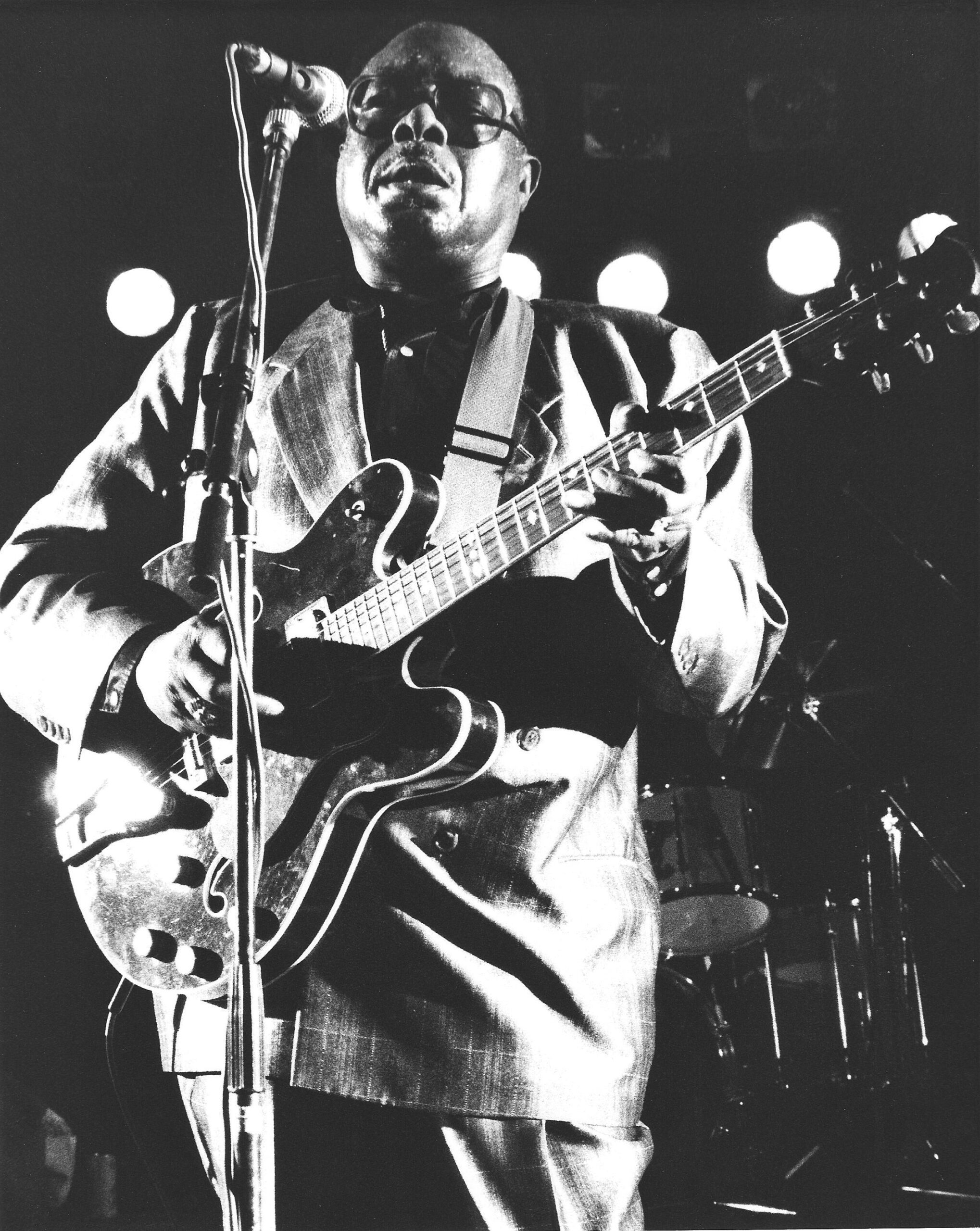
Brief Introduction of Jimmy Rogers
Jimmy Rogers, born Jay or James Arthur Lane, was a seminal figure in the development of the Chicago blues scene. A highly respected singer, guitarist, and harmonica player, Rogers is best known for his foundational role as a member of Muddy Waters’s first and most iconic band in the early 1950s. His steady, rhythmic guitar work was a cornerstone of the classic Chicago blues sound, providing the perfect counterpoint to Waters’s powerful vocals and slide guitar. Beyond his crucial contributions as a sideman, Rogers also forged a successful solo career, recording a string of influential songs for Chess Records, including the blues standards “That’s All Right,” “Walking by Myself,” and “Chicago Bound.” His understated yet deeply soulful vocals and innovative guitar playing have left an indelible mark on the blues, influencing countless musicians and solidifying his status as a true architect of the genre.
Jimmy Rogers Overview
| Full Name | Jay or James Arthur Lane (adopted his stepfather’s surname, Rogers) |
| Date of Birth | June 3, 1924 |
| Age(as of 2025) | Would have been 101 |
| Birthplace | Ruleville, Mississippi, U.S. |
| Profession | Chicago blues singer, guitarist, harmonica player |
| Husband/Wife | Dorothy Rogers |
| Family | Son – Jimmy D. Lane |
| Relationship/Affairs(GF/BF) | Information not publicly available |
| Net Worth | Not publicly available |
Early Life and Education of Jimmy Rogers
Jimmy Rogers was born Jay or James Arthur Lane on June 3, 1924, in Ruleville, Mississippi. Raised in a region steeped in the Delta blues tradition, his early life was marked by moves to Atlanta and Memphis. He eventually adopted the surname of his stepfather, becoming known as Jimmy Rogers. His musical journey began at a young age, learning the harmonica alongside his childhood friend, the legendary Snooky Pryor. As a teenager, Rogers’s musical interests expanded to the guitar. He honed his skills playing professionally in East St. Louis, Illinois, where he had the opportunity to perform with notable bluesman Robert Lockwood, Jr. These formative years were crucial in shaping the distinctive style that would later make him a pivotal figure in the Chicago blues scene. His upbringing in the South and his early experiences as a working musician provided him with a deep well of inspiration and a solid foundation in the blues tradition.
Jimmy Rogers’s Career
Jimmy Rogers’s professional career took a significant turn when he moved to Chicago in the mid-1940s. By 1946, he had already made his first recording as a harmonica player and singer for the Harlem record label, though his name was mistakenly left off the release, which was credited to Memphis Slim and His Houserockers. A year later, in 1947, a fateful collaboration began when Rogers joined forces with Muddy Waters and Little Walter. This trio formed the nucleus of what would become Muddy Waters’s first band in Chicago, a group that would go on to define the sound of modern, electrified Chicago blues. Known informally as the “Headhunters” for their ability to steal gigs from other local bands, they created a powerful and innovative ensemble sound.
While Rogers was an integral part of the Muddy Waters band, playing on iconic tracks such as “I’m Your Hoochie Coochie Man” and “I Just Want to Make Love to You,” he also pursued a solo career. In 1950, he began recording under his own name for Chess Records, releasing the enduring blues standard “That’s All Right.” He continued to record for Chess throughout the mid-1950s, producing classics like “Chicago Bound,” “Sloppy Drunk,” and his only R&B chart hit, “Walking by Myself.” His solo work showcased his smooth, melancholic vocals and his clean, articulate guitar style, which contrasted with and complemented the rougher-edged sound of many of his contemporaries. Rogers remained with Muddy Waters’s band until 1954, leaving to focus on his burgeoning solo career.
As the 1950s came to a close, a decline in the popularity of the blues led Rogers to gradually withdraw from the music industry. For nearly a decade, he pursued other ventures, working as a taxicab driver and owning a clothing store on Chicago’s West Side. Tragically, his store was destroyed in the 1968 riots that followed the assassination of Dr. Martin Luther King Jr. This event, in part, prompted his return to music. The blues revival of the late 1960s and early 1970s created a renewed interest in his work, particularly in Europe. He began touring and recording again, and in 1977, he reunited with Muddy Waters for a recording session that resulted in the album “I’m Ready.” By 1982, Rogers had returned to being a full-time solo artist, a role he continued until his passing. His final album, the posthumously released “Blues, Blues, Blues” (1999), featured an all-star lineup of admirers, including Eric Clapton, Keith Richards, Mick Jagger, and Robert Plant, paying tribute to his enduring talent and influence.
Jimmy Rogers Personal Life & Family
Jimmy Rogers was known to be a family man, and this was one of the primary reasons he stepped away from the music industry in the late 1950s, choosing more stable work to support his growing family, which included six children. While not much is publicly known about his wife, Dorothy Rogers, and the rest of his family, his son, Jimmy D. Lane, has followed in his father’s footsteps and is an accomplished guitarist, record producer, and recording engineer. Rogers’s decision to prioritize his family for a significant period of his life speaks to his character and his commitment to his loved ones. He managed to maintain a successful music career while also fulfilling his responsibilities as a father and husband, a balance that many artists find challenging.
Awards and Achievements of Jimmy Rogers
- Inducted into the Blues Hall of Fame in 1995.
- His song “That’s All Right” was inducted into the Blues Hall of Fame as a “Classic of Blues Recording” in 2016.
Jimmy Rogers Net Worth and Income
Information regarding Jimmy Rogers’s net worth at the time of his death in 1997 is not publicly available. His income throughout his career would have been derived from a variety of sources. In the early part of his career, this would have included earnings from live performances with the Muddy Waters band and as a solo artist, as well as royalties from his recordings with Chess Records. During his hiatus from the music industry in the 1960s, his income came from his work as a taxicab driver and the clothing store he owned. Upon his return to music in the 1970s, his income would have again been supplemented by touring, recording, and publishing royalties. The posthumous release of “Blues, Blues, Blues” would have also generated income for his estate.

Legacy and Influence
Jimmy Rogers’s legacy is that of a foundational architect of the Chicago blues. As a key member of the classic Muddy Waters band, he helped to create the template for the modern blues ensemble. His steady, rhythmic guitar playing was the bedrock upon which the band’s sound was built, and his influence can be heard in the work of countless blues guitarists who followed. His solo recordings have also stood the test of time, with songs like “That’s All Right” and “Walking by Myself” becoming essential parts of the blues canon. His influence extends beyond the blues to the world of rock and roll. Many of the British and American rock musicians of the 1960s who were heavily influenced by the blues have cited Rogers as an inspiration. The star-studded lineup on his final album is a testament to the high regard in which he was held by his peers and successors. He was a musician’s musician, admired for his taste, his timing, and his deep understanding of the blues.
Interesting Facts about Jimmy Rogers
- His first recording in 1946 was mislabeled and credited to Memphis Slim and His Houserockers.
- The band he formed with Muddy Waters and Little Walter was informally known as the “Headhunters” because they were so adept at taking gigs from other bands.
- He took a nearly decade-long break from music to work as a taxicab driver and own a clothing store.
- His final album, “Blues, Blues, Blues,” was released posthumously and featured a host of rock and blues legends, including members of The Rolling Stones, Led Zeppelin, and Eric Clapton.
Controversies
There are no known significant controversies associated with Jimmy Rogers’s life or career. He was widely respected as a musician and a person.
Social Media Presence
Jimmy Rogers passed away in 1997, before the rise of social media platforms like Instagram, Twitter, and YouTube. As such, he did not have a personal presence on these sites.
Final Words about Jimmy Rogers
Jimmy Rogers’s life and career were a testament to the enduring power of the blues. From his early days in the Mississippi Delta to his pivotal role in shaping the sound of Chicago blues, he remained a true and authentic voice of the genre. Though he may not have achieved the same level of mainstream fame as some of his contemporaries, his contributions as both a band member and a solo artist are immeasurable. His smooth vocals and tasteful guitar playing provided a crucial element to the classic Chicago blues sound, and his songs have become cherished standards. He passed away from colon cancer in Chicago on December 19, 1997, but his music continues to be celebrated and his influence felt by new generations of musicians. Jimmy Rogers’s legacy is secure as one of the most important and respected figures in the history of the blues.
 Team Dailly WikiBio