

Brief Introduction of Boubacar Traore
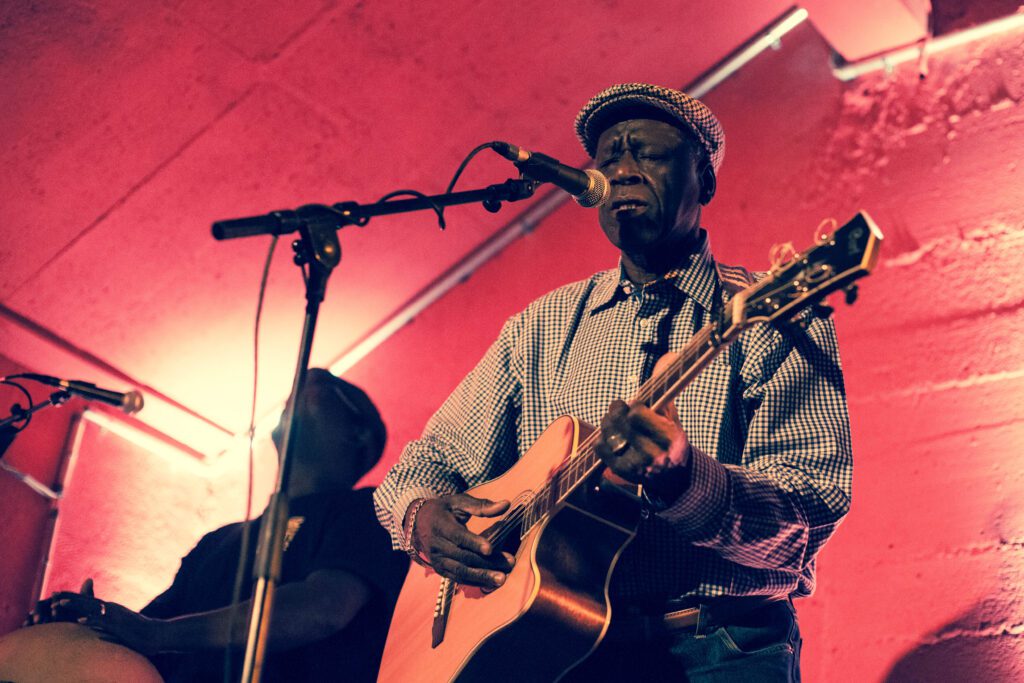
Boubacar Traoré, affectionately known as “Kar Kar,” is a legendary Malian singer, songwriter, and guitarist whose career has spanned over six decades. He is a seminal figure in the development of the Malian blues, creating a unique and deeply moving style that melds American blues, Arabic music, and the pentatonic structures of West Africa’s Mande cultural region. Traoré rose to fame in the early 1960s as the voice of newly independent Mali, with his songs becoming anthems of a hopeful generation. After a long period of obscurity, during which many believed he had died, he was rediscovered in the late 1980s. This led to a successful international career that brought his poetic, melancholic, and authentic sound to a global audience, cementing his status as one of the founding fathers of modern Mandingo music.
Boubacar Traore Overview
| Full Name | Boubacar Traoré |
| Date of Birth | 1942 |
| Age(as of 2025) | 83 |
| Birthplace | Kayes, Mali |
| Profession | Singer, Songwriter, Guitarist |
| Husband/Wife | Pierrette Francoise (deceased) |
| Family | Eleven children, six of whom survived. Three brothers: Kalilou, Baaba, and Maciré. |
| Relationship/Affairs(GF/BF) | Information not disclosed. |
| Net Worth | Not publicly available. |
Early Life and Education of Boubacar Traore
Boubacar Traoré was born in 1942 in Kayes, a city in the western region of Mali known as a cultural crossroads. Raised in the Bambara region, his upbringing was modest; his parents were farmers, and he grew up with three brothers. His primary passion as a child was not music, but football. He was so skilled at dribbling—”kari kari” in the Bambara language—that he earned the nickname “Kar Kar,” which would stick with him throughout his life. His love for the sport was so intense that he reportedly left school at the age of 12 because he could think of little else.
Traoré’s musical journey was a self-taught endeavor. He was drawn to the sounds of American blues singers like John Lee Hooker as well as the traditional Kassonké music of his home region. His older brother owned a guitar, and Boubacar would secretly borrow it when his brother was away, slowly teaching himself to play. Another brother, who had spent years studying music in Cuba, also helped him hone his guitar skills upon returning to Mali. This blend of influences—local and global—would become the hallmark of his distinctive musical style, which often emulates the phrasing of the kora, a traditional West African harp, on the guitar.
Boubacar Traore’s Career
The Voice of Independent Mali
Boubacar Traoré’s career took flight in the early 1960s, coinciding with Mali’s independence from France. At just 20 years old, he became a superstar and a potent symbol of the new nation’s identity and optimism. His poignant voice and unique guitar riffs were broadcast daily on the radio, waking the nation with songs of hope and national pride. Hits like “Mali Twist” and “Kayes Ba” became anthems for a generation, encouraging citizens to unite and build their country. Traoré was Mali’s equivalent of Chuck Berry or Elvis Presley, the first to adapt Mandingo music to the electric guitar. However, despite his immense popularity, he earned almost no money from his music. As there was no system for royalties, and he made no official recordings, he remained impoverished and had to work other jobs to survive.
Years of Obscurity
In 1968, a military coup overthrew President Modibo Keïta. Traoré, whose music was closely associated with the former regime, was effectively exiled from the airwaves. His fame faded, and he returned penniless to his hometown of Kayes. For nearly two decades, the man who had been the voice of a nation disappeared from public life. He worked as a farmer, a tailor, and ran a small shop with his brother to support his growing family. Many of his fans assumed he had passed away. This long period of silence ended in 1987 when a television crew visiting Kayes recognized him and persuaded him to perform on national television. The broadcast was a revelation for many Malians who were amazed to see that their idol was still alive.
Tragedy and International Rediscovery
This brief resurgence was tragically cut short. In 1989, his beloved wife and muse, Pierrette, died during childbirth. Heartbroken and distraught, Traoré left Mali for France, seeking to support his six surviving children by working in construction. He lived with other Malian migrant workers, taking on grueling labor jobs and occasionally playing his guitar on weekends. It was during this time that a British record producer from the Stern’s label heard a bootleg tape of one of his early radio performances. The producer tracked him down in Paris and offered him a record deal. In 1990, at the age of 48, Boubacar Traoré released his debut album, “Mariama.” The album, filled with melancholic and poetic songs refined by a life of hardship and joy, launched his international career. He began touring extensively across Europe and North America, finally receiving the global recognition that had eluded him for decades. His incredible life story was later documented in the 2001 film “Je chanterai pour toi” (I’ll Sing for You).
Boubacar Traore Personal Life & Family
Boubacar Traoré’s personal life is marked by both deep love and profound loss. In the mid-1960s, he married Pierrette Francoise, a woman of Moorish and French heritage. She became his muse and the center of his world. They had eleven children together, though tragically, only six survived to adulthood. His family life was often difficult; alongside financial struggles, he faced family tragedies, including the death of two children in the same week.
The most devastating event of his life was the death of his wife Pierrette in 1989. Her passing plunged him into a deep grief that profoundly shaped his subsequent music. Many of his songs, including the album “Les Enfants de Pierrette” (Pierrette’s Children), directly address his sorrow and the pain experienced by his children. Overwhelmed by his loss, he left Mali for Paris to work and provide for his family. Traoré is a Muslim. When not touring, he lives on a piece of land he bought outside of Bamako, where he finds peace in farming, raising sheep, and tending to his vegetable garden. He is not related to fellow Malian musician Rokia Traoré, though they have performed together.
Awards and Achievements of Boubacar Traore
While specific awards are not extensively documented, Boubacar Traoré’s career is marked by significant achievements that underscore his importance in world music.

- His songs, including “Mali Twist,” became unofficial national anthems for post-independence Mali in the 1960s.
- He was the subject of the critically acclaimed 2001 documentary film “Je chanterai pour toi” (I’ll Sing For You), which chronicled his life and music.
- He also appeared in the 2001 film “Blues Road Movie” alongside other blues artists.
- In 2018, he was nominated for the “Best Artist” award by Songlines Magazine for his album “Dounia Tabolo.”
- Traoré has toured globally for decades, performing at prestigious venues and festivals in Europe, North America, and Africa.
Boubacar Traore Net Worth and Income
Information regarding Boubacar Traore’s net worth is not publicly available. For the first two decades of his fame in Mali, he received no financial compensation or royalties for his widely popular music, living in poverty and working manual labor jobs. His financial situation improved significantly after his international rediscovery in the late 1980s. Since the release of his first official album in 1990, his income has been derived from album sales, international touring, and royalties. Despite his global acclaim, he maintains a humble lifestyle in Mali, where he focuses on farming when not on tour, stating that it is “the most reliable way of making a living.”
Legacy and Influence
Boubacar Traoré’s legacy is that of a pioneer and a survivor. He is considered one of the founding fathers of modern Mandingo music and a crucial figure in the creation of the “Malian blues.” His self-taught guitar style, which uniquely blends the tonalities of the kora with the phrasing of American Delta blues, has influenced countless musicians in Mali and beyond. In the 1960s, he was an innovator, being the first artist to popularize Mandingo-based music on the electric guitar, predating even the legendary Ali Farka Touré.
His life story—from national hero to forgotten man, and from grieving widower to international star—is a powerful narrative of resilience. His music is celebrated for its profound authenticity, carrying the weight of his personal history with a quiet, poetic grace. Today, “Kar Kar” is respected as an elder statesman of African music, particularly revered by younger generations in Mali who are rediscovering his foundational contributions to their cultural heritage.
Interesting Facts about Boubacar Traore
- His famous nickname, “Kar Kar,” comes from his childhood days as a talented football player, meaning “the one who dribbles too much” in the Bambara language.
- During his early fame in the 1960s, he was also known as “the African Elvis” and “Black Jacket” due to his adoption of a black leather jacket similar to that worn by Elvis Presley.
- For nearly twenty years after his fame subsided, many Malians believed he was dead. His 1987 television appearance was a national event that stunned viewers.
- He taught himself to play guitar by secretly borrowing his older brother’s instrument.
- After the death of his wife, he worked as a construction worker in Paris to support his six children.
- The flat cap he often wears is a legacy from his time living in the Barbès immigrant quarter of Paris.
- His 2017 album, “Dounia Tabolo,” was his first to be recorded in the United States, specifically in Louisiana with American blues and folk musicians Corey Harris, Cedric Watson, and Leyla McCalla.
Controversies
Boubacar Traoré has led a life largely free of public controversy. His career and public image are defined by his music, his gentle demeanor, and his story of personal resilience rather than by any notable disputes or scandals.
Social Media Presence
Boubacar Traoré has a modest presence on social media, likely managed by his record label or promotional team to connect with his international audience.
- Instagram: Not publicly available.
- Twitter: Not publicly available.
- YouTube: Music and official videos are available through his label’s channels, such as Lusafrica.
Final Words about Boubacar Traore
Boubacar Traoré’s life is a testament to the enduring power of music and the resilience of the human spirit. From the voice of a new nation to a forgotten artist and finally to a celebrated global icon, his journey has been extraordinary. His unique sound, born on the banks of the Niger River but echoing the sorrows and joys of the Mississippi Delta, continues to captivate audiences worldwide. Now in his eighties, Traoré remains a vital and respected artist, a living link to the roots of the blues and a cherished ambassador of Malian culture. His music, imbued with a lifetime of heartache and hope, serves as a poignant reminder that, as he once reflected, “Things happen in their own time… This must be my time, the time of Kar Kar.”
 Team Dailly WikiBio