
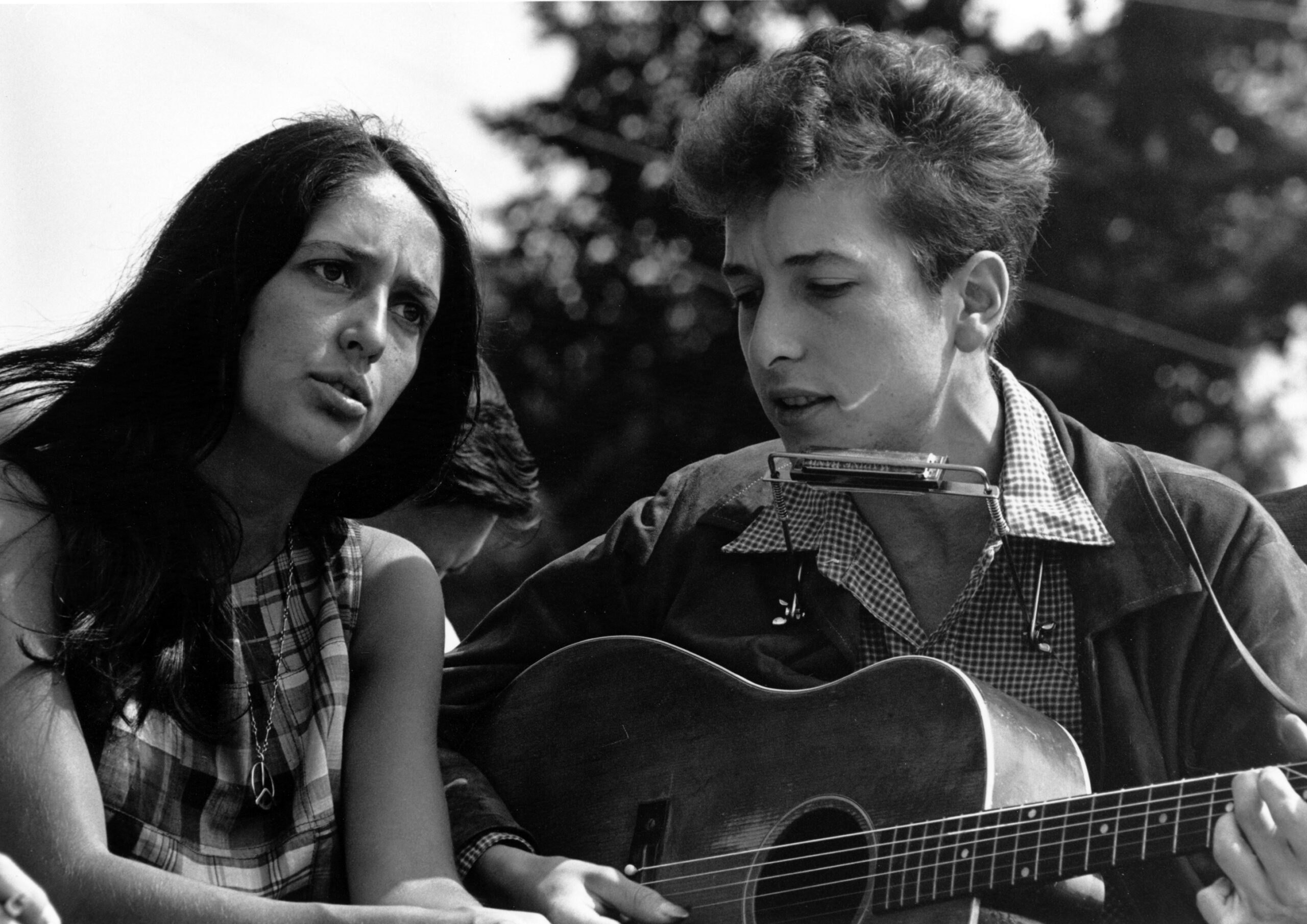
Brief Introduction of Bob Dylan
Bob Dylan (born Robert Allen Zimmerman on May 24, 1941) is a seminal American singer-songwriter, widely regarded as one of the most influential figures in popular music and culture over a career spanning more than six decades. Known for his distinctive voice and poetic, often politically charged lyrics, Dylan revolutionized folk music in the early 1960s before transitioning to electric rock, profoundly impacting genres from folk and blues to rock and gospel. His prolific output includes over 40 studio albums and more than 600 songs, many of which became anthems for social and political movements, such as “Blowin’ in the Wind” and “The Times They Are a-Changin'”. Dylan’s contributions to music and literature were recognized with the Nobel Prize in Literature in 2016, making him the first musician to receive the esteemed honor.
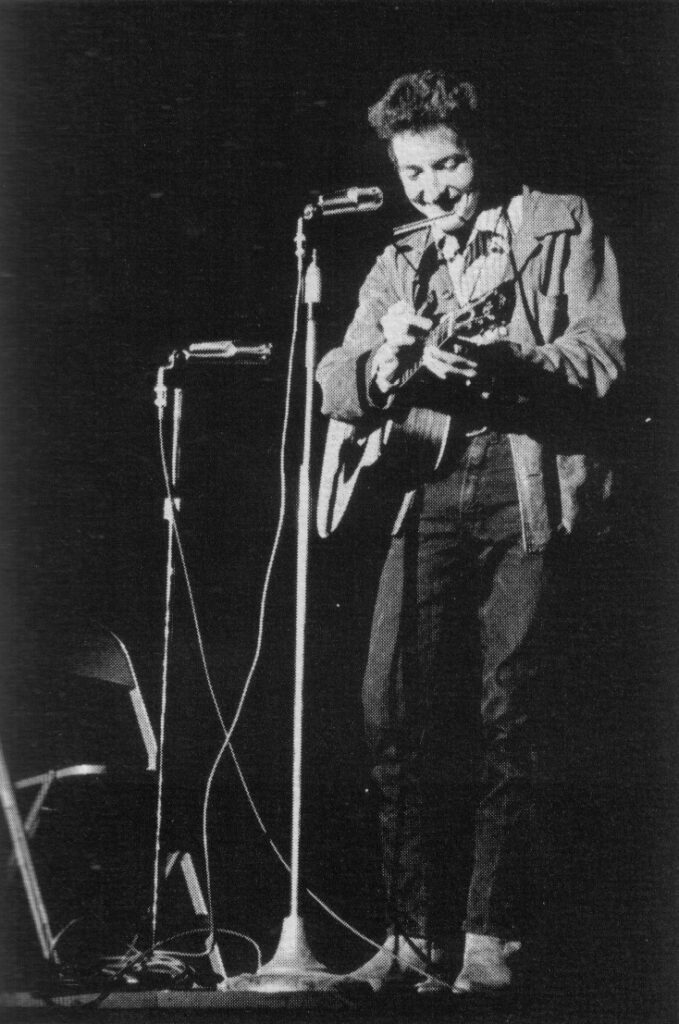
Bob Dylan Overview
| Category | Details |
|---|---|
| Full Name | Robert Allen Zimmerman (legally Robert Dylan) |
| Born | May 24, 1941 (age 84 as of 2025) |
| Birthplace | Duluth, Minnesota, U.S. |
| Parents | Abram Zimmerman and Beatrice “Beatty” Stone |
| Spouses | Sara Lownds (m. 1965; div. 1977), Carolyn Dennis (m. 1986; div. 1992) |
| Children | 6 (Maria, Jesse, Anna, Sam, Jakob, Desiree) |
| Height | 5′ 7″ (1.70 m) |
| Profession | Singer-songwriter, painter, writer, artist, actor, screenwriter, disc jockey |
| Genres | Folk, blues, rock, gospel, country, traditional pop |
| Years Active | 1957–present |
| Net Worth (as of 2025) | Over $500 million |
| Key Awards | Nobel Prize in Literature, Presidential Medal of Freedom, Pulitzer Prize Citation, Academy Award, 10 Grammy Awards |
Early Life and Education of Bob Dylan
Bob Dylan was born Robert Allen Zimmerman on May 24, 1941, in Duluth, Minnesota. His parents, Abram Zimmerman and Beatrice “Beatty” Stone, were part of a close-knit Jewish community. His paternal grandparents were Jewish immigrants from what is now Ukraine, and his maternal grandparents were Lithuanian Jewish immigrants. When Dylan was six, his family moved to the iron-mining town of Hibbing, Minnesota, where he spent most of his childhood.
From an early age, Robert Zimmerman developed a keen interest in music. He listened to the Grand Ole Opry radio show and was captivated by the songs of Hank Williams. As a teenager, he taught himself piano and guitar and was influenced by early rock stars such as Elvis Presley, Jerry Lee Lewis, and Little Richard, whose performances he would imitate on the piano at high school dances. While attending Hibbing High School, he formed several bands, including the Golden Chords and a group where he used the pseudonym Elston Gunnn.
After graduating from high school in 1959, Dylan enrolled at the University of Minnesota in Minneapolis. During this period, he began performing folk and country songs at local cafés under the name “Bob Dillon,” later changing it to “Bob Dylan,” reportedly inspired by the Welsh poet Dylan Thomas. He studied for barely eight months, often skipping classes, and dropped out in May 1960 to focus entirely on his musical aspirations. In January 1961, he moved to New York City, immersing himself in the burgeoning Greenwich Village folk music scene and seeking out his idol, Woody Guthrie, who was hospitalized at the time. Dylan’s early influences also included blues poet Robert Johnson and the Beat Generation authors.
Bob Dylan’s Career
Breakthrough and Folk Era
Bob Dylan’s career journey began in the coffeehouses and folk clubs of Greenwich Village in the early 1960s. His raw talent and distinctive style quickly caught the attention of renowned A&R executive John Hammond, who signed him to Columbia Records in 1961. Dylan released his self-titled debut album, Bob Dylan, in 1962, which featured traditional folk, blues, and gospel material alongside two original compositions.
His breakthrough came with his second album, The Freewheelin’ Bob Dylan, released in May 1963. This album solidified his reputation as a powerful singer-songwriter, featuring iconic protest songs like “Blowin’ in the Wind” and “A Hard Rain’s a-Gonna Fall”. These songs, along with “The Times They Are a-Changin'” from his 1964 album of the same name, became anthems for the civil rights and anti-war movements, establishing Dylan as a definitive voice of his generation.
Going Electric and Rock Stardom
In the mid-1960s, Bob Dylan made a pivotal and controversial shift, incorporating electric instruments into his music, contributing to the creation of the folk-rock genre. This transition famously culminated in his performance at the Newport Folk Festival on July 25, 1965, where he was controversially booed for playing an electric set. Despite the backlash, Dylan’s albums from this period—Bringing It All Back Home (1965), Highway 61 Revisited (1965), and the double album Blonde on Blonde (1966)—are considered masterpieces, featuring seminal rock songs such as “Like a Rolling Stone”. “Like a Rolling Stone” has been hailed as one of the greatest popular music songs of all time and broadened the scope of popular music.
In July 1966, Bob Dylan was involved in a near-fatal motorcycle accident, leading to a period of recovery and seclusion. His subsequent albums, John Wesley Harding (1967) and the country-tinged Nashville Skyline (1969), were notably more mellow. While his 1970 double-album Self-Portrait received a largely negative critical reception, Dylan continued to reinvent himself.
Later Career and “Never Ending Tour”
Throughout the 1970s, Bob Dylan continued to release impactful albums, including the acclaimed Blood on the Tracks (1975). In the late 1970s, he embraced evangelical Christianity, releasing three gospel albums that alienated some of his earlier fans. By the 1980s, he began to mix secular and Christian themes in his work, and while some albums saw diminished commercial success, his artistic output remained significant.
Since the late 1980s, Dylan has been on his renowned “Never Ending Tour,” playing thousands of concerts consistently. His later career saw a resurgence in critical acclaim with albums like Oh Mercy (1989), Time Out of Mind (1997), and Modern Times (2006). His more recent studio albums include Tempest (2012), Rough and Rowdy Ways (2020), and Shadow Kingdom (2023).
Bob Dylan has released 40 studio albums, 21 live albums, and 17 volumes of The Bootleg Series. He has written over 600 songs, and his music has been covered more than 6,000 times by a diverse array of artists. With an estimated 125 million records sold worldwide, he stands as one of the best-selling musicians of all time. Beyond music, Dylan is also a versatile artist, having worked as a painter, actor, and writer, including his 2004 memoir Chronicles: Volume One.
Bob Dylan Personal Life & Family
Bob Dylan has maintained a relatively private personal life despite his public fame. He has been married twice and has six children. His first marriage was to Sara Lownds in 1965, and they divorced in 1977. During their marriage, Dylan adopted Lownds’ daughter, Maria (born 1961), from a previous relationship. Together, they had four biological children: Jesse Byron Dylan (born 1966), Anna Lea Dylan (born 1967), Samuel Isaac Abram Dylan (born 1968), and Jakob Luke Dylan (born 1969).
His children have pursued various paths; Jesse Dylan is a successful filmmaker and director, known for movies like American Wedding and Kicking & Screaming, and founded a creative agency. Jakob Dylan followed in his father’s footsteps as a musician and is the lead singer of the band The Wallflowers. Samuel Dylan is a photographer and largely keeps his life private.
Dylan’s second marriage was to his backup singer, Carolyn Dennis, in June 1986. They had a daughter, Desiree Gabrielle Dennis-Dylan, born on January 31, 1986. Their marriage and the birth of their daughter were kept secret from the public and media until the 2001 publication of Howard Sounes’ biography, Down the Highway: The Life of Bob Dylan. Carolyn Dennis later stated that they chose to keep their marriage private to provide their daughter with a normal childhood, utilizing a California law that allowed them to seal their marriage certificate. The couple divorced in October 1992. Dennis clarified that Dylan has been a “wonderful, active father” to Desiree, refuting suggestions that he was absent from her life.
Bob Dylan’s family background is rooted in a Jewish heritage, with his paternal and maternal grandparents having immigrated from the Russian Empire (present-day Ukraine and Lithuania) to the United States. Despite his global fame, Dylan has often expressed that “outside of my family, nothing held any real interest for me”.
Awards and Achievements of Bob Dylan
Bob Dylan has amassed an extraordinary collection of awards and honors throughout his illustrious career, recognizing his profound impact on music, literature, and culture.
| Year | Award/Achievement | Notes |
|---|---|---|
| 1982 | Inducted into the Songwriters Hall of Fame | |
| 1988 | Inducted into the Rock and Roll Hall of Fame | |
| 1990 | Commandeur des Arts et des Lettres | |
| 1991 | Grammy Lifetime Achievement Award | |
| 1997 | Kennedy Center Honors | Received from President Clinton |
| 1998 | Grammy Award for Album of the Year | For Time Out of Mind |
| 2001 | Academy Award for Best Original Song | For “Things Have Changed” from the film Wonder Boys |
| 2001 | Golden Globe Award for Best Original Song | For “Things Have Changed” from the film Wonder Boys |
| 2008 | Pulitzer Prize Special Citation | For “his profound impact on popular music and American culture, marked by lyrical compositions of extraordinary poetic power” |
| 2009 | National Medal of Arts | Presented by President Barack Obama |
| 2012 | Presidential Medal of Freedom | Highest civilian honor in the U.S., presented by President Barack Obama |
| 2013 | Officier de la Légion d’honneur | |
| 2016 | Nobel Prize in Literature | “For having created new poetic expressions within the great American song tradition” |
In addition to these major accolades, Bob Dylan has won a total of 10 Grammy Awards from 38 nominations. He also received an honorary doctorate of music from Princeton University in 1970 and from the University of St. Andrews in 2004. His influence is further recognized by his induction into the Nashville Songwriters Hall of Fame.
Bob Dylan Net Worth and Income
As of January 2025, Bob Dylan’s net worth is estimated to be over $500 million, solidifying his status as one of music’s wealthiest and most influential artists. His substantial fortune is a result of a career spanning more than six decades, marked by prolific songwriting, extensive touring, and strategic business ventures.

A significant portion of his wealth stems from the historic sales of his music catalogs. In December 2020, Dylan sold his entire songwriting catalog to Universal Music Publishing Group for an estimated $400 million. This was followed by another landmark deal in January 2022, when he sold his master recordings to Sony Music for approximately $200 million.
Prior to these catalog sales, Bob Dylan reportedly earned between $15 million and $20 million annually from royalties generated by streaming, licensing, and cover versions of his more than 600 songs. His “Never Ending Tour,” which has seen him perform thousands of concerts since the late 1980s, has also contributed over $300 million to his earnings.
Beyond his music, Dylan has diversified his income through other creative and business endeavors. He is an accomplished visual artist, with his paintings and drawings displayed in major art galleries worldwide. He also owns a successful whiskey brand, Heaven’s Door, and has made real estate investments, including properties in Malibu, California. Despite his immense wealth and global recognition, Dylan is known for maintaining a relatively modest and private lifestyle, choosing not to flaunt his riches.
Legacy and Influence
Bob Dylan’s legacy and influence are profound and far-reaching, establishing him as a towering figure in contemporary culture. Described as one of the greatest songwriters of all time, he has been a major force in popular culture for over 68 years. Dylan’s lyrical genius is often credited with elevating popular music to a literary art form, infusing it with the intellectualism of classic literature and poetry. His songs defy pop music conventions, incorporating political, social, and philosophical influences that resonated deeply with the burgeoning counterculture of the 1960s and beyond.
His early protest songs became anthems for the civil rights and anti-war movements, giving voice to a generation’s hopes and frustrations. Dylan’s fearless evolution, from acoustic folk hero to electric rock icon, redefined artistic boundaries and inspired countless musicians to experiment with genre and lyrical depth. He demonstrated that popular music could be a vehicle for complex narratives, profound social commentary, and personal introspection. Artists from diverse genres, including Duke Ellington, Jimi Hendrix, Stevie Wonder, and U2, have covered his songs, testifying to their enduring power and versatility.
Beyond music, Dylan’s impact extends to literature and visual arts. He published his memoir, Chronicles: Volume One, in 2004, offering insights into his creative process and early life. His lyrics have been continuously published in various editions, often studied for their poetic merit. As a visual artist, he began drawing and painting after his 1966 motorcycle accident, and his sculpted iron gates reflect his childhood in Minnesota’s “Iron Range”. Dylan’s ability to consistently reinvent his artistic expression has ensured his relevance across decades, making him a subject of ongoing literary and musical analysis. His recognition with the Nobel Prize in Literature in 2016 further cemented his unique position at the intersection of music and poetry, acknowledging his creation of “new poetic expressions within the great American song tradition”.
Interesting Facts about Bob Dylan
- Bob Dylan’s original stage name was Elston Gunnn, with three n’s, before he adopted Bob Dylan.
- He once played piano for rising pop star Bobby Vee in 1959.
- Dylan wrote his first original song, “Song to Woody,” as a tribute to his idol, Woody Guthrie.
- He has never had a number one single himself, but he did write one – “Blowin’ in the Wind” was a hit for Peter, Paul and Mary.
- He claims he never listens to his own albums after their release.
- Dylan once wrote a song called “Wiggle Wiggle,” which was not well-received by critics.
- His music has appeared in over 100 film soundtracks, and he was once asked to write a James Bond theme but politely declined.
- He says he writes best at 3 a.m..
- Bob Dylan is the only songwriter to have won an Academy Award, a Pulitzer Prize, and a Nobel Prize.
- He reportedly introduced The Beatles to marijuana in 1964.
- Dylan was famously booed at the Newport Folk Festival in 1965 for performing with an electric guitar.
- In 2009, he was reportedly mistaken for homeless and questioned by police in Long Branch, New Jersey.
- He states he doesn’t believe in following news but still reads The Economist.
- Dylan reportedly does not own a cellphone.
- His son, Jakob Dylan, is the lead singer of the successful rock band The Wallflowers.
- Dylan wrote “Forever Young” as a lullaby for his son.
- He began drawing and painting to pass the time while recovering from his motorcycle accident in 1966.
- His sculpted works are often iron-based, reflecting his upbringing in Minnesota’s “Iron Range”.
Controversies
Bob Dylan’s career, marked by constant evolution, has not been without its share of controversies, often stemming from his artistic choices and guarded personal life. One of the most significant was his “going electric” at the Newport Folk Festival in 1965, where he was famously booed by a segment of the folk audience who felt betrayed by his departure from acoustic tradition. This moment symbolized a broader cultural shift and highlighted Dylan’s willingness to follow his artistic muse regardless of expectations.
Critical reception also stirred controversy at times. His 1970 double-album, Self-Portrait, was widely panned by critics, with some calling it a “joke” or a “prank”. Dylan himself later admitted he released it to “get people off my back”. Similarly, his spiritual journey in the late 1970s, which led to a period of evangelical Christianity and the release of gospel albums like Slow Train Coming and Saved, alienated some long-time fans who struggled with his overt religious themes. During tours in this era, he sometimes refused to perform his secular songs, further frustrating parts of his audience.
The announcement of Bob Dylan winning the Nobel Prize in Literature in 2016 sparked considerable debate. While many celebrated the recognition of song lyrics as a legitimate form of literature, some literary critics and authors questioned whether a musician should receive the award, arguing that it deviated from traditional literary forms. Dylan’s initial silence for days after the announcement and his absence from the official award ceremony, citing “pre-existing commitments,” further fueled the controversy, leading some members of the Swedish Academy to call his behavior “impolite” and “arrogant”. He eventually accepted the prize in a private ceremony and submitted his Nobel Lecture, reflecting on the literary influences on his songwriting.
The secrecy surrounding his second marriage to Carolyn Dennis and the birth of their daughter, Desiree, which remained unknown to the public until a 2001 biography, also became a point of discussion. However, Dennis clarified that the privacy was a mutual decision made to ensure their daughter had a normal childhood, and she maintained that Dylan was a “wonderful, active father”. Joni Mitchell, a fellow musician, was famously quoted as saying, “Bob is not authentic at all. He’s a plagiarist, and his name and voice are fake,” a sentiment that sparked its own discussion though it should be noted she reportedly softened her stance later. These instances reflect Dylan’s consistent defiance of public expectations and his unwavering commitment to his artistic vision.
Social Media Presence
Bob Dylan maintains an official presence across several key social media platforms, providing updates on his music, tours, and other artistic endeavors. His official website, bobdylan.com, links to his verified accounts.
- X (formerly Twitter): His account, @bobdylan, has recently seen an increase in posts that are seemingly written by Dylan himself, offering unique, sometimes arbitrary, and “hilariously heartwarming” insights. As of current estimations, he has approximately 450,000 followers.
- YouTube: The official Bob Dylan YouTube channel, @BobDylan, boasts 1.59 million subscribers. It features official music videos, audio tracks, and promotional content related to his albums and releases.
- Instagram: Dylan also has an Instagram presence, although his posts have occasionally been described as cryptic or have been deleted after a short period, leading to fan speculation.
- Facebook: He maintains an official Facebook page where fans can find news and updates.
- Spotify & Apple Music: Official artist profiles are available on major streaming platforms like Spotify and Apple Music, hosting his extensive discography.
Despite his historically private and elusive persona, Dylan’s recent engagement on platforms like X has surprised and delighted fans, offering a rare glimpse into the thoughts of the legendary artist.
Final Words about Bob Dylan
Bob Dylan remains a living legend, an artist whose impact on music, literature, and culture is immeasurable. As of late 2024 and heading into 2025, he continues to be an active force in the music world, regularly touring on his “Never Ending Tour” and occasionally releasing new material, such as his 2023 album Shadow Kingdom. His enduring legacy is built upon his remarkable ability to craft “new poetic expressions within the great American song tradition,” a skill that earned him the Nobel Prize in Literature.
From his early days as a folk icon to his controversial “electric” phase and later explorations across various genres, Dylan has consistently challenged conventions and pushed artistic boundaries. His lyrics, rich with metaphor and social commentary, have resonated across generations, providing a soundtrack to shifting cultural landscapes and personal introspection. The breadth of his influence is evident in the countless artists who cite him as an inspiration and the academic study his work continues to receive.
With a net worth reflecting not only his artistic success but also shrewd business acumen, Bob Dylan has cemented his place as one of the most financially successful musicians in history. Yet, his public image remains that of an enigmatic and deeply authentic artist, constantly evolving and forever committed to his craft. Bob Dylan’s biography is a testament to the power of artistic integrity and the lasting resonance of a truly unique voice. His work continues to captivate new audiences, ensuring that the legacy of this American troubadour will undoubtedly endure for generations to come.
 Team Dailly WikiBio