
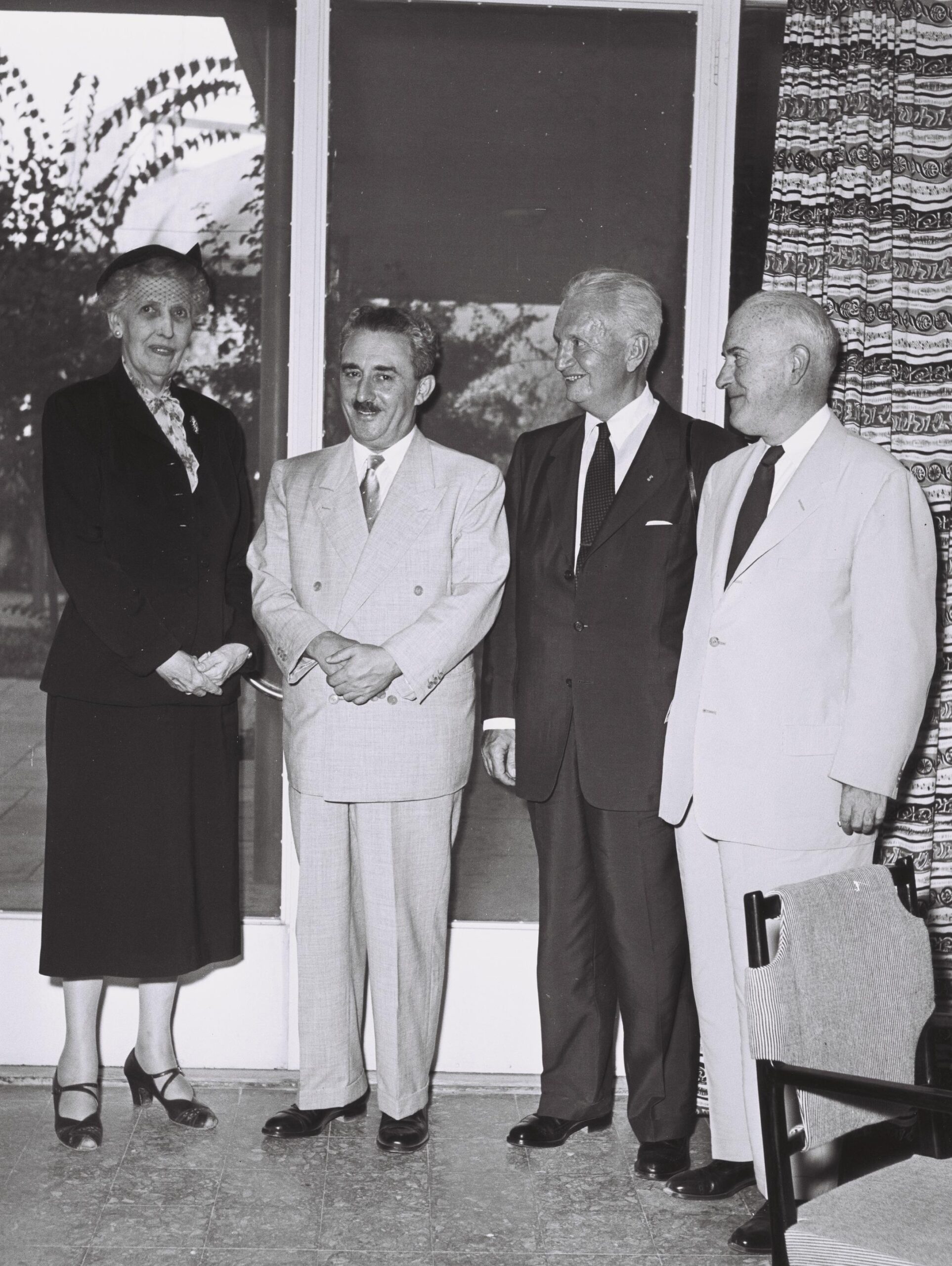
Brief Introduction of Walter Thompson
James Walter Thompson was a pioneering American advertising executive who is widely regarded as the father of modern magazine advertising. He transformed the advertising industry by establishing the first full-service advertising agency, offering a range of creative services including copywriting, layout, package design, and trademark development. Thompson’s innovative approach included a focus on brand development and the use of market research to understand consumer behavior, setting a new standard for the industry. He is credited with creating the first creative department within an agency and was instrumental in turning advertising from a simple brokerage of space into a sophisticated profession. His agency, the J. Walter Thompson Company (JWT), became one of the largest and most influential in the world, leaving an indelible mark on the field of marketing communications.

Walter Thompson Overview
| Full Name | James Walter Thompson |
| Date of Birth | October 28, 1847 |
| Age(as of 2025) | Died in 1928 at the age of 80 |
| Birthplace | Pittsfield, Massachusetts, United States |
| Profession | Advertising Executive, Founder of J. Walter Thompson Company |
| Husband/Wife | Margaret Riggs Boyle Thompson |
| Family | Information not publicly available in detail, but he had a wife, Margaret, and a son. |
| Relationship/Affairs(GF/BF) | Information not disclosed. |
| Net Worth | Not precisely documented, but he sold his agency for $500,000 in 1916. |
Early Life and Education of Walter Thompson
James Walter Thompson was born in Pittsfield, Massachusetts, on October 28, 1847. Much of his childhood was spent in Fremont, Ohio. Before embarking on his illustrious career in advertising, Thompson served his country. He was a U.S. Marine during the Civil War, having served on the USS Saratoga. This military experience predated his entry into the business world and the beginnings of his journey in advertising. Following his military service, he moved to New York City, where his professional life would take root and flourish. Details about his formal education are not extensively documented, but his career trajectory suggests a quick grasp of business and salesmanship. He began his career in advertising not in a creative or strategic role, but as a bookkeeper.
Walter Thompson’s Career
Walter Thompson’s career in advertising began in 1868 when he was hired as a bookkeeper for the small agency Carlton & Smith, which specialized in selling advertising space in religious magazines. Thompson quickly realized that sales and soliciting were far more profitable than bookkeeping and proved to be an exceptionally effective salesman for the company. His ambition and business acumen led him to purchase the agency from his employer, William J. Carlton, in 1877 for $500. He renamed the agency the J. Walter Thompson Company the following year, reportedly choosing the initial “J” to distinguish himself from other men named James Thompson in New York.
Under his leadership, the agency underwent a radical transformation. Thompson had the revolutionary idea that the agency could sell more advertising space if it also provided the service of creating the advertisements for the clients. To this end, he hired writers and artists to form the first known creative department in an advertising agency. This was a pivotal moment in the history of advertising, marking the shift from agencies as mere space brokers to full-service creative enterprises. Thompson’s agency pioneered a host of other innovations, including the creation of the first “account executives” to manage specific client campaigns. The company also became a leader in designing trademarks and packaging, creating enduring brand images such as the Rock of Gibraltar for the Prudential Insurance Company.
Thompson astutely recognized the potential of advertising in magazines, particularly those aimed at women. He aggressively pursued this market, and by 1889, it was estimated that 80 percent of the advertising in the United States was placed through the J. Walter Thompson agency. His vision was not limited to the domestic market. In 1899, he opened an office in London, making the J. Walter Thompson Company the first American advertising agency to expand internationally. Thompson’s philosophy was to draw a “straight line between the manufacturer and the consumer,” and he published a house ad in 1900 that is considered the first commercial explanation of what is now known as brand management. After a long and successful career, Thompson retired in 1916, selling the agency to Stanley B. Resor and a group of partners for $500,000.
Walter Thompson Personal Life & Family
James Walter Thompson was married to Margaret Riggs Boyle Thompson. In 1892, he built the Cranford Opera House block in Cranford, New Jersey, for his wife. He also developed the Roosevelt Manor section of Cranford in the 1890s. Thompson lived at 11 East Sixty-eighth Street in Manhattan. He was an avid sailor and yachtsman, a passion that stemmed from his time in the Navy. He owned several vessels, including a seagoing houseboat and a steamboat named ‘Stella’. His love for sailing led him to become a prominent member of the New York Yacht Club, where he was fondly known by the title “Commodore,” a nickname that became famous within his company. He was also a keen traveler, spending nearly every summer for two decades abroad, often returning with significant new business accounts for his agency.
Awards and Achievements of Walter Thompson
While formal industry awards as we know them today were not prevalent during his time, Walter Thompson’s achievements are foundational to the advertising industry. His most significant recognitions include:

- Being posthumously inducted into the Advertising Hall of Fame in 1979.
- Pioneering the concept of the full-service advertising agency.
- Creating the first-ever creative department within an advertising agency.
- Establishing the first international advertising agency.
- Being credited as the “father of modern magazine advertising” in the United States.
Walter Thompson Net Worth and Income
The precise net worth of Walter Thompson at the time of his death is not publicly documented. However, a significant financial transaction in his life was the sale of his agency in 1916. He sold the J. Walter Thompson Company to Stanley B. Resor and his partners for $500,000. Adjusted for inflation, this amount would be equivalent to a substantial sum in the 21st century. His income was derived from the immense success of his advertising agency, which at one point handled the majority of advertising placements in the United States.
Legacy and Influence
Walter Thompson’s legacy is the modern advertising agency itself. He fundamentally reshaped the industry from a simple brokerage of media space into a creative and strategic business. His agency, J. Walter Thompson (JWT), went on to become a global giant, representing some of America’s most iconic brands, including Kraft, Unilever, and Ford. JWT was a pioneer in many areas, including the use of celebrity testimonials, the application of behavioral psychology in advertising, and the development of radio and television advertising. The agency was known for creating cultural touchstones, such as the Oscar Mayer wiener jingle and the concept that an engagement ring should cost two months’ salary. The company he founded continued to be a dominant force in advertising for over a century after his departure, a testament to the solid foundation he built. Even after its eventual merger and rebranding, the innovations and principles established by James Walter Thompson continue to influence the practice of advertising and marketing worldwide.
Interesting Facts about Walter Thompson
- Before becoming an advertising mogul, he served in the U.S. Navy and the Marines during the Civil War.
- He was an avid sailor and was widely known as “Commodore” due to his leadership role in the New York Yacht Club.
- He purchased the advertising agency that would bear his name for a mere $500, plus an additional $800 for the office furniture.
- His agency was the first to hire a female creative director, Helen Lansdowne Resor, in 1908.
- He was a distant cousin of President Theodore Roosevelt.
- A letter from a then future-president Franklin D. Roosevelt arrived for Thompson in 1930, two years after his death, asking for a job for his son, Elliott.
- The agency he founded was responsible for creating the grilled cheese sandwich as part of a campaign for Kraft.
Controversies
Information regarding personal controversies involving James Walter Thompson is not widely documented. The controversies associated with the J. Walter Thompson agency, such as its work for the military dictatorship of Chile in the 1970s, occurred long after his death and the transfer of the company’s ownership.
Social Media Presence
Not applicable. James Walter Thompson lived from 1847 to 1928, long before the advent of social media.
Final Words about Walter Thompson
James Walter Thompson’s impact on the world of advertising is immeasurable. He was a visionary who saw the potential for advertising to be more than just announcements; he saw it as a force for building brands and influencing culture. The principles he established—the importance of creativity, the necessity of understanding the consumer, and the global potential of advertising—remain cornerstones of the industry today. While the agency that bore his name for over 150 years has since been merged and rebranded, the innovative spirit and foundational business model that Walter Thompson pioneered are his enduring legacy. He was not just a successful businessman; he was an architect of the modern advertising industry, and his influence continues to be felt in every advertisement we see.
 Team Dailly WikiBio