Brief Introduction of Paul Newman
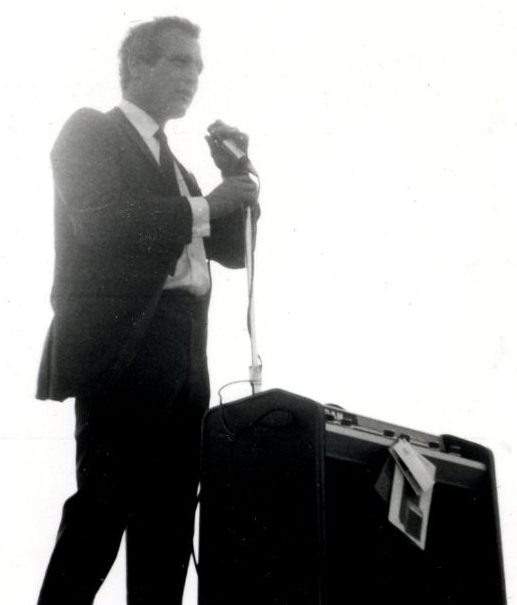
Paul Leonard Newman (January 26, 1925 – September 26, 2008) was a towering figure in American culture, celebrated not only for his prolific acting career but also for his significant contributions as a film director, producer, philanthropist, and championship-winning race car driver. With his piercing blue eyes, undeniable charisma, and immense talent, he became one of Hollywood’s most iconic and enduring leading men. Newman’s performances in films like “The Hustler,” “Cool Hand Luke,” and “Butch Cassidy and the Sundance Kid” solidified his status as a cinematic legend. Beyond the silver screen, he was a dedicated philanthropist who founded the “Newman’s Own” food company, donating all post-tax profits to charity. His multifaceted life was marked by a profound commitment to his craft, a passion for auto racing, and an unwavering dedication to humanitarian causes.

Paul Newman Overview
| Full Name | Paul Leonard Newman |
| Date of Birth | January 26, 1925 |
| Age(as of 2025) | Would have been 100 years old |
| Birthplace | Cleveland Heights, Ohio, U.S. |
| Profession | Actor, filmmaker, race car driver, philanthropist, entrepreneur |
| Husband/Wife | Jackie Witte (m. 1949; div. 1958), Joanne Woodward (m. 1958) |
| Family | Father: Arthur Sigmund Newman Sr., Mother: Theresa Garth, Brother: Arthur Newman. He had six children in total. Three with his first wife, Jackie Witte: Scott, Susan, and Stephanie. Three daughters with his second wife, Joanne Woodward: Elinor “Nell”, Melissa “Lissy”, and Claire “Clea”. |
| Relationship/Affairs(GF/BF) | Paul Newman was married twice. He had no other publicly known long-term relationships or affairs during his marriages. His 50-year marriage to Joanne Woodward is considered one of Hollywood’s most enduring love stories. |
| Net Worth | Estimated at $80 million at the time of his death in 2008. His estate was valued at over $600 million. |
Early Life and Education of Paul Newman
Paul Leonard Newman was born on January 26, 1925, in Cleveland Heights, Ohio, and grew up in the more affluent suburb of Shaker Heights. His father, Arthur Sigmund Newman Sr., was the son of Jewish immigrants from Hungary and Poland and ran a successful sporting goods store. His mother, Theresa Garth, was the daughter of Slovak immigrants and was a practitioner of Christian Science. Newman showed an early interest in theater, making his acting debut at the age of seven as a court jester in a school production of “Robin Hood.” By age 10, he was performing at the Cleveland Play House. After graduating from Shaker Heights High School in 1943, he briefly attended Ohio University before enlisting in the U.S. Navy during World War II. He served as a radioman and rear gunner in the Pacific theater. Following his military service, he attended Kenyon College on the G.I. Bill, graduating in 1949 with a Bachelor of Arts degree in drama and economics. He then spent a year at the Yale School of Drama before moving to New York City to study at the prestigious Actors Studio under Lee Strasberg. This formal training laid the groundwork for his distinguished career.
Paul Newman’s Career
Paul Newman’s career began on the stage. He made his Broadway debut in 1953 in the original production of William Inge’s “Picnic,” where he met his future wife, Joanne Woodward. His first foray into film, “The Silver Chalice” (1954), was a critical and commercial failure that Newman himself famously despised, even taking out an ad to apologize for his performance. However, his career quickly recovered with his powerful portrayal of boxer Rocky Graziano in “Somebody Up There Likes Me” (1956), a role that established him as a serious talent. Throughout the late 1950s, Newman’s star ascended with a series of critically acclaimed performances, earning his first Academy Award nomination for “Cat on a Hot Tin Roof” (1958) opposite Elizabeth Taylor.
The 1960s cemented Newman’s status as a Hollywood icon. He delivered some of his most memorable performances as anti-heroic protagonists in films like “The Hustler” (1961), “Hud” (1963), and “Cool Hand Luke” (1967), all of which earned him Oscar nominations. He also teamed up with Robert Redford for the classic buddy film “Butch Cassidy and the Sundance Kid” (1969), creating one of cinema’s most beloved pairings. The duo would reunite successfully in “The Sting” (1973), which won the Academy Award for Best Picture.
Newman’s career continued to flourish through the 1970s and 80s with diverse roles in films like “The Towering Inferno” (1974) and “Slap Shot” (1977). He received further Oscar nominations for “Absence of Malice” (1981) and “The Verdict” (1982). After six nominations, he finally won the Academy Award for Best Actor for reprising his role as “Fast” Eddie Felson in “The Color of Money” (1986). He also received an Honorary Oscar in 1986 and the Jean Hersholt Humanitarian Award in 1994.
Beyond acting, Newman was an accomplished director, earning a Golden Globe for Best Director for “Rachel, Rachel” (1968), which starred his wife. His passion for auto racing, ignited during the filming of “Winning” (1969), became a second career. He became a competitive driver, winning several national championships and even finishing second in the prestigious 24 Hours of Le Mans race in 1979. His final major film role was a critically acclaimed, Oscar-nominated performance in “Road to Perdition” (2002), and his last screen credit was voicing the character Doc Hudson in the animated film “Cars” (2006).
Paul Newman Personal Life & Family
Paul Newman’s personal life was as rich and complex as his professional one. He was married twice. His first marriage was to Jackie Witte from 1949 to 1958, with whom he had three children: a son, Scott, and two daughters, Susan and Stephanie. Scott, also an actor, tragically died in 1978 from an accidental drug overdose, a loss that profoundly affected Newman and led him to establish the Scott Newman Center for drug abuse prevention.
In 1953, while working on the Broadway play “Picnic,” Newman met actress Joanne Woodward. They reconnected on the set of the film “The Long, Hot Summer” in 1957 and married in Las Vegas in January 1958, shortly after his divorce from Witte was finalized. Their marriage lasted for 50 years until Newman’s death and is widely regarded as one of the most successful and enduring unions in Hollywood history. Together, they had three daughters: Elinor “Nell,” Melissa “Lissy,” and Claire “Clea.” The family chose to live in Westport, Connecticut, deliberately distancing themselves from the Hollywood lifestyle to provide their children with a more normal upbringing. Newman was a devoted family man, and despite the demands of his career, he prioritized his wife and children. He was known for his grounded personality, wit, and aversion to the trappings of celebrity, often refusing to sign autographs.
Awards and Achievements of Paul Newman
- Academy Award for Best Actor in a Leading Role for “The Color of Money” (1987)
- Academy Honorary Award for his many memorable and compelling screen performances (1986)
- Jean Hersholt Humanitarian Award for his charitable work (1994)
- Golden Globe Cecil B. DeMille Award (1984)
- Golden Globe for Best Director for “Rachel, Rachel” (1969)
- Emmy Award for Outstanding Supporting Actor in a Miniseries or a Movie for “Empire Falls” (2005)
- Cannes Film Festival Award for Best Actor for “The Long, Hot Summer” (1958)
- BAFTA Award for Best Foreign Actor for “The Hustler” (1962)
- Screen Actors Guild Life Achievement Award (1986)
- Kennedy Center Honors Lifetime Achievement Award (1992)
- Berlin International Film Festival Silver Bear for Best Actor for “Nobody’s Fool” (1995)
- Multiple national championships as a driver in Sports Car Club of America (SCCA) road racing.
Paul Newman Net Worth and Income
At the time of his death in 2008, Paul Newman’s net worth was estimated to be around $80 million. His substantial wealth was generated from his long and successful career as one of Hollywood’s most bankable stars, as well as his work as a director and producer. In addition to his earnings from the film industry, a significant portion of his financial legacy is tied to his entrepreneurial venture, Newman’s Own. Founded in 1982, the food company started with his homemade salad dressing and expanded into a wide range of products. Uniquely, Newman decided from the outset to donate 100% of the company’s after-tax profits and royalties to charitable organizations. As of recent reports, these donations have exceeded $600 million, channeled through the Newman’s Own Foundation. His estate, valued at over $600 million upon his passing, was carefully structured through a will and a living trust to continue his philanthropic mission and provide for his family.

Legacy and Influence
Paul Newman left an indelible mark on both cinema and philanthropy. As an actor, he was revered for his versatility, intelligence, and the quiet intensity he brought to a wide range of characters. He helped define the modern anti-hero and was a central figure in the New Hollywood movement. His on-screen collaborations with Joanne Woodward and Robert Redford produced some of the most iconic films of their era. His influence extends to generations of actors who have admired his craft and integrity. Beyond his artistic achievements, Newman’s most profound legacy is arguably his humanitarian work. By creating Newman’s Own and the subsequent Newman’s Own Foundation, he pioneered a new model of corporate philanthropy, demonstrating that a business could be both successful and a force for good. The foundation has supported thousands of charities worldwide, with a particular focus on children’s causes. In 1988, he founded the SeriousFun Children’s Network, a global family of camps and programs for children with serious illnesses, which has served hundreds of thousands of children. His name became synonymous not just with stardom, but with generosity, integrity, and a deep commitment to making a difference.
Interesting Facts about Paul Newman
- He was famously on President Richard Nixon’s “enemies list” due to his political activism.
- Despite his fame, he was known for being press-shy and often refused to sign autographs.
- Newman was colorblind, which discovered during his Navy V-12 pilot training program application, thus preventing him from becoming a pilot.
- He voiced the character Doc Hudson in the 2006 Pixar film “Cars,” which was his final major film role.
- A Rolex Daytona watch that he owned was sold at auction in 2017 for over $17.5 million, making it one of the most expensive wristwatches ever sold.
- He began his successful professional racing career relatively late in life, at the age of 47, and continued competing for over 30 years.
- The U.S. Postal Service issued a “forever stamp” in his honor in 2015.
Controversies
Paul Newman’s public image was largely untarnished by major scandal, reflecting a life of integrity. However, the end of his first marriage to Jackie Witte was a difficult period. His relationship with Joanne Woodward began while he was still married, leading to a divorce from Witte in 1958. Newman later expressed profound guilt over the dissolution of his first marriage and the pain it caused his family. In more recent years, after his death, a legal dispute arose between two of his daughters, Susan and Nell, and the Newman’s Own Foundation. The lawsuit, filed in 2022, claimed that the foundation’s board had strayed from their father’s original philanthropic wishes by reducing the amount of money allocated to foundations run by his children for their own charitable giving. This disagreement brought public attention to the management of his charitable legacy.
Social Media Presence
- Instagram – Not applicable
- Twitter – Not applicable
- YouTube – Not applicable
Final Words about Paul Newman
Paul Newman passed away from lung cancer on September 26, 2008, at his home in Westport, Connecticut, at the age of 83. A heavy smoker for much of his life, he quit in the mid-1980s. His death was mourned by millions around the world, who remembered him not just as a legendary actor but as a great humanitarian. His legacy continues to thrive through his timeless films and, most significantly, through the enduring work of the Newman’s Own Foundation and the SeriousFun Children’s Network. These organizations carry on his revolutionary “give it all away” philosophy, ensuring that his commitment to helping others continues to impact lives globally. Paul Newman’s life serves as a powerful example of how fame and fortune can be leveraged for the greater good, cementing his place as not just a Hollywood icon, but a true and lasting philanthropist.
 Team Dailly WikiBio