Brief Introduction of Maite Alberdi
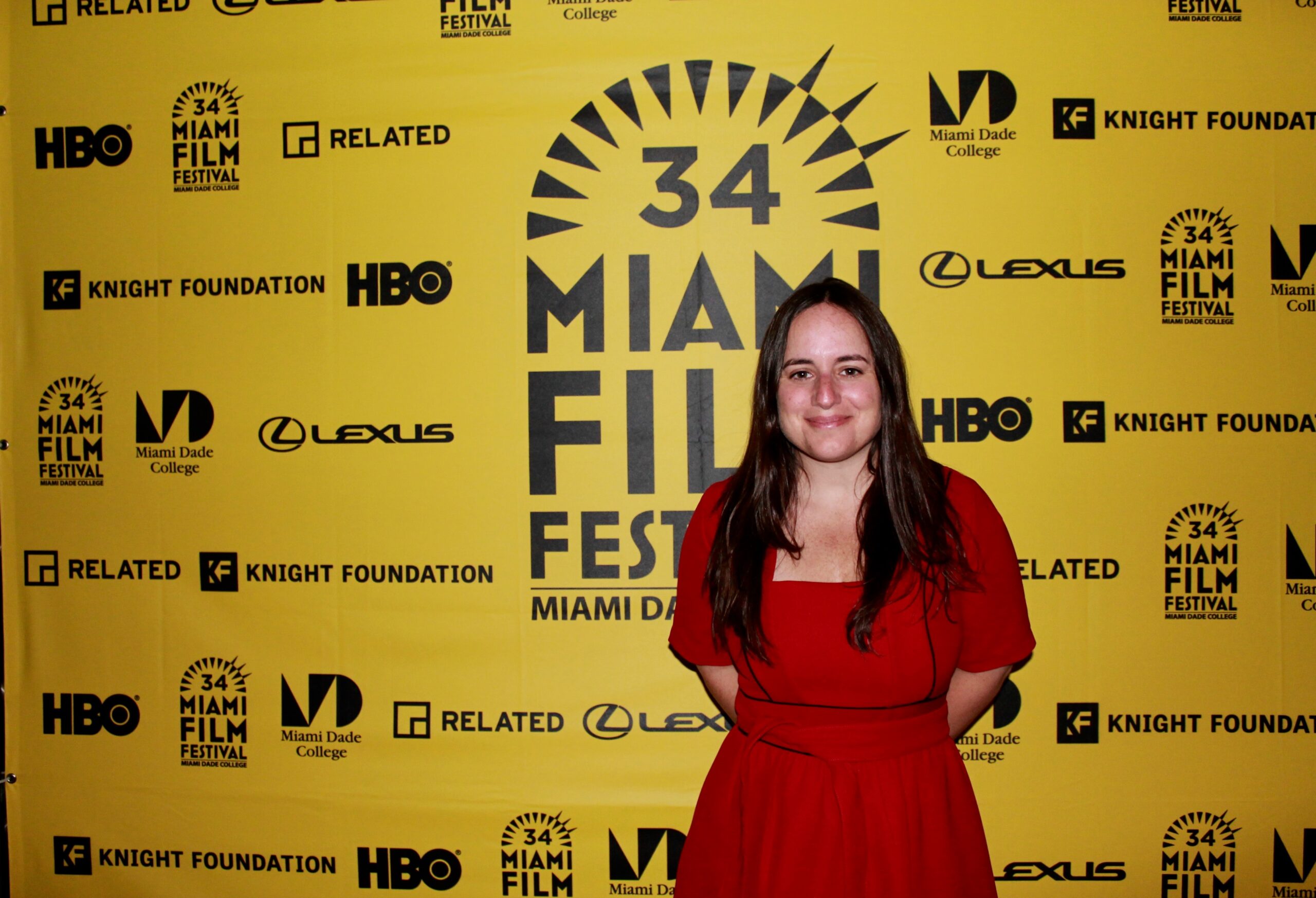
Maite Alberdi Soto is a highly acclaimed Chilean filmmaker, director, screenwriter, and film critic, recognized as one of the most significant voices in contemporary Latin American documentary cinema. She has garnered international recognition for her intimate and empathetic portrayals of everyday life within small, often overlooked communities. Alberdi’s distinctive style is characterized by her patient, observational approach, allowing her to capture the nuances of human relationships with profound sensitivity and humor. Her work frequently explores themes of aging, disability, and the complexities of memory, challenging societal perceptions and giving voice to marginalized individuals. Alberdi made history as the first Chilean woman to be nominated for an Academy Award for Best Documentary Feature for her celebrated film, “The Mole Agent” (2020), a feat she repeated with “The Eternal Memory” (2023). Through her production company, Micromundo, she continues to create films that resonate with global audiences, cementing her reputation as a masterful storyteller.
Maite Alberdi Overview
| Full Name | Maite Alberdi Soto |
| Date of Birth | March 29, 1983 |
| Age(as of 2025) | 42 |
| Birthplace | Santiago, Chile |
| Profession | Film Director, Screenwriter, Producer, Film Critic |
| Husband/Wife | Information not publicly available |
| Family | Information not publicly available |
| Relationship/Affairs(GF/BF) | Information not disclosed |
| Net Worth | Not publicly available |
Early Life and Education of Maite Alberdi
Maite Alberdi Soto was born in Santiago, Chile, on March 29, 1983. From a young age, she developed a keen interest in storytelling and observing the world around her. She pursued her higher education at the Pontifical Catholic University of Chile, a prestigious institution where she laid the academic foundation for her future career in filmmaking. Alberdi graduated with degrees in both Aesthetics and Social Communication, which provided her with a unique theoretical framework that blends artistic sensibilities with a deep understanding of societal narratives. This interdisciplinary education has profoundly influenced her filmmaking style, enabling her to approach her subjects with both analytical rigor and artistic sensitivity. Her academic journey also included work as a film critic, contributing to the film studies magazine La Fuga, and co-authoring the book “Teorías del cine documental en Chile: 1957-1973” (Theories of Documentary Film in Chile: 1957-1973), further establishing her as a serious scholar of the documentary form before she became one of its most celebrated practitioners.
Maite Alberdi’s Career
Maite Alberdi’s career began in the mid-2000s with a series of short films that immediately signaled her unique voice and thematic interests. Her early works, such as “Los trapecistas” (The Trapeze Artists) (2005) and “Las peluqueras” (The Hairdressers) (2007), demonstrated her ability to find extraordinary stories in ordinary lives. Her feature-length debut, “El salvavidas” (The Lifeguard) (2011), premiered at the prestigious International Documentary Film Festival Amsterdam (IDFA) and showcased her signature observational style, focusing on a lifeguard on a Chilean beach who meticulously avoids the water.
The international breakthrough came with “La once” (Tea Time) (2014), a documentary that lovingly observes a group of elderly women, including her own grandmother, who have gathered for tea every month for sixty years. The film received widespread critical acclaim, earning a Goya Award nomination for Best Ibero-American Film and winning the Best Female-Directed Documentary award at IDFA. This success was followed by “Los niños” (The Grown-Ups) (2016), a poignant and insightful film about a group of adults with Down syndrome navigating the challenges of work, love, and the desire for independence. This film further solidified her reputation for tackling sensitive subjects with dignity and warmth, earning her another Best Female-Directed Documentary award at IDFA.
In 2020, Alberdi achieved a historic milestone with “El agente topo” (The Mole Agent). The film, which follows an 83-year-old man who goes undercover in a retirement home, was a global sensation. It premiered at the Sundance Film Festival and went on to become the first Chilean documentary to be nominated for an Academy Award for Best Documentary Feature. The film’s blend of espionage-like intrigue with a deeply moving exploration of loneliness and old age captivated audiences and critics alike. Her next feature, “La memoria infinita” (The Eternal Memory) (2023), continued her remarkable run of success. The film, which chronicles the relationship between Chilean journalist Augusto Góngora and actress Paulina Urrutia as they confront his Alzheimer’s diagnosis, won the Grand Jury Prize at the Sundance Film Festival and earned Alberdi her second Academy Award nomination. Her work, which also includes producing and screenwriting, has firmly established her as a leading figure in global documentary filmmaking.
Maite Alberdi Personal Life & Family
Maite Alberdi is known for being a private individual, and details about her personal life are not widely publicized. While her work often delves into the intimate lives of her subjects, she maintains a clear distinction regarding her own family and relationships. An interview revealed that she has a son named Martín, who she has mentioned provides a grounding force in her life and influences her work schedule. Her grandmother, María Teresa, was a key figure in her film “La once,” offering a glimpse into her family’s history and the inspiration behind the celebrated documentary. Her mother was also a significant supporter of her career choice. Beyond these mentions, information about her parents, siblings, or marital status (husband/wife) is not publicly disclosed, aligning with her focus on her professional endeavors over her private life. Alberdi’s dedication to her craft appears to be the central narrative she presents to the public.

Awards and Achievements of Maite Alberdi
- Academy Award Nomination for Best Documentary Feature for “The Eternal Memory” (2024)
- Goya Award for Best Ibero-American Film for “The Eternal Memory” (2024)
- Sundance Film Festival Grand Jury Prize (World Cinema Documentary) for “The Eternal Memory” (2023)
- Academy Award Nomination for Best Documentary Feature for “The Mole Agent” (2021)
- Goya Award Nomination for Best Ibero-American Film for “The Mole Agent” (2021)
- Platino Award for Best Documentary for “The Mole Agent” (2021)
- Ariel Award for Best Ibero-American Film for “The Mole Agent” (2021)
- San Sebastián International Film Festival Audience Award for “The Mole Agent” (2020)
- Chicken & Egg Award (2020)
- IDFA Award for Best Female-Directed Documentary for “The Grown-Ups” (2016)
- IDFA Award for Best Female-Directed Documentary for “Tea Time” (2014)
- Goya Award Nomination for Best Ibero-American Film for “Tea Time” (2016)
Maite Alberdi Net Worth and Income
The specific net worth of Maite Alberdi is not publicly available as of 2025, and there are no credible sources that provide a reliable estimate. Her income is primarily derived from her work as a film director, producer, and screenwriter. This includes earnings from film distribution rights, festival prize money, and grants for film development. She is the founder of her own production company, Micromundo, which produces her films and likely constitutes a significant part of her professional earnings. Additionally, Alberdi works as a university lecturer and documentary filmmaking instructor, which provides another source of income. While her films have achieved significant international success and critical acclaim, leading to two Academy Award nominations, a precise and verified figure for her net worth remains undisclosed.
Legacy and Influence
Maite Alberdi has carved a significant legacy in the world of documentary filmmaking, particularly in Latin America. Her work is celebrated for redefining the boundaries of the genre by blending observational cinema with narrative techniques, creating films that are both artistically compelling and deeply human. She has been praised for her ability to bring marginalized stories to the forefront, particularly those concerning the elderly and individuals with disabilities, portraying her subjects with profound dignity, agency, and humor. Alberdi’s empathetic lens has been noted for its ability to foster a strong connection between the audience and the individuals on screen, promoting greater understanding and social awareness. As the first Chilean woman to be nominated for an Academy Award, she has broken new ground for filmmakers in her country and across the continent, inspiring a new generation of storytellers. Her influence extends beyond her films; as an educator and author on documentary theory, she actively contributes to the academic and practical development of the field.
Interesting Facts about Maite Alberdi
- She is the first Chilean female director to receive an Academy Award nomination.
- Her film “La once” (Tea Time) was inspired by her own grandmother and her lifelong friends.
- Alberdi often spends years filming her subjects to build trust and capture their lives authentically.
- She is the co-author of a book on the history of Chilean documentary film theories.
- She was invited to become a member of the Academy of Motion Picture Arts and Sciences in 2018.
- Her film “The Mole Agent” was initially conceived as a more straightforward detective story before evolving into a meditation on loneliness.
- She is a Global Shaper, a community of young leaders recognized by the World Economic Forum.
Controversies
Maite Alberdi’s work has been largely free from major public controversies. However, during the making of “The Mole Agent,” she acknowledged facing an ethical dilemma. The premise of the film involved placing a “spy” inside a nursing home without the residents or staff being fully aware of his investigative purpose. Alberdi has spoken about the challenge of balancing the narrative device with the need to be respectful and transparent with the people in the home. She has stated that while the home’s inhabitants were not aware of the “spy” element, they did consent to being filmed for a documentary about daily life in their residence, and she felt the final film was a truthful and empathetic representation of their experiences.
Social Media Presence
- Instagram – Information not publicly available
- Twitter – Information not publicly available
- YouTube – Not publicly available
Final Words about Maite Alberdi
Maite Alberdi stands as a formidable and essential voice in modern documentary cinema. Her filmography is a testament to the power of patient, empathetic storytelling. By turning her camera towards intimate worlds, she illuminates universal truths about love, memory, and the human condition. With two Academy Award nominations and numerous international accolades to her name, she has not only elevated the profile of Chilean and Latin American cinema but has also challenged and expanded the possibilities of the documentary form itself. Her commitment to portraying her subjects with unwavering respect and humanity has left an indelible mark on audiences worldwide. As she continues to produce work through her company Micromundo, the film community eagerly awaits her future projects, anticipating further explorations into the quiet, profound corners of human experience that she so masterfully captures.