Brief Introduction of Maggie Kang
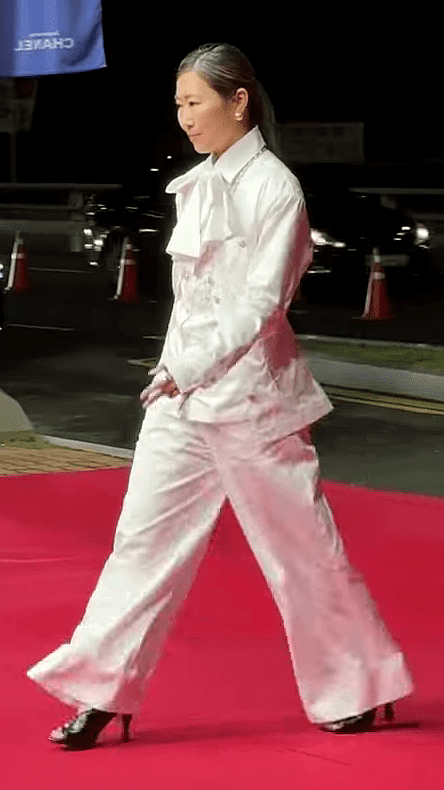
Maggie Kang is a distinguished South Korean-Canadian film director and story artist who has carved a significant niche for herself in the competitive world of animation. Initially gaining experience as a story artist on numerous blockbuster animated features for major studios like DreamWorks Animation, Illumination Entertainment, and Warner Animation Group, she has worked on beloved films such as the “Puss in Boots” franchise, “Kung Fu Panda 3,” and “The Lego Ninjago Movie.” Kang catapulted to international fame as the creator and co-director of the global phenomenon “KPop Demon Hunters,” an original animated feature for Netflix produced by Sony Pictures Animation. The film, born from her original concept, achieved monumental success, becoming Netflix’s most-watched movie in history and earning critical acclaim, thereby cementing Kang’s reputation as a visionary storyteller and a prominent voice in contemporary animation.

Maggie Kang Overview
| Full Name | Maggie Kang (Korean Name: Kang Min-ji) |
| Date of Birth | 1981 or 1982 |
| Age(as of 2025) | 43–44 |
| Birthplace | Seoul, South Korea |
| Profession | Film Director, Story Artist |
| Husband/Wife | Radford Sechrist |
| Family | Husband: Radford Sechrist, One daughter |
| Relationship/Affairs(GF/BF) | Married |
| Net Worth | Not publicly available |
Early Life and Education of Maggie Kang
Maggie Kang was born Kang Min-ji in Seoul, South Korea, in 1981 or 1982. At the age of five, her family immigrated to Toronto, Canada, where she was raised. Growing up in North York, a diverse district of Toronto, Kang straddled two cultures, spending her school years in Canada and often returning to South Korea for entire summers. This dual upbringing deeply influenced her identity and creative sensibilities. Her father, an avid film collector with a passion for world cinema, introduced her to a wide array of filmmakers like Akira Kurosawa, Charlie Chaplin, and Martin Scorsese from a young age. This early exposure nurtured her love for storytelling. Recognizing her talent for drawing and writing short stories, her father gave her a book about Disney animation, which sparked her realization that animation could be a viable career path. As a first-generation Korean-Canadian in the 1990s, she also developed a love for K-pop, an interest she sometimes hid from non-Korean friends. This personal experience of navigating cultural identity would later inform the themes of her work. Following her passion, Kang enrolled in the prestigious classical animation program at Sheridan College in Oakville, often referred to as the “Harvard of animation.” In her third and final year, her talent was recognized by major animation studios, and she was recruited into a story trainee program at DreamWorks Animation shortly after graduation, marking the beginning of her professional journey.
Maggie Kang’s Career
Maggie Kang’s career in animation is a testament to her artistic talent and dedication to storytelling. She began her professional journey at DreamWorks Animation, where she was accepted into a story trainee program right after graduating from Sheridan College. She honed her craft as a story artist, contributing to a remarkable slate of commercially successful and critically acclaimed films. Her extensive filmography at DreamWorks includes “Over the Hedge,” “Madagascar: Escape 2 Africa,” “Shrek Forever After,” “Puss in Boots” (2011), “Rise of the Guardians” (2012), “Kung Fu Panda 3” (2016), “Trolls,” and “The Croods: A New Age.” Her work involved visualizing narratives and shaping the emotional and comedic beats of these beloved franchises. After spending over a decade collectively at DreamWorks, Kang expanded her experience by working with other top-tier studios. She contributed her skills as a story artist at Illumination Entertainment on “Minions: The Rise of Gru” and took on a significant leadership role at Warner Animation Group as the Head of Story for “The LEGO Ninjago Movie” (2017). This role was a pivotal moment in her career, providing her with the experience of shaping a character-driven narrative on a large scale. Feeling ready to direct her own projects, Kang developed an original concept that would become her magnum opus. The idea for “KPop Demon Hunters” began with a simple one-line concept she conceived with her husband, Radford Sechrist, in 2018. The pitch was immediately successful and was bought by Sony Pictures Animation just a week after its initial pitch. The film, which tells the story of a K-pop girl group that secretly hunts demons, was a deeply personal project for Kang, blending her love for Korean mythology, shamanistic rituals, and K-pop culture. After several years in development, “KPop Demon Hunters” was released globally on Netflix in 2025, co-directed by Kang and Chris Appelhans. The film became a cultural juggernaut, shattering records to become Netflix’s most-watched movie of all time. Its soundtrack, particularly the song “Golden,” also achieved massive success, topping the Billboard charts. The film’s unprecedented success led to the announcement of a planned sequel, further solidifying Kang’s position as a leading creative force in the animation industry.
Maggie Kang Personal Life & Family
Maggie Kang maintains a life that is both deeply connected to her creative work and her family. She is married to Radford Sechrist, a fellow creator and storyboard artist in the animation industry. Sechrist is widely known as the creator of the popular Netflix animated series “Kipo and the Age of Wonderbeasts.” The couple shares a creative partnership, with Sechrist having collaborated on the initial one-line concept for “KPop Demon Hunters.” Together, they have a daughter, who has even participated in her mother’s work. Their daughter lent her voice to the character of the younger Rumi in “KPop Demon Hunters,” making the film a family affair. Growing up as a Korean-Canadian, Kang has often spoken about the importance of her cultural heritage. Despite feeling the need to hide aspects of her Korean identity at times during her youth, her parents instilled in her a strong connection to her roots and the Korean language. This pride in her background is something she has passed down to her own child. Kang has shared that her daughter, who is half-Korean, embraces her heritage, even asking for kimchi in her school lunches. This reflects Kang’s belief in the importance of cultural authenticity, a theme that is central to her storytelling. Her personal journey of navigating a dual identity has profoundly shaped her creative vision, allowing her to tell stories that resonate with a global audience while remaining deeply rooted in her Korean heritage.
Awards and Achievements of Maggie Kang
- Okgwan Order of Cultural Merit (2025)
- Celebration of Asian Pacific Cinema and Television, Animation Award for “KPop Demon Hunters” (2025)
- IndieWire Honors, Spark Award for “KPop Demon Hunters” (shared with Chris Appelhans and Ejae) (2025)
- KALH Honors, Pioneer Award for “KPop Demon Hunters” (2025)
- Korean Association of Film Critics Awards, FIPRESCI Award (Foreign) for “KPop Demon Hunters” (shared with Chris Appelhans) (2025)
- Named one of TIME’s most influential rising stars (2025)
- Ranked collectively with “The Women of KPop Demon Hunters” at No. 100 on Forbes’ 2025 list of the World’s 100 Most Powerful Women
Maggie Kang Net Worth and Income
Information regarding Maggie Kang’s specific net worth and income sources is not publicly available. Her career has spanned nearly two decades in the animation industry, working for major studios like DreamWorks, Warner Animation Group, and Sony Pictures Animation on numerous high-grossing films. As the creator and director of the massively successful Netflix film “KPop Demon Hunters,” which became the platform’s most-watched movie ever and spawned a hit soundtrack, her earning potential has likely increased significantly. Future income is expected from projects such as the announced sequel to “KPop Demon Hunters.”

Legacy and Influence
Maggie Kang’s legacy is defined by her role in bringing authentic and nuanced Korean culture to the forefront of global animation. With “KPop Demon Hunters,” she created a worldwide cultural event that celebrated Korean heritage, mythology, and the global appeal of K-pop. The film’s success demonstrated that culturally specific stories can have universal appeal, breaking barriers in an industry where such narratives were previously considered niche. Kang has become an influential figure for aspiring animators and creators, particularly those from diverse backgrounds, by proving that personal stories rooted in one’s own culture can resonate powerfully with a mass audience. Her work has been praised for its rich visual storytelling, character depth, and its empowering portrayal of female characters who are both “silly” and strong. By championing cultural authenticity and refusing to dilute her vision, Kang has not only achieved commercial and critical success but has also opened doors for more diverse voices and stories to be told in mainstream animation, significantly impacting the industry’s landscape.
Interesting Facts about Maggie Kang
- Her father is an immense film enthusiast with a personal collection of over 50,000 titles.
- She was recruited by DreamWorks Animation in her graduating year of college after the studio attended an industry day at Sheridan College.
- The main character of “KPop Demon Hunters,” Rumi, was a character she and her husband had designed two years prior for a different project.
- Growing up, she was a fan of anime like “Sailor Moon,” which served as an inspiration for the visual style of “KPop Demon Hunters.”
- For Halloween as a child, she felt the only Asian female character she could dress up as was Mulan, which felt strange as a Korean person, highlighting the lack of diverse representation she later sought to rectify.
- She considers herself a cat person.
Controversies
Maggie Kang has been involved in a couple of minor, fan-driven controversies related to her successful film. In October 2025, she faced backlash from a segment of the K-pop group BLACKPINK’s fanbase. The controversy began after she posted a short, ambiguous comment (“Mmmmmmmm”) in response to a fan-made video showing the “KPop Demon Hunters” character Rumi dancing to songs by various K-pop artists, including Jennie of BLACKPINK. Some fans interpreted the comment as a slight against Jennie, leading to online harassment. The situation escalated to the point that Kang posted a clarification on the different meanings of the expression and subsequently ceased activity on her X (formerly Twitter) account. Additionally, in September 2025, Netflix Korea came under fire for mistranslating a portion of a behind-the-scenes interview with Kang. She used the English word “sisterhood” to describe the group dynamics in her film, which the Korean subtitles translated to “family love.” Netizens criticized the translation for weakening the intended meaning of female solidarity, prompting Netflix Korea to issue an apology and a correction in the video’s comments.
Social Media Presence
- Instagram – Information not disclosed
- Twitter – Public activity paused as of late 2025
- YouTube – Not publicly available
Final Words about Maggie Kang
As a trailblazing director and storyteller, Maggie Kang has firmly established herself as a vital voice in modern animation. Her journey from a talented story artist to the creative force behind a global phenomenon like “KPop Demon Hunters” is a source of inspiration. The film’s success has not only brought her numerous accolades but has also had a significant cultural impact, championing Korean culture on an unprecedented scale. Kang’s commitment to authentic, personal storytelling has proven that narratives deeply rooted in a specific culture can achieve universal resonance. With a highly anticipated sequel to “KPop Demon Hunters” in the works, the industry and fans alike are eager to see how she will continue to expand the world she has created. Her future projects are poised to further cement her legacy as a director who not only entertains but also broadens the scope of representation in animation for a global audience.
 Team Dailly WikiBio