
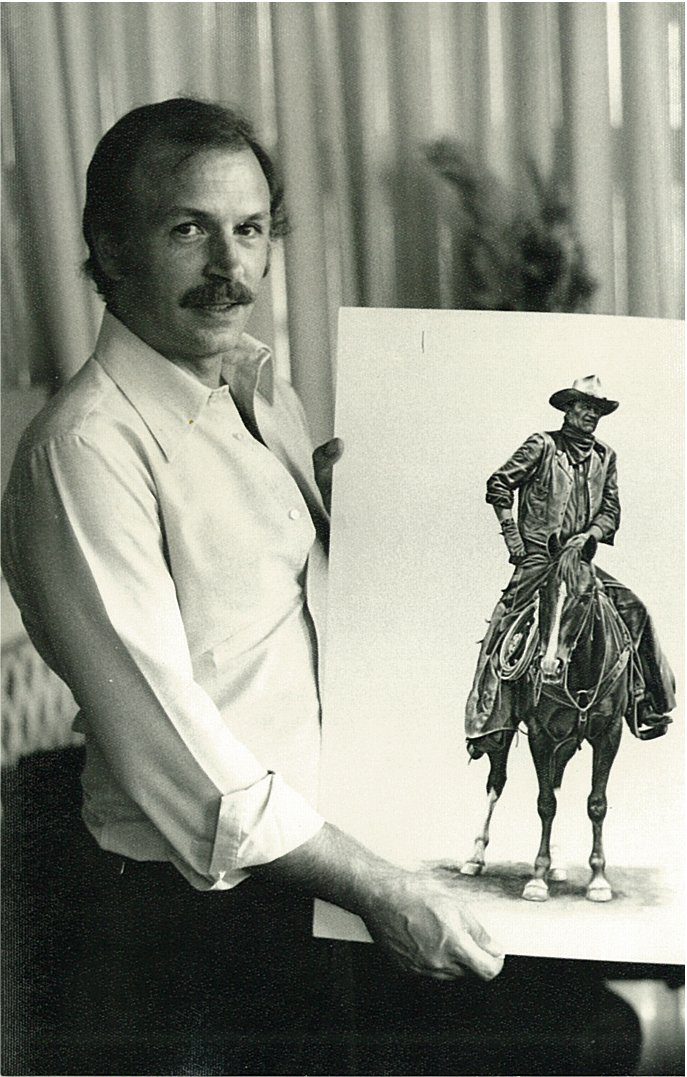
Brief Introduction of John Wayne
John Wayne, born Marion Robert Morrison, was an American actor who became a towering figure of Hollywood’s Golden Age. Nicknamed “The Duke,” he embodied the image of the strong, rugged American hero, particularly in Western and war films. His career spanned five decades, from the silent film era of the 1920s to the 1970s, appearing in over 175 films. Wayne’s commanding presence, distinctive voice, and signature walk made him one of the most popular and enduring movie stars in American history. He won an Academy Award for his role in “True Grit” (1969) and remains a cultural icon, symbolizing American individualism and patriotism. His influence on the Western genre is immeasurable, and he continues to be ranked among the greatest movie stars of all time.

John Wayne Overview
| Full Name | Marion Robert Morrison |
| Date of Birth | May 26, 1907 |
| Age(as of 2025) | Would have been 118 years old (Died June 11, 1979) |
| Birthplace | Winterset, Iowa, U.S. |
| Profession | Actor, Producer, Director |
| Husband/Wife | Josephine Alicia Saenz (m. 1933; div. 1945), Esperanza Baur (m. 1946; div. 1954), Pilar Pallete (m. 1954) |
| Family | Father: Clyde Leonard Morrison, Mother: Mary “Molly” Alberta Brown, Children: Michael, Mary Antonia, Patrick, Melinda, Aissa, John Ethan, Marisa |
| Relationship/Affairs(GF/BF) | After separating from his third wife, Pilar Pallete, he was in a long-term relationship with his former secretary, Pat Stacy, until his death. |
| Net Worth | $7 million at the time of his death in 1979 (equivalent to around $25 million in today’s dollars). |
Early Life and Education of John Wayne
John Wayne was born Marion Robert Morrison on May 26, 1907, in Winterset, Iowa, to Clyde Leonard Morrison, a pharmacist, and Mary “Molly” Alberta Brown. His family later moved to Southern California, settling in Glendale. It was here he earned the nickname “Duke” from a local fireman, who saw him everywhere with his Airedale Terrier of the same name. Wayne preferred the nickname to Marion, and it stuck for the rest of his life. He excelled in academics and sports at Glendale Union High School, where he was also active in student government and theatrical productions. After high school, he received a football scholarship to the University of Southern California (USC), where he studied pre-law. However, a bodysurfing accident that resulted in a broken collarbone ended his football career and his scholarship, forcing him to leave the university.
John Wayne’s Career
John Wayne’s entry into the film industry was facilitated by his USC football coach, who got him a job as a prop boy at Fox Film Corporation. Director John Ford began to give him small parts, and he was mentored by the legendary Western star Tom Mix. His first leading role came in 1930 in Raoul Walsh’s widescreen epic “The Big Trail.” It was for this film that his name was changed from Marion Morrison to John Wayne. Despite the film’s commercial failure, Wayne persevered, appearing in over 80 low-budget “B” movies, mostly Westerns, throughout the 1930s.
His major breakthrough came in 1939 when John Ford cast him as the Ringo Kid in the landmark film “Stagecoach.” This role catapulted him to mainstream stardom and began a legendary collaboration with Ford that would produce some of the most iconic Westerns in cinema history. Throughout the 1940s and 1950s, Wayne’s star power grew with films like “Red River” (1948), “Sands of Iwo Jima” (1949), for which he received his first Academy Award nomination, “She Wore a Yellow Ribbon” (1949), and “The Quiet Man” (1952). His portrayal of complex, often morally ambiguous characters in films like “The Searchers” (1956) is considered by many to be his finest work.
In 1960, Wayne took on the roles of producer, director, and star in the historical epic “The Alamo,” which earned a Best Picture Oscar nomination. He continued to deliver memorable performances in films such as “The Man Who Shot Liberty Valance” (1962) and “The Longest Day” (1962). His efforts culminated in 1969 when he won the Academy Award for Best Actor for his portrayal of the one-eyed, cantankerous U.S. Marshal Rooster Cogburn in “True Grit.” His final film role was as an aging gunfighter dying of cancer in “The Shootist” (1976), a poignant performance that mirrored his own battle with the disease.
John Wayne Personal Life & Family
John Wayne was married three times and was the father of seven children. His first wife was Josephine Alicia Saenz, whom he married in 1933. They had four children: Michael, Mary Antonia (“Toni”), Patrick, and Melinda. The marriage ended in divorce in 1945. In 1946, he married Mexican actress Esperanza Baur. Their marriage was tumultuous and childless, ending in a contentious divorce in 1954. His third and final marriage was to Peruvian actress Pilar Pallete in 1954. They had three children: Aissa, John Ethan, and Marisa. Although they separated in 1973, they remained legally married until his death. In his later years, his companion was his former secretary, Pat Stacy.
Wayne was a devoted family man who, despite his demanding career, made time for his children, several of whom went on to have careers in the film industry. He was a staunch conservative Republican and a vocal patriot, known for his outspoken political views. He was also a member of the Sigma Chi fraternity and the Order of DeMolay.

Awards and Achievements of John Wayne
- Academy Award for Best Actor in a Leading Role for “True Grit” (1970)
- Golden Globe Award for Best Actor – Motion Picture Drama for “True Grit” (1970)
- Cecil B. DeMille Award (1966)
- Academy Award Nomination for Best Actor for “Sands of Iwo Jima” (1950)
- Academy Award Nomination for Best Picture for “The Alamo” (as producer) (1960)
- Congressional Gold Medal (1979)
- Presidential Medal of Freedom (1980, posthumously)
- Hollywood Walk of Fame Star (1960)
John Wayne Net Worth and Income
At the time of his death in 1979, John Wayne’s net worth was estimated to be $7 million, which is equivalent to approximately $25 million in today’s currency when adjusted for inflation. His estate included $1 million in real estate holdings and $6 million in personal assets and investments. His wealth was primarily derived from his prolific and successful acting career, as well as his production company, Batjac Productions. His will detailed the distribution of his assets among his children and his first wife, with trust funds set up for their benefit.
Legacy and Influence
John Wayne’s legacy is firmly cemented in the annals of American cinema and culture. He is more than just a movie star; he is an enduring symbol of American ideals—courage, integrity, and rugged individualism. For decades, he was among the top box-office draws, and his films continue to be celebrated by audiences worldwide. Wayne’s impact on the Western genre is profound; he helped shape the archetype of the strong, silent hero who stands for what is right. His persona became a form of cultural shorthand, influencing subsequent generations of actors and filmmakers. Beyond the screen, his outspoken patriotism and conservative political views made him a significant, albeit sometimes controversial, figure in the national discourse. Posthumously awarded both the Congressional Gold Medal and the Presidential Medal of Freedom, his status as a national icon was officially recognized by the U.S. government. The John Wayne Cancer Foundation, established by his family after his death from stomach cancer, continues his fight against the disease.
Interesting Facts about John Wayne
- His nickname, “Duke,” came from his childhood Airedale Terrier of the same name.
- He was a member of the USC football team until an injury ended his athletic career.
- He was fluent in Spanish.
- Soviet leader Joseph Stalin allegedly ordered an assassination attempt on Wayne due to his strong anti-communist stance, though this was never officially confirmed.
- He was an avid chess player.
- Wayne was one of the first “singing cowboys” in film, though his singing voice was dubbed.
- He began wearing a hairpiece in the 1940s.
- He was the personification of the American serviceman for many, despite not serving in World War II.
Controversies
John Wayne’s legacy is not without controversy, primarily stemming from his deeply conservative political views and public statements. In a 1971 interview with Playboy magazine, he made remarks that have been widely criticized as racist and homophobic. He stated, “I believe in white supremacy until the blacks are educated to a point of responsibility,” and expressed disparaging views about Native Americans, stating he did not feel the country did wrong in taking it from them. These comments have led to renewed scrutiny of his films and public image in modern times, with some calling for the removal of his name and statues from public places. He was also a staunch supporter of the Vietnam War and a prominent member of the anti-communist Motion Picture Alliance for the Preservation of American Ideals, which was involved in the Hollywood blacklist.
Social Media Presence
- Instagram – The official John Wayne Instagram account (@johnwayneofficial) has over 243,000 followers.
- Twitter – Not publicly available.
- YouTube – The official YouTube channel, managed by John Wayne Enterprises, features clips, trailers, and other content related to his life and career.
Final Words about John Wayne
John Wayne passed away on June 11, 1979, after a battle with stomach cancer. He remains one of the most iconic figures in film history, a symbol of a bygone era of Hollywood and a particular vision of America. His cinematic legacy is vast, with numerous films considered timeless classics that continue to entertain and influence audiences. While his personal views have sparked considerable debate and re-evaluation of his hero status, his impact on the art of filmmaking and his enduring screen persona are undeniable. The work of the John Wayne Cancer Foundation ensures that his name is also associated with a lasting commitment to fighting the disease that took his life. “The Duke” continues to ride tall in the collective American consciousness, a complex and commanding figure whose shadow looms large over the landscape of cinema.
 Team Dailly WikiBio