Brief Introduction of Gene Hackman
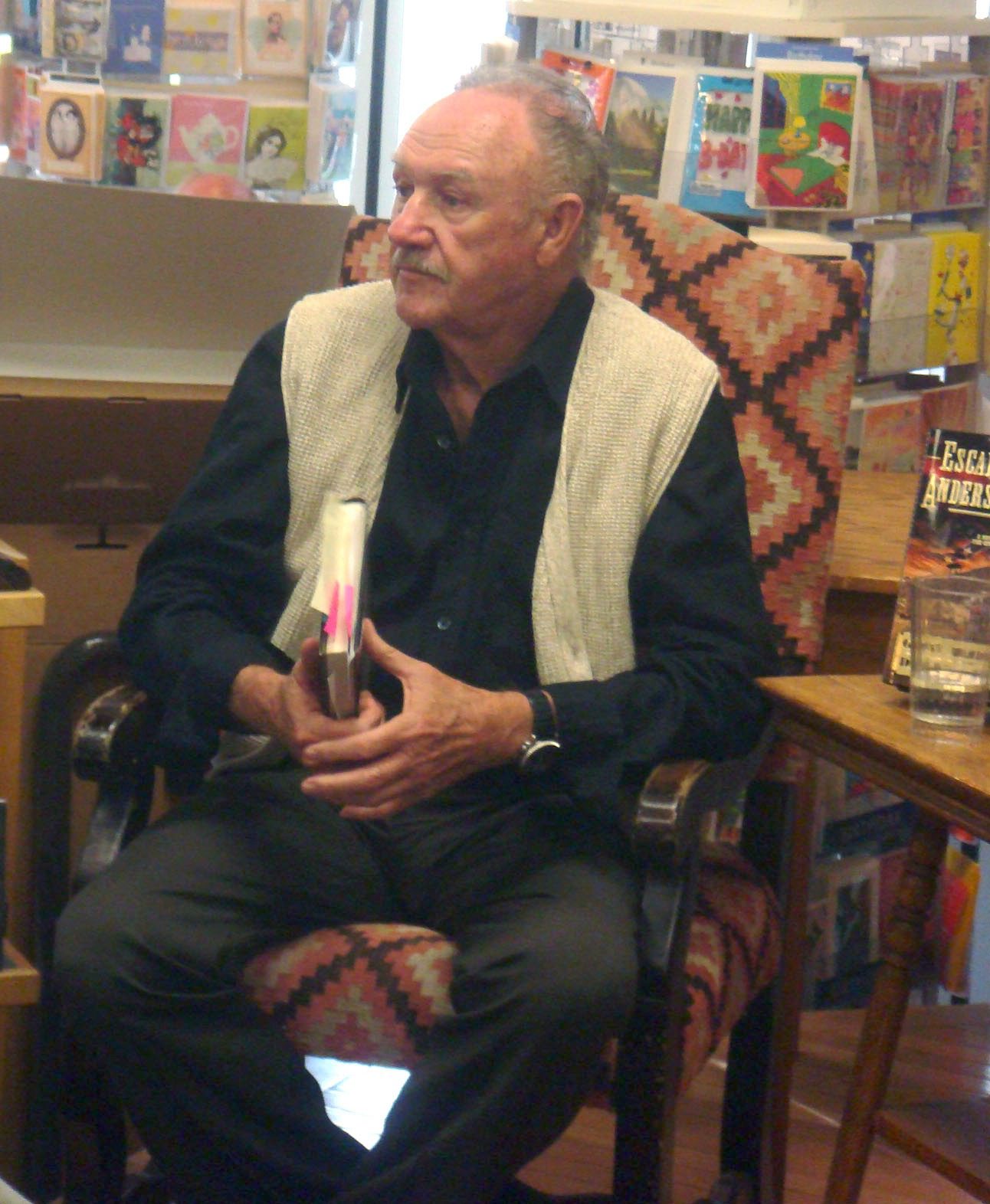
Eugene “Gene” Allen Hackman was a highly respected American actor and novelist, celebrated for a career that spanned over five decades. Renowned for his versatility and emotionally honest performances, Hackman became a prominent figure during the New Hollywood era. He masterfully portrayed a wide array of characters, from tough, uncompromising lawmen and menacing villains to complex, everyday men. His ability to bring a rugged authenticity and profound depth to his roles earned him numerous accolades, including two Academy Awards, and solidified his status as one of the greatest actors of his generation. After retiring from acting in 2004, he embarked on a successful second career as a novelist.
Gene Hackman Overview
| Full Name | Eugene Allen Hackman |
| Date of Birth | January 30, 1930 |
| Age(as of 2025) | 95 (at time of death in February 2025) |
| Birthplace | San Bernardino, California, U.S. |
| Profession | Actor, Novelist |
| Husband/Wife | Betsy Arakawa (m. 1991; d. 2025), Faye Maltese (m. 1956; div. 1986) |
| Family | Son: Christopher Allen Hackman, Daughters: Elizabeth Jean Hackman, Leslie Anne Hackman |
| Relationship/Affairs(GF/BF) | Not publicly available |
| Net Worth | Estimated $80 million at the time of his death |
Early Life and Education of Gene Hackman
Eugene Allen Hackman was born on January 30, 1930, in San Bernardino, California, to Eugene Ezra Hackman and Anna Lyda Elizabeth Gray. His family moved frequently during his early years before settling in Danville, Illinois. Hackman’s childhood was marked by instability; his father, a newspaper press operator, abandoned the family when Gene was just 13 years old. This event profoundly impacted him. At the age of 16, he lied about his age to enlist in the United States Marine Corps, seeking direction and structure. He served for four and a half years as a field radio operator, with some of his service taking place in China and Hawaii. After his military service, Hackman pursued various paths, including studying journalism and television production at the University of Illinois under the G.I. Bill and attending the School of Radio Technique in New York. His ambition to act eventually led him to the Pasadena Playhouse in California, where he famously befriended fellow aspiring actor Dustin Hoffman. Ironically, they were both voted “Least Likely to Succeed” by their classmates.
Gene Hackman’s Career
Gene Hackman’s journey to stardom was a testament to his perseverance. After leaving the Pasadena Playhouse, he moved to New York in the late 1950s, rooming for a time with Dustin Hoffman and befriending Robert Duvall. He took on odd jobs while honing his craft in off-Broadway productions, making his debut in “Chaparral” in 1958. His film career began with a small, uncredited role in 1961’s “Mad Dog Coll.” His breakthrough came in 1967 when he was cast as Buck Barrow in Arthur Penn’s groundbreaking film “Bonnie and Clyde,” a role that earned him his first Academy Award nomination for Best Supporting Actor. This pivotal performance established him as a formidable talent in Hollywood. He received a second Oscar nomination for “I Never Sang for My Father” (1970). The 1970s cemented Hackman’s status as a leading man. His intense and gritty portrayal of New York City detective Jimmy “Popeye” Doyle in “The French Connection” (1971) was a critical and commercial triumph, earning him the Academy Award for Best Actor. Throughout the decade, he delivered memorable performances in a variety of successful films, including the disaster epic “The Poseidon Adventure” (1972), Francis Ford Coppola’s psychological thriller “The Conversation” (1974), and the neo-noir “Night Moves” (1975). Hackman’s career continued to flourish in the 1980s and 1990s, where he showcased incredible range. He played the iconic villain Lex Luthor in “Superman” (1978) and its sequels, a role that brought him global recognition. He starred in the beloved basketball drama “Hoosiers” (1986), the political thriller “No Way Out” (1987), and the racially charged “Mississippi Burning” (1988), for which he received another Best Actor Oscar nomination. In 1992, he won his second Academy Award, this time for Best Supporting Actor, for his chilling portrayal of the sadistic Sheriff Little Bill Daggett in Clint Eastwood’s Western “Unforgiven.” His later career included acclaimed roles in films like “The Firm” (1993), “Crimson Tide” (1995), “The Birdcage” (1996), and a Golden Globe-winning performance in “The Royal Tenenbaums” (2001). Hackman quietly retired from acting after his final film, “Welcome to Mooseport,” in 2004, transitioning to a new chapter as a writer.
Gene Hackman Personal Life & Family
Gene Hackman was a private individual who largely kept his family life out of the public eye. He was married twice. His first marriage was to Faye Maltese in 1956. Together, they had three children: a son, Christopher Allen, and two daughters, Elizabeth Jean and Leslie Anne. The demands of Hackman’s burgeoning acting career often kept him away from home, a fact he later acknowledged put a strain on his family life. After 30 years of marriage, Hackman and Maltese divorced in 1986. Faye Maltese passed away in 2017. In 1991, Hackman married his second wife, classical pianist Betsy Arakawa. The couple had met in the mid-1980s and enjoyed a long-lasting, private relationship, residing in Santa Fe, New Mexico. They did not have any children together. Hackman and Arakawa lived a quiet life away from the Hollywood spotlight. In February 2025, they were tragically found deceased in their Santa Fe home. Authorities later confirmed that Arakawa had died from hantavirus, while Hackman passed away approximately a week later from heart disease, with advanced Alzheimer’s disease as a contributing factor.
Awards and Achievements of Gene Hackman
- Academy Award for Best Actor – The French Connection (1971)
- Academy Award for Best Supporting Actor – Unforgiven (1992)
- Golden Globe Award for Best Actor – Motion Picture Drama – The French Connection (1971)
- Golden Globe Award for Best Supporting Actor – Motion Picture – Unforgiven (1992)
- Golden Globe Award for Best Actor – Motion Picture Musical or Comedy – The Royal Tenenbaums (2001)
- BAFTA Award for Best Actor in a Leading Role – The French Connection (1971) and The Poseidon Adventure (1972)
- BAFTA Award for Best Actor in a Supporting Role – Unforgiven (1992)
- Screen Actors Guild Award for Outstanding Performance by a Male Actor in a Supporting Role – The Birdcage (1996)
- Golden Globe Cecil B. DeMille Award (2003)
- Academy Award Nomination for Best Supporting Actor – Bonnie and Clyde (1967)
- Academy Award Nomination for Best Supporting Actor – I Never Sang for My Father (1970)
- Academy Award Nomination for Best Actor – Mississippi Burning (1988)
Gene Hackman Net Worth and Income
At the time of his death in February 2025, Gene Hackman’s net worth was estimated to be approximately $80 million. This substantial fortune was amassed over a prolific acting career that spanned more than four decades and included roles in over 80 films. His income was primarily derived from his film salaries, which saw significant growth after his Oscar win for “The French Connection.” For that iconic role, he reportedly earned $100,000. His earnings escalated for later blockbusters; he received a reported $2 million for his role as Lex Luthor in “Superman” and $1.3 million each for “The Quick and the Dead” and “Lucky Lady.” After retiring from acting, Hackman generated further income as a successful novelist, co-authoring three historical fiction books and writing two solo novels. He also made prudent real estate investments, owning valuable properties in Santa Fe, New Mexico, and previously in Montecito and Pebble Beach, California.

Legacy and Influence
Gene Hackman leaves behind an indelible legacy as one of Hollywood’s most respected and versatile actors. Often referred to as an “actor’s actor,” he was admired by his peers for his dedication, emotional honesty, and the raw authenticity he brought to every performance. He redefined the notion of a Hollywood leading man, proving that immense talent and relatability could be more captivating than conventional good looks. Hackman was a cornerstone of the New Hollywood movement of the 1970s, starring in landmark films that challenged cinematic conventions. His ability to seamlessly transition between heroic and villainous roles, from the determined Popeye Doyle to the terrifying Little Bill Daggett and the comical Royal Tenenbaum, showcased a remarkable range that has influenced generations of actors. His body of work remains a masterclass in character study and nuanced performance. After retiring from the screen, his successful transition to a novelist further demonstrated his creative spirit and passion for storytelling, adding another dimension to his enduring legacy.
Interesting Facts about Gene Hackman
- At the Pasadena Playhouse, he and classmate Dustin Hoffman were voted “Least Likely to Succeed.”
- He lied about his age at 16 to enlist in the U.S. Marine Corps, where he served for nearly five years.
- Before his acting career took off, he worked various odd jobs, including as a doorman, furniture mover, and soda jerk.
- He was deeply influenced by Marlon Brando’s naturalistic acting style after seeing “A Streetcar Named Desire.”
- He and his former roommate Dustin Hoffman did not appear on screen together until the 2003 film “Runaway Jury.”
- An avid writer, he co-authored three historical fiction novels with archaeologist Daniel Lenihan before publishing two novels on his own.
- His mother tragically died in a fire that was caused by her own smoking in 1962.
- He reportedly had a fiery temper on set, earning him the nickname ‘Vesuvius’.
Controversies
Throughout his career, Gene Hackman was known for his intense professionalism but also for a notable temper and a dislike for authority, which sometimes led to friction on set. Several directors and co-stars have commented on his challenging demeanor, suggesting he could be difficult to work with, particularly with younger, less experienced directors. Wes Anderson, who directed him in his Golden Globe-winning role in “The Royal Tenenbaums,” described a tense working relationship, admitting Hackman “was a handful.” In 2001, at the age of 71, he was involved in a physical altercation following a traffic incident in Hollywood. In 2012, he was in the news again for slapping a homeless man who had allegedly been verbally aggressive towards his wife, Betsy Arakawa; police investigated but no charges were filed. These incidents, while sporadic, contributed to his reputation as a formidable and sometimes volatile personality.
Social Media Presence
- Instagram – Not publicly available
- Twitter – Not publicly available
- YouTube – Not publicly available
Final Words about Gene Hackman
Gene Hackman spent his final years in quiet retirement in Santa Fe, New Mexico, with his wife, Betsy Arakawa, far from the Hollywood limelight he had admittedly disliked. Having concluded his illustrious acting career in 2004, he fully embraced his passion for writing, publishing several novels that allowed him to continue his love for storytelling in a different medium. His death in February 2025 marked the passing of a true cinematic giant, a revered figure whose powerful and authentic performances left an unforgettable mark on film history. The breadth of his work, from Oscar-winning dramas to iconic blockbusters, ensures his legacy as a master of his craft. Gene Hackman’s life and career serve as a powerful example of perseverance, raw talent, and the profound impact of an actor who consistently delivered truth and complexity to the screen, solidifying his place as one of the most respected actors of all time.
 Team Dailly WikiBio