
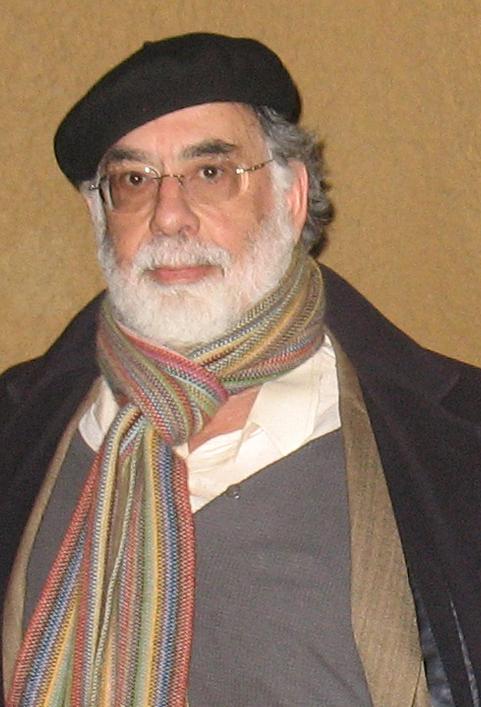
Brief Introduction of Francis Ford Coppola
Francis Ford Coppola is a legendary American filmmaker, widely celebrated for his pivotal role in the “New Hollywood” era and for revolutionizing the gangster film genre. Known as a director, producer, and screenwriter, Coppola has crafted some of cinema’s most enduring and influential works, earning numerous accolades throughout his prolific career. His creative vision and distinctive storytelling have left an indelible mark on motion pictures, establishing him as one of the greatest and most impactful figures in film history. Beyond his cinematic achievements, Coppola is also recognized for his entrepreneurial ventures, including his successful wineries and luxury resorts.
Francis Ford Coppola Overview
| Born | April 7, 1939 (age 86) |
| Birthplace | Detroit, Michigan, U.S. |
| Parents | Carmine Coppola (father), Italia Pennino (mother) |
| Spouse | Eleanor Neil (m. 1963; died 2024) |
| Children | Gian-Carlo Coppola (deceased), Roman Coppola, Sofia Coppola |
| Height | 6 feet 0 inches (1.83 m) |
| Profession | Film director, producer, screenwriter, vintner |
| Net Worth | Estimated $350–$400 million |
| Education | Hofstra University (BA), University of California, Los Angeles (MFA) |
| Active Years | 1962–present |
Early Life and Education of Francis Ford Coppola
Francis Ford Coppola was born on April 7, 1939, in Detroit, Michigan. His middle name, “Ford,” was given because he was born at Henry Ford Hospital and his father worked for the Ford Motor Company at the time. He is the middle of three children, with an older brother, August Coppola, and a younger sister, actress Talia Shire. His father, Carmine Coppola, was a flutist with the Detroit Symphony Orchestra and later became the principal flutist for the NBC Symphony Orchestra under Arturo Toscanini. His mother, Italia Pennino Coppola, came from a family of second-generation Italian immigrants; her father, Francesco Pennino, was a popular Italian composer.
When Coppola was two years old, his family relocated to New York, settling in Woodside, Queens, where he spent his formative years. A significant part of his childhood was marked by a bout of polio at the age of nine, which left him bedridden for extended periods. During this time of confinement, he fostered his imagination by creating homemade puppet theater productions and developed an interest in storytelling. He also began experimenting with 8mm films, editing home movies to create his own narratives. Although described as a mediocre student, his fascination with technology and engineering earned him the childhood nickname “Science”.
Coppola’s path to filmmaking was somewhat circuitous. He initially pursued music, becoming proficient in the tuba and even earning a music scholarship to the New York Military Academy. He attended 23 different schools before graduating from Great Neck North High School. His interest in theater blossomed after reading Tennessee Williams’ A Streetcar Named Desire at age 15.
In 1955, he enrolled at Hofstra University as a theater arts major. There, he was awarded a scholarship in playwriting and became deeply involved in directing theater productions. He was elected president of the university’s drama group, The Green Wig, and its musical comedy club, the Kaleidoscopians, eventually merging them into The Spectrum Players. Under his leadership, the group staged a new production each week. He also founded the cinema workshop at Hofstra and contributed to the campus literary magazine, earning several awards for his theatrical contributions.
Despite his father’s desire for him to study engineering, Coppola was profoundly influenced by Sergei Eisenstein’s film October: Ten Days That Shook the World (1928), particularly its editing, which solidified his decision to pursue cinema. He also credited his brother, August, and director Elia Kazan as significant influences on his aspirations as a writer and director. After graduating from Hofstra in 1960 with a B.A. in theater arts, he moved to California to attend the prestigious UCLA Film School, where he earned his Master of Fine Arts degree in 1967. During his time at UCLA, he was mentored by pioneering director Dorothy Arzner and won the Samuel Goldwyn Writing Award for his screenplay Pilma, Pilma, which launched his professional career.
Francis Ford Coppola’s Career
Francis Ford Coppola’s career is marked by periods of immense artistic success and daring entrepreneurial ventures. After his graduate studies, he began working with low-budget film producer Roger Corman, where he gained practical experience in various capacities, including dialogue director, sound man, and associate producer. His first full-length directorial effort was the 1963 horror film Dementia 13, which he also wrote. Shot in just nine days with a small budget, the film later achieved cult status among horror fans.
In the mid-1960s, Coppola transitioned into screenwriting, co-writing scripts for films like This Property Is Condemned (1966) and Is Paris Burning? (1966). His UCLA thesis project, You’re a Big Boy Now (1966), a comedy he wrote and directed, received a theatrical release and critical acclaim, earning him his MFA. His first major studio directorial assignment was the musical Finian’s Rainbow (1968), followed by the more personal road-trip film The Rain People (1969), which won the Golden Shell for Best Film at the San Sebastián International Film Festival.
A significant turning point came with his co-writing of the screenplay for Patton (1970), which earned him his first Academy Award for Best Original Screenplay. This success, alongside the establishment of American Zoetrope in 1969 with George Lucas, signaled a new era of independent filmmaking. American Zoetrope became a pioneering film company that fostered the careers of many talented directors and actors.
Coppola’s reputation was cemented with The Godfather (1972), a critically acclaimed saga that redefined the gangster genre. Despite initial studio skepticism and constant pressure, Coppola trusted his instincts, delivering a monumental film that became one of the highest-grossing movies in history and earned him an Academy Award for Best Adapted Screenplay, Best Picture, and a nomination for Best Director. He further solidified his status with The Conversation (1974), a psychological thriller that received the Palme d’Or at the Cannes Film Festival and Academy Award nominations for Best Picture and Best Original Screenplay. The same year, The Godfather Part II (1974) was released, a sequel that rivaled its predecessor’s success, winning six Academy Awards, including Best Picture, Best Director for Coppola, and Best Adapted Screenplay. This made him the second director to win three Academy Awards for the same film and secured his position as one of Hollywood’s top directors.
The late 1970s saw the release of the Vietnam War epic Apocalypse Now (1979), a film notorious for its lengthy and strenuous production. Despite the challenges, it garnered significant critical acclaim, winning the Palme d’Or at Cannes, making Coppola one of only ten filmmakers to win the award twice.
The 1980s brought financial challenges and a period of “hard times” for Coppola, partly due to the ambitious but ultimately costly endeavors of Zoetrope Studios, which he envisioned as an electronically modern filmmaking facility. Despite setbacks, he directed films such as The Outsiders (1983), Rumble Fish (1983), The Cotton Club (1984), and Peggy Sue Got Married (1986). He returned to the Corleone saga with The Godfather Part III (1990) and directed the visually striking Bram Stoker’s Dracula (1992). After The Rainmaker (1997), Coppola stepped away from extensive directing for a time, focusing on other ventures.
In the new millennium, Coppola returned to hands-on filmmaking with a more independent and experimental approach, directing films like Youth Without Youth (2007), Tetro (2009), Twixt (2011), and Megalopolis (2024), often self-financing his passion projects. Beyond directing, Coppola has been a prolific producer, supporting his daughter Sofia Coppola’s directorial debut The Virgin Suicides (1999) and serving as executive producer for films like Lost in Translation (2003) and Marie Antoinette (2006).
Francis Ford Coppola Personal Life & Family
Francis Ford Coppola’s personal life has been closely intertwined with his professional endeavors, often featuring his family in his films and business ventures. He married Eleanor Jessie Neil, a documentary filmmaker and artist, on February 2, 1963. They met while working on the set of Dementia 13, where Eleanor was an assistant art director and Francis was making his directorial debut. Eleanor passed away in 2024 at the age of 87.
Together, Francis and Eleanor had three children: Gian-Carlo, Roman, and Sofia. All three children grew up surrounded by the film industry and appeared in their father’s films at young ages. The Coppola family is a prominent dynasty in Hollywood, with many members finding success in film. His sister, Talia Shire, is an actress known for her roles in The Godfather trilogy and the Rocky films. His nephews, Nicolas Cage and Jason Schwartzman, are also accomplished actors.
Tragically, his eldest son, Gian-Carlo Coppola, died in a boating accident in 1986 at the age of 22. Gian-Carlo was following in his father’s footsteps, having worked as an associate producer on The Outsiders and Rumble Fish. His daughter, Gia Coppola, born posthumously, has also become a successful filmmaker.
His son, Roman Coppola, is a screenwriter and director, and has served as a second unit director on many of his father’s films. His daughter, Sofia Coppola, is an acclaimed director and screenwriter, earning an Academy Award for Best Original Screenplay for Lost in Translation (2003) and being the third woman ever nominated for Best Director. The family bond is strong, with Francis stating, “We support each other in the Coppola family. We love the idea of everyone getting his place in the sun”.
Coppola resides in Napa, California, and since the 2010s has been a significant figure in the wine industry, owning a family-branded winery. He acquired the former home and vineyard of Gustave Niebaum in Napa Valley in 1975, using the proceeds from The Godfather to establish his winery. His business ventures also include luxury resorts in Central America, Argentina, and Italy, and he runs an award-winning short story magazine, Zoetrope: All-Story. Coppola has often expressed his preference for simplicity over luxury in his personal life.
Awards and Achievements of Francis Ford Coppola
Francis Ford Coppola is one of the most awarded and nominated filmmakers in cinematic history, reflecting his profound impact on the art form. He has received five Academy Awards from a total of 15 nominations, making him a highly decorated figure in Hollywood.
Here is a summary of his major awards and honors:
| Award Category | Wins | Notable Recognitions |
|---|---|---|
| Academy Awards (Oscars) | 5 | Best Original Screenplay (Patton, 1970); Best Adapted Screenplay (The Godfather, 1972); Best Picture (The Godfather Part II, 1974); Best Director (The Godfather Part II, 1974); Best Adapted Screenplay (The Godfather Part II, 1974) |
| Palme d’Or (Cannes Film Festival) | 2 | The Conversation (1974); Apocalypse Now (1979) |
| Golden Globe Awards | 3 | Best Director (The Godfather, 1972); Best Screenplay (The Godfather, 1972); Best Director (Apocalypse Now, 1979) |
| BAFTA Awards | 1 | Best Direction (Apocalypse Now, 1979) |
| Directors Guild of America Awards | 2 | Outstanding Directorial Achievement in Motion Pictures (The Godfather, 1972); (The Godfather Part II, 1974) |
| Irving G. Thalberg Memorial Award | 1 | Presented by the Academy of Motion Picture Arts and Sciences (2010) |
| Kennedy Center Honors | 1 | Honored in 2024 |
| AFI Life Achievement Award | 1 | Honored in 2025 |
| Other Honors | Berlinale Camera (1991); Golden Lion (Venice Film Festival, 1992); Directors Guild of America Lifetime Achievement Award (1998); Hollywood Walk of Fame (2022); Praemium Imperiale |
Four of Coppola’s films—The Conversation, The Godfather, The Godfather Part II, and Apocalypse Now—have been inducted into the National Film Registry, recognizing their cultural, historical, or aesthetic significance.
Francis Ford Coppola Net Worth and Income
Francis Ford Coppola has amassed substantial wealth not only through his highly successful filmmaking career but also from his astute business ventures outside of Hollywood. As of the latest available estimates, Francis Ford Coppola has an estimated net worth ranging from $350 million to $400 million.
His income sources are diverse, primarily stemming from his roles as a film director, producer, and screenwriter. The monumental success of films like The Godfather trilogy and Apocalypse Now generated significant earnings throughout his career, cementing his financial standing in the entertainment industry.
Beyond film, Coppola is a highly successful wine entrepreneur and investor. He began his foray into winemaking in 1975, purchasing the former home and vineyard of Gustave Niebaum in Napa Valley, California, with the proceeds from the first Godfather movie. This venture evolved into the Francis Ford Coppola Winery and later Inglenook Winery, which he owns. In 2021, he reportedly sold his other Sonoma County wineries to Delicato Family Wines for over $500 million, indicating the immense value of his wine business.
Coppola’s business empire also includes luxury resorts in Central America, Argentina, and Italy, along with a cafe and a literary magazine, all contributing to his overall income. His recent directorial project, Megalopolis (2024), was a deeply personal passion project that he financed himself, investing $120 million of his own money, some of which came from selling a portion of his winery.
Legacy and Influence
Francis Ford Coppola’s legacy is profound and far-reaching, establishing him as one of the most influential and acclaimed filmmakers in cinematic history. He is considered a leading figure of the “New Hollywood” era, a period when a new generation of filmmakers gained creative control and reshaped American cinema. His films from the 1970s, particularly The Godfather (1972), The Conversation (1974), The Godfather Part II (1974), and Apocalypse Now (1979), are consistently cited among the greatest films ever made and are pivotal in film studies.
Coppola revolutionized the gangster film genre, elevating it to an art form with complex characters and intricate narratives that explored themes of power, family, and morality. His distinctive directorial style, often characterized by lush cinematography, innovative editing, and intense psychological depth, has influenced countless directors across generations. He is known for his dedication to artistic integrity, often battling with studios to realize his vision, as famously documented during the arduous production of Apocalypse Now.
Beyond his directorial work, Coppola’s influence extends through American Zoetrope, the pioneering film company he co-founded with George Lucas in 1969. American Zoetrope has served as a nurturing ground for many prolific directors and actors, demonstrating Coppola’s commitment to supporting new talent and independent filmmaking. The company’s films have garnered 16 Academy Awards and 70 nominations, highlighting its significant impact.
Coppola’s social contributions also include promoting the arts through his literary magazine, Zoetrope: All-Story, which champions short fiction. His family, a formidable dynasty in the film industry, further exemplifies his enduring influence, with his children and nephews achieving notable success in filmmaking and acting. His public image is one of a visionary artist, a risk-taker, and an unyielding advocate for creative freedom. Even in later years, he continues to push boundaries with independent and experimental films, solidifying his status as a cinematic icon who continually seeks to turn dreams into reality.
Interesting Facts about Francis Ford Coppola
Early Nickname: As a child, Francis Ford Coppola was nicknamed “Science” due to his early interest in technology and engineering.
Polio and Puppets: A nine-year-old Coppola was confined to bed with polio, during which time he entertained himself by creating homemade puppet shows, an early manifestation of his storytelling talent.
Musical Background: Before pursuing film, Coppola trained for a career in music, becoming proficient in the tuba and even earning a music scholarship to the New York Military Academy.
First Directorial Feature: His first full-length feature film, Dementia 13 (1963), was a low-budget horror movie he directed in just nine days for Roger Corman.
Cameo in His Own Film: Coppola has a cameo in his highly acclaimed film Apocalypse Now as a television journalist.
Influence of Books: When adapting novels, Coppola often prefers to work directly from the book rather than just the script, as he did with Joseph Conrad’s Heart of Darkness for Apocalypse Now.
The Godfather’s Difficult Production: Despite its eventual success, The Godfather had a notoriously difficult production, with Coppola constantly on the verge of being fired by Paramount executives who doubted his vision.
Winery Origin: He bought his Napa Valley winery, Inglenook, in 1975 using the proceeds from The Godfather.
Family Collaborations: Many of his family members, including his wife, children, sister, and nephews, have collaborated with him or pursued careers in film.
Quotes on Art and Risk: Coppola is known for his insightful quotes about filmmaking and art, such as “I think cinema, movies, and magic have always been closely associated. The very earliest people who made film were magicians” and “You can’t have great art without great risk”. He also noted, “Anything you build on a large scale or with intense passion invites chaos”.
Controversies
Francis Ford Coppola’s career, while marked by immense artistic triumphs, has also navigated significant challenges and controversies, often self-imposed in his pursuit of creative freedom. One of the most well-documented periods of difficulty was the production of his 1979 masterpiece, Apocalypse Now. The film famously suffered from numerous setbacks, including an over-budgeted and extended shoot in the Philippine jungle, a typhoon that destroyed sets, a lead actor (Martin Sheen) suffering a heart attack, and the erratic behavior of Marlon Brando. The production became so infamous that his wife, Eleanor Coppola, documented it in her book and documentary, Hearts of Darkness: A Filmmaker’s Apocalypse, revealing the near-insanity and financial peril faced by the crew and Coppola himself. Coppola himself famously said of the production, “We had access to too much money, too much equipment, and little by little, we went insane”.
In the 1980s, Coppola faced significant financial setbacks with his ambitious venture, Zoetrope Studios. He bought Hollywood General Studios with the vision of creating an electronically modern filmmaking facility, aiming to produce independent films outside the traditional studio system. However, this endeavor led to out-of-control budgets and costly box-office flops, leading to well-publicized financial difficulties and the eventual sale of some assets. Despite these challenges, Coppola remained committed to his independent spirit.
More recently, his self-financed magnum opus, Megalopolis (2024), faced mixed critical reception and did not perform as well as hoped at the box office. This experimental film was described as polarizing and inaccessible to a larger audience, drawing comparisons to earlier arthouse projects by Coppola that also struggled commercially. Despite the financial risks and critical divisions, Coppola continues to express a defiant independence, stating, “I have always been a rebel”. These controversies often stem from his unwavering commitment to his artistic vision, even when it means challenging conventional filmmaking practices and taking substantial personal and financial risks.
Social Media Presence
While Francis Ford Coppola maintains a presence across various social media platforms, he typically utilizes them to share updates on his films, wines, and other ventures, rather than for daily personal interactions. His social media engagement reflects his multifaceted career, encompassing filmmaking, winemaking, and broader artistic endeavors. He often posts on platforms like Instagram and Twitter, providing insights into his creative process, new projects, and the legacy of his iconic works. Specific follower counts fluctuate, but his accounts serve as official channels for connecting with his audience and fans globally.
Final Words about Francis Ford Coppola
Francis Ford Coppola stands as a monumental figure in the landscape of global cinema, a visionary whose audacious spirit and unparalleled talent have continually pushed the boundaries of storytelling. From the gritty realism of The Godfather to the hallucinatory epic of Apocalypse Now, his filmography is a testament to a career dedicated to artistic integrity and groundbreaking innovation. His legacy is not merely defined by the numerous awards and critical acclaim but by the profound influence he has exerted on generations of filmmakers and the enduring cultural impact of his works.
In recent years, Coppola has continued his pursuit of independent filmmaking, most notably with his passion project Megalopolis, demonstrating an unwavering commitment to his artistic vision even as he self-finances ambitious endeavors. Beyond the silver screen, his entrepreneurial success in the wine industry and hospitality further underscores his diverse talents and his ability to cultivate creative enterprises. The Coppola family, a creative dynasty, also represents an extension of his legacy, with his children and relatives making significant contributions to the arts.
Francis Ford Coppola’s journey is one of triumphs and challenges, artistic breakthroughs and financial gambles, all undertaken with a rebellious spirit and a deep love for the magic of cinema. He remains an active and influential voice, a living legend whose contributions have shaped, and continue to shape, the very definition of modern filmmaking.

 Team Dailly WikiBio