
–
Brief Introduction of David Letterman
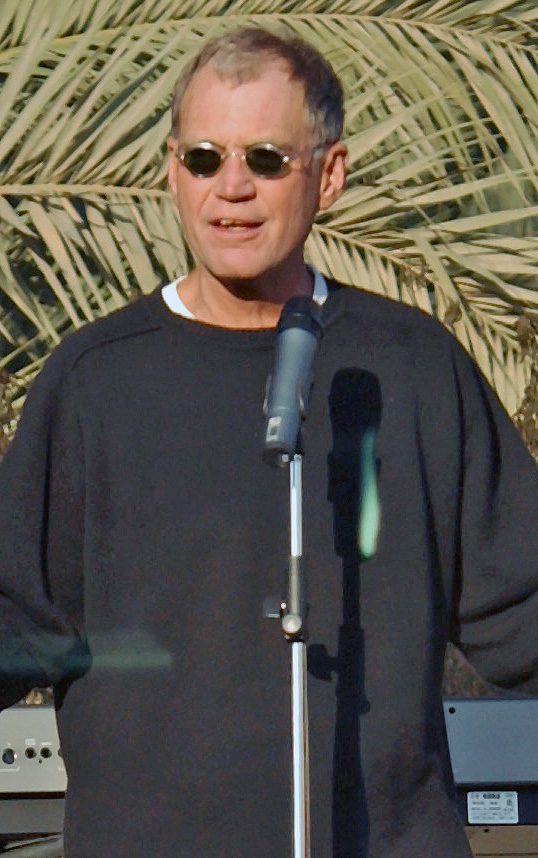
David Michael Letterman is a revered American television host, comedian, writer, and producer who redefined the late-night talk show genre with his acerbic wit, unconventional humor, and groundbreaking segments. For 33 years, he was a nightly presence in American homes, beginning with “Late Night with David Letterman” on NBC in 1982 and concluding with the “Late Show with David Letterman” on CBS in 2015. His influential career saw him host 6,080 episodes, making him the longest-serving late-night talk show host in American television history, surpassing his mentor, Johnny Carson. Known for his gap-toothed grin and self-deprecating, often curmudgeonly persona, Letterman’s impact on comedy is immeasurable, inspiring a generation of hosts including Conan O’Brien, Jimmy Kimmel, and Stephen Colbert. Since retiring from late-night, he has continued to engage audiences with his in-depth interview series on Netflix, “My Next Guest Needs No Introduction with David Letterman.”

David Letterman Overview
| Full Name | David Michael Letterman |
| Date of Birth | April 12, 1947 |
| Age(as of 2025) | 78 |
| Birthplace | Indianapolis, Indiana, U.S. |
| Profession | Television host, comedian, writer, producer, auto racing team owner |
| Husband/Wife | Regina Lasko (m. 2009), Michelle Cook (m. 1968; div. 1977) |
| Family | Son: Harry Joseph Letterman (b. 2003); Father: Harry Joseph Letterman; Mother: Dorothy Marie Mengering; Sisters: Janice, Gretchen |
| Relationship/Affairs(GF/BF) | Merrill Markoe (1978-1988) |
| Net Worth | Estimated $400 million |
Early Life and Education of David Letterman
David Michael Letterman was born on April 12, 1947, in Indianapolis, Indiana. His father, Harry Joseph Letterman, was a florist, and his mother, Dorothy Marie Mengering (née Hofert), was a church secretary who would later become a beloved, recurring guest on his talk show. Growing up in the Broad Ripple area of Indianapolis, Letterman was the middle child with an older and younger sister. He has often credited his father’s humor and ability to be the “life of the party” as a significant influence. The family faced hardship when his father suffered a heart attack at age 36, and the fear of losing him was a constant presence in young David’s life; Harry Letterman passed away from a second heart attack at the age of 57 in 1973. Letterman attended Broad Ripple High School, where he worked as a stock boy at a local supermarket. After graduating, he enrolled at Ball State University in Muncie, Indiana, where he became a member of the Sigma Chi fraternity. He graduated in 1969 with a degree in radio and television. It was at Ball State that he began his broadcasting career at the student-run radio station, WBST, though he was reportedly fired for his irreverent treatment of classical music.
David Letterman’s Career
After college, David Letterman’s career began in his hometown of Indianapolis, where he worked as a radio talk-show host and a television weatherman for a local station. His on-air antics were an early showcase of his signature irreverent humor; he famously congratulated a tropical storm on its upgrade to a hurricane and reported weather from fictional cities. In 1975, seeking to advance his career as a comedy writer, Letterman moved to Los Angeles. He began performing stand-up at The Comedy Store, where he befriended other up-and-coming comedians like Jay Leno. He found work writing for sitcoms like “Good Times” and made appearances on various game shows and talk shows. His big break came with multiple appearances on “The Tonight Show Starring Johnny Carson.” Carson, who became Letterman’s mentor, was so impressed that Letterman became a regular guest host. This led to his own morning comedy show on NBC, “The David Letterman Show,” in 1980. Though critically acclaimed and the winner of two Emmy Awards, it failed to attract a daytime audience and was canceled after a few months. However, NBC retained him, and on February 1, 1982, “Late Night with David Letterman” premiered. The show, which followed “The Tonight Show,” was a revolutionary force in late-night television. Its edgy, ironic, and often absurd humor—featuring segments like “Top Ten Lists,” “Stupid Pet Tricks,” and “Viewer Mail”—developed a massive cult following, especially among college students. For 11 years, Letterman redefined the talk show format. When Johnny Carson retired in 1992, a public succession battle for “The Tonight Show” host chair ended with Jay Leno being chosen over Letterman. This prompted Letterman’s high-profile move to CBS. On August 30, 1993, the “Late Show with David Letterman” debuted, directly competing with Leno. Letterman’s tenure at CBS lasted 22 years, during which he became an American institution, known for his sharp interviews and comedy. He hosted a total of 6,080 late-night episodes across both networks, earning the title of the longest-serving late-night host in American TV history. He announced his retirement in 2014, and his final show aired on May 20, 2015, to a massive audience. After a brief hiatus, he returned to television in 2018 with the Netflix series, “My Next Guest Needs No Introduction with David Letterman,” a monthly program featuring long-form interviews with prominent figures.
David Letterman Personal Life & Family
David Letterman has famously kept his personal life private. He was married to his college sweetheart, Michelle Cook, from 1968 until their divorce in 1977. Following his divorce, he was in a long-term relationship with Merrill Markoe, who was the head writer on “Late Night” and a key architect of the show’s comedic voice, from 1978 to 1988. In 1986, he began a relationship with Regina Lasko, who worked in production for “Saturday Night Live” and later his own show. After a 23-year relationship, they married in a private courthouse ceremony in Choteau, Montana, on March 19, 2009. The couple has one son, Harry Joseph Letterman, born on November 3, 2003, named after David’s father. Letterman’s mother, Dorothy Mengering, became a celebrity in her own right through her regular, charming appearances on the “Late Show,” often as a correspondent for events like the Winter Olympics or in her popular Thanksgiving segment from her home in Indiana. She passed away in 2017. Letterman has also been candid about his personal struggles, including a battle with shingles and undergoing emergency quintuple-bypass heart surgery in January 2000. His return to the show five weeks later, bringing his doctors and nurses on stage to thank them, was a highly-rated and emotional television moment.
Awards and Achievements of David Letterman
- Primetime Emmy Awards: Throughout his career, his shows have won numerous Emmys for Outstanding Variety, Music or Comedy Series and for writing. He is one of the most-nominated individuals in Emmy history, with 52 nominations and 10 wins.
- Daytime Emmy Awards: For “The David Letterman Show” in 1981, winning for Outstanding Host and for writing.
- Peabody Award: His production company, Worldwide Pants Incorporated, received a Peabody in recognition of its programming that “exemplifies the best in television.”
- Kennedy Center Honors: He was a recipient of this prestigious award in 2012 for his significant contributions to American culture.
- Mark Twain Prize for American Humor: In 2017, he was awarded the Mark Twain Prize, the nation’s top honor for humor, by the Kennedy Center.
- Johnny Carson Award for Comedic Excellence: He was the inaugural recipient of this award at The Comedy Awards in 2011.
David Letterman Net Worth and Income
As of 2025, David Letterman’s net worth is estimated to be around $400 million. The vast majority of his wealth was accumulated during his 33-year career as a late-night talk show host. At the peak of the “Late Show,” his annual salary was reported to be over $31 million. A significant source of his income also comes from his production company, Worldwide Pants Incorporated. The company produced his own show as well as “The Late Late Show” and several successful primetime sitcoms. The most lucrative of these was “Everybody Loves Raymond,” which has generated substantial earnings through syndication. He also co-owns an IndyCar racing team, Rahal Letterman Lanigan Racing. His current income is supplemented by his ongoing Netflix series, “My Next Guest Needs No Introduction with David Letterman.”

Legacy and Influence
David Letterman’s legacy is that of a television innovator who fundamentally altered the landscape of late-night comedy. His ironic, anti-establishment humor stood in stark contrast to the more traditional approach of his predecessors. He pioneered a deconstructionist style of comedy, often making the process of creating a television show part of the joke itself, with behind-the-scenes gags and on-air interactions with his writers and crew. His acerbic interviewing style, which could be both playfully antagonistic and disarmingly insightful, created memorable and often unpredictable moments with celebrities and public figures. He is credited with shepherding the nation through moments of crisis with his intelligence and honesty, particularly in his heartfelt and widely praised monologue following the September 11th attacks. An entire generation of comedians and talk show hosts, including Conan O’Brien, Jimmy Kimmel, Stephen Colbert, Seth Meyers, and Jon Stewart, have cited Letterman as a primary influence, adopting elements of his intelligent, absurd, and self-aware comedic style. He transformed late-night from a cozy, predictable format into something edgier, smarter, and more self-referential, a change that continues to shape the genre today.
Interesting Facts about David Letterman
- He began his career as a wisecracking weatherman in Indianapolis, where he once predicted hailstones “the size of canned hams.”
- Letterman’s production company, Worldwide Pants, produced the hit sitcom “Everybody Loves Raymond.”
- He is the longest-serving late-night talk show host in American television history, having hosted 6,080 episodes over 33 years.
- Ball State University, his alma mater, named its communication and media building the David Letterman Communication and Media Building in his honor in 2007.
- In 2005, a plot to kidnap his infant son, Harry, was foiled by law enforcement.
- The pencils on his “Late Show” desk famously had erasers on both ends to prevent him from accidentally stabbing himself or others when he would throw them at the camera.
- He has been the subject of multiple stalkers throughout his career.
Controversies
In October 2009, David Letterman’s personal and professional life became the subject of intense media scrutiny. On his own show, he revealed that he had been the target of a $2 million extortion attempt. The blackmailer, later identified as CBS News producer Robert “Joe” Halderman, threatened to expose Letterman’s sexual relationships with female members of his staff if he did not pay the money. Rather than succumb to the threat, Letterman went to the Manhattan District Attorney’s office, cooperated in a sting operation, and then publicly addressed the situation on air. In a now-famous monologue, he admitted to his audience, “I have had sex with women who work for me on this show.” The confession, which came just months after he had married his longtime partner Regina Lasko, created a significant scandal. The controversy forced a public conversation about workplace ethics and the power dynamics between a powerful host and his employees. Letterman later apologized to his wife and staff on air for his behavior. Halderman eventually pleaded guilty to attempted grand larceny and served time in jail.
Social Media Presence
- Instagram – Not publicly available
- Twitter – Not publicly available
- YouTube – Official clips from his shows are available on various channels, but he does not have a personal, active channel.
Final Words about David Letterman
After stepping away from the nightly grind of late-night television, David Letterman has settled into a role as one of television’s most respected elder statesmen. Now sporting a long, white beard that became a symbol of his retirement, he has embraced a quieter life but has not disappeared from the public eye. His Netflix series, “My Next Guest Needs No Introduction,” allows him to explore his passion for in-depth conversation, free from the constraints of a nightly broadcast. The show has been critically praised for its thoughtful and nuanced interviews with a wide range of influential figures. This current chapter of his career showcases a more relaxed, reflective, and curious Letterman, yet one who still possesses the sharp wit and intelligence that defined his legendary 33-year run in late-night. The David Letterman biography is a testament to a career built on a unique comedic voice that not only entertained millions but also changed the very fabric of television comedy, leaving an indelible mark on the generations that followed.
 Team Dailly WikiBio