
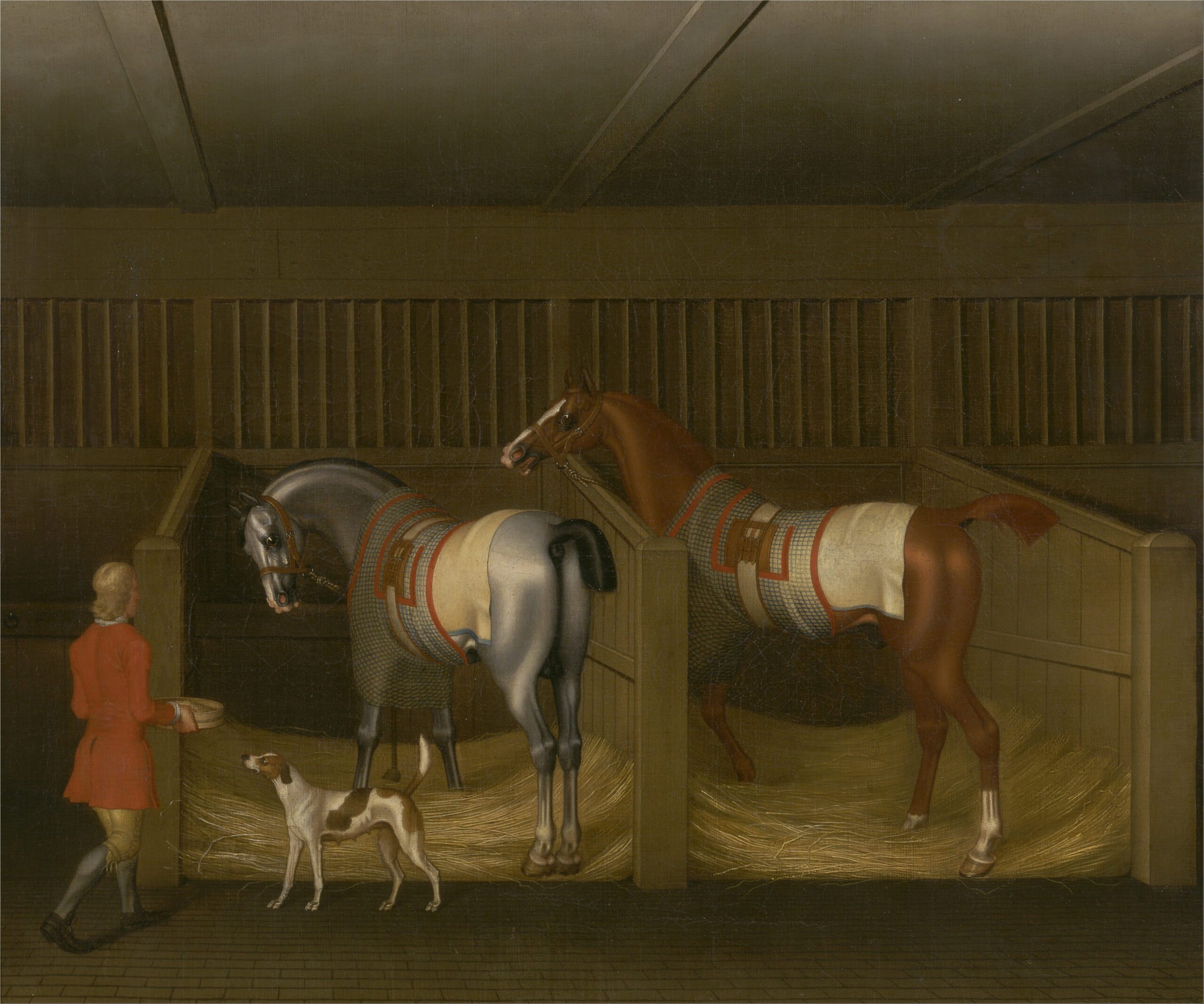
Brief Introduction of James Seymour
James Seymour (1702–1752) was a celebrated English painter, renowned for his significant contributions to the genre of sporting and equestrian art. Considered one of the three founders of the British sporting school, alongside John Wootton and Peter Tillemans, Seymour was one of the first English artists to specialize exclusively in this subject matter. His works predominantly feature depictions of racehorses, hunting scenes, and stable life. Born in London to a wealthy father who was a banker, goldsmith, and art dealer, Seymour was largely self-taught, honing his skills by studying his father’s art collection. His intimate knowledge and passion for horse racing deeply informed his art, which became highly sought after by aristocratic patrons. Despite his professional success, a lavish lifestyle led to his financial ruin, yet his legacy endures as a pivotal figure in the development of British sporting art.

James Seymour Overview
| Full Name | James Seymour |
| Date of Birth | c. 1702 |
| Date of Death | June 30, 1752 |
| Age at Death | c. 50 |
| Birthplace | London, England |
| Profession | Painter, Sporting Artist |
| Husband/Wife | Died unmarried |
| Family | James Seymour Sr. (father) |
| Relationship/Affairs(GF/BF) | Information not disclosed. |
| Net Worth | Died in poverty and debt. |
Early Life and Education of James Seymour
James Seymour was born in London, England, around 1702, into a prosperous and well-connected family. His father, James Seymour Sr., was a man of considerable means and diverse interests—a successful banker, goldsmith, diamond merchant, and an amateur artist himself. The elder Seymour was also an art dealer and collector who supplied the silver and gold plates for prestigious racing trophies. This environment immersed the young Seymour in the worlds of both commerce and fine art from his earliest days. His father was an active member of the Virtuosi Club of St Luke, a respected gentlemen’s club for artists and art lovers, which included prominent artists like John Wootton. This membership provided the young Seymour with invaluable exposure, allowing him to meet and observe the leading artists of the period. Unlike many of his contemporaries, Seymour had no formal art training. He was entirely self-taught, a feat made possible by the family’s wealth, which afforded him the leisure to study the extensive collection of pictures and prints his father owned. He showed a natural “genius to drawing of Horses” from a very young age, a passion that would define his entire career. His early sketch studies of horses, some copied from masters like Van Dyck, are now held in the British Museum. In 1720, he briefly attended the art academy in St Martin’s Lane, founded by Louis Chéron and John Vanderbank, though his primary education remained his personal study and observation.
James Seymour’s Career
James Seymour’s career is intrinsically linked with his profound passion for horses and the burgeoning sport of horse racing in 18th-century England. He didn’t just paint horses; he was deeply involved in the sporting world, reportedly owning, breeding, and racing his own horses. This firsthand experience gave his work an authenticity that resonated with the aristocratic patrons who dominated the sport. His earliest known signed and dated painting is from 1721, and from that point on, his output was prolific, quickly establishing his professional reputation as a leading sporting artist. Seymour specialized exclusively in sporting subjects, a focus that distinguished him from contemporaries like John Wootton who also painted landscapes and other subjects. His work captured the full spectrum of equestrian life, from formal portraits of celebrated racehorses like the Duke of Devonshire’s ‘Flying Childers’ to dynamic hunting scenes such as ‘A Kill at Ashdown Park’ (1743). His paintings were lauded for their ability to capture the individual character and vitality of the animals. He secured commissions from some of the most prominent families and influential figures of the day, including Sir William Jolliffe, MP, and Charles Seymour, the 6th Duke of Somerset. The Duke of Somerset commissioned Seymour to decorate an entire room at Petworth House with portraits of his racehorses, a major project that was unfortunately never completed due to a quarrel between the artist and his powerful patron. Despite such setbacks, his fame spread, and his work was widely disseminated through engravings made by artists like Thomas Burford and Richard Houston, which popularized sporting art across Britain, Europe, and America. By 1739, the Universal Spectator declared him “reckoned the finest draughtsman in his way [of horses, hounds etc.] in the whole world.” His distinctive style, though sometimes critiqued for weaknesses in perspective, was marked by meticulous detail and a unique ability to convey the relationship between the horses and the figures around them.
James Seymour Personal Life & Family
James Seymour’s personal life was a study in contrasts, defined by his privileged upbringing and his ultimately ruinous lifestyle. He was the only son of James Seymour Sr., a man whose wealth from banking and dealing in diamonds and precious metals provided a comfortable and stimulating home environment. His father’s connections in the art world were instrumental in launching his son’s career. However, Seymour’s all-consuming passion for the turf became his downfall. A contemporary diarist, George Vertue, chronicled Seymour’s life, describing him as “the darling of his Father” who “run thro some thousands – livd gay high and loosely – horse raceing gameing women &c.” This extravagant lifestyle, centered around the very subject of his art, led to severe financial consequences. His high-stakes involvement in racing and gambling not only depleted his own considerable earnings but is also believed to have bankrupted his father. The latter part of Seymour’s life was spent in stark contrast to his affluent youth. He descended into poverty, facing “baseness and want of all necessaries.” He died unmarried on June 30, 1752, at the age of 50, in lodgings in Southwark, London. At the time of his death, he was in the “lowest circumstances & in debt,” a tragic end for an artist who had been so celebrated by the wealthiest members of society.
Awards and Achievements of James Seymour
While James Seymour did not receive formal awards in the modern sense, his achievements were significant and foundational to the genre of British sporting art.
- He is recognized as one of the three principal founders of the English school of sporting painting, along with Peter Tillemans and John Wootton.
- Seymour was one of the very first English-born artists to specialize solely in sporting and equestrian subjects, establishing it as a legitimate and popular genre.
- He received major commissions from high-profile patrons, including the 6th Duke of Somerset and Sir William Jolliffe, MP, affirming his status as a leading artist in his field.
- His works were widely reproduced as engravings, which greatly increased his influence and disseminated the popularity of equestrian art to a broader audience in Britain and abroad.
- By 1739, he was publicly acclaimed as the “finest draughtsman in his way… in the whole world,” a testament to his contemporary reputation.
- His paintings provide an invaluable and detailed visual record of 18th-century horse racing, hunting, and the celebrated bloodlines of the time.
James Seymour Net Worth and Income
A precise calculation of James Seymour’s net worth in modern terms is not possible. During the height of his career, from the 1720s to the 1740s, he earned a substantial income from commissions. His patrons were among the wealthiest aristocrats in England, and the popularity of equestrian portraits ensured a steady stream of work. However, Seymour was notoriously improvident with his finances. His income was quickly consumed by an extravagant and “loose” lifestyle that included gambling, owning and racing horses, and other high-living pursuits. This lifestyle ultimately led to his financial ruin. According to contemporary accounts, he not only spent his own fortune but was also responsible for the bankruptcy of his father. Consequently, he spent his final years in poverty and died deeply in debt in 1752. The James Seymour net worth, therefore, plummeted from a position of inherited wealth and high artistic earnings to one of insolvency at the time of his death.

Legacy and Influence
James Seymour’s legacy is that of a pioneering artist who was instrumental in establishing sporting art as a major genre in Britain. Along with Wootton and Tillemans, he laid the groundwork for a tradition that would be carried on by future masters, most notably George Stubbs. While later artists like Stubbs would bring a more refined anatomical precision to the field, Seymour’s work was admired for its vitality and its authentic depiction of the racing world. His paintings are valued not only for their artistic merit but also as important historical documents that capture the culture of the turf, the appearance of famous horses, and the attire and practices of the Georgian era. The widespread distribution of prints after his paintings ensured that his influence extended far beyond his immediate patrons, shaping the visual culture of sporting life for generations. Today, his works are held in major collections, including the Tate Britain, the Yale Center for British Art, and the Virginia Museum of Fine Arts, cementing his status as a key figure in the history of British art.
Interesting Facts about James Seymour
- His father, James Seymour Sr., was not only a banker and art dealer but also supplied the precious metal plates used for making racing trophies.
- Despite his profound influence, he was almost entirely self-taught, learning his craft by studying prints and paintings in his father’s collection.
- He was an active participant in the world he painted, not just an observer. He owned, bred, and raced his own horses.
- A major commission to decorate a room for the powerful 6th Duke of Somerset at Petworth House was abandoned after Seymour reportedly offended the Duke by claiming they were related.
- Many of his most famous works, such as “The Chaise Match Run on Newmarket Heath” (1750), were popularized through widely circulated engravings.
- His earliest known drawings, studies of horse heads after old masters, are preserved in the British Museum.
Controversies
The primary controversy surrounding James Seymour’s life was his dramatic fall from grace due to his own actions. The contemporary accounts of George Vertue paint a picture of a man whose prodigious talent was matched by his personal recklessness. His extravagant spending, gambling, and “loose” living were well-documented. This behavior led not only to his own imprisonment for debt and eventual death in poverty but also reportedly caused the bankruptcy of his wealthy father, a scandalous outcome for a well-regarded family. Additionally, his professional life was not without conflict; his relationship with his most important patron, the 6th Duke of Somerset, ended abruptly after a personal quarrel, costing him a significant and prestigious commission.
Social Media Presence
- Instagram – Not applicable
- Twitter – Not applicable
- YouTube – Not applicable
Final Words about James Seymour
The James Seymour biography is a tale of exceptional talent and personal tragedy. As a foundational figure in British sporting art, he elevated the depiction of horses from mere portraiture to dynamic scenes imbued with life and character. His deep, personal connection to the world of horse racing gave his work an unparalleled authenticity that captured the imagination of the 18th-century aristocracy. Though his career was prolific and his influence lasting, his inability to manage his finances and his penchant for an extravagant lifestyle led to a sorrowful end. He died in obscurity and debt, a fate that belied his significant contribution to the art world. Today, James Seymour is rightfully remembered not for his impoverished death, but as a pioneering artist whose vision defined a genre and influenced generations of painters, securing his permanent place in the annals of British art history.
 Team Dailly WikiBio