
Brief Introduction of Tim Rogers
William Timothy “Tim” Rogers Jr. is a highly influential and often polarizing American figure in the world of video games, known for his multifaceted career as a journalist, developer, video essayist, and musician. He first rose to prominence as a key proponent of “New Games Journalism,” a style characterized by subjective, personal, and often lengthy explorations of the player’s experience. His verbose and hyper-articulate writing has been featured in numerous publications, most notably Kotaku, where his video reviews and articles garnered a dedicated following. In addition to his journalistic work, Rogers co-founded the independent game development studio Action Button Entertainment, where he designed several games. Since leaving Kotaku, he has focused on creating feature-length video game reviews under his Action Button brand on YouTube, with his multi-hour analyses of games becoming notable for their depth, autobiographical nature, and unique presentation style. Rogers’ distinctive voice and approach have made him a significant and enduring personality within video game culture.

Tim Rogers Overview
| Full Name | William Timothy Rogers Jr. |
| Date of Birth | June 7, 1979 |
| Age(as of 2025) | 46 |
| Birthplace | Philadelphia, Pennsylvania, United States |
| Profession | Video Game Journalist, Video Essayist, Game Developer, Musician |
| Husband/Wife | Information not disclosed. He has referred to a “partner” in public posts. |
| Family | Information not disclosed. |
| Relationship/Affairs(GF/BF) | Not publicly available. |
| Net Worth | Not publicly available. His income is primarily derived from his work as an independent creator. |
Early Life and Education of Tim Rogers
William Timothy Rogers Jr. was born on June 7, 1979. He has stated that his birthplace is Philadelphia, Pennsylvania. Much of his early life remains private, as Rogers tends to reveal personal details only as they pertain to the narrative of his work, weaving anecdotes from his youth into his extensive reviews and essays. This autobiographical approach offers glimpses into his formative years and how they shaped his perspective on video games and culture at large. His academic pursuits led him to Indiana University Bloomington, where he immersed himself in the study of foreign cultures. In 2001, he graduated with a degree in East Asian languages and cultures. This educational background would prove to be profoundly influential on his career, providing him with a unique lens through which to analyze and critique video games, particularly those from Japan. His time in college also coincided with the era of influential games that he would later revisit and analyze in his professional work, often sharing stories of his experiences playing them in a dorm-room setting.
Tim Rogers’s Career
Tim Rogers’s career is a dynamic and varied journey through the landscape of video game media and development, marked by a distinctive and uncompromising style. He first made a name for himself in the mid-2000s as a significant figure in the “New Games Journalism” movement. This style, which rejected purely objective, consumer-focused reviews, instead emphasized the subjective and personal experiences of the writer. Rogers’s 2005 essay, “Dreaming in an Empty Room: A Defense of Metal Gear Solid 2,” is frequently cited as a quintessential example of the genre, praised for its depth and personal insight. His writing, often described as verbose, hyper-articulate, and sprawling, found a home in a variety of publications, including Insert Credit, Next Generation, GamesTM, and Game Developer magazine.
His profile grew significantly during his tenure at Kotaku. At the popular gaming website, Rogers was not just a writer but also a video producer, creating long-form video reviews that became his signature. These videos stood out for their lengthy runtimes, unconventional editing, and Rogers’s on-screen persona, which blended sharp analysis with meandering, personal anecdotes. His work was both celebrated for its intelligence and creativity and criticized by some for its self-indulgence. Regardless, he cultivated a strong and loyal fanbase that appreciated his unique approach to game criticism. In February 2020, Rogers announced his departure from Kotaku to pursue independent content creation.
Parallel to his journalism career, Rogers is also a game developer. He is a co-founder of the four-person studio Action Button Entertainment. The studio’s design philosophy reflects Rogers’s interest in minimalist aesthetics and mechanics, focusing on creating games with simple and intuitive controls. Action Button Entertainment has released several titles, including the retro-style arcade shooter Ziggurat and the minimalist eSport title Videoball. This experience as a developer has given Rogers a deeper understanding of the game creation process, which often informs his critical analysis.
Since leaving Kotaku, Rogers has dedicated his efforts to his YouTube channel, also named Action Button. Here, he has taken his concept of long-form reviews to new extremes, producing multi-hour video essays on games ranging from mainstream hits like Final Fantasy VII Remake to more obscure titles like Boku no Natsuyasumi. These videos are meticulously crafted, combining deep-dive mechanical analysis, cultural commentary, historical context, and deeply personal stories. A six-hour review of Tokimeki Memorial was credited with generating significant Western interest in the previously niche Japanese dating simulator. His work is funded directly by his audience through Patreon, allowing him complete creative freedom. This current phase of his career has solidified his status as one of the most unique and ambitious creators in the video game analysis space.
Tim Rogers Personal Life & Family
Tim Rogers is notably private about his personal life, preferring to let his work speak for itself. While his journalistic and video essay style is deeply autobiographical, the personal anecdotes he shares are typically curated to serve the larger narrative of the game or topic he is discussing. Details about his family, including his parents and any siblings, are not publicly disclosed. Similarly, his marital status remains private. He does not publicly discuss his relationships, and any information regarding a “Tim Rogers wife” or “Tim Rogers gf/bf” is largely speculative and often confused with other public figures of the same name. However, in a 2024 Patreon post, he referred to a “partner” whose belongings were stolen during a car break-in, indicating he is in a relationship. Beyond this, he maintains a clear boundary between his public persona and his private life. His lifestyle appears to be centered around his creative pursuits, including his work on Action Button, his music, and his deep engagement with video game culture.
Awards and Achievements of Tim Rogers
While Tim Rogers may not have a long list of formal industry awards, his achievements and recognition are significant and widely acknowledged within the field of video game journalism and criticism.

- He is recognized as a pioneering and influential voice in the “New Games Journalism” movement of the mid-2000s.
- His 2005 essay “Dreaming in an Empty Room: A Defense of Metal Gear Solid 2” is considered a landmark piece of writing in the genre and was highlighted by The Guardian as a core example of this new style.
- Gaming journalist Kieron Gillen, who coined the term “New Games Journalism,” referred to the aforementioned article as “highly discussed and fairly brilliant.”
- Simon Carless of GameSetWatch once described Rogers as “the Lester Bangs of video games” for his “disruptive and iconoclastic” approach to games writing, highlighting his significant, if polarizing, impact.
- He successfully co-founded an independent video game studio, Action Button Entertainment, and designed original games such as Ziggurat and Videoball.
- He has built a successful independent career on YouTube, funded by a substantial Patreon following, where his feature-length video essays are critically acclaimed for their depth and ambition.
- His video reviews, such as his six-hour analysis of Tokimeki Memorial, have been credited by fellow journalists with bringing significant attention to niche and overlooked video games in the West.
Tim Rogers Net Worth and Income
A definitive and verified “Tim Rogers net worth” is not publicly available, and any figures that may appear online are speculative and often confuse him with other individuals named Tim Rogers. As an independent creator, his financial details are private. However, his primary source of income is his successful Patreon account for his “Action Button” project. According to publicly available data from Graphtreon, his Patreon earns between $2,000 and $29,000 per month from over 3,000 paying members, though these figures can fluctuate. This substantial support from his audience allows him to fund his elaborate, long-form video essays without reliance on traditional advertising or media corporations. His income is also supplemented by YouTube ad revenue from his channel’s millions of views. In the past, his income would have been derived from his work as a salaried video producer and journalist for Kotaku, as a freelance writer for various gaming publications, and from the sales of the games developed by his company, Action Button Entertainment. His financial success is a testament to the viability of audience-funded, niche content in the modern media landscape.
Legacy and Influence
Tim Rogers has carved out a significant and enduring legacy as one of the most distinctive voices in video game criticism. His primary influence stems from his early and passionate advocacy for “New Games Journalism,” a movement that helped shift a portion of games writing from purely consumer-focused reviews to more personal, experiential, and analytical essays. By infusing his own life story and subjective feelings into his work, he encouraged a generation of writers to see video games not just as products to be scored, but as cultural artifacts to be experienced and interrogated on a deeper level. His writing has been described as both “infamous” and “brilliant,” a polarizing quality that has nonetheless cemented his place as a key figure in the evolution of the craft.
His influence extends to the format of video game analysis. The “Action Button” video essays, with their epic runtimes and dense, labyrinthine structure, have pushed the boundaries of what a “review” can be. In an era of short, easily digestible content, Rogers has demonstrated a demand for long-form, deeply researched, and highly personal video content. Many contemporary video essayists and critics have cited Rogers as an influence, inspired by his willingness to dedicate hours to a single topic and to blend academic rigor with idiosyncratic humor and raw autobiography. His public image is that of an iconoclast—a fiercely intelligent and articulate critic who operates entirely on his own terms, uncompromising in his vision and style.
Interesting Facts about Tim Rogers
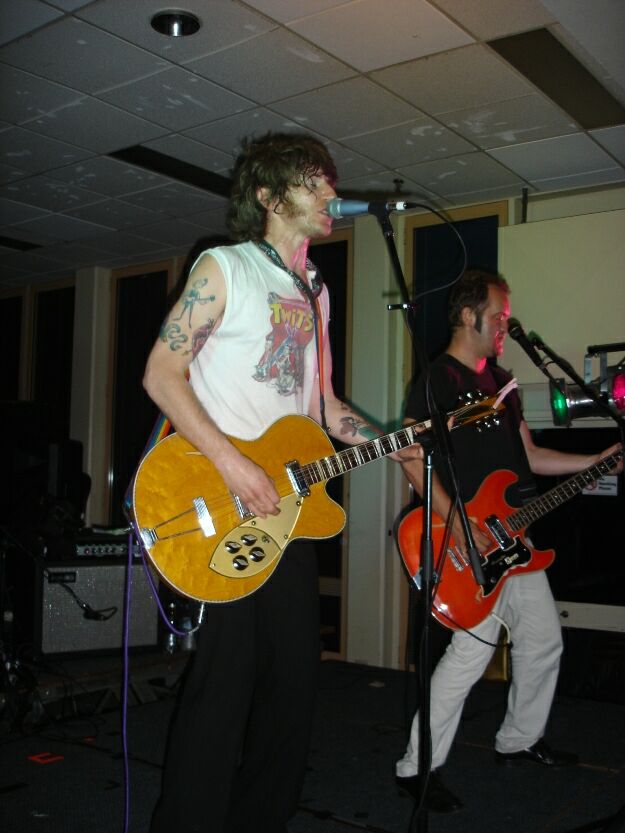
- He is a musician and serves as the guitarist for the noise-rock band Large Prime Numbers. The band’s music has been described as originating from Tokyo and later relocating to Oakland, California.
- His Twitter handle is “@108,” and the number holds personal significance for him. He is often referred to by this number by fans and colleagues.
- Rogers has claimed to experience hyperthymesia, a condition that gives him a highly superior autobiographical memory, allowing him to recall the vast majority of his life’s events in immense detail.
- He has a deep appreciation for Japanese culture and language, having graduated with a degree in East Asian languages and cultures and having lived and worked in Japan for a period. This expertise heavily informs his analysis of Japanese video games.
- His writing and on-screen persona are known for their extreme verbosity; he once reportedly overshot a requested word count for an E3 article for IGN by 80,000 words.
- Rogers translated the 1997 PlayStation game Moon: Remix RPG Adventure for its official English-language re-release on the Nintendo Switch in 2020.
Controversies
Throughout his career, Tim Rogers’s outspoken and unconventional style has sometimes led to controversy. His work is intentionally polarizing, and he has been a subject of intense debate within gaming communities. In 2011, while writing for Kotaku, he penned a satirical article titled “I Got My Fashion Sense From Video Games And You Can Too.” The article was intended as a joke, but it was met with a severe backlash from some readers, which Rogers stated included death threats. This incident highlighted the sometimes-hostile environment of online games media and the passionate, often negative, reactions his work could provoke. Furthermore, his association with Kotaku during the Gamergate harassment campaign placed him, along with his colleagues, in a contentious position, although he was not a central figure in the controversy. Some online discussions have also criticized his persona as being pretentious or self-aggrandizing, while others have debated the consistency of his content delivery on Patreon, themes he has occasionally addressed in his own posts.
Social Media Presence
- YouTube – His channel “ActionButton” has over 168,000 subscribers.
- Twitter – His account, under the handle @108, has over 67,000 followers.
- Instagram – He has an Instagram account under the handle “cviii”. Follower count is not prominently available.
Final Words about Tim Rogers
Tim Rogers remains a vital and endlessly fascinating figure in the video game world. Having transitioned from a prominent voice in traditional games journalism to a fully independent creator, he continues to challenge the conventions of video game criticism. His current status is defined by the monumental video essays he produces for his Action Button channel, projects that are often years in the making and represent a unique fusion of criticism, memoir, and performance art. While his production schedule can be infrequent, the eventual release of a new video is treated as a major event by his dedicated fanbase. His legacy is that of a writer and creator who refused to compromise his vision, influencing the medium by consistently demonstrating that there is a large audience for thoughtful, personal, and profoundly deep engagement with video games. His future plans appear to be focused on continuing to build the Action Button brand, delivering the ambitious video reviews he has promised his patrons, and solidifying his place as a truly unique author in the digital age.
 Team Dailly WikiBio