
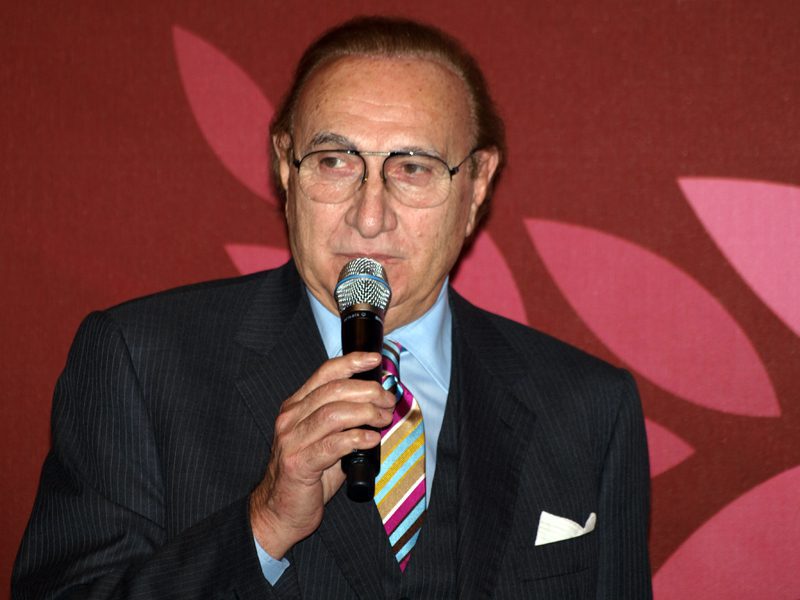
Pippo Baudo, whose full name was Giuseppe Vittorio Raimondo Baudo, was an iconic Italian television presenter, producer, and artistic director, widely regarded as one of the most influential figures in the history of Italian broadcasting. Born on June 7, 1936, in Militello in Val di Catania, Sicily, his career spanned over six decades, earning him the affectionate nickname “Superpippo”. Baudo was synonymous with Italian television, known for his charismatic presence, versatility, and unique ability to discover and launch new talents into the entertainment world. He hosted a record 13 editions of the prestigious Sanremo Music Festival, a feat unmatched by any other presenter. His work extended beyond presenting to include roles as a television producer, screenwriter, radio personality, and even a lyricist, solidifying his status as a multifaceted artist and a cultural icon in Italy. Pippo Baudo’s contributions profoundly shaped the landscape of Italian popular culture, making him a household name and a symbol of continuity for generations of viewers. He passed away in Rome on August 16, 2025, at the age of 89, from an infarction, leaving behind an immense legacy that continues to define Italian television.

Pippo Baudo Overview
| Attribute | Details |
|---|---|
| Full Name | Giuseppe Vittorio Raimondo Baudo |
| Nickname | Superpippo |
| Date of Birth | June 7, 1936 |
| Birthplace | Militello in Val di Catania, Sicily, Italy |
| Date of Death | August 16, 2025 |
| Age at Death | 89 years old |
| Cause of Death | Infarction |
| Nationality | Italian |
| Profession | Television Presenter, Producer, Screenwriter, Radio Personality, Lyricist, Artistic Director |
| Education | Law degree from the University of Catania |
| Spouses | Angela Lippi (m. 1970; div. 1975), Katia Ricciarelli (m. 1986; div. 2004/2007) |
| Children | Alessandro (b. 1962), Tiziana (b. 1970) |
| Grandchildren | Sean (Alessandro’s son), Nicholas and Nicole (Tiziana’s twins) |
| Great-Grandchildren | Became a great-grandfather in 2010 |
| Estimated Net Worth (as of his passing) | No official figure, but significant earnings including over €10 million from Sanremo festivals alone, plus real estate investments. |
Early Life and Education of Pippo Baudo
Giuseppe Vittorio Raimondo Baudo was born on June 7, 1936, in the small town of Militello in Val di Catania, located in Sicily, Italy. He was the only child of Giovanni Baudo, a lawyer, and Innocenza Pirracchio, a housewife. From a young age, Baudo demonstrated a keen interest in the performing arts and show business. His initial forays into entertainment began in his hometown, where he would entertain audiences at the “Cine Teatro Tempio,” a local theater owned by a family friend. During intermissions of plays and operas, young Pippo would captivate the crowd by reciting prose and lyrics, and also by playing the piano.
Despite his burgeoning passion for entertainment, Baudo pursued a traditional academic path to fulfill his family’s expectations. He completed his classical high school education at “Bonaventura Secusio” in Caltagirone and then enrolled at the University of Catania to study law. While still a law student, he continued to cultivate his artistic talents, performing as an actor and presenter, often serving as the sidekick to comedian Tuccio Musumeci. Together, they participated in various shows, including a Radiosquadre performance in Ragalna in 1956, which marked his television debut. Although he successfully graduated with a law degree, Pippo Baudo ultimately chose not to practice law, instead dedicating his life to the world of entertainment. In the late 1950s, his musical talents also found an outlet as he became a singer and pianist for the Orchestra Moonlight.
Pippo Baudo’s Career
Pippo Baudo’s illustrious career in Italian television spanned over six decades, marking him as one of the most influential figures in the country’s broadcasting history. His television debut came in 1959 with the Orchestra Moonlight on Enzo Tortora’s variety show “La Conchiglia d’Oro”. The 1960s saw him gain significant traction, presenting various programs such as “Guida degli Emigranti,” “Primo Piano,” the children’s show “Telecruciverba,” and music shows like the Festival of Naples.
His major breakthrough arrived in 1966 with the musical show “Settevoci”. Initially deemed “inadequate” by RAI, the show was aired as a last-minute replacement for a delayed American TV series and unexpectedly became a massive hit, propelling Baudo to national recognition. “Settevoci” showcased his innovative approach, including the “applausometro” to measure audience reaction, and cemented his reputation for versatility.
The late 1960s and 1970s marked his ascent to becoming a cornerstone of RAI, Italy’s public broadcaster. In 1968, he hosted the Sanremo Music Festival for The first time, an event he would go on to host a record 13 times, solidifying his nickname “Mister Sanremo”. His last hosting of Sanremo was in 2008. His charismatic presence and ability to navigate unexpected situations, such as persuading a man threatening to jump from the theater gallery during the 1995 festival, became legendary moments in Italian television history.
Baudo inherited and transformed some of Italy’s most important television programs, including “Canzonissima” (which he hosted in 1972 and 1973) and “Domenica In”. He hosted “Domenica In” for numerous editions, starting in 1979 and returning multiple times, making it a weekly ritual for Italian families and a cultural institution. Other successful shows under his belt included “Fantastico” (which garnered 20 million viewers for its 1984 edition), “Un disco per l’estate,” “Luna Park,” and “Novecento”.
Beyond his roles as a presenter, Baudo was also a skilled producer and director, influencing generations of artists and shaping television formats. He was renowned for his exceptional talent scouting, launching the careers of many notable figures, including comedians like Beppe Grillo, dancers like Heather Parisi and Lorella Cuccarini, and singers such as Laura Pausini. His influence was so profound that a common parody involved him claiming “L’ho inventato io…” (I invented him/her…) when referring to successful artists.
In addition to his television work, Baudo held significant positions in the performing arts. He served as the artistic director of the Teatro Stabile di Catania from 1989 to 1997, and later as its president from 2000 to 2007. He also contributed to music as a songwriter, with notable compositions including “Donna Rosa” for Nino Ferrer and “Una domenica così” for Gianni Morandi. In 1994, he briefly assumed the artistic direction of RAI until 1996. In 2018, he published his autobiography, “Ecco a voi. Una storia italiana,” reflecting on his remarkable journey.
Pippo Baudo Personal Life & Family
Pippo Baudo’s personal life, while often kept private, also captured public interest due to his high-profile relationships. He was married twice and had two children, establishing a significant family tree.
His first marriage was to Angela Lippi, from whom he had a daughter named Tiziana, born in 1970. Tiziana later became his secretary and assistant. Baudo also had a son, Alessandro, born in 1962, from a relationship with Mirella Adinolfi. Alessandro was formally recognized by Baudo in 1996 after a brief legal process.
Pippo Baudo’s most well-known marriage was to the acclaimed Italian soprano Katia Ricciarelli. Their union began on January 18, 1986. Prior to his marriage to Ricciarelli, he had relationships with actresses Alida Chelli (a seven-year relationship) and Adriana Russo. His marriage to Katia Ricciarelli ended in separation in 2004 and ultimately in divorce in 2007.
Baudo was a proud grandfather to three grandchildren: Sean, Alessandro’s son (born 1990), and Nicholas and Nicole, Tiziana’s twin children (born 2010). Sean, in turn, made Baudo a great-grandfather in 2010.
Beyond his family, Baudo was known for his love of Sardinia, where he spent many summers, particularly with Katia Ricciarelli in Torre delle Stelle. He also harbored a great passion for classical opera and, despite his immense success in television, he held a lifelong dream of becoming an orchestra conductor, a dream he expressed he never fully achieved. He was noted for his professionalism, culture, and courtesy throughout his career.
Awards and Achievements of Pippo Baudo
Pippo Baudo’s extensive career was marked by numerous awards and recognitions, cementing his status as a titan of Italian television. His most significant and recurring achievement was his unparalleled record as the host of the Sanremo Music Festival.
- Sanremo Music Festival Host: Pippo Baudo holds the record for hosting the most editions of the Sanremo Music Festival, leading the prestigious event a remarkable 13 times between 1968 and 2008. He also served as the artistic director for seven of these editions.
- Knight Grand Cross of the Order of Merit of the Italian Republic: In 2021, Baudo received the highest honor in Italy, being awarded the title of Cavaliere di Gran Croce dell’Ordine al Merito della Repubblica Italiana by President Sergio Mattarella, in recognition of his profound cultural contributions.
- Discovery of Talents: One of his most enduring achievements was his extraordinary ability to discover and launch the careers of numerous artists who would become household names in Italy, including Beppe Grillo, Heather Parisi, Lorella Cuccarini, and Laura Pausini.
- Long-standing Career: His career spanned over six decades, from 1959 to 2022, showcasing remarkable longevity and adaptability in a constantly evolving media landscape.
- Iconic Programs: He created and hosted a multitude of highly successful and culturally significant programs, including “Settevoci” (his breakthrough show), “Canzonissima,” “Domenica In,” “Fantastico,” and “Novecento,” many of which became cultural institutions.
- Artistic Director and President: Beyond television, he served as the artistic director (1989-1997) and president (2000-2007) of the Teatro Stabile di Catania, demonstrating his commitment to broader cultural initiatives.
Pippo Baudo Net Worth and Income
As of his passing in August 2025, Pippo Baudo’s exact net worth was not officially disclosed to the public, a common practice for prominent figures. However, given his extensive and highly successful career spanning over six decades at the pinnacle of Italian television, it is possible to estimate a significant accumulated wealth.
His primary income source was undoubtedly his work as a television presenter, producer, and artistic director for RAI, the Italian public broadcaster, where he spent the vast majority of his career. His earnings from hosting the Sanremo Music Festival alone provide insight into the scale of his remuneration. It is estimated that each of the 13 editions he hosted could have earned him approximately €800,000, summing up to over €10 million solely from this iconic event.

Beyond his television salaries and appearance fees, Baudo was also recognized as an “able investor”. He accumulated a substantial real estate portfolio throughout his long career, which represented a significant component of his wealth. This strategic management of his resources allowed him to maintain a comfortable lifestyle. While precise figures for Pippo Baudo’s net worth remain in the private domain, his decades of high-level engagement in Italian media, coupled with his business acumen, indicate a considerable financial legacy.
Legacy and Influence
Pippo Baudo’s legacy in Italian television and culture is monumental and deeply ingrained in the collective consciousness of the nation. He was not merely a presenter but a true pioneer and trendsetter who fundamentally shaped the “nazionalpopolare” concept in Italian broadcasting, successfully blending light entertainment with deeper cultural themes. His shows were weekly rituals for Italian families, uniting generations and providing a sense of familiarity and continuity in a country often marked by rapid political and social changes.
One of his most enduring impacts was his unparalleled “knack for spotting talent,” turning Italian television into a vital showcase for new artists. He launched the careers of countless singers, comedians, dancers, and showgirls, including figures like Beppe Grillo, Lorella Cuccarini, Heather Parisi, and Laura Pausini, who went on to achieve significant fame. His keen eye and mentorship created a ripple effect, influencing the entertainment industry for decades.
Baudo’s charismatic presence, professionalism, and ability to maintain control even in controversial situations earned him immense respect. He was considered “the first, the greatest” of Italian television presenters, a “symbol of elegance, seriousness and passion for the arts”. Tributes from across the Italian political and cultural spectrum, including President Sergio Mattarella and Prime Minister Giorgia Meloni, following his passing underscored his profound national significance. Mattarella praised his “professionalism, culture, courtesy and extraordinary ability to interpret the tastes and expectations of Italian viewers,” while Meloni acknowledged how his “face and voice have accompanied entire generations”. His career is often viewed as a case study in charisma, versatility, and enduring impact, truly defining an era of Italian entertainment.
Interesting Facts about Pippo Baudo
- “Superpippo” Nickname: Baudo was affectionately known as “Superpippo,” a playful reference to the Italian name of the Disney character Super Goof, highlighting his larger-than-life presence and capabilities in television.
- Law Degree, Never Practiced: Despite graduating with a law degree from the University of Catania, Baudo never pursued a legal career, opting instead to follow his passion for entertainment.
- Early Musical Career: Before becoming a famous TV host, Baudo performed as a singer and pianist with the Orchestra Moonlight in the late 1950s, making his television debut in this capacity.
- “L’ho inventato io…” Parody: Due to his incredible track record of discovering new talents, a common parody of Pippo Baudo would involve him claiming, “L’ho inventato io…” (I invented him/her…), a humorous nod to his influential role.
- Sanremo Suicide Attempt: During the opening night of the Sanremo Music Festival in 1995, Baudo personally intervened to talk down a man named Pino Pagano who was threatening to commit suicide by jumping from the theater’s gallery, amid applause from the audience.
- Brief Stint at Mediaset: While primarily known for his long tenure at RAI, Baudo had a brief and largely unsuccessful stint with Silvio Berlusconi’s Mediaset between 1987 and 1988, a period he recalled with some bitterness due to conflicts and a significant financial penalty upon his return to RAI.
- Passion for Opera: Beyond his popular television work, Baudo held a deep passion for classical opera and harbored a lifelong dream of becoming an orchestra conductor, a dream he expressed he never fully achieved.
- Author: In 2018, he published his autobiography titled “Ecco a voi. Una storia italiana,” providing his personal account of his life and career.
Controversies
Throughout his long and prominent career, Pippo Baudo encountered several controversies, navigating them while largely maintaining his influential position in Italian television.
One notable period of tension occurred in 1987 when he had a significant clash with Enrico Manca, the then-president of RAI. Manca publicly criticized Baudo’s “nazionalpopolare” style, accusing him of catering too much to popular tastes. This disagreement led Baudo to make a brief, but largely unsuccessful, move to Silvio Berlusconi’s rival network, Mediaset (then Fininvest), where he hosted “Festival”. His time at Mediaset was fraught with internal tensions and poor ratings for his shows like “Una volta al mese” and “La canzone del secolo”. He ultimately returned to RAI after only a year, reportedly paying a substantial financial penalty and even having to sell a valuable property in Rome to do so.
Another significant challenge came in 1996 when Baudo was investigated by the Milan Public Prosecutor’s Office. He was accused of having requested personal, undeclared fees (known as “telepromozioni” or product placements) for more convincingly endorsing products during his shows, including the Sanremo Festival. The accusations involved receiving approximately a billion lire (around €500,000) in “black money” from various companies like Sperlari and Barilla. While he defended himself, stating he “never knowingly did anything wrong,” the investigation led to a plea deal and a reimbursement of 200 million lire. Despite this setback, Baudo demonstrated his resilience, making a successful comeback with new programs like “Novecento” on Rai3.
Additionally, while less of a controversy and more of a widely discussed event, in 1986, comedian Beppe Grillo was reportedly removed from RAI after making a controversial joke about then-Prime Minister Bettino Craxi during “Fantastico 7,” a show hosted by Baudo. This incident, though not directly caused by Baudo, led to his recall to RAI under the Socialist Party quota, highlighting the political sensitivities surrounding television at the time. Pippo Baudo’s career was characterized by his ability to maintain his stature and continue his work despite these public and professional challenges.
Social Media Presence
While Pippo Baudo was a television icon who dominated traditional media for decades, his presence on modern social media platforms was not as directly emphasized with large, personal, actively managed accounts in the same vein as contemporary celebrities. Given his age and the nature of his career, his official online presence was more reflective of his professional legacy rather than direct interaction with millions of followers on platforms like Instagram, Twitter, or YouTube in the way younger public figures operate.
However, Baudo’s immense cultural impact ensured a significant digital footprint. His iconic moments, interviews, and performances were widely shared and discussed across various social media platforms by fans, media outlets, and fellow entertainers. His passing in August 2025 immediately led to an outpouring of tributes and discussions across social media, with artists, politicians, and the public sharing their memories and acknowledging his profound influence on Italian culture. While specific follower counts for personal profiles were not a central part of his public persona, his legacy undeniably resonated strongly within the digital space, underscoring his enduring popularity and recognition across generations.
Final Words about Pippo Baudo
Pippo Baudo, a titan of Italian television, passed away in Rome on August 16, 2025, at the age of 89, leaving behind an unparalleled legacy that fundamentally shaped the entertainment landscape of Italy for over six decades. His death marked the end of an era, prompting a wave of condolences and tributes from across the spectrum of Italian society, including President Sergio Mattarella and Prime Minister Giorgia Meloni, who recognized his extraordinary contribution to national culture.
Baudo was more than just a presenter; he was a cultural architect who defined “nazionalpopolare” television, creating programs that resonated with millions of Italians and became part of the nation’s collective memory. His unique ability to discover and mentor talent, launching the careers of countless stars, solidified his reputation as a kingmaker in the entertainment industry. Programs like “Settevoci,” “Canzonissima,” “Domenica In,” and his record 13 hostings of the Sanremo Music Festival are not just shows but chapters in Italy’s television history.
Even in his later years, Pippo Baudo remained an active and revered figure. His autobiography, “Ecco a voi. Una storia italiana” (2018), and the prestigious honor of Knight Grand Cross of the Order of Merit of the Italian Republic (2021) were testaments to his enduring impact and cultural significance. His final on-screen appearance was in September 2023, via a video link-up to “Domenica In,” the show he had so famously anchored for years, demonstrating his lifelong connection to his audience and the medium.
Pippo Baudo’s future plans, beyond his continued occasional appearances, would have undoubtedly revolved around enjoying his well-deserved retirement and maintaining his revered status as a living legend. His passing, however, ensures that his legacy will continue to inspire future generations of broadcasters and artists. He will be remembered not only as “Superpippo” but as the “lord of Italian television,” whose charisma, professionalism, and passion left an indelible mark on the hearts and minds of Italians. The void he leaves behind is a testament to the immense and irreplaceable role he played in the cultural fabric of Italy.
 Team Dailly WikiBio