
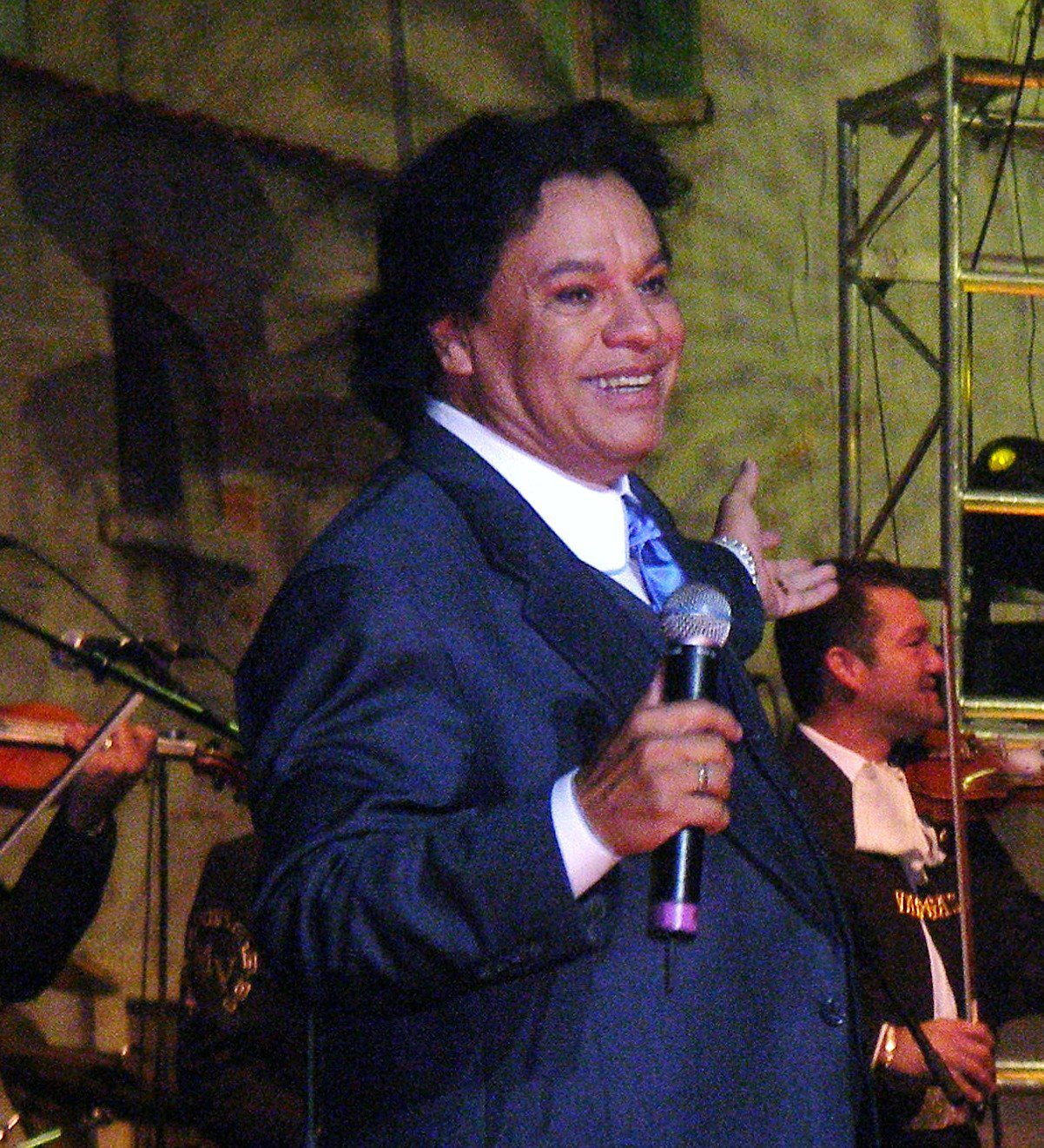
Brief Introduction of Juan Gabriel
Alberto Aguilera Valadez, known professionally as Juan Gabriel, was a profoundly influential Mexican singer, songwriter, and actor. Affectionately nicknamed “Juanga” and “El Divo de Juárez,” he was celebrated for his flamboyant style and dramatic performance, which broke barriers and challenged norms within the Latin music industry. Widely regarded as one of the most prolific and successful composers in Latin American music history, he penned over 1,800 songs in various genres, including mariachi, ranchera, pop, and ballads. His compositions became anthems of love and heartbreak for millions across generations. With a career spanning over four decades, Juan Gabriel sold more than 100 million albums worldwide, making him one of the best-selling Latin music artists of all time and a true pop icon. His music not only defined an era but also created a lasting cultural legacy that continues to resonate globally.

Juan Gabriel Overview
| Full Name | Alberto Aguilera Valadez |
| Date of Birth | January 7, 1950 |
| Age(as of 2025) | Would have been 75 |
| Birthplace | Parácuaro, Michoacán, Mexico |
| Profession | Singer, Songwriter, Actor, Producer |
| Husband/Wife | Never married |
| Family | Mother: Victoria Valadez Rojas, Father: Gabriel Aguilera Rodríguez, 9 older siblings. He had several children, including Iván Gabriel, Joan Gabriel, Hans Gabriel, Jean Gabriel, and Luis Alberto Aguilera. |
| Relationship/Affairs(GF/BF) | Not publicly disclosed. Juan Gabriel was very private about his personal life. The mother of four of his children is Laura Salas, whom he called “the best friend of my life.” |
| Net Worth | Estimated at $30 million at the time of his death in 2016. |
Early Life and Education of Juan Gabriel
Born Alberto Aguilera Valadez on January 7, 1950, in Parácuaro, Michoacán, Mexico, Juan Gabriel was the youngest of ten children born to peasant farmers Gabriel Aguilera Rodríguez and Victoria Valadez Rojas. His early life was marked by hardship. Shortly after his birth, his father was involved in an incident that led to his internment in a psychiatric hospital, and the family never heard from him again. Overwhelmed, his mother moved the family to the border city of Ciudad Juárez, Chihuahua. Unable to care for her youngest child, she placed Alberto in the El Tribunal boarding school when he was around four or five years old.
This period of loneliness and separation profoundly shaped him. It was within the walls of the boarding school that he found solace in music. He met Juan Contreras, a schoolteacher who became his mentor, teaching him to play instruments and nurturing his innate musical talent. This relationship was a cornerstone of his formative years. At the age of 13, driven by his burgeoning passion, he composed his first song. A year later, he escaped the institution and briefly lived with Contreras before returning to his mother. He began singing in the choir of a local Methodist church, where he further developed his musical abilities. His formal education was limited to his time at the boarding school, but his musical education was just beginning on the streets and in the clubs of Juárez.
Juan Gabriel’s Career
Juan Gabriel’s path to stardom was anything but easy. He began his career as a teenager, performing in local bars and nightclubs in Ciudad Juárez under the stage name Adán Luna. One of his first regular gigs was at a bar called “El Noa Noa,” which he would later immortalize in one of his most famous songs. Driven by ambition, he traveled to Mexico City to seek a recording contract but faced rejection and hardship, including being wrongly accused of robbery and imprisoned for over a year. His fortune turned when the influential singer Enriqueta Jiménez, “La Prieta Linda,” recognized his talent and advocated for his release, helping him secure a contract with RCA Records.
He adopted the stage name Juan Gabriel, honoring his mentor Juan Contreras and his father, Gabriel. In 1971, he released his debut album, “El Alma Joven…,” which featured his first major hit, “No Tengo Dinero” (“I Have No Money”). The song was an immediate success and launched a career that would span more than four decades. Throughout the 1970s and 1980s, his fame grew exponentially. He released a string of successful albums, blending ranchera, mariachi, pop, and ballads. His 1984 album, “Recuerdos, Vol. II,” became the best-selling album of all time in Mexico, featuring the iconic hit “Querida.”
A testament to his cultural significance, in 1990, Juan Gabriel became the first non-classical artist to perform at the prestigious Palacio de Bellas Artes in Mexico City, accompanied by the National Symphony Orchestra. This historic concert broke cultural barriers and solidified his status as a national treasure. He also composed prolifically for other major Latin artists, including Rocío Dúrcal, Isabel Pantoja, and José José, penning timeless hits like “Amor Eterno” and “Lo Pasado, Pasado.” Over his career, he wrote approximately 1,800 songs, released over 30 studio albums, and sold over 100 million records worldwide, making him Mexico’s top-selling artist.
Juan Gabriel Personal Life & Family
Juan Gabriel was intensely private about his personal life, creating an aura of mystery that followed him throughout his career. He never married. The mother of four of his children—Iván Gabriel, Joan Gabriel, Hans Gabriel, and Jean Gabriel—is Laura Salas, a woman he described as “the best friend of my life.” After his death, it was revealed through DNA testing that he had other children, including Luis Alberto Aguilera and Claudia Gabriela Aguilera, from relationships with other women. This created a complex family dynamic that became public after his passing.
His sexuality was a frequent subject of media speculation, fueled by his flamboyant stage presence, sequined outfits, and expressive performances that challenged the traditional “macho” image prevalent in Mexican culture. When asked directly about his sexuality, he famously replied, “Lo que se ve no se pregunta” (“What is seen is not asked”). This iconic phrase is often interpreted as an implicit acknowledgment of his identity while masterfully redirecting the focus to his art. While he never explicitly identified as gay, he is widely considered a gay icon and a hero within the Latin LGBTQ+ community for living unapologetically and paving the way for greater acceptance. He was also a noted philanthropist, establishing an orphanage called Semjase in Ciudad Juárez in 1987 to support underserved children.

Awards and Achievements of Juan Gabriel
- Inducted into the Billboard Latin Music Hall of Fame (1996).
- ASCAP Latin Songwriter of the Year (1995, 1996, 1998).
- Latin Recording Academy’s Person of the Year (2009).
- Star on the Hollywood Walk of Fame (2002).
- Lo Nuestro Excellence Award (1991).
- Inducted into the International Latin Music Hall of Fame (2003).
- Posthumously inducted into the Latin Songwriters Hall of Fame (2016).
- Received two posthumous Latin Grammy Awards for his album “Los Dúo 2” (2016).
- La Opinión Tributo Nacional for Lifetime Achievement (1999).
- Billboard erected a statue in his honor at Mexico City’s Plaza Garibaldi (2001).
- Six-time Grammy Award nominee.
Juan Gabriel Net Worth and Income
At the time of his death on August 28, 2016, Juan Gabriel’s net worth was estimated to be around $30 million. His wealth was primarily generated from his incredibly successful music career. The main sources of his income included extensive album sales, having sold over 100 million records globally, and consistent, large-scale international tours that often set attendance records. Forbes magazine listed him as one of the world’s richest musicians in 2015, with earnings of approximately $11 million in that year alone. Additionally, he earned significant royalties from his vast catalog of over 1,800 compositions, which were recorded by more than 1,500 artists worldwide. His estate also included several real estate properties in Mexico and the United States.
Legacy and Influence
Juan Gabriel’s legacy is immeasurable, cementing his status as one of the most important cultural figures in the Spanish-speaking world. His music transcended borders, generations, and social classes, becoming the soundtrack for the lives of millions. He revolutionized Mexican music by fusing traditional genres like mariachi and ranchera with pop, rock, and disco, creating a unique and universally appealing sound. As a performer, his flamboyant and emotional style broke down barriers of hyper-masculinity, making him an icon for the LGBTQ+ community and a symbol of individuality and fearless self-expression. Many artists, from Marc Anthony to Juanes, have cited him as a major influence, and his songs continue to be widely covered. Former U.S. President Barack Obama noted that for many, “his music sounds like home.” His ability to turn personal pain into universal anthems of love, loss, and resilience ensures that his work remains timeless and deeply embedded in the fabric of Latin culture.
Interesting Facts about Juan Gabriel
- His stage name, Juan Gabriel, was a tribute to his mentor, Juan Contreras, and his father, Gabriel Aguilera.
- He wrote his first song, “La Muerte del Palomo,” at the age of 13.
- The famous song “El Noa Noa” was named after a real nightclub in Ciudad Juárez where he began his career.
- He was fiercely proud of his heritage and refused to record in English, stating that Mexican music must be defended.
- In 1986, Los Angeles Mayor Tom Bradley declared October 5th as “The Day of Juan Gabriel.”
- Despite being nominated six times, he never won a Grammy award during his lifetime, though he did win two posthumously at the Latin Grammys.
- He was a noted philanthropist, founding an orphanage and regularly performing benefit concerts for children’s homes.
Controversies
Throughout his career, Juan Gabriel faced several controversies. He had significant disputes with tax authorities in both Mexico and the United States. In the mid-1980s, a major conflict with his record label, BMG, over the copyright ownership of his songs led him to refuse to record any new material for nearly eight years, a period during which he focused solely on live performances. There were also unsubstantiated rumors linking him to the Cali drug cartel after the son of a trafficker claimed Juan Gabriel had performed at a cartel party, an allegation he denied. The most persistent public discussion revolved around his personal life and sexuality, which he consistently refused to address directly, maintaining a firm boundary between his public artistry and his private identity.
Social Media Presence
Even after his passing, Juan Gabriel maintains a significant digital presence through his official accounts managed by his estate.
- Instagram – Information not disclosed
- Twitter – Information not disclosed
- YouTube – Information not disclosed
Final Words about Juan Gabriel
Juan Gabriel, “El Divo de Juárez,” passed away from a heart attack on August 28, 2016, in Santa Monica, California, just two days after a sold-out concert in Los Angeles. His sudden death sent shockwaves across the globe, prompting an outpouring of grief from fans and fellow artists. His legacy is that of a musical prodigy who rose from poverty and hardship to become a global superstar. He was a masterful songwriter who could articulate the deepest human emotions and a revolutionary performer who challenged cultural conventions. Juan Gabriel’s music remains eternally relevant, a testament to his genius and his profound connection with his audience. His life story, a powerful narrative of resilience and triumph, continues to inspire millions, ensuring that his voice and spirit will endure for generations to come.
 Team Dailly WikiBio