
Arthur Ashe was a pioneering American professional tennis player, civil rights activist, and humanitarian. Renowned for his elegant playing style and composed demeanor, he broke significant racial barriers in the sport, becoming the first and only Black man to win the singles titles at Wimbledon, the US Open, and the Australian Open. Beyond his extraordinary athletic achievements, Ashe dedicated his life to advocating for social justice, fighting against apartheid in South Africa, promoting heart health, and raising global awareness about HIV/AIDS after his own diagnosis. His legacy transcends sports, marking him as an iconic figure whose unwavering commitment to equality and human dignity continues to inspire.
Arthur Ashe Overview
| Full Name | Arthur Robert Ashe Jr. |
| Date of Birth | July 10, 1943 |
| Place of Birth | Richmond, Virginia, U.S. |
| Date of Death | February 6, 1993 (aged 49) |
| Place of Death | New York, New York, U.S. |
| Height | 6 ft 1 in (1.85 m) |
| Profession | Professional Tennis Player, Author, Activist, Commentator |
| Father | Arthur Ashe Sr. |
| Mother | Mattie Cordell Cunningham Ashe |
| Spouse | Jeanne Moutoussamy-Ashe (m. 1977) |
| Children | Camera Elizabeth Ashe (adopted daughter) |
| Grand Slam Singles Titles | US Open (1968), Australian Open (1970), Wimbledon (1975) |
| Career Prize Money | Over $1.5 million (ATP) |
| Net Worth (at time of death, inflation-adjusted to 2025) | Approximately $4 million (equivalent to $2 million in 1993) |
Early Life and Education of Arthur Ashe
Arthur Robert Ashe Jr. was born on July 10, 1943, in Richmond, Virginia, to Arthur Ashe Sr. and Mattie Cordell Cunningham Ashe. He was the elder of two sons, with a younger brother named Johnnie. His family claimed direct descent from Amar, an enslaved West African woman brought to America in 1735. Growing up in a strictly segregated Richmond, Ashe’s childhood was marked by both challenges and unique opportunities.
His family lived in a caretaker’s cottage within Brook Field, an 18-acre park that served as Richmond’s largest recreational facility for African Americans. Ashe Sr. worked as the park’s supervisor and instilled in his sons values of dignity, hard work, and self-discipline. Tragically, Ashe’s mother, Mattie, died from complications related to a toxemic pregnancy (now known as pre-eclampsia) in March 1950, a few months before his seventh birthday. His father, fearful of his boys falling into trouble, maintained a tight ship at home, ensuring they attended church every Sunday and came straight home from school.
Ashe discovered tennis at the age of seven, picking up a racket at the park’s tennis courts. His innate talent was quickly noticed by Ronald Charity, a gifted Black tennis player and coach from nearby Virginia Union University, who began teaching him the nuances of the game. By 1953, Charity introduced Ashe to Dr. Robert Walter Johnson Jr., a prominent Black physician and tennis coach in Lynchburg, Virginia. Dr. Johnson, who had previously mentored Wimbledon champion Althea Gibson, guided Ashe through his youth tennis career, emphasizing not only technique but also composure and emotional control on the court—qualities that became hallmarks of Ashe’s game.
Ashe excelled, winning the American Tennis Association (ATA) championship for boys under thirteen in 1955, the first of his eleven ATA titles. In 1958, he became the first African American to compete in the Maryland boys’ championships, his first integrated tennis competition. However, racial segregation in Richmond severely limited his ability to play against white youths or use indoor courts during the school year. To advance his game, Ashe accepted an offer from St. Louis tennis official Richard Hudlin to live with him and attend Sumner High School for his senior year, allowing him to compete more freely against stronger, mostly white, competition. He graduated first in his class from Sumner High School in 1961 and earned a full tennis scholarship to the University of California, Los Angeles (UCLA).
At UCLA, Ashe continued to thrive academically and athletically, maintaining good grades while becoming a standout player. In 1963, he made history by becoming the first African American selected for the United States Davis Cup team. In 1965, he won both the National Collegiate Athletic Association (NCAA) singles and doubles titles, contributing significantly to UCLA’s NCAA team tennis championship victory. After graduating from UCLA with a bachelor’s degree in Business Administration in 1966, Ashe joined the United States Army. He served two years, rising to the rank of first lieutenant while continuing to play tennis and compete in tournaments, including the Davis Cup, from his assignment at the U.S. Military Academy at West Point. He was honorably discharged in early 1969.
Arthur Ashe’s Career
Arthur Ashe’s professional tennis career officially began in 1969, following his military service, though he had already achieved significant success as an amateur. In 1968, while still an amateur, Ashe made history by winning the inaugural U.S. Open title, defeating Tom Okker in a five-set match. Due to his amateur status, he could not accept the prize money, which instead went to the runner-up. This victory marked him as the first and only African American male player to win the U.S. Open singles title.
Ashe quickly rose through the ranks, becoming a consistent presence among the world’s top tennis players. He was ranked world No. 1 by several publications in 1975 and reached world No. 2 in the ATP computer rankings in May 1976. His playing style was characterized by a blend of finesse and power, combined with his composed court manner.
His career was highlighted by three Grand Slam singles titles:
1968 US Open: As an amateur, he became the first African American man to win the title.
1970 Australian Open: He secured his second Grand Slam singles title.
1975 Wimbledon: In a landmark victory, Ashe defeated the heavily favored Jimmy Connors in four sets, becoming the first and only Black man to win the prestigious Wimbledon singles title.
Ashe also achieved success in doubles, winning the French Open doubles title in 1971 with Marty Riessen and the South African Open doubles title in 1973 with Tom Okker. He was a frequent member of the U.S. Davis Cup team from 1963 to 1970 and again in 1975, 1976, and 1978, leading the United States to victory for three consecutive years (1968–70).
Beyond his playing career, Ashe was a significant figure in the governance and development of tennis. He was one of the founders of the Association of Tennis Professionals (ATP) in 1972, an organization formed to represent the interests of male tennis professionals, and he was elected its president in 1974. In this role, he played a crucial part in the sport’s transition to the open era and even helped organize the players’ boycott of the Wimbledon championships in 1973.
Ashe retired from professional tennis in 1980 at the age of 36, following heart issues. Despite his retirement from active competition, his influence on the sport continued. He served as captain of the U.S. Davis Cup team from 1981 to 1985, leading the team to victories in 1981 and 1982. He also became a respected commentator for ABC Sports and HBO and wrote for publications such as Time magazine, The Washington Post, and Tennis Magazine.
Ashe’s commitment to social change was deeply intertwined with his tennis career. He actively spoke out against apartheid in South Africa, and after several refusals, was granted a visa to play in the South African Open in 1973. His participation broke the color barrier in the country, and he even funded and dedicated a tennis center for Black South Africans in Johannesburg’s Soweto township. In 1969, he co-founded the National Junior Tennis League (now the National Junior Tennis and Learning program), aiming to expose underprivileged children to tennis while also emphasizing academics and leadership.
Arthur Ashe Personal Life & Family
Arthur Ashe’s personal life was characterized by deep commitment to his family and a profound sense of purpose that extended beyond the tennis court. In October 1976, he met Jeanne Moutoussamy, a talented photographer and graphic artist, at a United Negro College Fund benefit. Jeanne, who is of Afro-Guadeloupean and African-American heritage, is the daughter of architect John Moutoussamy. They married on February 20, 1977, in a ceremony officiated by Andrew Young, then the United States Ambassador to the United Nations.
Their marriage was a loving partnership that lasted 15 years until Ashe’s death. In December 1986, Arthur and Jeanne adopted a daughter, whom they named Camera, a tribute to Jeanne’s profession as a photographer. Jeanne Moutoussamy-Ashe has since published books featuring photographs of her late husband and daughter, including “Daddy and Me: A Photo Story of Arthur Ashe and His Daughter, Camera”.
Ashe’s father, Arthur Ashe Sr., played a pivotal role in his upbringing, especially after his mother’s early death. His father’s strict discipline and encouragement shaped Ashe’s character, instilling values of dignity, hard work, and self-discipline. Ashe also had a younger brother, Johnnie.
His lifestyle was one of quiet determination and grace, balancing his athletic pursuits with intellectual engagement and social activism. He was an avid reader from a young age. Throughout his life, Ashe maintained a strong belief in the power of education and used his platform to advocate for social change. He embodied a philosophy of serving others, famously stating, “From what we get, we can make a living; what we give, however, makes a life”.
Ashe faced significant health challenges later in life. In July 1979, at the age of 36, he suffered a heart attack while conducting a tennis clinic. This led to quadruple bypass surgery in December of that year. He experienced further chest pains, which ultimately led him to retire from professional tennis in 1980. In 1983, he underwent a second bypass surgery, during which he received a blood transfusion. It was from this transfusion that he is believed to have contracted HIV, the virus that causes AIDS. Ashe kept his HIV diagnosis private for several years for the sake of his young daughter. However, in April 1992, after learning that a newspaper was preparing to publish the story, he publicly announced his illness. This revelation marked a new chapter in his activism, as he dedicated his remaining life to educating others about HIV and AIDS. He founded the Arthur Ashe Foundation for the Defeat of AIDS and the Arthur Ashe Institute for Urban Health to address health disparities and advocate for those living with HIV/AIDS. Arthur Ashe passed away from AIDS-related pneumonia on February 6, 1993, at the age of 49, leaving behind a profound legacy of courage and humanitarianism.
Awards and Achievements of Arthur Ashe
Arthur Ashe’s career was decorated with numerous awards and honors, both for his groundbreaking achievements in tennis and his unwavering dedication to humanitarian causes. He remains the only Black man to win the singles titles at Wimbledon, the US Open, and the Australian Open.
Tennis Achievements:
- Wins the National Interscholastic’s, 1960.
- First African American to win a U.S. Lawn Tennis Association (USLTA) national title, 1960.
- First African American ever selected for U.S. Davis Cup team, 1963.
- Wins U.S. Men’s Hardcourt championships, 1963.
- National College Athletic Association (NCAA) All-American, 1963-1965.
- NCAA singles and doubles champion, 1965.
- Winner of 1964 Johnston Award for contributions to the sport and good sportsmanship.
- Wins U.S. Open Tennis Championships, 1968 (as an amateur).
- Wins Australian Open, 1970.
- Wins French Open doubles title with Marty Riessen, 1971.
- Wins South African Open doubles title with Tom Okker, 1973.
- Elected as President of ATP (Association of Tennis Professionals), 1974.
- Named Player of the Year, Association of Tennis Professionals, 1975.
- Wins Wimbledon singles title, 1975.
- Ranked World No. 1 by Rex Bellamy, Bud Collins, Judith Elian, Lance Tingay, World Tennis and Tennis Magazine (U.S.) in 1975.
- Wins Australian Open doubles title with Tony Roche, 1977.
- Inducted into the International Tennis Hall of Fame, 1985.
- Recipient of the Laurel Wreath Award from Kappa Alpha Psi Fraternity, 1986.
- Inducted into UCLA Sports Hall of Fame, the Virginia Sports Hall of Fame, the Eastern Tennis Association Hall of Fame, and the U.S. Professional Tennis Association Hall of Fame.
Humanitarian and Posthumous Honors:
- Recipient of the ATP Sportsmanship Award, 1977.
- Authored/Co-authored A Hard Road to Glory, a three-volume history of African American athletes, receiving a Sports Emmy for the documentary based on the book, 1986.
- Named Sports Illustrated magazine’s Sportsman of the Year, 1992.
- Recipient of the “Sports Legend” Award by the American Sportscasters Association, 1992.
- Posthumously awarded the Presidential Medal of Freedom by President Bill Clinton, 1993.
- Posthumously awarded the Arthur Ashe Humanitarian of the Year Award by the ATP, 1993.
- The Arthur Ashe Courage Award, part of the ESPY Awards, is named in his honor and given to individuals whose contributions “transcend sports”.
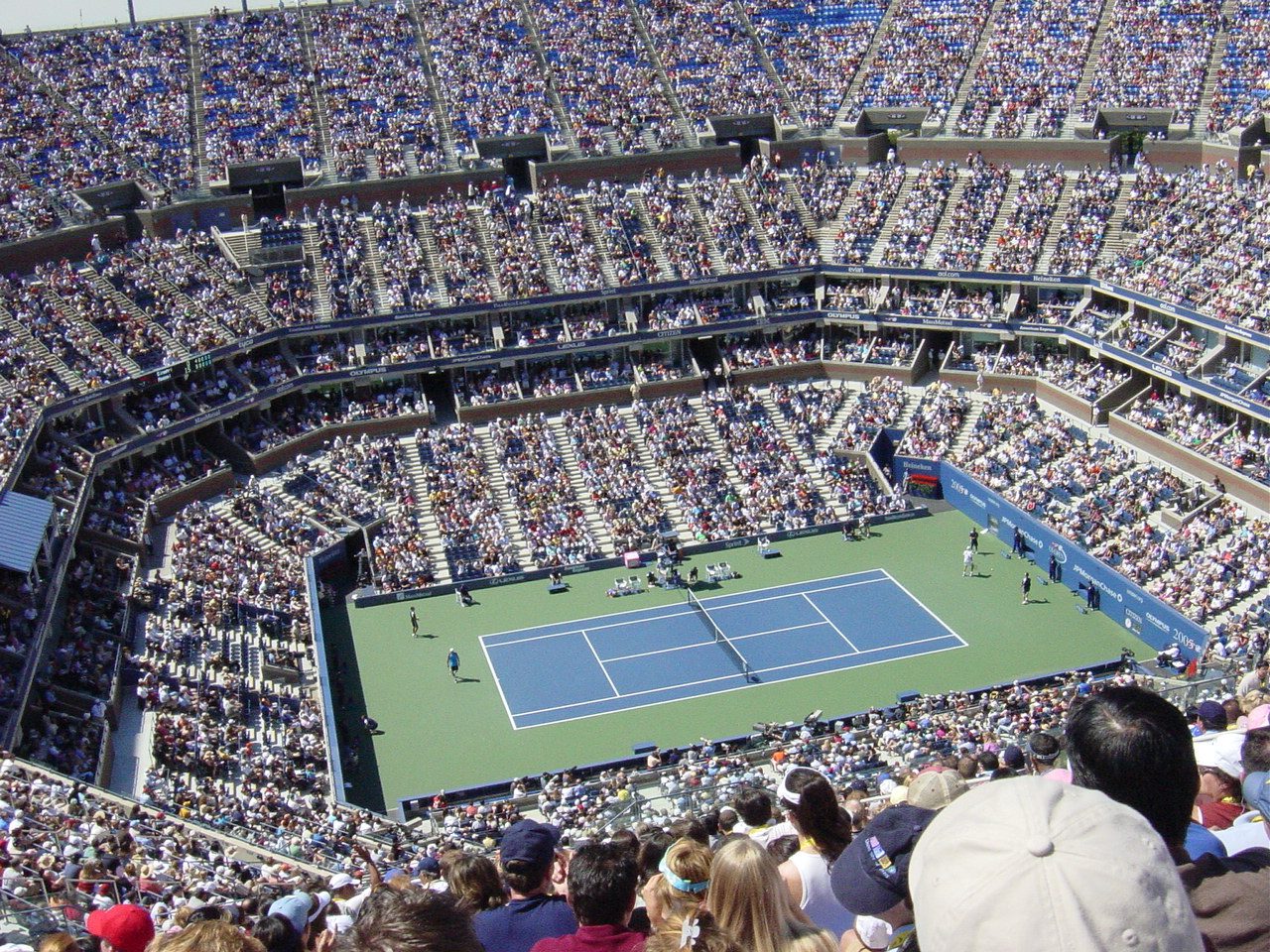
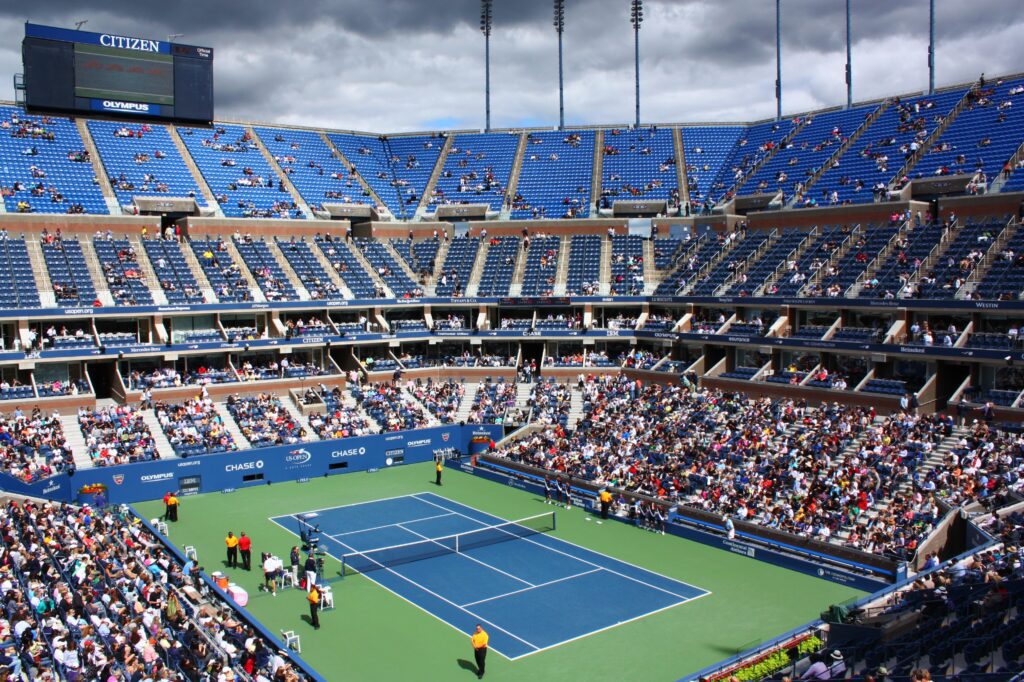
- The main court for the US Open, Arthur Ashe Stadium, is named in his honor.
- The Arthur Ashe Institute for Urban Health and the Arthur Ashe Foundation for the Defeat of AIDS were founded by him.
- Honorary doctorates from institutions including Dartmouth College, LeMoyne-Owen College, Princeton University, Saint John’s University, Trinity University, Hartford College, and Virginia Union University.
- Diverse: Issues In Higher Education sponsors the Arthur Ashe Jr. Sports Scholar Awards to honor students of color who have excelled academically and athletically.
- A statue of Arthur Ashe stands on Richmond’s Monument Avenue, depicting him with books and a tennis racket, symbolizing his dedication to both knowledge and sports.
Arthur Ashe Net Worth and Income
At the time of his passing in 1993, Arthur Ashe’s net worth was estimated to be $2 million. Adjusting for inflation to 2025, this figure is equivalent to approximately $4 million.
Ashe’s income sources were diverse, reflecting his multifaceted career:
Tennis Prize Money: During his professional playing career from 1969 to 1980, Ashe earned over $1.5 million in prize money according to the ATP.
Endorsements and Sponsorships: Off the court, he leveraged endorsements with renowned sports brands such as Head and Wilson, which significantly contributed to his earnings.
Broadcasting and Commentary: After retiring from competitive tennis, Ashe became a respected sports commentator for major networks like ABC Sports and HBO, providing a steady income stream from the early 1980s until shortly before his death.
Writing and Authorship: He was a prolific writer, contributing to Time magazine, The Washington Post, and Tennis Magazine. His most notable literary work, A Hard Road to Glory, a three-volume history of African American athletes, was a significant intellectual and financial endeavor.
Speaking Engagements and Public Appearances: As a prominent civil rights activist and humanitarian, Ashe was a sought-after speaker, undoubtedly commanding fees for his engagements.
Investments: Ashe was noted for his financial acumen and made shrewd investments during his lifetime.
ATP Presidency and Davis Cup Captaincy: His roles as President of the ATP and Captain of the U.S. Davis Cup team, while not primarily for income, would have come with compensation and opportunities.
Arthur Ashe’s financial success was a testament to his prowess both on and off the court, allowing him to not only provide for his family but also to fund and establish several philanthropic and health-related initiatives in his later years.
Legacy and Influence
Arthur Ashe’s legacy stretches far beyond his formidable achievements on the tennis court; he is remembered as a pioneering athlete, a steadfast civil rights activist, and a courageous humanitarian whose impact continues to resonate globally. His influence is multifaceted, touching upon sports, social justice, and public health.
In tennis, Ashe shattered racial barriers, becoming the first and only Black man to win singles titles at the US Open, Australian Open, and Wimbledon. His elegant, composed, and intelligent playing style inspired countless athletes, particularly those from underrepresented communities, to pursue the sport. He also played a critical role in the formation and leadership of the Association of Tennis Professionals (ATP), advocating for players’ rights and professionalism. The U.S. Open’s main court, Arthur Ashe Stadium, and the annual Arthur Ashe Courage Award at the ESPYs, which honors individuals whose contributions “transcend sports,” stand as enduring tributes to his indelible mark on tennis.
Beyond sports, Ashe was a dedicated and thoughtful activist. He used his platform to speak out against injustice, most notably apartheid in South Africa. His persistent efforts to visit and play in South Africa, which he eventually did in 1973, were instrumental in breaking down racial barriers and highlighting the discrimination inherent in the apartheid system, two decades before its fall. He co-founded Artists and Athletes Against Apartheid with Harry Belafonte in 1983 and was arrested in 1985 during an anti-apartheid protest outside the South African embassy in Washington. He also championed youth development by co-founding the National Junior Tennis League (now National Junior Tennis and Learning) in 1969, encouraging inner-city children to pursue both sports and academics.
Ashe’s public image was one of quiet dignity, intellectualism, and principled action. His autobiography, Days of Grace, published posthumously, offered profound insights into his philosophy and resilience. He served on numerous corporate boards and was a national chairman for the American Heart Association, advocating for heart health.
Perhaps his most poignant and impactful legacy emerged after his HIV diagnosis in 1988, which he publicly announced in 1992. Rather than retreating, Ashe transformed this personal tragedy into a global platform for education and advocacy about HIV/AIDS. He founded the Arthur Ashe Foundation for the Defeat of AIDS and the Arthur Ashe Institute for Urban Health, which continue to raise funds for research, educate the public, and address health disparities in urban communities. His courageous and dignified response helped destigmatize the disease and brought crucial attention to the global AIDS crisis.
Ashe’s unwavering commitment to education, his composed approach to challenging social issues, and his dedication to humanitarian causes have made him a unique and enduring role model. His famous quote, “True heroism is remarkably sober, very undramatic. It is not the urge to surpass all others at whatever cost, but the urge to serve others at whatever cost,” encapsulates the essence of his profound legacy.
Interesting Facts about Arthur Ashe
- Arthur Ashe began reading at the age of four, taught by his mother.
- He was first featured in Sports Illustrated’s “Faces in the Crowd” segment in December 1960 and again as a UCLA sophomore.
- Despite being a top junior player, Ashe was not ranked in the Mid-Atlantic Region for a time because he was not permitted to play against the region’s top white competitors due to segregation.
- When he won the first U.S. Open in 1968 as an amateur, he could not accept the $14,000 prize money, which instead went to the runner-up.
- Ashe joined the U.S. Army and served for two years, rising to the rank of first lieutenant, even while continuing to compete in tennis tournaments. He was a systems analyst and assistant tennis coach at West Point.
- His unique style of play was described as “controlled cool”.
- He co-authored A Hard Road to Glory, a three-volume historical account of African American athletes, for which he won an Emmy Award for the related documentary.
- Ashe was known for his thoughtful and inspiring quotes, such as “Success is a journey, not a destination. The doing is often more important than the outcome”. Another memorable quote: “Start where you are. Use what you have. Do what you can”.
- He actively fought against apartheid in South Africa, successfully lobbying for a visa to play there in 1973, thereby breaking racial barriers. He also funded a tennis center for Black South Africans in Johannesburg’s Soweto township.
- His wife, Jeanne Moutoussamy-Ashe, is an acclaimed photographer and AIDS activist. Their daughter, Camera, was named after her mother’s profession. Jeanne also photographed her husband and daughter in the book “Daddy and Me”.
- Ashe famously stated, regarding his HIV diagnosis, “If I were to say, ‘God, why me?’ about the bad things, then I should have said, ‘God, why me?’ about the good things that happened in my life”.
- He finished writing his memoir, Days of Grace, less than a week before his death.
- His body lay in state at the Governor’s Mansion in Richmond, Virginia, an honor usually reserved for politicians, with over 5,000 people paying their respects.
Controversies
While Arthur Ashe maintained a public image of grace and composure, his life was not without significant challenges and, at times, what could be considered controversies or difficult public stances, particularly in the context of racial injustice and his health.
One notable “controversy” in his career involved his repeated applications for a visa to play in the South African Open during the apartheid era. Despite being the top-ranked American player, he was initially denied entry multiple times due to his race. This denial itself was a point of international contention and highlighted the discriminatory policies of the South African government. When he was finally granted a visa in 1973, it was a groundbreaking moment, but also placed him in a unique position. Some questioned whether his participation legitimized the apartheid regime, but Ashe firmly believed it offered an opportunity to break down stereotypes and bring attention to the injustice from within. His decision to play and his subsequent actions, including winning the doubles title and funding a tennis center for Black South Africans, ultimately served as a powerful form of protest and advocacy.
Another challenge, which evolved into a significant public discussion, was his reluctance to be an outspoken civil rights leader in the mold of some contemporaries. Early in his career, Ashe often preferred a quieter diplomacy rather than confrontational activism, a stance that sometimes drew criticism from other Black leaders who urged him to take a more vocal role. However, Ashe found his own effective ways to advocate for change, through his actions, writings, and the establishment of programs like the National Junior Tennis League. His manager and lawyer, Donald Dell, recalled Ashe as “very quiet and very reflective”. Ultimately, his “quiet activism” proved profoundly impactful.
The most profound “controversy” or challenge in his personal life involved his HIV diagnosis. Ashe contracted HIV from a blood transfusion during his second heart bypass surgery in 1983. He and his wife initially kept his illness a secret for the sake of their young daughter. However, when a newspaper threatened to publish the story in April 1992, Ashe preempted them by publicly announcing his diagnosis. This forced revelation, while painful, transformed him into a leading spokesperson for AIDS awareness and education. It brought significant media attention to HIV/AIDS at a time when stigma was still rampant, helping to humanize the disease and advocate for those affected. His courage in the face of this deeply personal and public health crisis redefined his legacy and became a powerful catalyst for change.
Social Media Presence
Arthur Ashe passed away in 1993, long before the advent of modern social media platforms like Instagram, Twitter, or YouTube. Therefore, he did not have personal social media accounts or follower counts during his lifetime.
However, his enduring legacy is honored and promoted through various official and fan-maintained online presences:
The Arthur Ashe Legacy at UCLA: This official initiative maintains a comprehensive website (arthurashe.ucla.edu) dedicated to his life, career, and humanitarian efforts. It often shares historical content, photos, and information about ongoing programs inspired by Ashe’s work.
Arthur Ashe Foundation for the Defeat of AIDS / Arthur Ashe Institute for Urban Health: These organizations, founded by Ashe himself, have online presences that continue his work in health advocacy and education.
International Tennis Hall of Fame: As an inductee, Ashe is featured on the Hall of Fame’s website and social media channels.
USTA and US Open: The United States Tennis Association (USTA) and the US Open regularly pay tribute to Ashe, particularly in relation to the Arthur Ashe Stadium and the National Junior Tennis and Learning (NJTL) program he co-founded. Their social media channels frequently feature posts celebrating his achievements and influence.
* Biographical and Sports Accounts: Numerous sports history, civil rights, and general biography accounts across all social media platforms regularly share content about Arthur Ashe, honoring his contributions and inspiring new generations.
While Arthur Ashe himself did not navigate the digital age, his powerful story and impact continue to be shared and celebrated across online platforms, ensuring his legacy remains relevant and accessible to a global audience.
Final Words about Arthur Ashe
Arthur Ashe’s life was a testament to grace, courage, and an unwavering commitment to justice, truly making him an icon whose influence transcended the boundaries of sports. From his pioneering achievements as the first Black man to win the US Open, Australian Open, and Wimbledon singles titles, he redefined what was possible in the predominantly white world of professional tennis. Yet, he himself often downplayed his tennis accomplishments, believing his greater purpose lay in contributing to society and helping others.
His activism against apartheid in South Africa demonstrated immense courage and a strategic approach to challenging systemic racism, ultimately contributing to the dismantling of discriminatory policies. His dedication to youth education through the National Junior Tennis and Learning program reflected his deep-seated belief in the power of opportunity and mentorship.
The profound challenges Ashe faced in his personal health, particularly his HIV diagnosis, did not diminish his spirit but instead amplified his humanitarian voice. In the final chapter of his life, he bravely stepped forward to educate the world about AIDS, confronting stigma and advocating for research and compassionate care, thereby leaving an indelible mark on public health awareness.
Arthur Ashe passed away on February 6, 1993, at the age of 49, but his legacy is anything but static. It continues to be celebrated and actively perpetuated through the institutions he founded—the Arthur Ashe Institute for Urban Health and the Arthur Ashe Foundation for the Defeat of AIDS—which tirelessly work to address health disparities and support those living with HIV/AIDS. His philosophy of service, integrity, and self-confidence remains a guiding light, encouraging individuals to “Start where you are. Use what you have. Do what you can”. Arthur Ashe remains not just a sports legend, but a symbol of dignity, perseverance, and the enduring fight for a more just and equitable world.
 Team Dailly WikiBio