
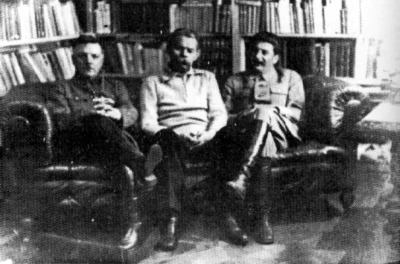
Brief Introduction of Maksim Gorky
Alexei Maximovich Peshkov, better known by his pseudonym Maksim Gorky, was a renowned Russian and Soviet writer, playwright, and political activist. A founder of the socialist realism literary method, Gorky rose from a life of extreme poverty to become one of Russia’s most celebrated literary figures. He is famous for his naturalistic and empathetic portrayals of Russia’s downtrodden and his complex relationship with the Bolshevik regime. Nominated five times for the Nobel Prize in Literature, his works, including the novel “Mother” and the play “The Lower Depths,” have left an indelible mark on world literature. Gorky’s life and writings reflect the turbulent social and political transformations of late 19th and early 20th-century Russia.

Maksim Gorky Overview
| Full Name | Alexei Maximovich Peshkov |
| Date of Birth | March 28, 1868 |
| Age | 68 years (at the time of death) |
| Birthplace | Nizhny Novgorod, Russia |
| Nationality | Russian, Soviet |
| Profession | Writer, Playwright, Political Activist |
| Famous For | Founding the socialist realism literary method and his works “The Lower Depths” and “Mother” |
| Education | Largely self-educated; attended a few months of formal schooling |
| Marital Status | Separated |
| Spouse / Partner | Yekaterina Peshkova (married), Maria Andreyeva (partner), Moura Budberg (partner) |
| Children | Maxim Peshkov (son), Zinovy, Yuri (sons), Yekaterina, Catherine (daughters) |
| Net Worth | Information not publicly available |
Early Life and Education of Maksim Gorky
Maksim Gorky was born Alexei Maximovich Peshkov on March 28, 1868, in Nizhny Novgorod, Russia. His early life was fraught with hardship and tragedy. His father, a shipping agent, died of cholera when Gorky was just five years old. His mother remarried, and he was sent to live with his maternal grandparents. His grandfather, a dyer whose business was failing, treated him harshly, while his grandmother, an excellent storyteller, provided him with what little kindness he experienced. This brutal upbringing ended his formal education after only a few months; at the age of eight, his grandfather sent him out to work. Gorky held a series of menial jobs, including apprentice to a shoemaker, errand boy for an icon painter, and a dishwasher on a Volga steamer, where a cook introduced him to the world of literature, which quickly became his passion. At twelve, he ran away from home and began a period of wandering across the Russian Empire, an experience that would profoundly influence his later writing. The misery of his surroundings led to a suicide attempt in December 1887. Following this, he embarked on a five-year journey on foot, accumulating a wealth of experiences that would form the basis of his literary work.
Maksim Gorky Career
Early Career
Gorky’s literary career began in the provincial press. While working various jobs, he began writing under the pseudonym Jehudiel Khlamida. In 1892, he adopted the name “Gorky,” meaning “bitter,” to reflect his anger about the harsh realities of Russian life and his determination to expose the truth. His first published short story, “Makar Chudra,” appeared in the Tiflis newspaper “Kavkaz” that same year. He continued to write for various newspapers, and his early stories often depicted the lives of the outcasts and downtrodden people he had encountered during his travels, offering a unique and sympathetic perspective from the bottom stratum of society. His work quickly gained attention for its raw naturalism and its focus on characters previously ignored in mainstream literature.
Breakthrough
Gorky’s breakthrough came in 1898 with the publication of his first book, a two-volume collection titled “Essays and Stories” (“Ocherki i rasskazy”). The book was a sensational success, and his career as a writer was firmly established. His fame grew rapidly, and he became known as a powerful voice for Russia’s social and cultural transformation. By 1899, he was openly associating with the emerging Marxist social-democratic movement, which further elevated his status among the intelligentsia and “conscious” workers. His plays also brought him significant acclaim, most notably “The Lower Depths” (“Na dne”) in 1902, which was a massive success and remains one of his most famous works. This play, set in a homeless shelter, solidified his reputation as a master of depicting the lives of the marginalized.
Major Achievements and Success
Throughout his career, Maksim Gorky became a towering figure in Russian literature. He was a prolific writer of novels, short stories, plays, and memoirs. His novel “Mother” (“Mat'”), written in 1906, became a foundational text of socialist realism, lauded by Vladimir Lenin as a “very timely book” for its depiction of a working-class woman’s revolutionary awakening. His autobiographical trilogy—”My Childhood” (1913–1914), “In the World” (1916), and “My Universities” (1923)—is considered a masterpiece of Russian literature, offering a vivid and unflinching account of his early life. Gorky was elected an honorary Academician of Literature in 1902, though Tsar Nicholas II ordered the election to be annulled due to his revolutionary activities, prompting Anton Chekhov and Vladimir Korolenko to resign from the academy in protest. He became a personal friend of Lenin and other prominent revolutionaries. After his final return to the Soviet Union, he was declared the founder of Socialist Realism and became the first president of the Union of Soviet Writers in 1934.
Recent Work / Current Status
Maksim Gorky died on June 18, 1936, at the age of 68. In the years leading up to his death, he had a complicated and often strained relationship with the Soviet regime under Joseph Stalin. After returning to the USSR in 1932 at Stalin’s invitation, he was celebrated and given a mansion, but also found himself under increasing control. He was placed under unannounced house arrest in his final days. His last major work was the monumental, unfinished novel “The Life of Klim Samgin,” which he worked on from 1925 until his death. This four-volume epic was intended to be his masterpiece, depicting the vast social and political turmoil of Russia from the late 19th century through the revolution. The circumstances surrounding his death, and that of his son Maxim Peshkov a year earlier, are considered suspicious, with some speculating they were victims of Stalin’s purges, though this has never been definitively proven.
Maksim Gorky Awards and Achievements
- Nominated five times for the Nobel Prize in Literature.
- Elected an honorary Academician of Literature by the Russian Academy of Sciences in 1902 (annulled by the Tsar).
- Awarded the Order of Lenin.
- Served as the first President of the Union of Soviet Writers.
- Received the Griboyedov Prize in 1903 and 1904.
Maksim Gorky Personal Life & Family
Maksim Gorky’s personal life was as eventful as his public one. He married Yekaterina Pavlovna Peshkova in 1896, and they had a son, Maxim Peshkov. Although they separated in 1903, they remained lifelong friends. For many years, his partner was the actress Maria Fyodorovna Andreyeva, who accompanied him during his exile and travels, including a trip to the United States. Their relationship caused a scandal in the US as Gorky’s divorce from his first wife was not recognized by the Russian Orthodox Church. In his later years, his secretary, Moura Budberg, became his mistress and unofficial wife. Gorky’s life was marked by long periods of exile, partly for health reasons (he suffered from tuberculosis) and partly due to his political activities. He lived on the Italian island of Capri from 1906 to 1913 and again in Sorrento from 1921 to 1929 before his final return to the Soviet Union.

Maksim Gorky Relationship Details
Maksim Gorky’s first wife was Yekaterina Peshkova, whom he married in 1896. They had one son together, Maxim Peshkov. The couple separated in 1903 but never formally divorced, maintaining an amicable relationship. From 1903 to 1919, his common-law wife was Maria Andreyeva, a prominent Bolshevik actress and political activist. She was a close associate and fundraiser for the Bolshevik party. In 1921, Gorky hired Moura Budberg (born Maria Ignatievna Zakrevskaya-Benckendorff-Budberg) as his secretary, and she soon became his mistress, remaining with him until his death.
Maksim Gorky Net Worth and Income
Information regarding Maksim Gorky’s precise net worth is not publicly available. However, it is known that he was a very successful writer whose works earned him a substantial income. He generously donated a significant portion of his earnings to the Social Democratic Party, particularly the Bolshevik wing, becoming one of their main financial sources before the revolution. Upon his final return to the Soviet Union, he was provided with a mansion in Moscow (now the Gorky Museum) and a dacha in the suburbs by the state, indicating he lived in considerable comfort under official patronage.
Maksim Gorky Physical Appearance
- Height: Information not publicly available
- Weight: Information not publicly available
- Eye Color: Information not publicly available
- Hair Color: Information not publicly available
Maksim Gorky Controversies
Maksim Gorky’s life was steeped in political controversy. An outspoken critic of the Tsarist regime, he was arrested multiple times for his revolutionary activities. His relationship with the Bolsheviks was complex and often fraught with disagreement. After the 1917 October Revolution, he became a vocal critic of Lenin’s dictatorial methods and the Bolsheviks’ use of political repression, writing a series of articles titled “Untimely Thoughts”. His newspaper, “Novaya Zhizn” (“New Life”), was eventually shut down by censorship on Lenin’s orders. His second period of exile beginning in 1921 was partly a result of these disagreements. His eventual return to the Soviet Union in 1932 and his subsequent role as a cultural figurehead for Stalin’s regime drew criticism, as he was seen by some as legitimizing a brutal dictatorship. He helped found the literary method of Socialist Realism, which became a tool of state propaganda. The mysterious circumstances of his death in 1936 have led to persistent rumors that he was poisoned on Stalin’s orders, a charge that was even raised during the Bukharin trials of 1938.
Maksim Gorky Social Media Presence
- Instagram – Not applicable
- Twitter – Not applicable
- YouTube – Not applicable
Interesting Facts about Maksim Gorky
- His chosen pseudonym, Gorky, translates to “bitter” in Russian, reflecting his outlook on the hardships of life in Russia.
- The famous Gorky Park in Moscow is named in his honor, as was his birth city, Nizhny Novgorod, which was called Gorky from 1932 to 1990.
- He attempted suicide in 1887 by shooting himself, which resulted in lifelong lung problems and bouts of tuberculosis.
- The world’s largest aircraft in the mid-1930s, the Tupolev ANT-20, was named “Maxim Gorky” in his honor.
- He was a personal friend of fellow literary giants Leo Tolstoy and Anton Chekhov and wrote insightful memoirs about them.
Maksim Gorky Legacy and Influence
Maksim Gorky holds a significant and complex legacy in Russian and world literature. He is considered the father of Soviet revolutionary literature and was instrumental in developing the doctrine of Socialist Realism, which shaped Soviet cultural policy for decades. His works gave a powerful voice to the Russian working class and social outcasts, portraying their lives with unprecedented realism and empathy. Gorky’s influence extended beyond the Soviet Union; his plays, particularly “The Lower Depths,” influenced Western playwrights like Eugene O’Neill, and Bertolt Brecht adapted his novel “Mother” for the stage. He served as a crucial bridge between 19th-century Russian realism and 20th-century proletarian art. Despite the political compromises that have complicated his image, Gorky’s profound knowledge of the “lower depths” of Russian society, his talent for vivid characterization, and his belief in the inherent worth of the individual ensure his place as one of the most important literary figures of his era.
Final Words about Maksim Gorky
Maksim Gorky’s life was a testament to the power of literature to reflect and shape a tumultuous world. From a childhood of brutal poverty, he rose to become a literary titan whose name was known across the globe. His journey from a tramp wandering the Russian steppes to the head of the Soviet Writers’ Union is a remarkable story of self-education and unwavering determination. He chronicled the lives of the dispossessed, championed the cause of revolution, and wrestled with the immense contradictions of the Soviet state he helped to inspire. Gorky’s work is a powerful exploration of human suffering and resilience, capturing the spirit of a nation on the brink of profound change. While his legacy is debated, his contribution to literature is undeniable; he gave voice to the voiceless and left behind a body of work that continues to resonate with its raw power and deep humanity.
 Team Dailly WikiBio