
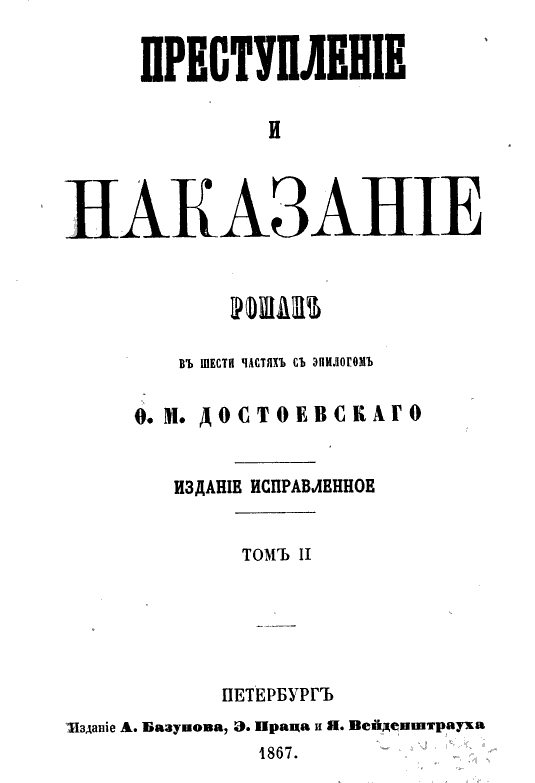
Brief Introduction of Rodion Raskolnikov
Rodion Romanovich Raskolnikov is the complex and tormented protagonist of Fyodor Dostoevsky’s seminal 1866 novel, “Crime and Punishment”. A former law student of Russian nationality, Raskolnikov lives in extreme poverty in 19th-century Saint Petersburg. He is noteworthy and famous for developing and acting upon a nihilistic theory that divides humanity into two categories: “ordinary” people, who must obey the law, and “extraordinary” individuals who have an inner right to transgress moral boundaries for a higher purpose. This intellectual justification leads him to commit a double murder, and the novel masterfully chronicles the profound psychological, moral, and spiritual consequences of his crime, making him one of the most studied and compelling characters in world literature.

Rodion Raskolnikov Overview
| Full Name | Rodion Romanovich Raskolnikov |
| Date of Birth | Not publicly available (fictional character from an 1866 novel) |
| Age | 23 years old during the novel’s events. |
| Birthplace | A province in Russia (implied). |
| Nationality | Russian |
| Profession | Former law student. |
| Famous For | Being the protagonist of “Crime and Punishment” and murdering a pawnbroker to test a philosophical theory. |
| Education | Formerly studied law at a university in Saint Petersburg. |
| Marital Status | Single. |
| Spouse / Partner | Sofya Semyonovna Marmeladova (Sonya) becomes his devoted companion. |
| Children | None. |
| Net Worth | Not applicable; lives in extreme poverty. |
Early Life and Education of Rodion Raskolnikov
Rodion Romanovich Raskolnikov is introduced as a young man who has been forced to abandon his legal studies at a Saint Petersburg university due to severe financial hardship. He resides in a tiny, coffin-like garret in a downtrodden part of the city, plagued by poverty that leaves him isolated, malnourished, and shabbily dressed. Raskolnikov is depicted as intelligent, proud, and handsome, though his dire circumstances and internal turmoil often mar his appearance. His family, consisting of his mother, Pulcheria Alexandrovna, and his sister, Avdotya Romanovna (Dunya), live in a province and make great sacrifices to support him, a fact that causes him both love and anguish. He feels repulsed by their charity and the sacrifices they make, particularly his sister’s engagement to the calculating Pyotr Petrovich Luzhin, which he views as a form of self-sacrifice for his sake. This intense family pressure, combined with his intellectual arrogance and impoverished state, creates a fertile ground for his radical ideas to take root. His name itself, derived from the Russian word “raskol,” means “schism” or “split,” foreshadowing the profound internal division and dualistic nature that defines his character.
Rodion Raskolnikov Career
Early Career
Raskolnikov’s career is essentially that of a promising student cut short by destitution. Before the events of the novel, he supported himself through meager means, including tutoring children, but has since fallen into a state of inaction and isolation. His poverty is so extreme that he has stopped working, avoids his landlady to whom he owes rent, and is often without food. This period is characterized by deep intellectual fermentation, where he spends his time brooding in his small room, detaching himself from society, and developing the philosophical theory that will lead to his downfall. He publishes an article on this theory, which argues that certain “extraordinary” men have the right to commit crimes for a greater good, an early and ominous sign of his intellectual trajectory.
Breakthrough
The major turning point in Raskolnikov’s life, and the central event of the novel, is his decision to murder an elderly, unscrupulous pawnbroker, Alyona Ivanovna. This act is his “breakthrough” in the sense that it is the ultimate test of his “extraordinary man” theory. He believes that by killing a woman he deems a “louse” and using her money for good deeds, he can prove himself to be a Napoleon-like figure, above conventional morality. The crime is meticulously planned, but in the heat of the moment, he is also forced to kill Alyona’s gentle half-sister, Lizaveta, who stumbles upon the scene. This brutal act is not a breakthrough to greatness, but a descent into a hell of guilt, paranoia, and psychological torment. It shatters his intellectual pride and forces him into a prolonged and agonizing confrontation with his own conscience.
Major Achievements and Success
To speak of “achievements and success” in Raskolnikov’s case is deeply ironic. From the perspective of his own theory, the immediate aftermath of the murders could be seen as a success: he escapes the scene undetected and initially avoids suspicion. However, this “success” is immediately undermined by a profound psychological failure. He finds himself incapable of being the cold, detached “superman” he envisioned. He is wracked with fever, delirium, and disgust, unable to even check how much money he has stolen before hiding it. His true, albeit agonizing, achievement is the journey he undertakes after the crime. Through his interactions, particularly with the detective Porfiry Petrovich and the pure-hearted prostitute Sonya Marmeladova, he is slowly guided toward confession. His ultimate success lies not in transgressing morality, but in his eventual, painful surrender to it. The confession and acceptance of his sentence represent a monumental moral achievement, marking the first step towards redemption and spiritual rebirth.
Recent Work / Current Status
At the conclusion of the novel, Raskolnikov has confessed to the murders. Due to mitigating circumstances, including his state of mind and another man’s false confession, he receives a relatively lenient sentence: eight years of penal servitude in Siberia. In the epilogue, he is serving his time in the prison camp. Initially, he remains proud, alienated, and unrepentant, feeling his only crime was his own weakness in failing to be “extraordinary”. However, Sonya follows him to Siberia, and her unwavering love and devotion slowly begin to break through his hardened exterior. After a severe illness, Raskolnikov finally experiences a moment of spiritual awakening. He realizes his love for Sonya and begins his long, difficult path toward genuine repentance and moral regeneration, symbolized by his picking up the New Testament she had given him.
Rodion Raskolnikov Awards and Achievements
- Not applicable. As a fictional character who commits a double murder, Rodion Raskolnikov has not received any awards or formal achievements. His “achievements” are of a moral and philosophical nature, central to the novel’s themes of crime, guilt, and redemption.
Rodion Raskolnikov Personal Life & Family
Raskolnikov’s personal life is defined by alienation and fraught family relationships. He is devoted to his mother, Pulcheria, and his sister, Dunya, yet their sacrifices on his behalf fill him with a resentful pride. This internal conflict contributes to his isolation, as he actively pushes away those who care for him. His only true friend is the loyal and kind-hearted Dmitry Prokofyich Razumikhin, another former student who serves as Raskolnikov’s foil, representing a path of hard work and sociability that Raskolnikov rejects. His lifestyle is one of abject poverty; he lives in squalor, often goes hungry, and is described as being ill for much of the novel. His personal interests are almost entirely intellectual and internal, as he is consumed by his philosophical ideas and the psychological fallout from his crime. The most significant relationship he forms is with Sonya Marmeladova, seeing her as a fellow transgressor, though he comes to understand that her sin—prostitution to save her family—is one of self-sacrifice, unlike his own self-serving crime.
Rodion Raskolnikov Relationship Details
The most crucial relationship in Rodion Raskolnikov’s life is with Sofya Semyonovna Marmeladova, known as Sonya. She is the daughter of a drunkard whom Raskolnikov meets and is forced into prostitution to support her destitute family. Raskolnikov is drawn to her, recognizing in her a fellow outcast who has transgressed societal norms. It is to Sonya that he first confesses his crime, and her deep, unwavering Christian faith and capacity for selfless love become his only path to redemption. She does not judge him but urges him to confess to the authorities and accept his suffering. Sonya’s devotion is absolute; she follows him to Siberia and her love is the ultimate catalyst for his spiritual rebirth. Before the novel’s events, it is mentioned that Raskolnikov was once engaged to his landlady’s daughter, a sickly girl who died, but this relationship is mentioned only in passing. His relationship with his sister Dunya is also central; he is fiercely protective of her, vehemently opposing her engagement to the contemptible Luzhin.

Rodion Raskolnikov Net Worth and Income
Rodion Raskolnikov has no net worth; he is a character defined by his extreme poverty. Having dropped out of university, he has no stable income and has ceased all attempts to support himself, such as by giving lessons. He lives in a rented room for which he is deeply in debt. His survival depends on the meager funds sent by his mother and sister, which he often receives with a sense of guilt and frustration. To get by, he is forced to pawn his few remaining possessions, including his father’s watch, to the very pawnbroker he eventually murders. His financial desperation is a key component of his motivation, although the novel makes it clear that his reasons for the crime are primarily philosophical and psychological, not purely monetary.
Rodion Raskolnikov Physical Appearance
- Height: Above average.
- Weight: Slim, well-built.
- Eye Color: Beautiful dark eyes.
- Hair Color: Dark brown.
While described as exceptionally handsome, his appearance is often marred by his self-neglect, poverty, and psychological distress, leaving him looking pale, thin, and haggard in his tattered clothes.
Rodion Raskolnikov Controversies
The central and all-consuming controversy surrounding Rodion Raskolnikov is the brutal double murder he commits with an axe. He kills the pawnbroker Alyona Ivanovna and, unexpectedly, her sister Lizaveta. This act is born from a controversial and dangerous philosophical theory he developed, which posits that “extraordinary” men like himself are not bound by the moral laws that govern “ordinary” humanity. This “superman” theory, which he uses to justify the murder, is the core of his intellectual and moral transgression. The entire novel is an exploration of this controversy, examining the disastrous psychological and spiritual consequences of his attempt to live outside the bounds of human empathy and law.
Rodion Raskolnikov Social Media Presence
- Instagram – Not applicable
- Twitter – Not applicable
- YouTube – Not applicable
Interesting Facts about Rodion Raskolnikov
- The name “Raskolnikov” is derived from the Russian word “raskol,” meaning “schism” or “split,” directly reflecting the character’s divided nature and internal conflict.
- Despite his misanthropy and the heinous crime he commits, Raskolnikov performs several acts of impulsive charity, such as giving his last money to the Marmeladov family for a funeral.
- He published a philosophical article titled “On Crime” six months before the murder, outlining his theory of “ordinary” and “extraordinary” people, which the detective Porfiry Petrovich later uses to psychologically entrap him.
- His psychological state throughout the novel is so fragile that it often manifests in physical illness, including fever, delirium, and fainting spells, especially when his crime is discussed.
- The cross is a significant symbol in his journey; he initially discards the one he finds on the pawnbroker’s body but later accepts a cypress cross from Sonya, symbolizing the beginning of his path toward repentance.
Rodion Raskolnikov Legacy and Influence
Rodion Raskolnikov’s legacy is immense, cementing his status as one of the most profound and influential characters in literary history. He represents a masterful study of the psychopathology of guilt and alienation. Dostoevsky uses Raskolnikov’s internal monologue and psychological torment to explore timeless questions of morality, free will, nihilism, and the potential for redemption. The character’s “extraordinary man” theory is seen as a powerful critique of utilitarian and nihilistic ideas that were gaining traction in 19th-century Russia. Raskolnikov’s journey has had a deep influence on existential philosophy and modern psychology, providing a rich case study of a mind in crisis. His struggle continues to resonate with readers and has been the subject of countless adaptations in film, television, and theatre, demonstrating the enduring power and relevance of his story.
Final Words about Rodion Raskolnikov
Rodion Raskolnikov is far more than a simple murderer; he is an embodiment of the eternal struggle between intellectual pride and human conscience, between alienation and connection, and between sin and redemption. His story begins with a rational, calculated decision to commit a crime based on a flawed philosophy, believing he can control the outcome and prove his superiority. However, the act itself unleashes a torrent of unforeseen psychological and spiritual consequences, proving that his humanity cannot be so easily discarded. His journey through guilt, paranoia, and suffering, guided by the selfless love of Sonya Marmeladova, is a testament to the idea that redemption is not achieved through intellectual reasoning but must be earned through humility and suffering. Raskolnikov’s ultimate acceptance of punishment and his slow, painful turn towards a new life make him a powerful and unforgettable symbol of the human capacity for both profound error and profound grace.
 Team Dailly WikiBio