
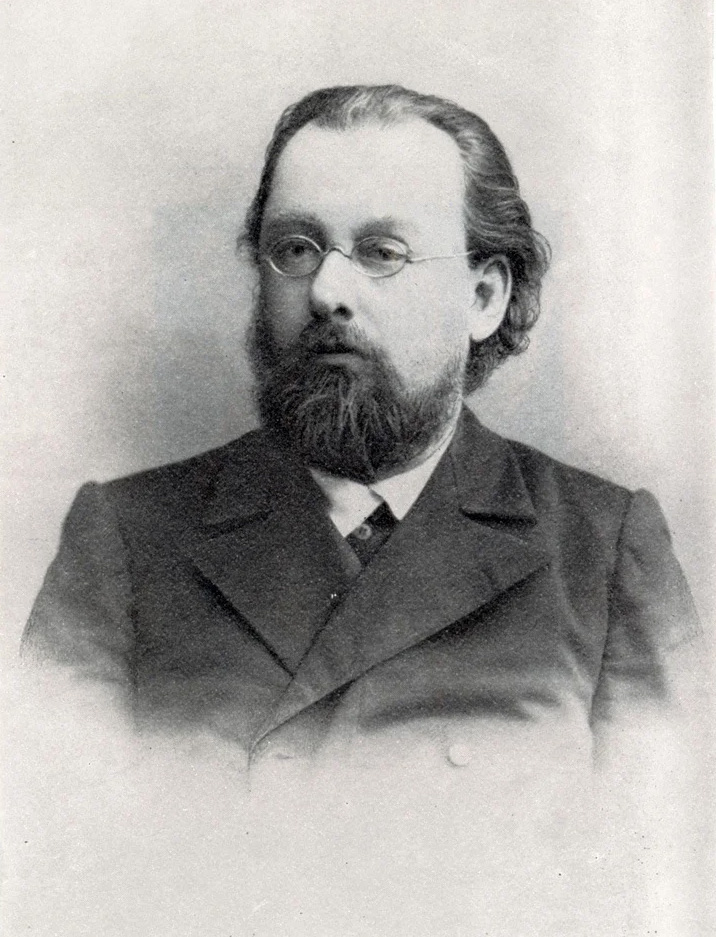
Brief Introduction of Konstantin Tsiolkovsky
Konstantin Eduardovich Tsiolkovsky was a pioneering Russian and Soviet rocket scientist and a progenitor of astronautics. A self-taught provincial schoolteacher, he laid the theoretical groundwork for space exploration decades before it became a reality. Tsiolkovsky is renowned for deriving the “Tsiolkovsky rocket equation,” a fundamental principle that remains essential to modern astronautics and describes the motion of rockets. His extensive body of work, comprising over 400 scientific papers, explored concepts such as multistage rockets, liquid propellants, space stations, and the colonization of space. Despite never building a rocket himself, his visionary ideas profoundly influenced subsequent generations of Soviet rocket engineers like Sergei Korolev and Valentin Glushko, earning him the title of one of the founding fathers of modern rocketry and astronautics.
Konstantin Tsiolkovsky Overview
| Full Name | Konstantin Eduardovich Tsiolkovsky |
| Date of Birth | September 17, 1857 |
| Age | 78 years at the time of death |
| Birthplace | Izhevskoye, Ryazan Governorate, Russian Empire |
| Nationality | Russian, Soviet |
| Profession | Scientist, Inventor, Teacher |
| Famous For | Pioneering work in astronautics and the Tsiolkovsky rocket equation |
| Education | Largely self-educated |
| Marital Status | Married |
| Spouse / Partner | Varvara Evgrafovna Sokolova |
| Children | Seven children (Lyubov, Ignatius, Alexander, Ivan, Leonty, Maria, Anna) |
| Net Worth | Not publicly available |
Early Life and Education of Konstantin Tsiolkovsky
Konstantin Eduardovich Tsiolkovsky was born on September 17, 1857, in the village of Izhevskoye, Ryazan Province, Russia, to a middle-class family. He was one of eighteen children born to Eduard Tsiolkovsky, a Polish forester, and Maria Yumasheva, a Russian woman of mixed Volga Tatar and Russian origin. A pivotal event in his childhood occurred around the age of nine or ten when he contracted scarlet fever, which resulted in a significant loss of hearing. This disability isolated him from his peers and forced him to drop out of school at age 14, effectively ending his formal education.
Tsiolkovsky’s hearing impairment, however, fostered a deep reliance on self-study. He immersed himself in his father’s library, teaching himself mathematics and physics. At the age of sixteen, his family sent him to Moscow, where for three years he dedicated himself to a rigorous schedule of self-education at the Chertkovskaya Public Library, studying chemistry, physics, astronomy, and analytical mechanics. During this time, he was influenced by Nikolai Fyodorov, a prominent proponent of Russian cosmism who worked at the library. Inspired by the science fiction of Jules Verne, Tsiolkovsky began to contemplate the practicalities of space travel, a passion that would define his life’s work. After returning from Moscow, he passed the teacher’s exam and began his career as an educator.
Konstantin Tsiolkovsky Career
Early Career
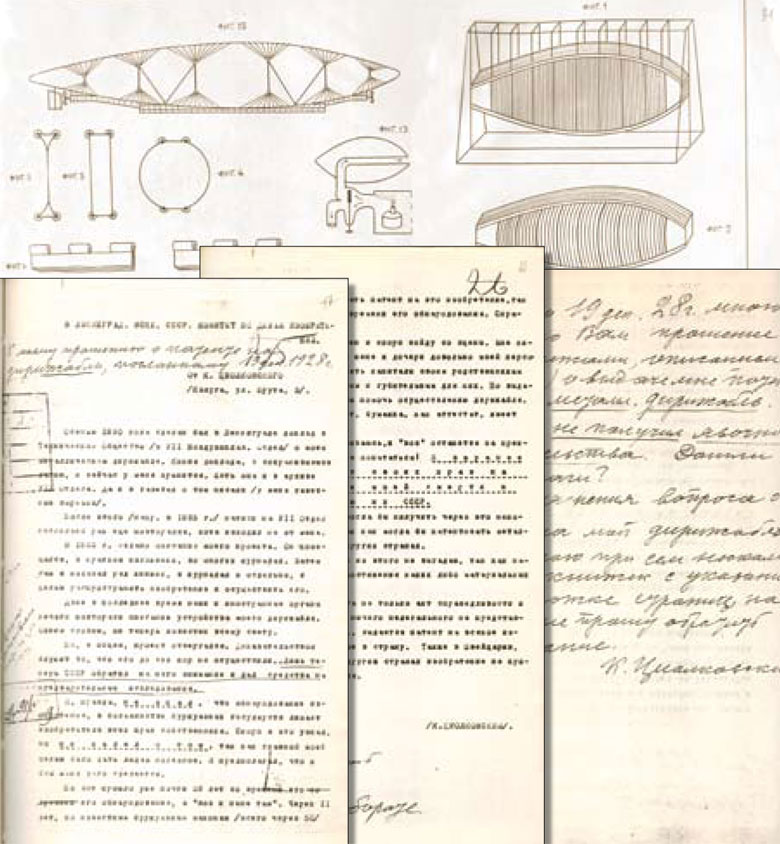
In 1879, Tsiolkovsky earned his teaching certificate and was assigned a position as a mathematics and geometry teacher in Borovsk, a small town in the Kaluga Province. Despite his relative isolation from major scientific centers, he continued his research with immense dedication. His first scientific paper, “Theory of Gases,” written in 1880-1881, outlined the basis of the kinetic theory of gases. However, upon submitting it to the Russian Physico-Chemical Society, he learned his discoveries had already been made 25 years prior. Undeterred, his second paper, “The Mechanics of the Animal Organism,” received a more favorable response, leading to his induction into the society. During his time in Borovsk, he also began to theorize about lighter-than-air flight, publishing his first work on the design of an all-metal dirigible in 1892.
Breakthrough
In 1892, Tsiolkovsky was transferred to a teaching post in Kaluga, where he would spend the rest of his life and produce his most significant work. It was here that he began to seriously focus on the problems of space travel. A major breakthrough came with the publication of his most important work in May 1903, “Exploration of Outer Space by Means of Rocket Devices.” This article was the first to scientifically propose that a rocket could perform space flight. Crucially, it contained the derivation of what is now known as the Tsiolkovsky rocket equation. This formula established the fundamental relationship between a rocket’s final velocity, the velocity of its exhaust gases, and its initial and final mass, proving that liquid propellants, specifically liquid oxygen and liquid hydrogen, could generate the necessary thrust to achieve orbit.
Major Achievements and Success
Tsiolkovsky’s theoretical contributions laid the entire foundation for modern astronautics. He was the first to determine that the minimum orbital speed around Earth is 8,000 m/s and that this could be achieved with a multistage rocket. His book “Space Rocket Trains” (1929) detailed the concept of multistage boosters, a crucial innovation for escaping Earth’s gravity. His extensive writings, totaling over 400 works, detailed numerous visionary concepts including steering thrusters, space stations, airlocks for extravehicular activity, and closed-cycle biological systems to provide food and oxygen for space colonies. He also developed the first aerodynamics laboratory in Russia in his apartment and, in 1897, built the country’s first wind tunnel, receiving a small grant from the Academy of Sciences to further his research. Though his work was not widely recognized internationally for many years, after the Bolshevik Revolution, the new Soviet government acknowledged his importance, electing him a member of the Socialist Academy in 1918 and granting him a lifetime pension in 1921.
Recent Work / Current Status
Konstantin Tsiolkovsky died on September 19, 1935, in Kaluga after undergoing an operation for stomach cancer. He bequeathed his life’s work to the Soviet state. As he passed away before the dawn of the Space Age, there is no “recent work” in the conventional sense. His work, however, became the cornerstone of the Soviet space program, directly inspiring its chief architects, Sergei Korolev and Valentin Glushko. His theoretical predictions and calculations proved remarkably accurate and continue to be fundamental to spaceflight engineering today.
Konstantin Tsiolkovsky Awards and Achievements
- Order of St. Stanislaus, Third Degree (1906)
- Elected Member of the Socialist Academy (later the USSR Academy of Sciences) (1918)
- Awarded a lifetime government pension for his scientific contributions (1921)
- Order of the Red Banner of Labour (1932)
Konstantin Tsiolkovsky Personal Life & Family
Konstantin Tsiolkovsky spent most of his life in a modest log house on the outskirts of Kaluga. Described as a recluse by nature, his unusual habits and deafness often made him appear eccentric to his neighbors. In August 1880, while teaching in Borovsk, he married Varvara Evgrafovna Sokolova, the daughter of a local preacher. Their life was marked by financial hardship and personal tragedy. The couple had seven children: four sons and three daughters. Their family life was difficult; two of their sons, Ignatius and Alexander, committed suicide, and another son, Leonty, died in infancy. Despite these challenges and his isolation, he remained devoted to his scientific and philosophical pursuits, often funding his experiments from his meager teacher’s salary.

Konstantin Tsiolkovsky Relationship Details
Konstantin Tsiolkovsky married Varvara Evgrafovna Sokolova in Borovsk in August 1880. She was the daughter of a local priest. Their marriage lasted until his death in 1935. They had seven children together. Varvara was described as a “great martyr” by the townspeople of Borovsk, as she managed the household and family with very limited financial resources while Konstantin was absorbed in his scientific work. She outlived her husband by five years, passing away in 1940.
Konstantin Tsiolkovsky Net Worth and Income
Information regarding Konstantin Tsiolkovsky’s net worth is not publicly available, and the concept is not easily applicable to his life and time. For most of his career, he lived a life of poverty, supporting his family and his research on a modest schoolteacher’s salary. In 1900, he received a small grant of 470 rubles from the Academy of Sciences to build a new wind tunnel. A significant change in his financial status occurred after the Bolshevik Revolution. In 1921, the Soviet government granted him a lifetime pension in recognition of his scientific work, which allowed him to retire from teaching and dedicate himself fully to his research.
Konstantin Tsiolkovsky Physical Appearance
- Height: Information not disclosed
- Weight: Information not disclosed
- Eye Color: Information not disclosed
- Hair Color: Information not disclosed
Konstantin Tsiolkovsky Controversies
No major controversies have been reported regarding Konstantin Tsiolkovsky’s scientific work or personal life. However, after the October Revolution, he was briefly jailed by the Cheka (the early Soviet state security organization) for several weeks, though he was a supporter of the Bolshevik Revolution. Some of his philosophical ideas, which bordered on panpsychism (the belief that all matter has a form of consciousness), were suppressed in the USSR for their non-materialist and mystical claims, though his scientific work was celebrated.
Konstantin Tsiolkovsky Social Media Presence
- Instagram – Not applicable
- Twitter – Not applicable
- YouTube – Not applicable
Interesting Facts about Konstantin Tsiolkovsky
- Inspired by the newly constructed Eiffel Tower in 1895, Tsiolkovsky was the first person to conceive of the space elevator, a tower reaching from the surface of Earth into geostationary orbit.
- Before focusing on rockets, he designed an all-metal dirigible and built Russia’s first wind tunnel in his own apartment to conduct aerodynamic experiments.
- He was a proponent of Russian cosmism, a philosophical movement that believed humanity’s destiny was to colonize the cosmos, achieve perfection, and attain immortality.
- Tsiolkovsky wrote science fiction stories, including “On The Moon” and “Dreams of the Earth and Sky,” as a way to explore and popularize his scientific ideas about space travel.
- As a young man, he built a centrifuge to test the effects of gravity on living creatures, using local chickens as his test subjects.
Konstantin Tsiolkovsky Legacy and Influence
Konstantin Tsiolkovsky’s legacy is immense, cementing his status as one of the primary founding fathers of astronautics, alongside Robert Goddard and Hermann Oberth. His theoretical work provided the essential blueprint for space travel, from the fundamental rocket equation that still governs spacecraft design to concepts of multistage rockets, liquid propellants, and orbital space stations. Although his ideas were developed in relative isolation and went largely unrecognized for decades, they profoundly influenced the leading figures of the Soviet space program, including Sergei Korolev and Valentin Glushko, who turned his theories into reality. Today, his influence is seen in nearly every aspect of space exploration. He is honored in Russia and worldwide; a prominent crater on the far side of the Moon is named after him, as is the K. E. Tsiolkovsky State Museum of the History of Cosmonautics in Kaluga, and the Tsiolkovsky Gold Medal is awarded by the Russian Academy of Sciences for outstanding work related to astronautics.
Final Words about Konstantin Tsiolkovsky
Konstantin Tsiolkovsky was a true visionary, a self-taught genius whose imagination and scientific rigor transcended the limitations of his time and personal circumstances. Overcoming deafness and provincial isolation, he single-handedly developed the theoretical foundations of spaceflight. From his humble home in Kaluga, he foresaw a future where humanity would leave its terrestrial cradle to explore and colonize the cosmos. His detailed calculations and prophetic concepts, from liquid-fueled rockets to space stations, were not mere science fiction but a scientifically grounded roadmap for the future. While he never lived to see his dreams realized, his work lit the path for the Space Age, making him the undisputed patriarch of Soviet cosmonautics and an enduring inspiration for all who look to the stars. His famous quote encapsulates his philosophy: “The Earth is the cradle of humanity, but one cannot live in a cradle forever.”
 Team Dailly WikiBio